
Review · KYOTO
Kyoto: Traditional Concert at Townhouse or Bathhouse
Kyoto’s traditional music feels most immediate when you are sitting just a few feet from the performer. This experience puts professional koto and shamisen musicians in either a small traditional townhouse or a former bathhouse hall, with short explanations that help you hear what the instruments are doing.
I like the tiny townhouse setting, where a group of about 11 people can see every hand movement and hear every plucked string. I also like the plain-English introduction and Q&A, which turn an unfamiliar concert into something you can follow. The main consideration is that the bathhouse program runs irregularly, and the townhouse can feel tight when nearly full.
Key points
- Choose between two very different Kyoto venues: a living-room-style townhouse for solo music or a tiled bathhouse hall for fuller duet performances.
- Hear four or five pieces: programs mix Japanese classical works, newer arrangements, original compositions, and songs that may include singing.
- Meet the musicians after the concert: The bilingual Q&A lets you ask about technique, instruments, notation, and the stories behind the music.
- Try the koto yourself: The 35 to 40 minute workshop is available only with the traditional townhouse option.
- Plan around the calendar: Townhouse concerts run almost daily, while bathhouse performances are offered irregularly, usually on Mondays.
- Expect small groups: The townhouse holds about 11 people, and private or small-group bookings are available.
Two Kyoto rooms, two kinds of music
This is not one fixed show in one fixed hall. You choose between two settings, and that choice shapes the evening.
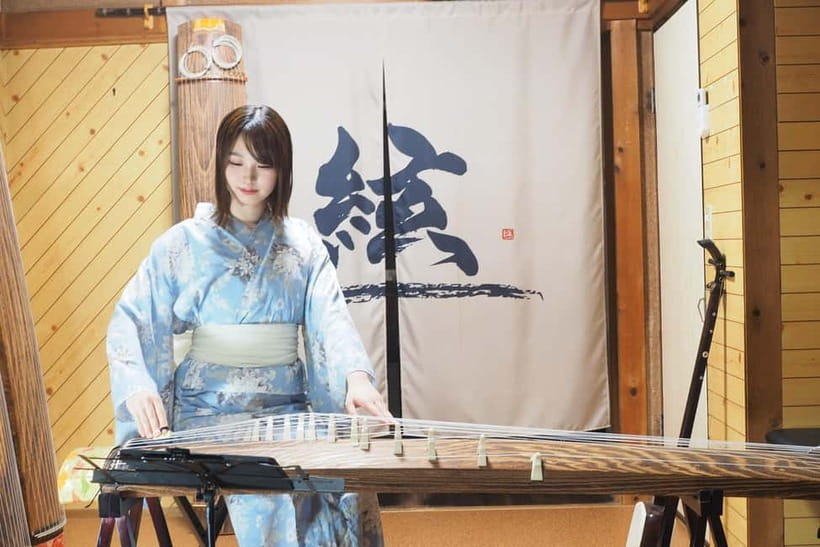
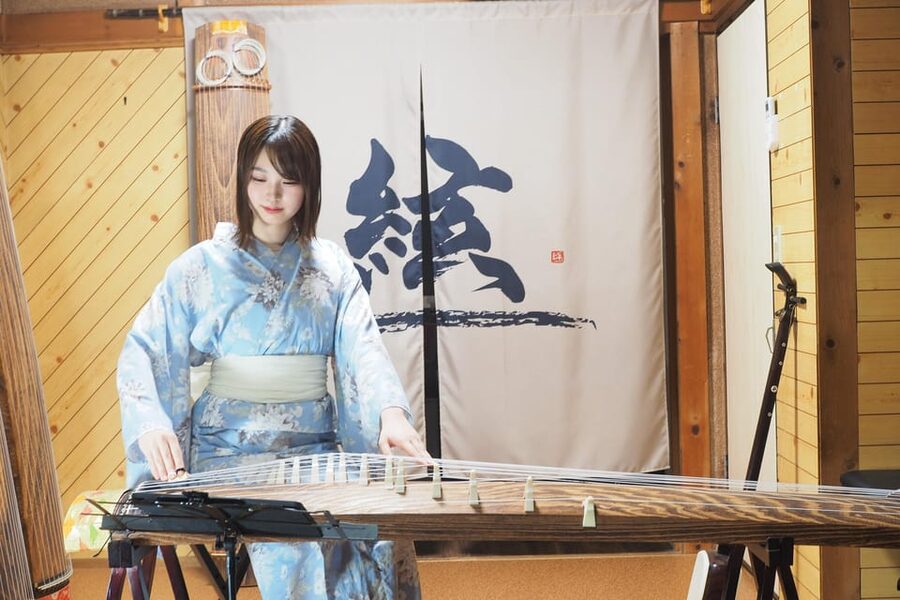
The traditional townhouse is the more intimate option. It holds up to about 11 people, with cushions or chairs in a room that feels closer to a Japanese home than a formal concert venue. You sit near the performer, which makes small details easy to notice: the placement of the bridges, the movement of the pick, the changing pressure on the strings, and the careful posture needed to play.
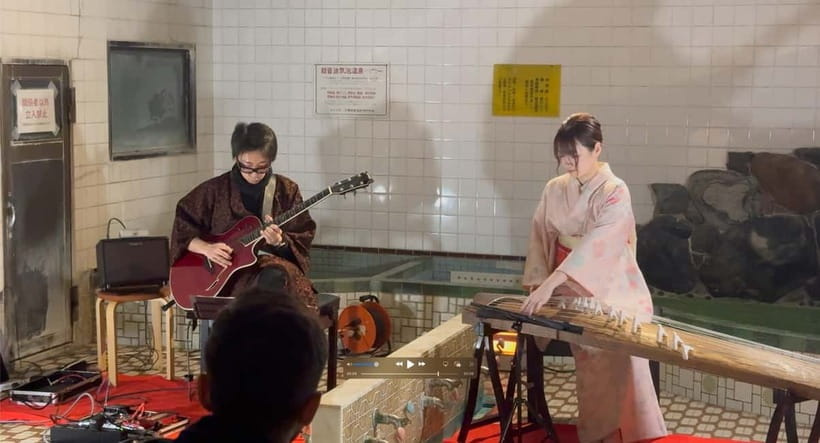
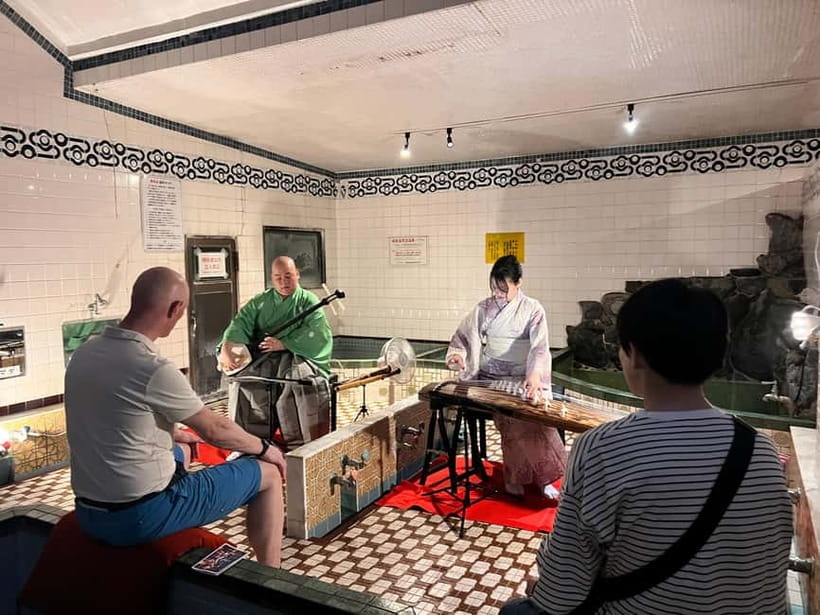
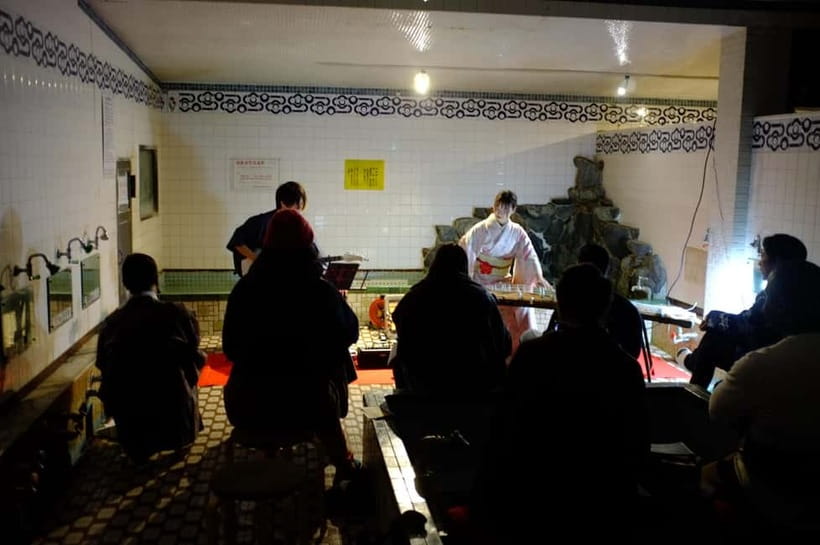
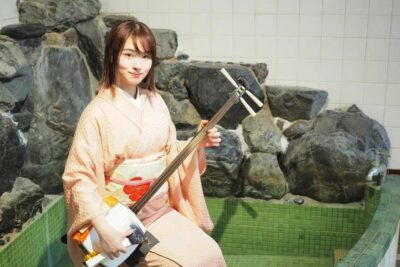
The historic bathhouse hall is larger, holding about 30 people in rows. Its tiled walls create natural reverberation, so the sound hangs in the air longer. The effect is more dramatic, especially when the koto is paired with shamisen, shakuhachi, flute, taishōgoto, guitar, or another instrument.
I would choose the townhouse if you want conversation, closeness, and the option to play the koto. I would choose the bathhouse if you want a broader concert sound and a duet program. The two venues are worth treating as separate experiences rather than assuming one is simply a larger version of the other.
More Traditional Music and Dance Shows in Japan:
- Japanese Traditional Music Show in Tokyo
★ 5.0 · 72 reviews - Traditional Japanese Music show & Experience Tour in Kyoto
★ 5.0 · 57 reviews - Concerts Played with Traditional Instruments in Kyoto
★ 5.0 · 50 reviews
What happens before the first note
Allow about 45 to 65 minutes for the concert and discussion. Add another 35 to 40 minutes if you take the optional koto workshop, bringing the total to as much as 105 minutes.
The visit begins with check-in and seating, which takes about five to ten minutes. The host explains basic etiquette and helps everyone settle into the room. At the townhouse, you may sit on cushions or chairs. At the bathhouse, seating is arranged in rows.
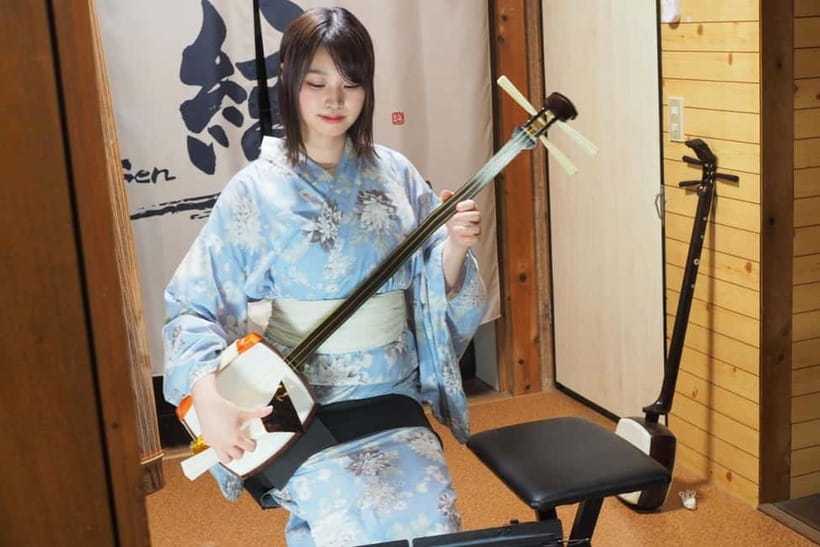
Next comes a 10 to 15 minute instrument introduction. This is an important part of the experience, not filler before the music. You learn how the koto and shamisen are built, how players use picks and bridges, and how Japanese notation differs from the staff notation familiar to many Western listeners.
The explanations are given in English and Japanese. Gen and his team guide the session, and past programs have included hosts such as Shohei and other English-speaking presenters. The exact host and performer can vary, but the format is designed for people with no prior knowledge of Japanese music.
That preparation pays off. Once the concert begins, you can connect the sound to the object in front of you. A bright, ringing koto passage no longer feels like a general sample of Japanese music. You understand something about how it is produced.
The townhouse concert: close enough to see every technique
The townhouse program features a solo performer on koto and shamisen. You hear four or five pieces, usually drawn from Japanese classical music, contemporary works, and original or artist-selected arrangements.
Programs change with the performer and season. Possible pieces include Kajimakura, Chidorino Kyoku, and Kaede no Hana, but you should not expect the same set every time. The musician chooses works that show personal style and technical range.
Several programs have included singing as well as instrumental performance. That combination can change the mood of a piece completely, moving from a quiet, spare melody to something more forceful. The repertoire is not presented as a museum display. It can include older ballads beside newer arrangements, giving you a clearer sense that traditional instruments still support living musicians.
The room is the real attraction here. With only a handful of people present, you are not watching from the back of a large hall. You can observe the performer’s hands and facial expression, and the sound has nowhere to hide. A few people have even ended up with a private concert when no other bookings were made, though you should not count on having the room to yourself.
The small size also brings one drawback. A group near the maximum capacity of 11 can feel crowded, particularly if you prefer a lot of personal space. The intimacy is the point, but it is worth knowing what you are choosing.
The bathhouse hall: tile, echoes, and duet arrangements
The bathhouse option uses a historic bathhouse hall, not the bathing facilities. Your ticket includes the concert space only, with no bathing, food, or drinks.
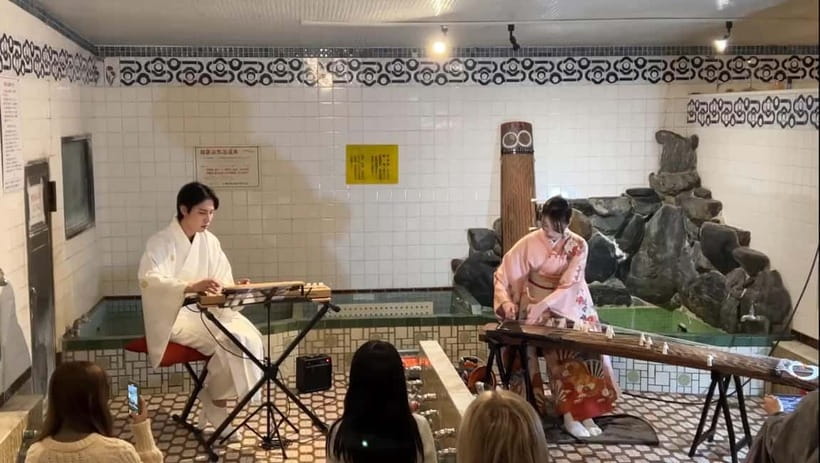
This room changes the music. Tile reflects the sound and creates a lingering echo, giving the koto a fuller tail and making duet passages feel more enveloping. The hall can hold about 30 people, so the experience is less private than the townhouse program, but it has a stronger concert-hall feeling.
The program includes four or five pieces, not counting the opener. You might hear a solo work followed by pairings such as koto and shamisen, koto and shakuhachi, or koto with flute, guitar, or taishōgoto. The combinations vary, and the music is selected to suit both the hall and the musicians performing that day.
This option is offered irregularly, usually on Mondays, so check the calendar before planning your day around it. If your dates are fixed, the townhouse is the safer choice because it is held almost every day. If the bathhouse date works, it gives you a different sound and a larger group setting.
A few more concerts around Japan worth a look
- Kyoto: Japanese Koto & Shamisen Concert and Koto Class
★ 4.9 · 31 reviews - Traditional Japanese Music show & Experience Tour in Osaka
★ 5.0 · 25 reviews - Tokyo: Traditional Asakusa Music Show with Dinner
★ 5.0 · 10 reviews - Traditional Concert in Public bath near Kyoto Station
★ 5.0 · 5 reviews
Why the short explanations matter
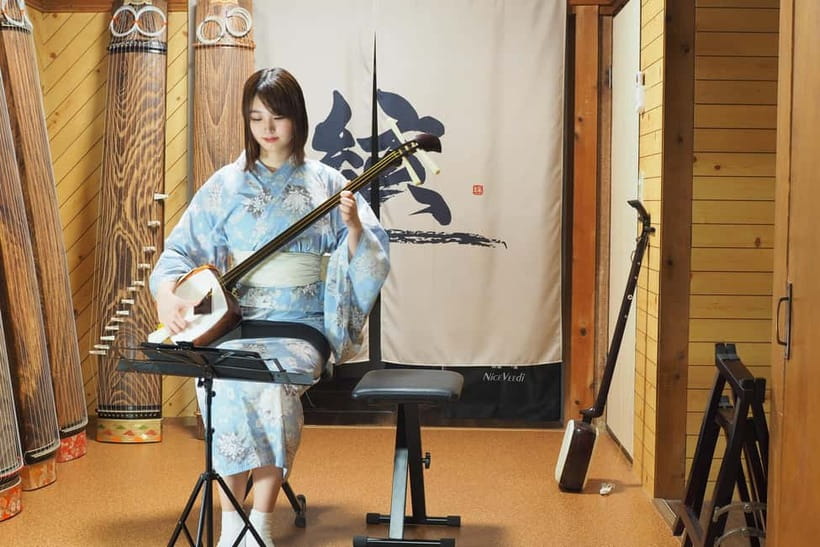
A traditional music concert can be hard to read if you do not know the instruments. The koto’s long body and many strings make it visually striking, but without context you may miss why the performer changes hand position or how a bridge affects the sound.
The introduction covers the parts of the instruments, materials, picks, bridges, and notation. It also gives you a way to understand the pieces before they begin. That is especially useful when a title or musical form has no familiar Western parallel.
The Q&A follows the concert and lasts about five to ten minutes. You can ask about the musician’s training, the pieces, the instruments, or the meaning behind a performance. The hosts aim to keep the exchange informal, and the small room makes it easier to ask a question without feeling as if you are interrupting a formal event.
There is also time for photographs with the performers. At the townhouse, you can take pictures during the designated photo period, but it is still sensible to stay present during the music rather than viewing the whole concert through your phone.
The townhouse koto workshop
The hands-on workshop is available only at the traditional townhouse. It adds about 35 to 40 minutes and uses sanitized instruments with guidance from the team.
You learn basic posture, how to pluck the strings, and how to produce a short phrase. The workshop is aimed at beginners, so you do not need musical training. The instruction is adjusted for children and adults, and the team works patiently with first-time players.
Do not expect to leave as a koto musician. The value is in feeling how much control the instrument requires. A simple phrase can look easy until you try to coordinate your hands and read the notation at the same time.
For families with older children, this can be the most memorable part. One parent described the team giving extra help to a son during the lesson, and several programs have made time for each participant to try a small tune. Babies under one year are not suitable for the activity, and the quiet format may not suit very young children in general.
The performers and the tone of the evening
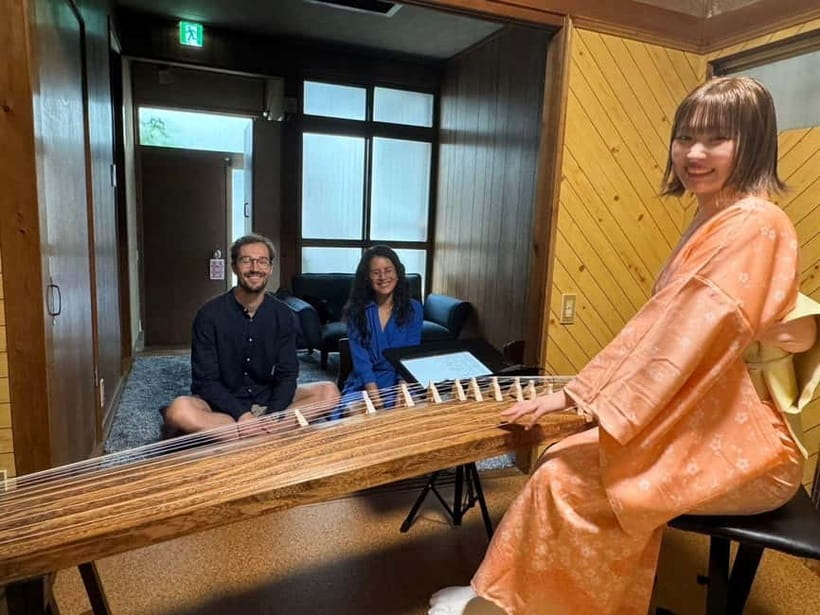
The musicians are professional artists, and the programs put technique first. Performers such as Furan, Kyoko, Aoi, and other artists have appeared in the townhouse programs, while the exact musician depends on the date you book.
The performance style can be calm, lyrical, powerful, or playful depending on the repertoire. Some musicians sing traditional songs, while others focus more on instrumental pieces. That variety is one reason I would not book this expecting one fixed musical style.
The hosts are part of the experience. Gen’s team handles the introductions, translation, questions, and workshop. Names mentioned in past sessions include Shohei and other presenters, but staffing may change. The useful thing is the format: you have someone explaining the music as you go, rather than being left with a program sheet full of unfamiliar titles.
The mood is quiet and personal. This works well after a busy day at temples or markets. It is not a loud nightlife activity, and it does not try to turn traditional music into a stage spectacle. You are there to listen closely.
Price, timing, and practical value
At about $32 per person, the price is reasonable for a professional live performance, bilingual instruction, a Q&A, and photo time. The townhouse workshop adds more time and participation without changing the basic character of the evening.
The value is strongest if you want more than a short cultural demonstration. You get a concert of four or five pieces, background on the instruments, contact with the artists, and, at the townhouse, a chance to play. A larger commercial show might offer more elaborate staging, but it would not give you this level of access.
Plan on spending at least 45 minutes, and up to 105 minutes with the workshop. The meeting point varies by option, so check your booking details carefully. Some people have found the townhouse location difficult to identify, especially because it is away from the main tourist routes. Use the supplied map details, and consider checking the location before you set out.
Transportation is not included. From the Saiin area, you can connect with several useful Kyoto sights:
- Arashiyama: Allow about 25 minutes. Walk to Saiin Station, take the Hankyu line to Katsura, then transfer to the Randen Line.
- Nijō Castle: About 20 minutes. The area can be combined before or after the concert using the subway connection from Saiin.
- Kinkaku-ji: About 20 minutes by bus from Nishioji Sanjō, followed by a short walk.
- Nishiki Market: About 25 minutes by direct Hankyu ride to Karasuma or Kawaramachi.
I would avoid scheduling the concert too tightly between major sights. Kyoto’s transport connections are manageable, but the townhouse is not the sort of place where you want to arrive breathless and late. The team has been accommodating when people have been delayed, but punctuality is still the polite choice.
Free cancellation is available up to 24 hours before the activity, and you can reserve now and pay later. Those terms are useful if your Kyoto plans are still shifting.
Who should book this concert
I would recommend it most strongly to music lovers, curious first-time visitors to Japan, couples, solo travelers, and families with older children. It is also a good choice if you have already seen several temples and want an evening activity that connects with Japanese culture through sound rather than architecture.
The townhouse is best for you if you value small groups and personal contact. Choose it if the workshop matters, if you want to ask many questions, or if you like watching an artist work from close range.
The bathhouse is better for you if atmosphere and acoustics matter most. Its larger room and duet arrangements offer more variety in sound, but dates are limited and the experience is less private.
You may want to skip this if you need a large-scale show, a guaranteed fixed repertoire, or a very casual drop-in activity. The music asks for quiet attention, and the setting is intimate. It is not a sightseeing stop you rush through in 20 minutes.
Should you book it?
Yes, if you want a small, personal introduction to Japanese traditional music at a fair price. The townhouse is the safer recommendation for most people because it runs almost daily, keeps the group small, and includes the optional koto workshop.
Choose the bathhouse when its limited schedule lines up with your plans and you prefer duet music with a stronger echo. Either way, you will leave with more than a few pleasant melodies. You will understand how the instruments work, meet the people performing them, and hear Kyoto in a setting far removed from the usual temple route.
FAQ
How long does the Kyoto traditional concert last?
The concert and discussion take about 45 to 65 minutes. The optional koto workshop adds 35 to 40 minutes, so the full visit can last up to 105 minutes.
Which venues can I choose from?
You can choose a traditional townhouse with solo koto and shamisen performances, or a historic bathhouse hall with solo and duet programs. The bathhouse ticket does not include bathing or access to the bathhouse facilities.
How many people attend each program?
The townhouse holds up to about 11 people. The bathhouse hall holds up to about 30 people. Private and small-group bookings are also available.
Is the music explained in English?
Yes. The activity includes bilingual English and Japanese commentary about the instruments, notation, and repertoire. English and Japanese instruction is also available during the Q&A and optional workshop.
Can I play the koto?
Yes, but only if you book the traditional townhouse option with the optional hands-on workshop. The workshop lasts about 35 to 40 minutes and is designed for beginners.
How far in advance can I cancel?
You can cancel up to 24 hours before the activity for a full refund. Reserve-now, pay-later booking is also available.
Just added around Japan
- Tsugaru shamisen performance over traditional dinner★ 5.0 · 9 reviews
- Japanaese tradtional Tsugaru Shamisen music lesson in Tokyo★ 4.5 · 3 reviews
- Easy for everyone! Now you can play handmade mini shamisen and show off to everyone! Musical instruments, sweets and live music★ 5.0 · 3 reviews
- Traditional Japanese Music show & Experience Tour in Osaka★ 5.0 · 25 reviews
- Traditional Concert in Public bath near Kyoto Station★ 5.0 · 5 reviews
- Kyoto: Matcha & Traditional Japanese Music Immersive Experience★ 5.0 · 9 reviews
- Private Japanese music concert★ 5.0 · 4 reviews
- Tokyo Underground Music Tours★ 5.0 · 9 reviews
Kyoto Concerts, compared.
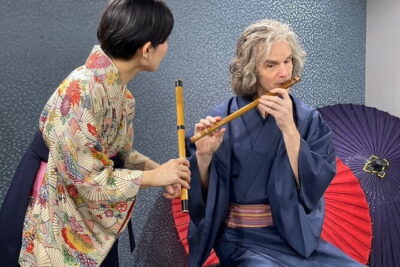
Traditional Japanese Music show & Experience Tour in Kyoto
Read our review →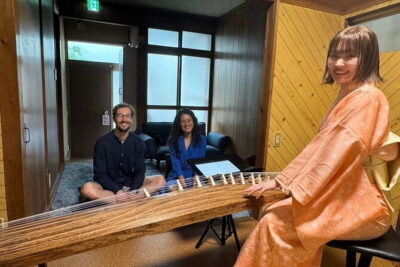
Concerts Played with Traditional Instruments in Kyoto
Read our review →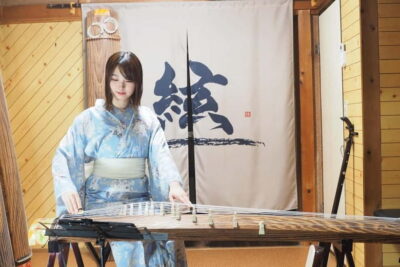
Kyoto: Japanese Koto & Shamisen Concert and Koto Class
Read our review →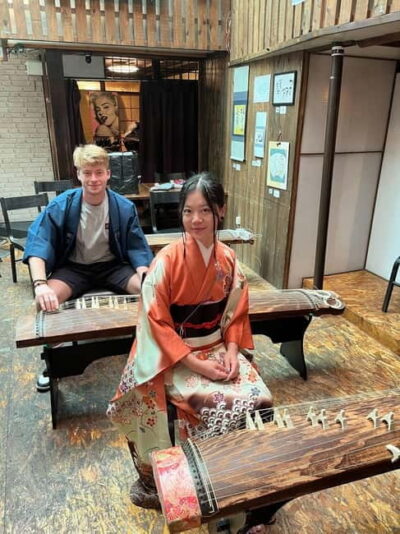
Kyoto: Matcha & Traditional Japanese Music Immersive Experience
Read our review →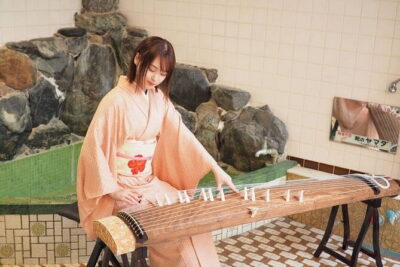
Traditional Concert in Public bath near Kyoto Station
Read our review →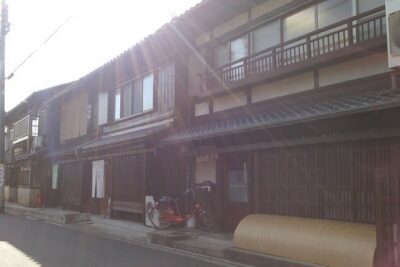
Kyoto: Kujo-yu Sento Traditional Japanese Instrument Concert
Read our review →Browse the lists this tour appears in