
Review · JAPAN
Easy for everyone! Now you can play handmade mini shamisen and show off to everyone! Musical instruments, sweets and live music
A handmade mini shamisen is the star here. In about two hours, you assemble a small Japanese string instrument, learn a few notes, play a song with the group, and take the instrument home. It is a rare chance to move past simply watching traditional music and actually make something you can keep.
I like the beginner-friendly teaching and the small group size, limited to four people. I also like the mix of craft, music, tea, and live performance. The main consideration is price: at $182.09 per person, this is not a cheap casual activity. You are paying for a take-home instrument and a private-feeling lesson, not just admission to a show.
Key points at a glance
- Make your own mini shamisen: The introductory kit takes about 20 minutes to assemble, and children from elementary school age can participate.
- Learn with simple numbered music: The mini shamisen has numbered positions, so you can follow where to place your fingers.
- Meet near Tokorozawa Station: The scheduled start is 1:00 pm, with pickup offered as a listed feature.
- Enjoy tea and a live performance: Your workshop includes a break with tea sweets and live shamisen music.
- Take the instrument home: You leave with the mini shamisen and the sheet music for the song you practiced.
- Keep the group small: A maximum of four participants allows for close help from the instructor.
A hands-on introduction to the shamisen
The shamisen is a traditional Japanese string instrument with a distinctive long neck and sharp, bright sound. It can look intimidating to a first-time player, especially if you see a skilled musician handling a full-size instrument at speed.
This workshop lowers that barrier. You do not begin with a long technical lesson or a formal concert etiquette routine. You start by putting together a mini shamisen kit, then use that same instrument to make music before the afternoon is over.
That order matters. You learn what the instrument is made of, how its parts fit together, and how it sounds. The craft gives you a physical connection to the music. When you take it home, you are not carrying away a souvenir purchased in a shop. You have built it yourself and learned how to use it.
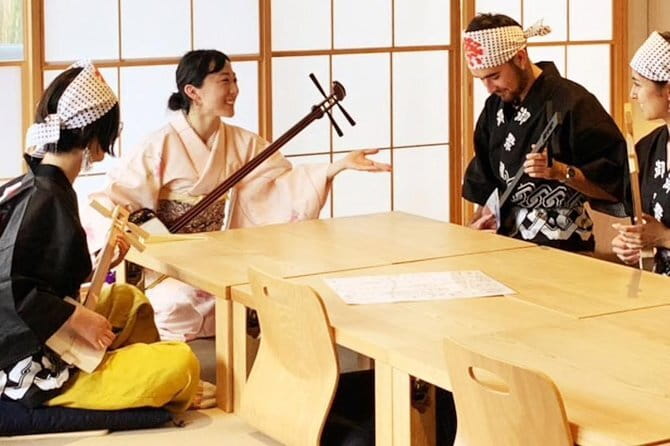
The workshop takes place in a relaxing Japanese-style room at a tea teacher’s home. That setting should appeal to you if you prefer a personal cultural lesson to a large commercial attraction. The atmosphere is designed for participation, not passive sightseeing.
The activity is also set up for international exchange. Because it welcomes people from outside Japan, the small group may include participants from different countries. The maximum of four people keeps that social side manageable rather than noisy or crowded.
More Musicals in Japan:
- Kyoto: Japanese Koto Musical Instrument Class
★ 4.9 · 11 reviews - NYC: Aladdin the Musical on Broadway
★ 4.8 · 1,800 reviews - NYC: MJ the Musical on Broadway
1,510 reviews
Starting at Tokorozawa Station at 1:00 pm
Your meeting point is Tokorozawa Station in Saitama Prefecture, and the scheduled start time is 1:00 pm. Public transportation is nearby, and pickup is offered as one of the listed features. Confirm the exact pickup details when you book, since the supplied information identifies the station as the start point.
A station meeting point is useful if you are staying in or around the greater Tokyo area and want a clearly defined place to begin. At the same time, this is not a central Tokyo activity. You should allow enough time to reach Tokorozawa Station and avoid planning a tightly timed evening commitment afterward.
The workshop lasts about two hours. Starting at 1:00 pm, you should expect the main program to finish in the mid-afternoon. That makes it a practical choice for a half-day plan, though you will want to leave room for the journey back.
The group limit is four people. This is one of the most important details for judging the value. A small class gives the instructor more time to check how you are assembling the kit, correct your hand position, and help you follow the music. It also means the class may feel more like a private lesson than a standard group tour.
Putting on a happi coat
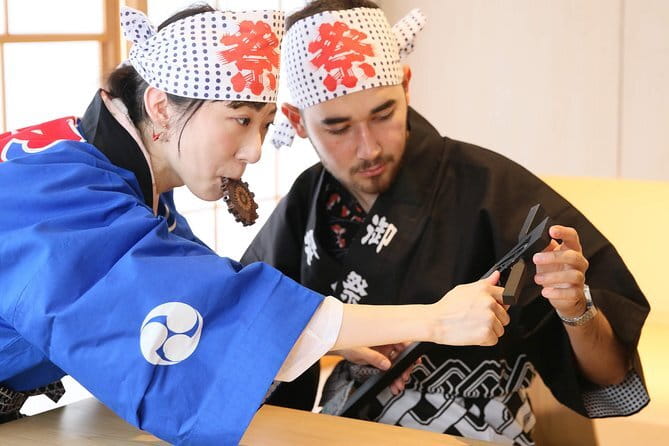
The workshop begins with a happi coat. This traditional festival-style garment is a simple touch, but it changes the tone of the afternoon. You are not just sitting down for a craft class. You are being introduced to a Japanese performance tradition through clothing, music, and setting.
The coat is also a useful icebreaker. Some people arrive unsure of their musical ability or worried that a traditional instrument will be too difficult. Beginning with an easy, visual activity helps you relax before the technical part starts.
This is a good feature for families and first-time visitors who want a cultural activity that feels active without being physically demanding. Elementary school students and older children can take part, according to the participation information.
Learning what makes the shamisen different
Before assembling the instrument, you receive a short explanation of the shamisen, including its history and basic features. The lesson is not presented as an advanced music lecture. It gives you enough context to understand what you are building and why the instrument sounds the way it does.
That background adds value to the craft. You learn that the shamisen is not simply a decorative Japanese object. It is a working musical instrument with its own playing method, sound, and place in Japanese culture.
The instructor, Kana, is described as kind, patient, and passionate about music. Those qualities matter here because the workshop is designed for complete beginners. You do not need to arrive knowing how to read music or play another instrument.
The lesson also gives you a chance to ask questions while the instrument is in front of you. A short explanation followed by immediate practice is easier to remember than a long talk before any hands-on work begins.
A few more concerts around Japan worth a look
- Salzburg: Mozart Chocolate Workshop
★ 4.9 · 59 reviews - Strauss Exhibition incl. LED Concert Show / Coffee + Strauss Cake
★ 5.0 · 30 reviews - Mozart Kugel Workshop in Chocolate Museum Vienna “BO-YO”
★ 5.0 · 9 reviews - Paris Walk: Opera to Montmartre with Pastry & Chocolate
★ 5.0 · 4 reviews
Building a mini shamisen in about 20 minutes
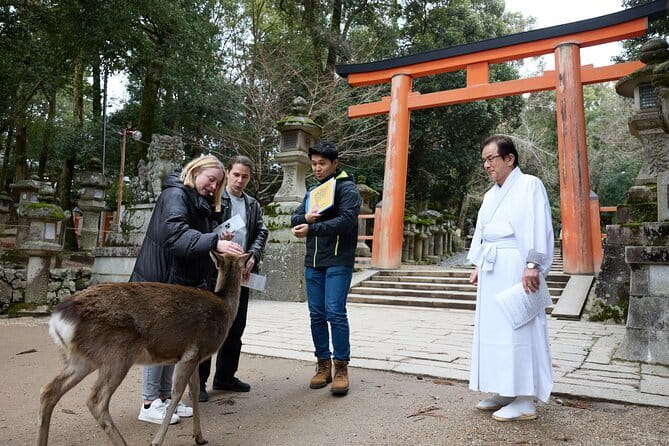
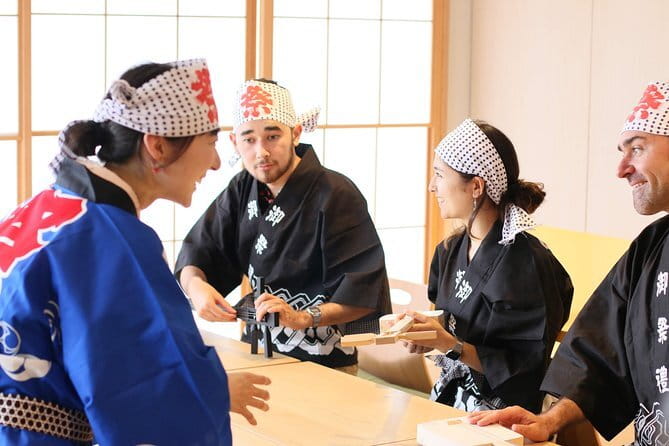
Next comes the main craft section. You assemble an introductory mini shamisen kit, following a demonstration before trying it yourself. The construction takes about 20 minutes, and the activity has already been completed by elementary school students.
That time estimate is helpful. You are not spending most of the session on a complex woodworking project. The kit is intended to be approachable, with the focus on getting you to the playing stage quickly.
You will see the parts and how they fit together, then copy the instructor’s method. If you are traveling with children, this is the point where patience may matter most. The work is described as not difficult, but younger participants may still need help with small components and careful assembly.
The reward comes right away. Once the instrument is built, you do not put it aside as a souvenir. You make a sound with it and begin learning a song. That connection between making and playing is the strongest part of the program.
Because the mini shamisen is included in the price, you should think of this section as both a workshop and the creation of a personal keepsake. The finished instrument may not replace a full-size professional shamisen, but it gives you a way to continue practicing at home.
Playing your first song with numbered music
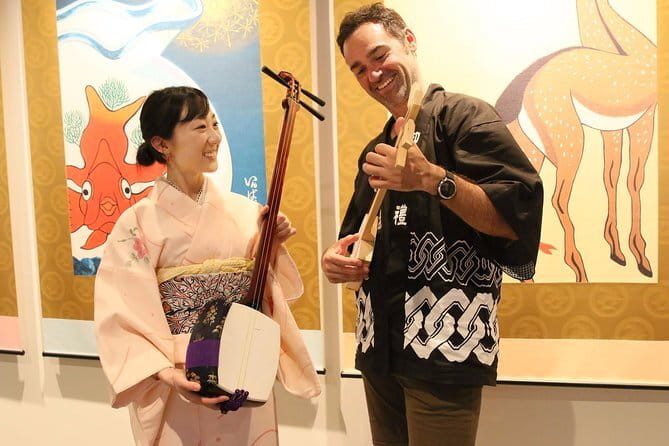
After assembly, the instructor shows you how to make a sound and how to read the music. The shamisen score is kept simple, and the mini instrument has numbers that show where to hold it.
This is especially helpful if you have never read music. Instead of facing a page filled with unfamiliar notation, you can look at the numbered positions and follow the lesson step by step.
The goal is not to turn you into a skilled shamisen performer in one afternoon. It is to give you a successful first song. That is a sensible approach for a short cultural workshop. You get the satisfaction of playing something recognizable without the pressure of mastering an entire musical system.
The group then practices together. Playing with other participants can make the first attempt less self-conscious. You hear the combined sound, follow the pace of the lesson, and get a clear sense of how the instrument works in an ensemble.
If you already play an instrument, you may find the lesson quite basic. That is a feature rather than a flaw for beginners, but experienced musicians should book it for the craft, cultural context, and live demonstration rather than for advanced instruction.
Tea, sweets, and a live shamisen performance
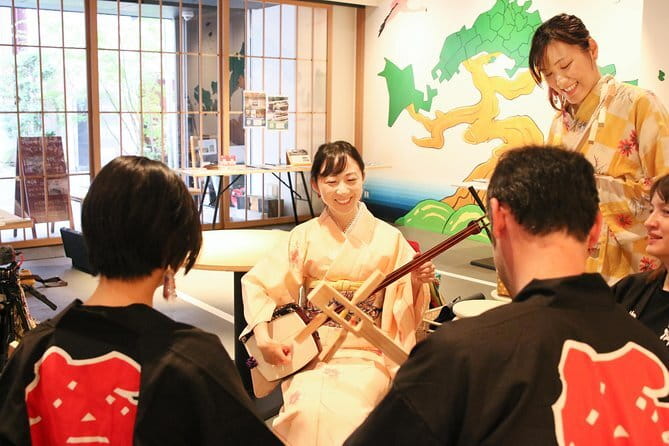
The workshop includes a break with tea sweets and live shamisen music. This pause gives you time to listen after you have been concentrating on assembly and playing.
The live performance is an important part of the afternoon. It lets you hear what the instrument can do in the hands of someone with more skill than a first-time player. After making a few simple sounds yourself, you can better appreciate the control and rhythm involved in a polished performance.
Tea and sweets also slow the pace. The program is not simply a quick craft session followed by a hurried exit. You get a quiet cultural moment in the home setting, with food, drink, and traditional music together.
The performance does not replace the hands-on lesson, and the lesson does not replace the performance. They serve different purposes. One lets you participate. The other gives you a fuller sense of the shamisen’s sound.
Taking home more than a souvenir
At the end, you take home the handmade mini shamisen and the sheet music for the song you practiced. This is where the $182.09 price needs careful thought.
If you only want a short introduction to Japanese music, the cost may feel high. A two-hour workshop is a substantial price when compared with a basic museum visit, performance ticket, or casual craft activity.
If you value a small-group lesson, a take-home instrument, live music, tea, and personal instruction, the calculation changes. You are paying for several parts at once: materials, teaching, the use of a private-style setting, and an object you can continue using after the trip.
The instrument also helps the experience last beyond your Japan visit. You can show it to family and friends, use the sheet music to repeat the song, and explain that you assembled it during a workshop near Tokorozawa.
That ongoing element is one of the best reasons to book. Many cultural activities end when you leave the venue. This one gives you a simple way to revisit the afternoon at home.
Who will enjoy this workshop most
I would recommend this workshop to you if you want an active cultural activity and have little or no musical experience. The numbered music, short assembly time, and patient teaching style make the class approachable.
It also suits families with elementary school children or older. The craft gives younger participants something concrete to do, while the live performance and tea add interest for adults.
Couples and small groups may appreciate the four-person limit. You can share the process without being placed in a large class where individual help is limited.
This is also a good choice if you want a souvenir with a story. A purchased ornament can be attractive, but a handmade mini shamisen carries a stronger memory because you built and played it.
You may want to skip it if your schedule is very tight, if you dislike beginner-level instruction, or if $182.09 feels too high for a two-hour activity. The class is not designed as a full shamisen course, and the available information does not promise advanced playing.
Practical details before you book
Confirmation is provided when you book. The activity is near public transportation, begins at 1:00 pm, and accepts most participants. The maximum group size is four.
Free cancellation is available if you cancel at least 24 hours before the local start time. Cancellations or changes made less than 24 hours before the start are not accepted for a refund. The activity also requires good weather, and if poor weather causes a cancellation, you are offered another date or a full refund.
Because the tour begins at a station in Saitama, check your route before booking. Pickup is offered, but you should confirm how it works and where you will be collected. The mobile ticket is useful for keeping the booking details on your phone.
The experience is generally accessible to elementary school students and older, but the supplied information does not give detailed accessibility notes. If you have specific mobility or other access needs, ask the provider before reserving.
Should you book the TOKYO SHAMI workshop?
Book it if you want to do more than watch traditional Japanese culture from the sidelines. The strongest reasons are the small four-person group, the hands-on instrument building, and the chance to take your mini shamisen home.
The price is the deciding factor. At $182.09 per person, this makes sense when you value personal teaching and a lasting souvenir. It makes less sense if you want only a short performance or a low-cost introduction.
For beginners, families, and curious music fans, this is a focused and memorable way to meet the shamisen. You will leave with a simple instrument, a song to practice, and a much clearer idea of how Japanese traditional music feels in your own hands.
FAQ
Where does the shamisen workshop begin?
The workshop begins at Tokorozawa Station in Tokorozawa, Saitama, Japan. Public transportation is nearby, and pickup is offered as a listed feature.
What time does the activity start?
The scheduled start time is 1:00 pm. The workshop lasts approximately two hours.
How many people can join?
The activity has a maximum of four participants.
Can children participate?
Elementary school students and older can participate. The mini shamisen kit has previously been assembled by elementary school students.
What do I take home?
You take home the handmade mini shamisen and the sheet music for the song practiced during the workshop.
What happens if bad weather cancels the activity?
If poor weather causes a cancellation, you are offered a different date or a full refund. For your own cancellation, you must cancel at least 24 hours before the local start time to receive a full refund.
Just added around Japan
- Tsugaru shamisen performance over traditional dinner★ 5.0 · 9 reviews
- Japanaese tradtional Tsugaru Shamisen music lesson in Tokyo★ 4.5 · 3 reviews
- Traditional Japanese Music show & Experience Tour in Osaka★ 5.0 · 25 reviews
- Traditional Concert in Public bath near Kyoto Station★ 5.0 · 5 reviews
- Kyoto: Matcha & Traditional Japanese Music Immersive Experience★ 5.0 · 9 reviews
- Private Japanese music concert★ 5.0 · 4 reviews
- Tokyo Underground Music Tours★ 5.0 · 9 reviews
- Kyoto: Kujo-yu Sento Traditional Japanese Instrument Concert★ 5.0 · 2 reviews
Japan Concerts, compared.
Kyoto: Traditional Concert at Townhouse or Bathhouse
Read our review →
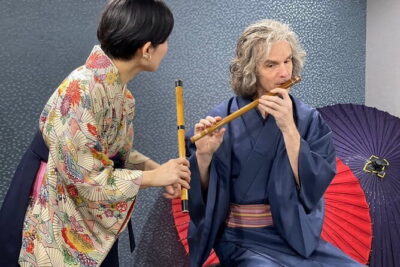
Traditional Japanese Music show & Experience Tour in Kyoto
Read our review →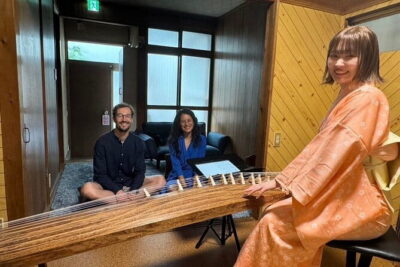
Concerts Played with Traditional Instruments in Kyoto
Read our review →
Kyoto: Japanese Koto & Shamisen Concert and Koto Class
Read our review →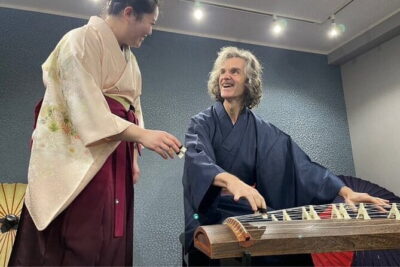
Traditional Japanese Music show & Experience Tour in Osaka
Read our review →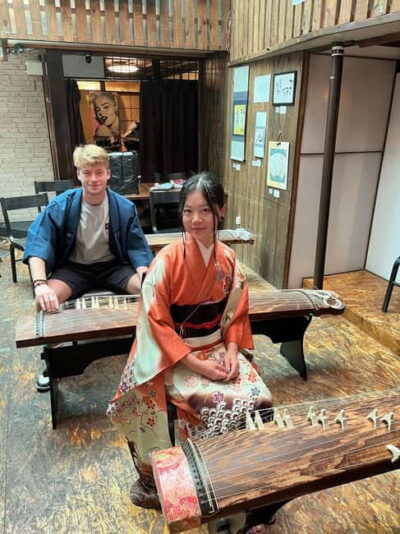
Browse the lists this tour appears in