
Review · KYOTO
Kyoto: Japanese Koto Musical Instrument Class
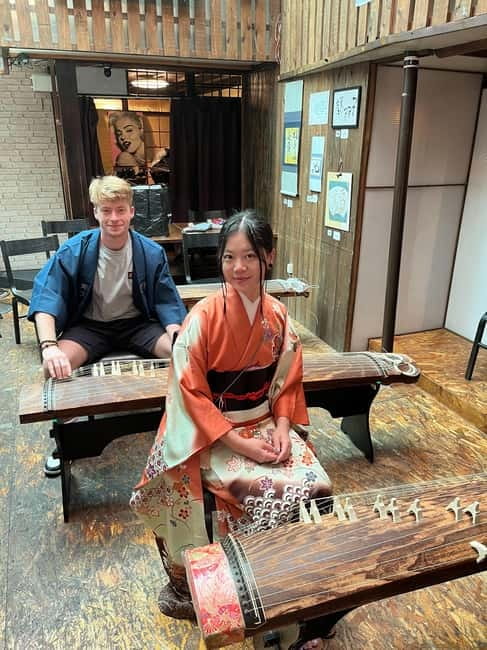
The most memorable part of this Kyoto class is simple: you sit at a real Japanese koto and play a traditional song with your own hands. The 90-minute lesson begins with a live performance, then guides you through Sakura Sakura, one of Japan’s best-known folk melodies.
I like the calm setting at Gojo Paradiso, beside the Takase River, and the small group size of no more than 10. I also like that the class takes beginners seriously. You do not need to read music or play another instrument, and the patient instructor can help even if this is your first attempt at making music.
The main consideration is age: children under 10 cannot join. Also, this is a first lesson rather than a full course, so you will learn the basics of one song, with time for more only if the group moves quickly.
Key points to know before you book
- You play Sakura Sakura yourself, rather than only watching a performance.
- The 90-minute class suits complete beginners, including people who have never played an instrument.
- A live demonstration comes first, giving you a clear sense of the koto’s sound before you try it.
- The class takes place at Gojo Paradiso, a short walk from Kiyomizu Gojo Station along the Takase River.
- Attendance is limited to 10 people, allowing room for individual help.
- Natsuko is praised for her patience and friendly teaching, though the instructor available for your session may vary.
Your first sound on the Kyoto koto
The koto is a long Japanese zither with strings stretched over a wooden body. It has a graceful look, but the important point for a beginner is that you do not need years of training to take part in this class.
Your lesson starts with listening. The instructor gives a live performance so you can hear the instrument’s clear, ringing tone before you touch it. This is a useful beginning, not just a formal introduction. You hear the goal first, then get a chance to work toward it.
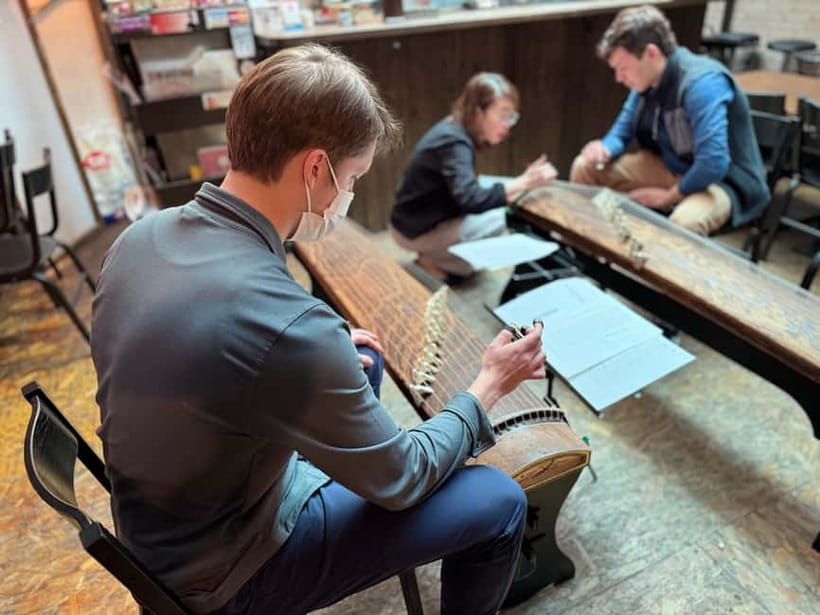
After the demonstration, you take your place at the koto and learn the basic way to play. The class is built around Sakura Sakura, a familiar Japanese folk song that fits the instrument well. Its melody gives you a practical target, and you can recognize the tune as you learn it.
I like this approach because it avoids turning the class into a lecture about instruments. You receive enough background to understand what you are doing, then spend most of the session making music. That balance matters when you have only 90 minutes in a busy Kyoto itinerary.
More Musicals in Japan:
- Easy for everyone! Now you can play handmade mini shamisen and show off to everyone! Musical instruments, sweets and live music
★ 5.0 · 3 reviews - NYC: Aladdin the Musical on Broadway
★ 4.8 · 1,800 reviews - NYC: MJ the Musical on Broadway
1,510 reviews
Learning Sakura Sakura one phrase at a time
The heart of the class is your attempt at Sakura Sakura. The lesson is beginner-friendly, so you can expect the instructor to break the piece into manageable parts rather than put the full song in front of you at once.
You may be surprised by how quickly a few correct notes begin to sound like music. The goal is not a polished concert performance. It is to understand the basic feel of the koto and finish with a small piece you can play yourself.
This is also where the teacher makes the difference. The instructor needs to watch several people at once, explain the technique clearly, and adjust the pace for students with different levels of confidence. The strongest praise for this class focuses on patience, friendliness, and clear teaching. Natsuko is specifically singled out for being helpful and encouraging.
One participant had never played an instrument before and still felt able to learn the basics. That is a useful sign for anyone who worries about being unmusical. You are not expected to arrive prepared. The instrument and required materials are provided, and the class is designed for first-time players.
Once you have worked through Sakura Sakura, you may have a chance to try another song. Treat this as an extra, not a promise. The time available will depend on the group’s pace and how much help each person needs.
Why the live performance matters
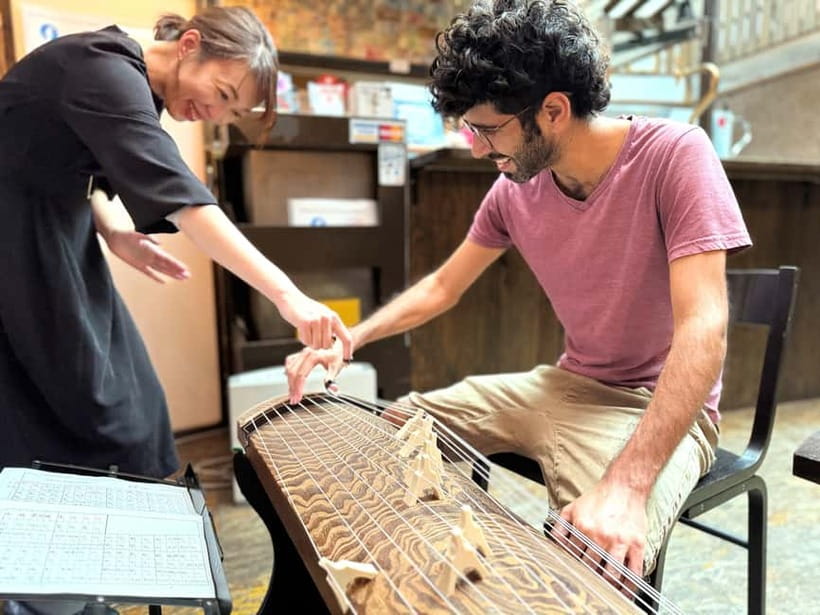
A short performance can change how you hear the rest of the class. Before your hands begin searching for the correct strings, you hear what the koto can do when played with control.
That contrast is valuable. Your first notes may be simple and uneven, but you have already heard the instrument’s full character. The class becomes less about producing perfect sound and more about taking your first step toward it.
The performance also gives the lesson a cultural setting. You are not simply attending a generic music workshop with a Japanese instrument placed in the room. You are hearing a traditional sound before learning a small part of the tradition yourself.
I would book this for the cultural connection as much as for the music. Kyoto offers temples, gardens, tea experiences, and food classes. This activity gives you another way to meet Japan: by sitting down, listening carefully, and making a sound that belongs to its musical culture.
Gojo Paradiso and the Takase River location
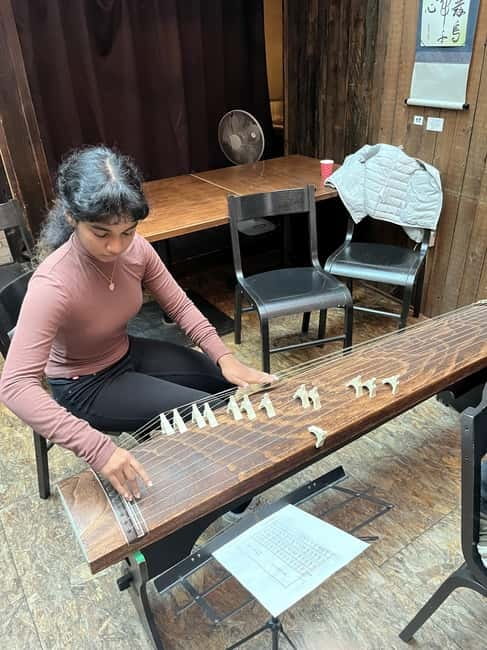
Gojo Paradiso is on Kiyamachi Street beside the Takase River. From Keihan Kiyomizu Gojo Station, the walk is about five minutes, or roughly 386 meters. From Keihan Shichijo Station, allow about 10 minutes.
That central location makes the class easy to pair with other plans in eastern Kyoto. You will not need to commit a full day to reach it. The meeting point is also specific, which helps: look for Gojo Paradiso along Kiyamachi Street rather than relying on a vague neighborhood name.
The setting beside the river adds to the quiet mood that suits a koto lesson. The supplied details do not promise a particular room view or a special riverside performance, so I would not book it expecting sightseeing from your seat. The value of the location is convenience and atmosphere.
Plan to arrive with enough time to find the venue. The class lasts 90 minutes, and a late arrival could make the opening demonstration or first instruction harder to follow. A reservation is required at least one day ahead.
More Workshops in Japan:
- Kyoto: Japanese Koto & Shamisen Concert and Koto Class
★ 4.9 · 31 reviews - Japanaese tradtional Tsugaru Shamisen music lesson in Tokyo
★ 4.5 · 3 reviews - Mango’s Miami: Salsa Lessons, Mojitos, Bites & Live Music
★ 4.7 · 156 reviews - Mozart Kugel Workshop
★ 4.7 · 129 reviews
A small class with room for real instruction
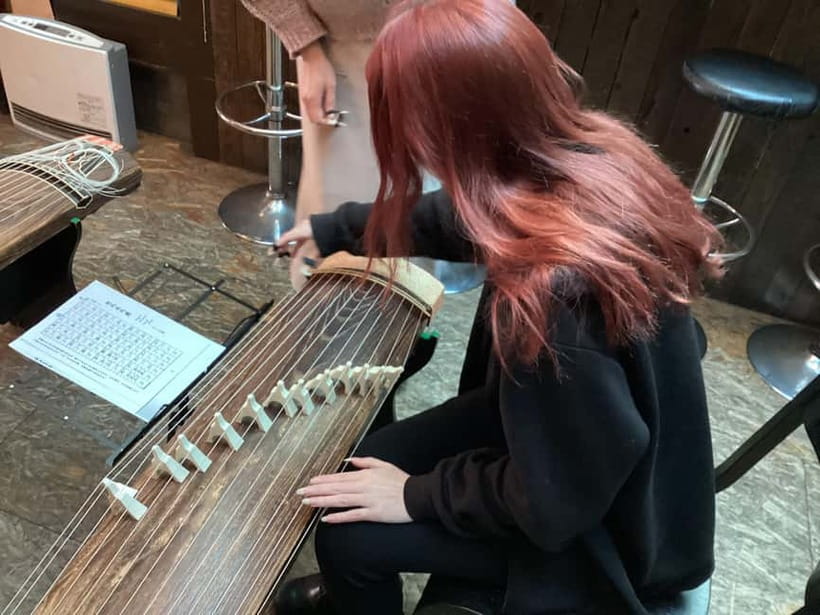
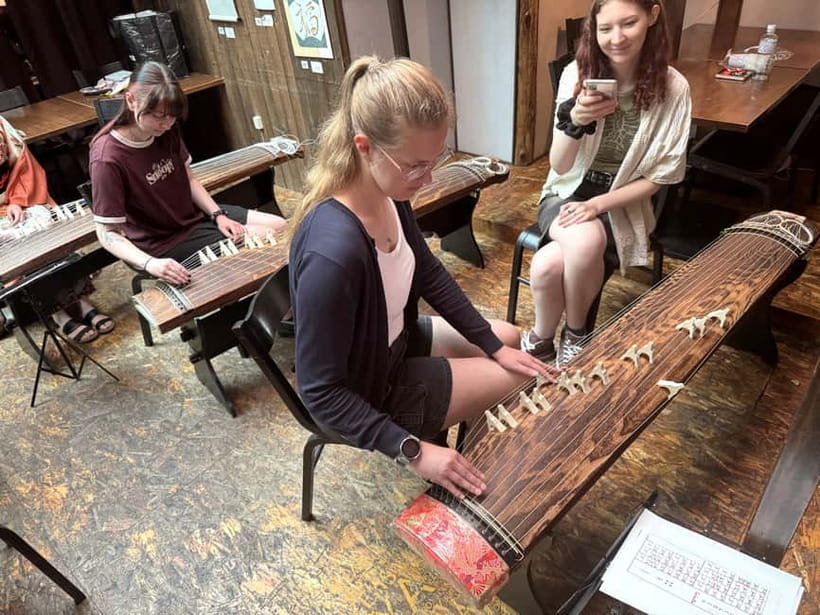
The maximum group size is 10. That is small enough to feel more personal than a large demonstration, but it is still a group class. You will share the instructor’s attention, and the speed may not match your own perfectly.
For a first musical lesson, this format makes sense. You get the energy of learning alongside other people, while the instructor has a reasonable chance to correct mistakes and answer questions. The small group also suits solo visitors. One participant attended alone and still received the lesson.
The class is offered in English and Japanese. That makes it accessible to international visitors, though the exact balance of languages may depend on who attends. If a session includes people with different language needs, explanations may take a little longer.
I would choose this over a larger workshop if your priority is actually touching the instrument and receiving guidance. If you want a private, highly tailored lesson, a group of up to 10 will not offer that same level of individual attention.
The value of a $32 cultural activity
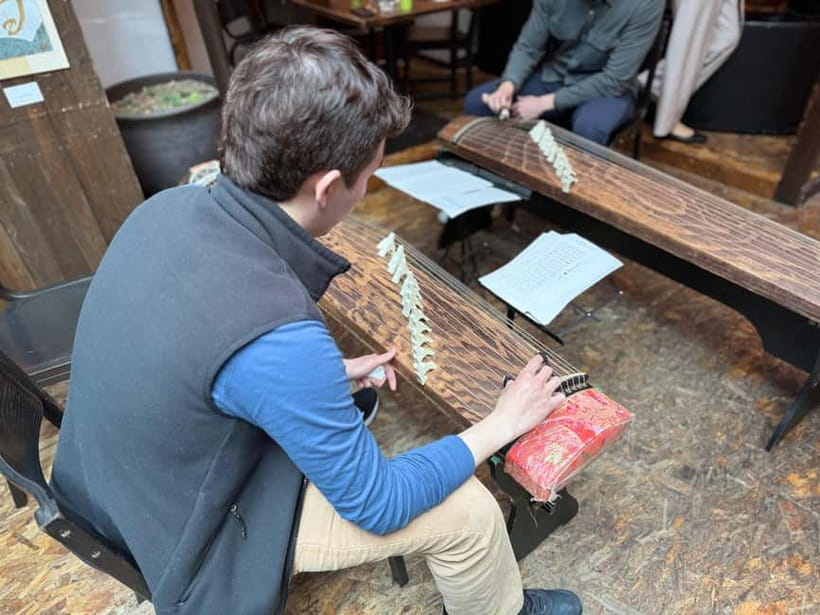
At $32 per person, this class is priced as an affordable hands-on cultural experience. You receive 90 minutes of instruction, a live performance, use of the koto, and the materials needed for the lesson.
The important value is participation. Many cultural activities let you watch a demonstration or hear an explanation. Here, you do both of those things and then attempt the music yourself. That makes the experience easier to remember after you leave Kyoto.
It is also a good length for a mixed itinerary. A 90-minute class can fit around temple visits, shopping, or an evening meal without taking over the day. You get a focused activity rather than a long workshop that demands sustained concentration.
The price will feel worthwhile if you want a cultural memory with an active part in it. It may feel less useful if you prefer a professional concert or want to study the koto in depth. This class gives you an introduction, not a serious progression course.
Photos, videos, and a memory you can keep
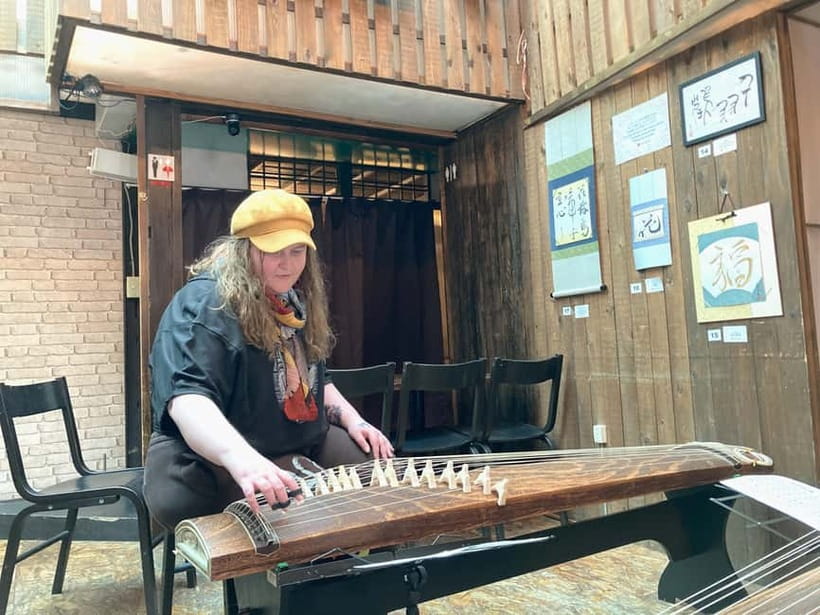
You are encouraged to capture photos and videos during the experience. That gives you more than a souvenir photograph of a costume or building. You can preserve the moment of sitting at the instrument and trying the song.
Check the instructor’s directions before recording, especially during the live performance or while someone else is receiving help. The activity information says photos and videos can help create a lasting memory, but it does not specify exact recording rules for every part of the class.
The chance to record is especially useful because your finished performance may be brief. You do not need to become a koto player in 90 minutes. A short clip of your first song can still mark a distinct moment in your Kyoto visit.
Who will enjoy this class most
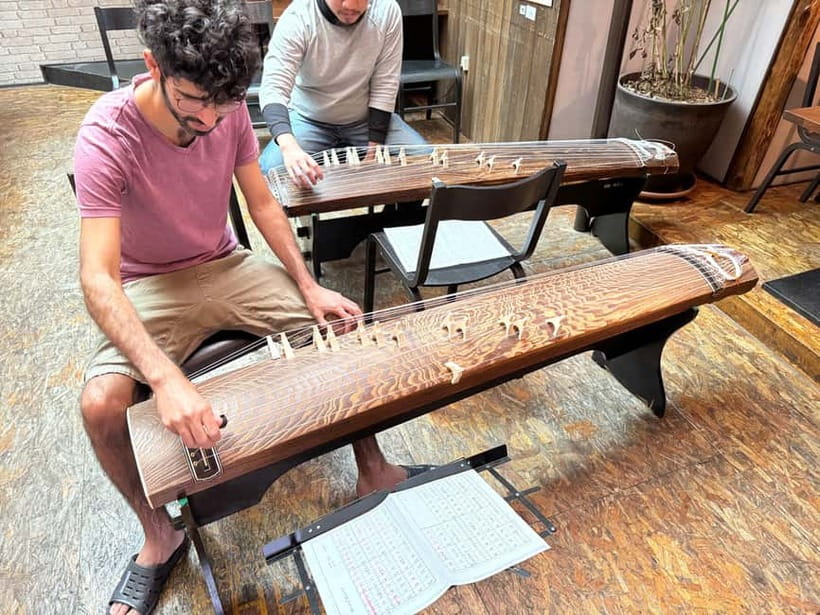
I would recommend the lesson to music lovers, cultural learners, and curious visitors who want something more active than sightseeing. It also suits people who have never played an instrument. The class does not require prior experience, and the teaching style is intended to help beginners start from zero.
It can work well for solo visitors, couples, and small groups of friends. The maximum of 10 participants keeps it from feeling like a large public show. Families should note the minimum age of 10, so younger children cannot join.
This is a good pick if you want:
- A calm activity between busy sightseeing stops
- A direct connection with Japanese tradition
- A lesson taught in English or Japanese
- A chance to make music without preparation
- An experience that fits into a half-day plan
You may want something else if you need a private lesson, advanced instruction, or a long performance by a professional musician. The class has a clear beginner focus, and the song selection begins with Sakura Sakura.
Practical details that affect your decision
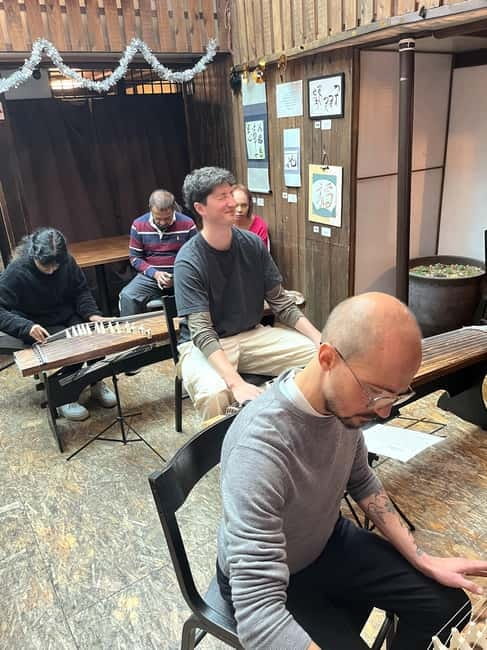
The activity is wheelchair accessible, which is useful when planning a Kyoto day with varied mobility needs. The provided information does not describe the exact seating arrangement or access route inside Gojo Paradiso, so contact the provider if you need specific room details.
You must reserve at least one day in advance. The booking terms allow free cancellation up to 24 hours before the activity for a full refund. A reserve-now-and-pay-later option is also available, which can help if your Kyoto schedule is still changing.
The class runs at several possible starting times, depending on availability. Check the schedule before arranging trains, meals, or another timed activity. Since the lesson begins with a performance and then moves into instruction, arriving late could mean missing the part that sets up the rest of the session.
The teacher speaks English and Japanese. The experience provider is Gojo Paradiso. All necessary materials are included, so you do not need to bring an instrument or supplies.
My call: book it if you want to take part
I would book this koto class if I wanted a short, affordable Kyoto activity that gives me something to do, not just something to see. The live performance, beginner lesson, and chance to play Sakura Sakura create a clear arc from listening to participation.
The strongest reason to choose it is the teaching. A calm and patient instructor matters more than a long list of songs in a first lesson, and the class has earned especially strong praise for that quality. Natsuko, when leading the session, is described as friendly and encouraging.
Skip it if you are looking for a full study of the koto or a private concert. For everyone else, especially first-time players and culture-minded visitors, this is an easy way to spend 90 minutes beside the Takase River and leave with a new sound in your memory.
FAQ
How long does the koto class last?
The class lasts 90 minutes.
How much does the experience cost?
The price is $32 per person.
Do I need previous musical experience?
No. The class is designed for beginners, and no prior experience is required.
What song will I learn?
The main beginner song is Sakura Sakura. If time allows, you may also try other songs.
Where is the meeting point?
The class meets at Gojo Paradiso on Kiyamachi Street, along the Takase River. It is about a five-minute walk from Keihan Kiyomizu Gojo Station and a 10-minute walk from Keihan Shichijo Station.
Can children join the class?
Children under 10 cannot join. The activity is suitable for participants aged 10 and older.
Just added around Japan
- Tsugaru shamisen performance over traditional dinner★ 5.0 · 9 reviews
- Japanaese tradtional Tsugaru Shamisen music lesson in Tokyo★ 4.5 · 3 reviews
- Easy for everyone! Now you can play handmade mini shamisen and show off to everyone! Musical instruments, sweets and live music★ 5.0 · 3 reviews
- Traditional Japanese Music show & Experience Tour in Osaka★ 5.0 · 25 reviews
- Traditional Concert in Public bath near Kyoto Station★ 5.0 · 5 reviews
- Kyoto: Matcha & Traditional Japanese Music Immersive Experience★ 5.0 · 9 reviews
- Private Japanese music concert★ 5.0 · 4 reviews
- Tokyo Underground Music Tours★ 5.0 · 9 reviews
Kyoto Concerts, compared.
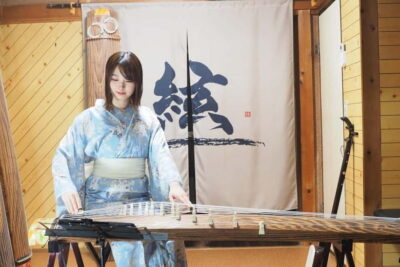
Kyoto: Traditional Concert at Townhouse or Bathhouse
Read our review →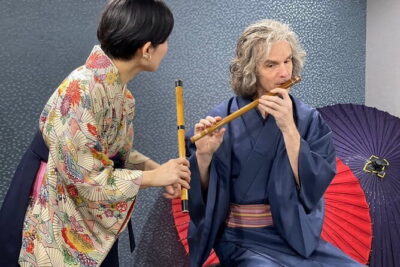
Traditional Japanese Music show & Experience Tour in Kyoto
Read our review →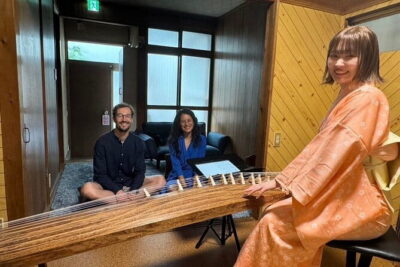
Concerts Played with Traditional Instruments in Kyoto
Read our review →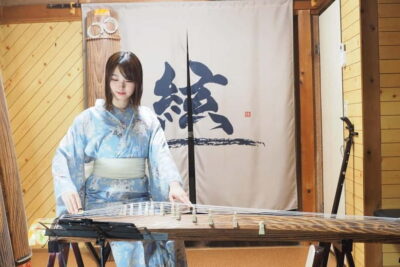
Kyoto: Japanese Koto & Shamisen Concert and Koto Class
Read our review →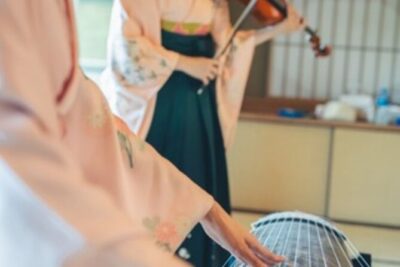
Kyoto: Matcha & Traditional Japanese Music Immersive Experience
Read our review →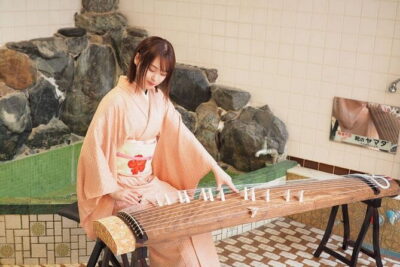
Traditional Concert in Public bath near Kyoto Station
Read our review →
Kyoto: Kujo-yu Sento Traditional Japanese Instrument Concert
Read our review →Browse the lists this tour appears in