
Review · KYOTO
Kyoto: Japanese Koto & Shamisen Concert and Koto Class
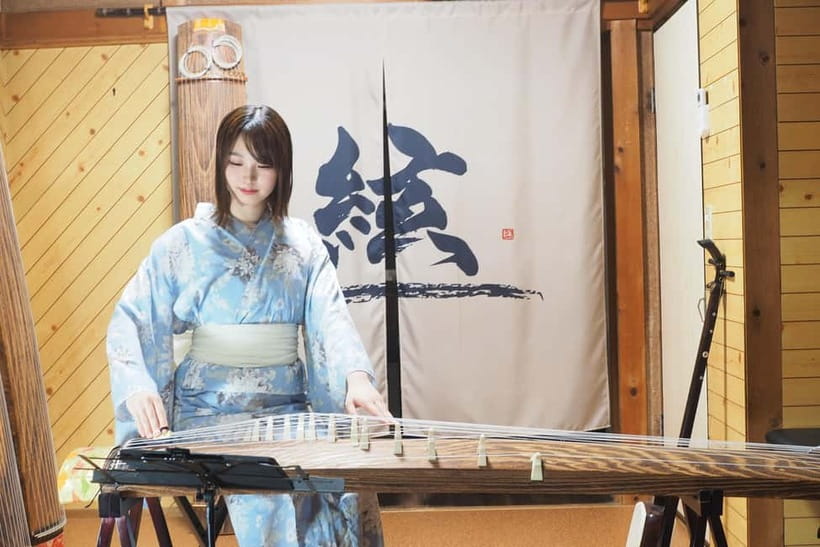
The most memorable part of this Kyoto experience is the setting: you sit in a small old Japanese house, close enough to watch the musician’s fingers work across the strings. The program moves from classical pieces to contemporary music and original compositions, so you hear more than a short museum demonstration.
I like the personal Q&A, where you can ask about the instruments, music notation, and performance techniques. I also like the hands-on lesson, since you do not only listen to the koto and shamisen, you get to try the koto with patient guidance from a professional.
The main thing to consider is finding the house. It is in a residential area, and one visitor found the alley dark and had to wait outside until shortly before the concert. Arrive early, but allow time to read the meeting instructions carefully because the location can vary by booking option.
Key points to know before booking
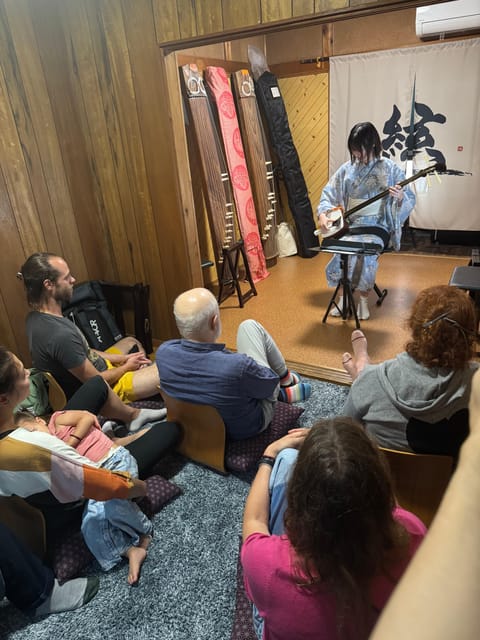
- A home-style venue: The concert takes place in a small, old Japanese house rather than a large theater or temple.
- Two musical worlds: Expect traditional pieces alongside contemporary works and original compositions.
- A real hands-on lesson: You receive guidance while trying a simple piece on the koto yourself.
- Close contact with the musicians: The format includes questions, conversation, photos, and a chance to learn about the performer’s techniques.
- Good for beginners and families: No musical background is needed, though very young children are not accepted.
- Useful Kyoto location: Saiin Station gives you practical links to Arashiyama, Nijo Castle, Kinkakuji, and Nishiki Market.
A Kyoto concert inside a real neighborhood home
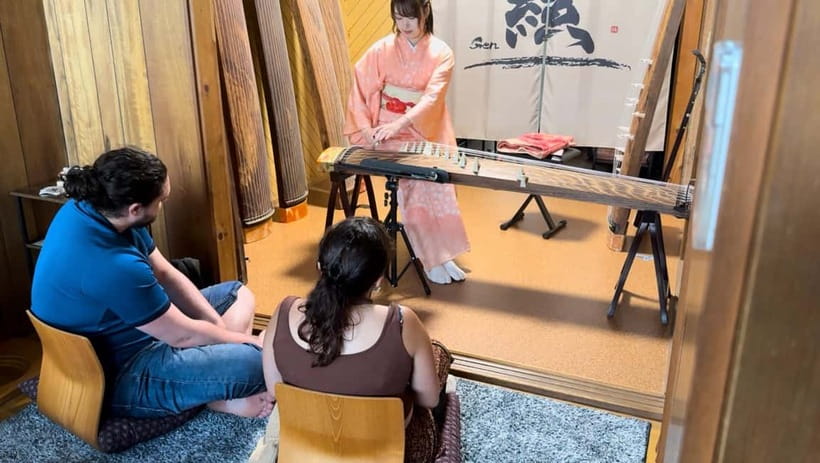
Many cultural performances in Kyoto happen in temples, formal halls, or traditional townhouses. This one takes a quieter route. You enter a small house in a residential neighborhood, where the room feels closer to a family sitting room than a concert venue.
That changes the mood right away. You are not watching from a distant seat. The koto is close, the shamisen is close, and you can see how each movement changes the sound. For anyone curious about the physical work behind Japanese music, that distance matters.
The intimate format also suits people who feel lost at formal cultural performances. You can ask questions, and the session includes English and Japanese support. The activity is offered privately or in small groups, so the exact atmosphere depends on the option and the number of people booked.
The house is part of the experience, but it is also the one practical weak point. The entrance may be easy to miss in a residential lane. One person arrived by taxi and still found the alley dark, while another noted the need to wait outside until about five minutes before the performance. Keep your phone handy, follow the meeting directions closely, and avoid cutting the timing too fine.
More Workshops in Japan:
- Kyoto: Japanese Koto Musical Instrument Class
★ 4.9 · 11 reviews - Japanaese tradtional Tsugaru Shamisen music lesson in Tokyo
★ 4.5 · 3 reviews - Mango’s Miami: Salsa Lessons, Mojitos, Bites & Live Music
★ 4.7 · 156 reviews
What you hear before picking up the koto
The session begins with a short introduction to Japanese instruments, including the koto and shamisen. You learn what makes each instrument different and get a basic explanation of the music notation used for traditional Japanese pieces.
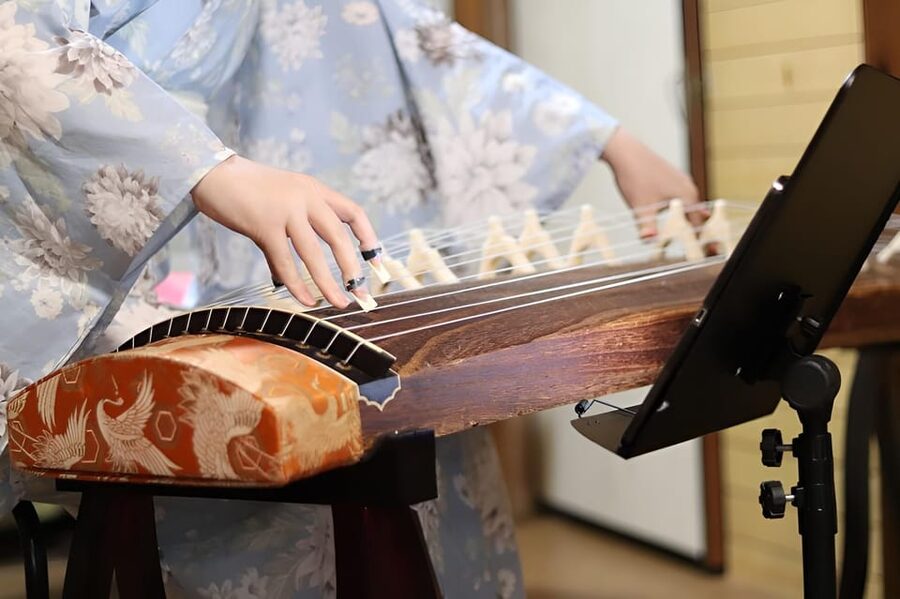
The koto is a long, zither-like instrument with strings stretched over a wooden body. The performer changes pitch and tone through finger technique and pressure on the strings. The shamisen is a three-stringed instrument with a very different shape and sound, often played with a large plectrum.
You do not need to arrive with musical knowledge. The introductory talk gives you enough context to listen with sharper ears. Instead of hearing only a beautiful string sound, you begin to notice the different tones, the rhythm, and the techniques used to create them.
This is especially useful if you are visiting Japan for the first time and want cultural context without signing up for a long lecture. The explanation is brief, then the music takes over.
Classical pieces, modern sounds, and original music
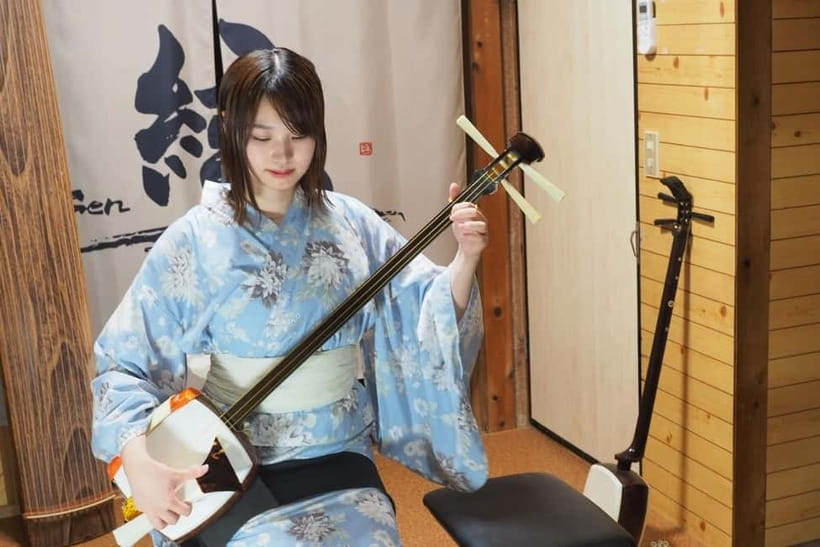
The concert is not limited to one style. The program can include classical music, contemporary compositions, and original works. It may change with the season or the performer, so you should not book it expecting one fixed set list.
That variety is one of the strongest parts of the experience. Traditional music gives you a sense of the instruments’ older role, while contemporary pieces show that the koto and shamisen are not locked in the past. The contrast helps you understand how these instruments can create both delicate and energetic sounds.
Some programs also include singing. A performance by Aoi was praised for combining skilled koto playing with a strong, expressive voice, especially in traditional pieces. Other pieces use more forceful or modern techniques, creating a livelier change of pace.
You may hear different timbres from the same instrument as the musician shifts technique. That is worth watching as much as listening to. The performance is short enough to hold your attention, but varied enough to feel like a real concert rather than a single demonstration.
The format works well for music lovers, but it is not only for them. Several people with no experience playing an instrument found the lesson approachable. You can simply listen if you prefer, then decide at the end how actively you want to take part.
A close-up conversation with the performer
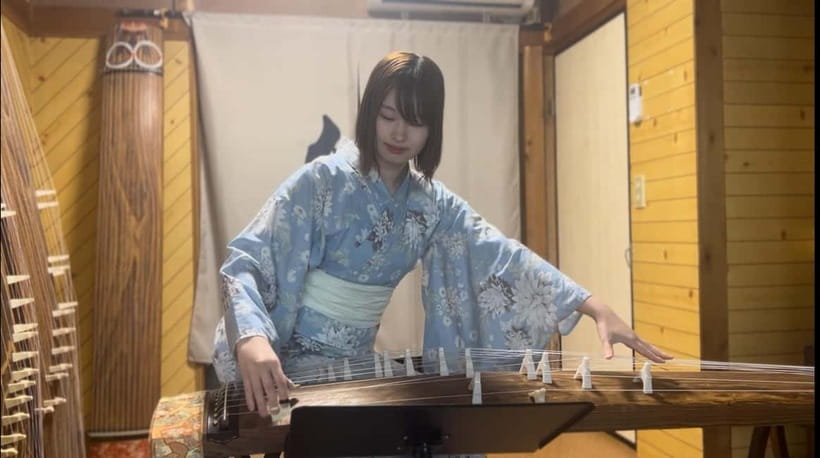
After the music, the session opens up. You can ask questions, talk with the performer, and take photos. This conversation is not an afterthought. It gives you a chance to ask about the instruments, the score, performance methods, and the difference between pieces.
That personal contact is hard to get in a large concert hall. You might ask why a certain sound is produced, how the strings are read, or how a musician prepares a traditional piece. The English and Japanese support helps keep the exchange accessible.
The people involved are warm and encouraging. Aoi is named as a performer in several experiences, while Kyoko and Shohei are associated with instruction, interpretation, and support. The exact performer and host can vary, so check the option details when booking.
The photo opportunity is also useful for families and couples. Photos are provided after the experience, including images of people trying the instrument. It gives you a keepsake that feels more personal than a standard stage photo.
A few more concerts around Japan worth a look
- Kyoto: Traditional Concert at Townhouse or Bathhouse
★ 4.9 · 224 reviews - Japanese Traditional Music Show in Tokyo
★ 5.0 · 72 reviews - Traditional Japanese Music show & Experience Tour in Kyoto
★ 5.0 · 57 reviews - Concerts Played with Traditional Instruments in Kyoto
★ 5.0 · 50 reviews
Your first koto lesson
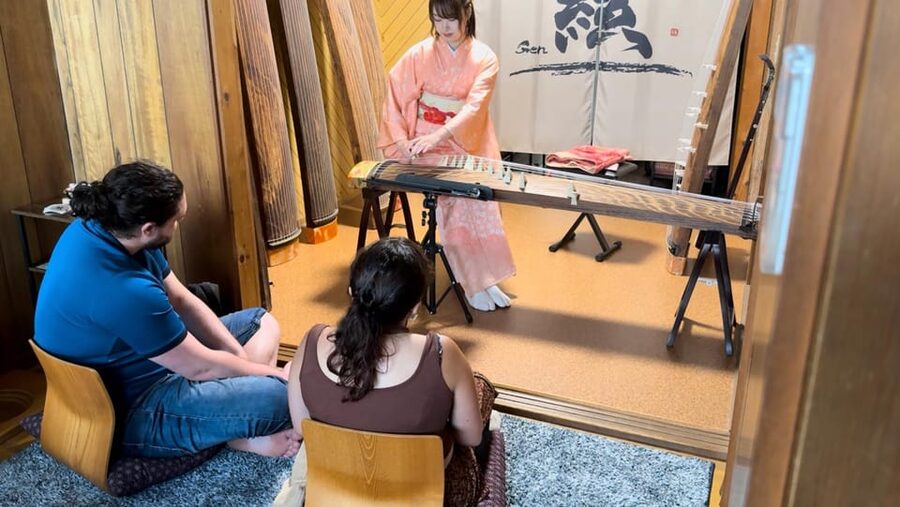
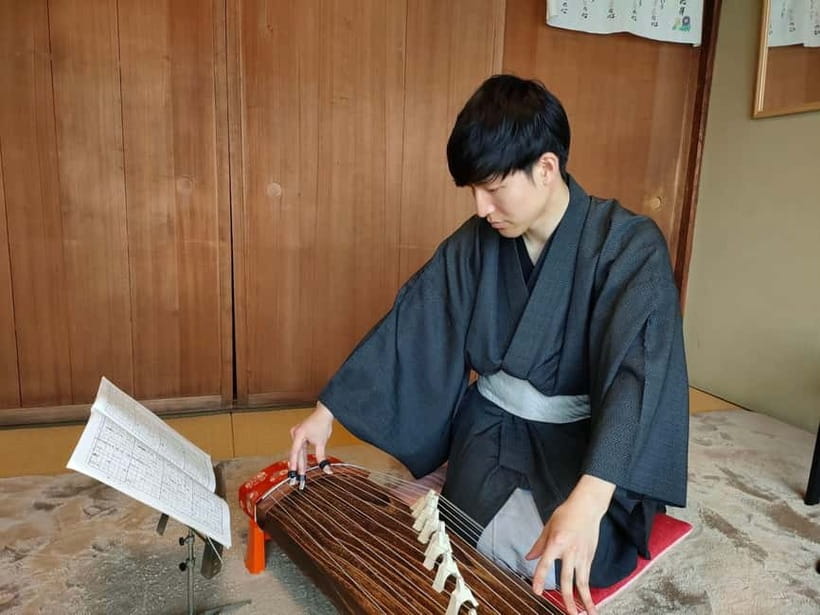
The hands-on portion comes near the end. Under professional guidance, you sit at the koto and try a simple piece. You receive the needed instrument, materials, and instruction, so you do not need to prepare anything in advance.
Do not expect to become a koto player in an hour. The value is in feeling the instrument directly and learning how much control goes into even a simple passage. You may be surprised by how quickly you can pick up the basics, but the short lesson also makes clear how much more there is to master.
The teaching style is patient and supportive. One participant with no musical background described the instructors as encouraging, while another appreciated being allowed to try personal ideas during the lesson. If you have played music before, you can ask more technical questions. If you have not, the activity remains approachable.
In some sessions, you may play a short piece together with the performer. That shared moment can be the most memorable part of the hour. The lesson gives you a direct connection to the concert because you have now felt the strings, the posture, and the concentration required.
Physical limitations and allergies should be mentioned ahead of time. The activity is not suitable for babies and children under the stated minimum age, with the booking information listing restrictions for children under two, three, and four years. For older children, the private or small-group format can work well, especially if they enjoy music and can sit attentively.
Is 38 dollars good value?
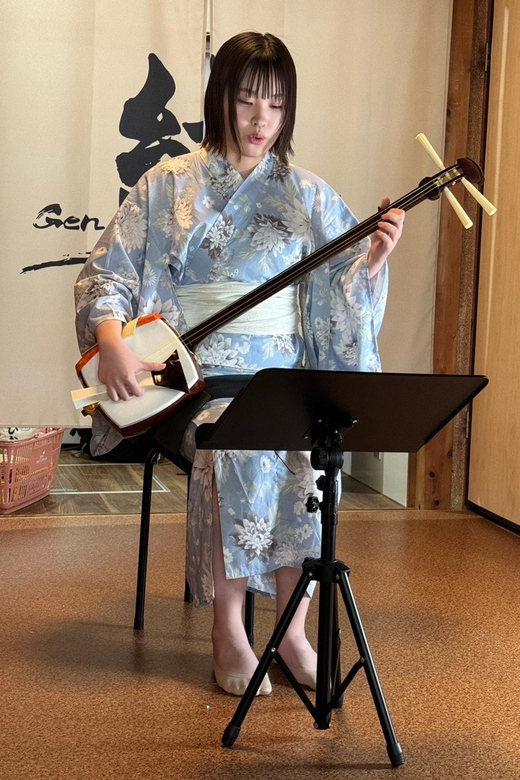
At $38 per person, this is a strong value for a private or small-group cultural activity lasting about 60 to 100 minutes. The price covers the performance, cultural introduction, use of the koto, instructor guidance, necessary materials, and photos.
The value comes from the combination. A short concert alone would give you a pleasant listening experience. A lesson alone would give you a basic introduction. Here, you receive both, plus conversation with a professional musician and a personal photo record.
The price is also easier to justify if you are looking for something different from Kyoto’s temples and shopping streets. It does not replace a full evening concert, and the performance is not a large-scale production. Instead, you pay for access, contact, and participation.
There may be a performance-only option at a lower price, according to information shared during one visit. If you mainly want to hear the instruments, check whether that option is available for your date. If you want to touch the koto and learn a simple piece, book the version that includes the class.
Transportation, food, drinks, souvenirs, and extra koto accessories are not included. You will need to arrange your own route to the house.
Fitting the concert into a Kyoto sightseeing day
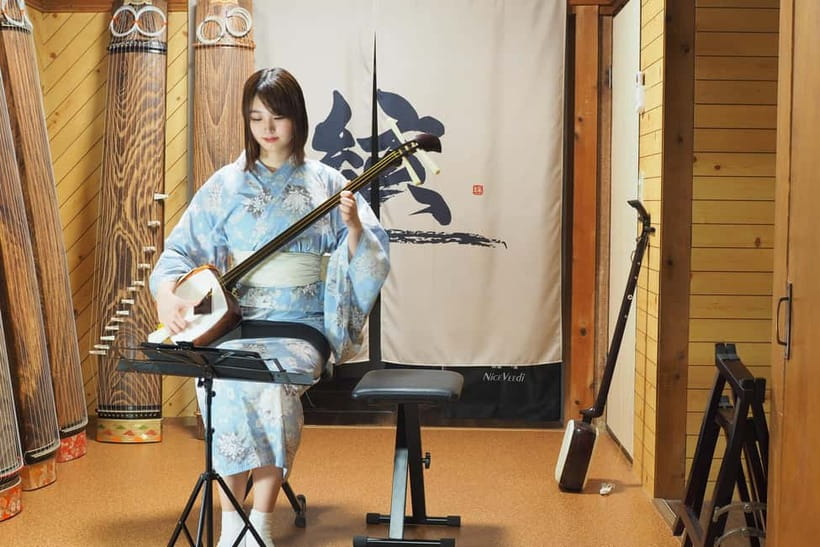
The location near Saiin Station makes this activity fairly easy to pair with other stops. Saiin is a useful connection between the Hankyu Line and the Randen Line, which makes Arashiyama practical before or after the concert. The ride and walk together take about 25 minutes.
Nijo Castle is another sensible pairing. The experience is about 20 minutes from Nijo Castle by train and on foot, with access toward Nijo Castle-mae on the Tozai Line. You could visit the castle earlier, then come to the music session for a quieter change of pace.
Kinkakuji, the Golden Pavilion, is around 20 to 25 minutes away by bus and on foot. The Nishioji Sanjo bus stop is the useful reference point, with the bus ride taking roughly 16 minutes before the walk and visit.
Nishiki Market is also about 25 minutes by train and on foot. A direct Hankyu Line ride toward Karasuma or Kawaramachi makes it convenient to combine the concert with food shopping and central Kyoto.
These times are approximate, and they do not remove the need for walking, transfers, or finding the house. I would avoid scheduling the concert too close to a major timed admission. A little extra space is sensible, particularly if this is your first time navigating Kyoto’s local stations.
Who will enjoy this most?
I would recommend this experience to anyone who wants a cultural activity with real participation. It is particularly good for:
- Couples seeking a quiet evening activity
- Families with older children
- First-time visitors who want context for Japanese music
- Musicians and music students curious about unfamiliar instruments
- People who prefer small groups to formal performances
- Visitors who have already seen temples and want a different side of Kyoto
It is less suitable if you want a grand stage production, a long concert, or a guaranteed fixed program. The changing repertoire is part of the appeal, but it also means you cannot know every piece in advance.
It may also be a poor fit for anyone with a very tight schedule. Late arrival can shorten the session, and the small house may take extra time to locate. The activity is best treated as a focused appointment rather than something to squeeze between two major sights.
Practical details that affect your choice
The duration ranges from one hour to 100 minutes, depending on the option. Starting times vary, so check availability before planning the rest of your day.
English and Japanese are offered. The experience can be private or small group, and the meeting point may differ by booking option. Read the confirmation carefully rather than assuming every session uses the same entrance.
Cancellation is free up to 24 hours before the start time, and you can reserve now and pay later. That is useful when your Kyoto schedule depends on weather, train plans, or changing sightseeing priorities.
The activity has a 4.9 rating from 31 bookings, with repeated praise for the musicianship, intimacy, patient teaching, and welcoming atmosphere. The strongest pattern is clear: people value the chance to hear high-level playing and then handle the instrument themselves.
Should you book the koto and shamisen experience?
Book it if you want more than a photograph of Kyoto. The performance gives you beautiful traditional music, while the lesson lets you take part without requiring any previous skill. The small house, direct conversation, and changing program make this feel personal rather than packaged.
Skip it if you need a large venue, a fixed concert schedule, or a location that is effortless to find. Otherwise, the $38 price is well judged for what you receive. Plan extra time for the residential lane, arrive ready to listen, and take the chance to ask questions. The koto lesson is the detail that turns a pleasant concert into a lasting Kyoto memory.
FAQ
How long does the koto and shamisen experience last?
The activity lasts between one hour and 100 minutes, depending on the option you book. Starting times vary, so check availability for your chosen date.
What instruments will I hear and play?
You will hear the traditional Japanese koto and shamisen. The hands-on portion gives you the chance to try playing the koto under professional guidance.
Is the experience suitable for beginners?
Yes. The introduction and lesson are designed to be accessible, and no previous musical training is required. You learn a simple piece with help from the instructor.
Is the concert held in a temple or theater?
No. It takes place in a small, old Japanese house in a residential area, creating a cozy home-style setting. The meeting point can vary by booking option.
Are the performance and class available in English?
The experience is offered in English and Japanese. The program includes an introduction, questions with the performer, and instruction during the koto lesson.
What is included in the price?
The price includes the concert, cultural introduction, use of the koto, required materials and tools, professional instruction, and photos of the experience. Transportation, food, drinks, souvenirs, and extra koto accessories are not included.
Just added around Japan
- Tsugaru shamisen performance over traditional dinner★ 5.0 · 9 reviews
- Japanaese tradtional Tsugaru Shamisen music lesson in Tokyo★ 4.5 · 3 reviews
- Easy for everyone! Now you can play handmade mini shamisen and show off to everyone! Musical instruments, sweets and live music★ 5.0 · 3 reviews
- Traditional Japanese Music show & Experience Tour in Osaka★ 5.0 · 25 reviews
- Traditional Concert in Public bath near Kyoto Station★ 5.0 · 5 reviews
- Kyoto: Matcha & Traditional Japanese Music Immersive Experience★ 5.0 · 9 reviews
- Private Japanese music concert★ 5.0 · 4 reviews
- Tokyo Underground Music Tours★ 5.0 · 9 reviews
Kyoto Concerts, compared.
Kyoto: Traditional Concert at Townhouse or Bathhouse
Read our review →
Traditional Japanese Music show & Experience Tour in Kyoto
Read our review →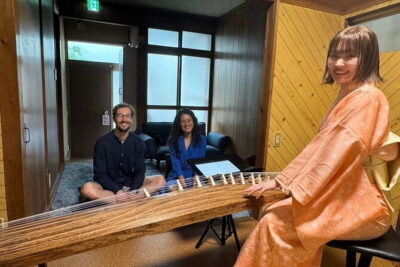
Concerts Played with Traditional Instruments in Kyoto
Read our review →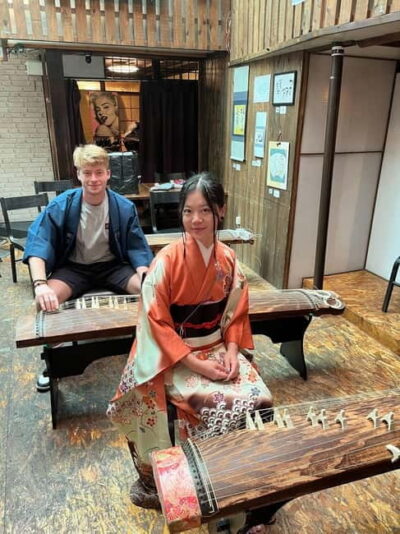
Kyoto: Matcha & Traditional Japanese Music Immersive Experience
Read our review →
Traditional Concert in Public bath near Kyoto Station
Read our review →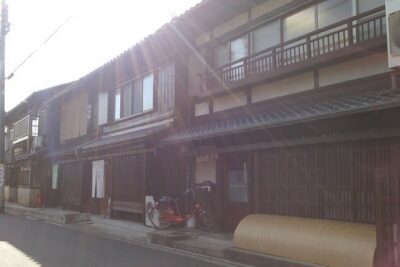
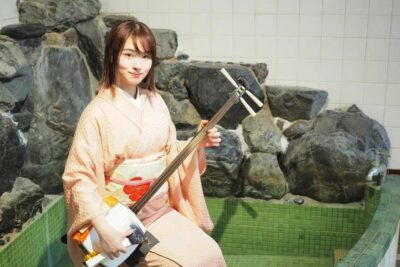
Kyoto: Kujo-yu Sento Traditional Japanese Instrument Concert
Read our review →Browse the lists this tour appears in