
Review · KYOTO
Traditional Concert in Public bath near Kyoto Station
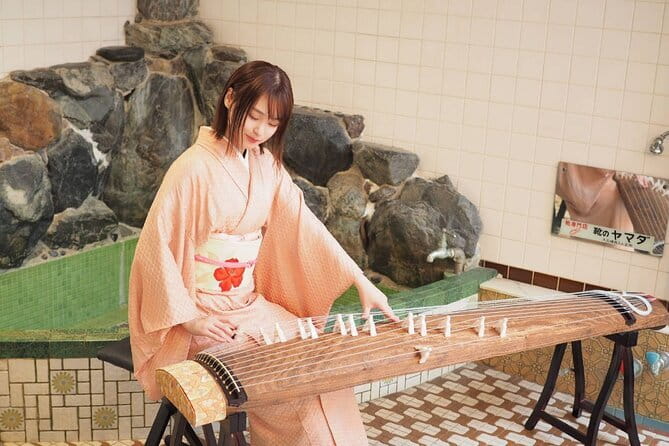
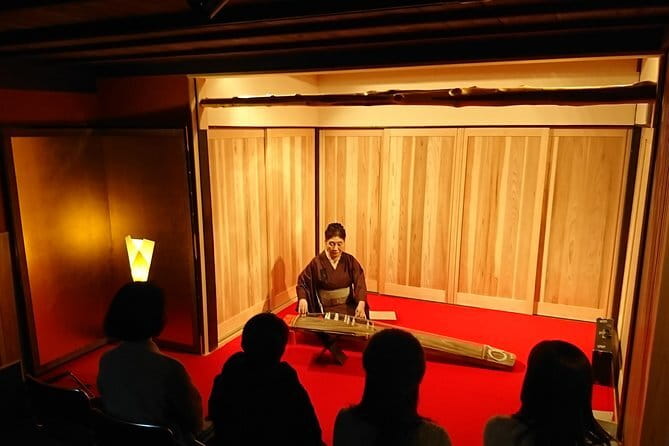
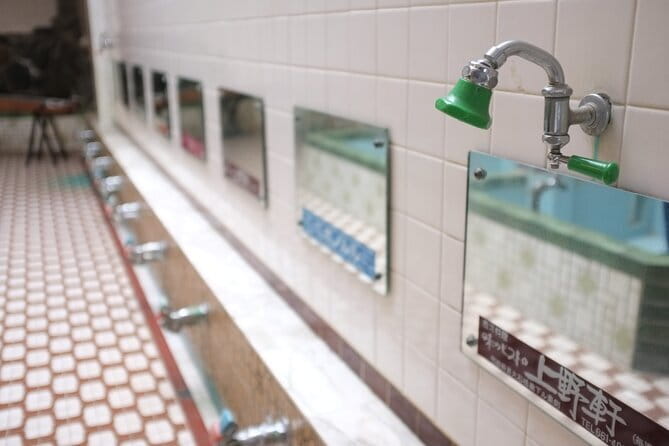
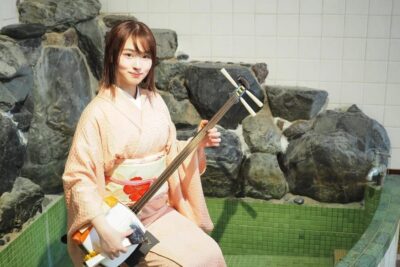
Kyoto’s most unusual concert hall may be a former public bathhouse. At Kujo-yu, high ceilings, tiled walls, and the old sento design frame an intimate performance of koto and shamisen music. The setting is not a stage built to look traditional. It is a real neighborhood bathhouse given a new life.
I like the way the building itself becomes part of the music. I also like the changing program, which can include classical Japanese pieces, newer arrangements, and original compositions. The main drawback is that the concert lasts only about one hour, so this is a focused cultural stop rather than a full evening out. Coffee and tea are not included.
Key points
- Former sento setting: Hear traditional music inside renovated Kujo-yu, a bathhouse once used by the local community.
- Special acoustics: High ceilings and tiled walls help carry the delicate sounds of the koto and shamisen.
- Changing repertoire: The program varies with the season and performers, so the exact musical selection is not fixed.
- Near Kyoto Station: The location makes this a practical addition to a Kyoto sightseeing day.
- Simple one-hour format: You receive a concert ticket and spend roughly an hour at the performance.
- Good value for culture lovers: At $32.52 per person, you pay for a distinctive venue and live traditional music, not just a standard recital.
Why a Kyoto bathhouse makes a memorable concert hall
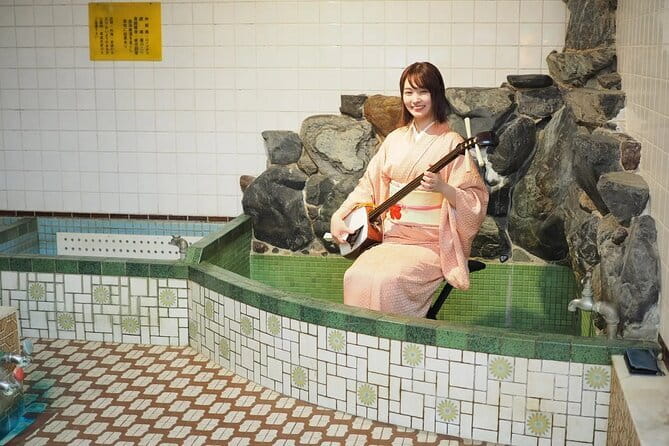
A sento is a Japanese public bathhouse, traditionally a place where local residents came to wash, relax, and see familiar faces. Kujo-yu has been renovated as a creative space, but its bathhouse character remains clear. That gives this concert a sense of place that a plain theater cannot easily match.
The high ceiling and tiled surfaces were made for a practical purpose, yet they also affect the sound. Music from the koto and shamisen can spread across the room and mingle with the building’s hard surfaces. You are not simply watching musicians in front of a neutral backdrop. The room helps shape what you hear.
I like this kind of cultural experience because it explains something about Japan without turning the lesson into a lecture. The architecture, the instruments, and the local setting work together. You get a short performance, but you also get a glimpse of how an older neighborhood building can be used in a new way.
The bathhouse is described as a place cherished by the local community. That detail matters. The attraction is not a decorative replica built only for sightseeing. It is a historic local space that has been carefully reworked for concerts and other creative use.
More Traditional Music and Dance Shows in Japan:
- Kyoto: Traditional Concert at Townhouse or Bathhouse
★ 4.9 · 224 reviews - Japanese Traditional Music Show in Tokyo
★ 5.0 · 72 reviews - Traditional Japanese Music show & Experience Tour in Kyoto
★ 5.0 · 57 reviews
What happens at Kujo-yu
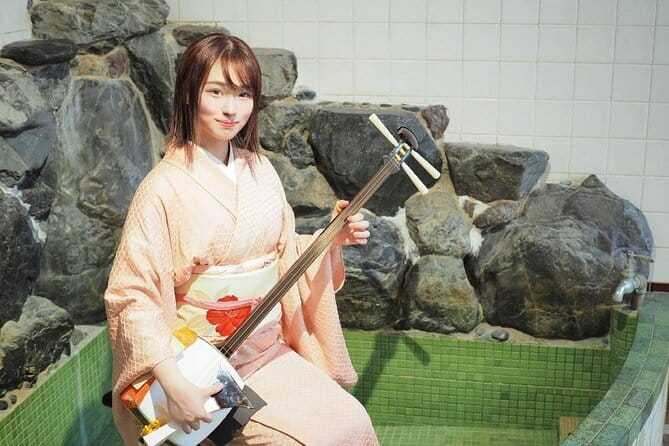
The experience takes place at コワーケーションスペース九条湯, also called Kujo-yu. Your ticket covers admission to the concert. The listed duration is about one hour, making it easy to fit around other plans near Kyoto Station.
Expect the music to center on traditional Japanese instruments, especially the koto and shamisen. The koto is a long string instrument known for clear, finely shaped tones. The shamisen is a three-stringed instrument with a sharper, more percussive sound. Together, they can create a pleasant contrast between flowing notes and crisp rhythmic phrases.
The program is not fixed across every performance. It may include classical Japanese masterpieces, contemporary arrangements, or original compositions. The selection also changes with the season and the performers. That gives the concert some freshness, but it means you should not book it expecting one exact piece or a guaranteed set list.
This variety is one of the strongest features of the experience. If you already know Japanese music, you may appreciate hearing traditional works alongside newer material. If you are new to the instruments, the mixture can give you a broader introduction than a program limited to historic pieces.
The sound of koto and shamisen in tiled surroundings
The room’s acoustics are central to the experience. A former bathhouse has tall ceilings and tiled walls, and those surfaces can carry sound in a way that feels different from a carpeted concert room.
That does not mean every listener will prefer the acoustics. Some people want a tightly controlled hall with an exact, polished sound. Here, the building contributes to the performance. The result is part of the charm, especially when the delicate tones of the koto spread through the old bathing space.
The setting also gives the music visual context. You can connect the sound to the physical features around you rather than treating the instruments as an isolated cultural display. The concert’s strongest appeal is this combination of place and performance.
This is also a good choice if you want something quieter and more focused than a large group activity. The experience is intimate, and the one-hour length keeps the commitment manageable. You do not need to set aside half a day or rearrange an entire Kyoto itinerary.
Why the changing program matters
Traditional music can seem distant if you have never heard the instruments before. A varied program helps solve that problem. Classical works show you the older musical language, while contemporary arrangements and original pieces show how performers continue to use these instruments today.
I appreciate that the concert is not presented as a frozen museum piece. The koto and shamisen have long traditions, but they can also take part in new compositions. The changing repertoire lets the performance reflect the season and the particular musicians involved.
There is one trade-off. Since the exact program changes, you cannot use the booking as a way to hear one named work unless that information is provided for your date. Think of it as a chance to hear a thoughtful selection of Japanese instrumental music in a special setting, not as a concert built around one guaranteed composition.
For first-time listeners, that is probably an advantage. You can arrive with an open mind and let the instruments introduce themselves through several styles. For dedicated music fans, it may be worth checking the current program if one is available before booking.
A few more concerts around Japan worth a look
- Concerts Played with Traditional Instruments in Kyoto
★ 5.0 · 50 reviews - Kyoto: Japanese Koto & Shamisen Concert and Koto Class
★ 4.9 · 31 reviews - Traditional Japanese Music show & Experience Tour in Osaka
★ 5.0 · 25 reviews - Tokyo: Traditional Asakusa Music Show with Dinner
★ 5.0 · 10 reviews
The location near Kyoto Station

The venue is near Kyoto Station and close to public transportation. That makes it useful for several types of schedules. You can place it before dinner, after arriving in the city, or between other plans in the station area.
The short duration is especially helpful in Kyoto, where a day can quickly fill with temples, gardens, markets, and long transit connections. A one-hour concert gives you a cultural experience without the time commitment of a full evening performance.
Still, allow yourself enough time to find Kujo-yu. The information provided confirms that it is near public transportation, but it does not give a precise walking time from Kyoto Station. Use the mobile ticket and venue address when planning your route, and avoid arriving at the last second.
The nearby location also makes this a practical choice on a departure or arrival day, provided your schedule is not tight. You receive a mobile ticket, so there is no need to arrange a paper voucher in advance. Keep your booking details available on your phone.
Is $32.52 a fair price?
At $32.52 per person, this is not the cheapest activity you can add to a Kyoto itinerary. You are paying more than you would for a self-guided look at a neighborhood building. The value comes from combining live music, a distinctive venue, and a cultural experience that would be difficult to arrange on your own.
The concert lasts about an hour, so the price works best for someone who values quality and setting over length. If you judge activities mainly by how many hours they occupy, you may find it expensive. If you want a compact event with a strong sense of place, the cost is easier to justify.
The ticket includes the concert itself. Coffee and tea are not included, and private transportation is also not part of the price. Since the venue is near public transportation, you can make your own way there rather than paying for a private transfer.
I would compare this price with other ticketed cultural performances in Kyoto, not with free sightseeing. The bathhouse venue is the part that makes the experience different. You are buying access to a live performance in a reimagined local space, not just a seat in a conventional hall.
Who will enjoy this experience most?
I would recommend this concert to you if you like architecture, music, and small cultural experiences that fit neatly into a busy itinerary. It works particularly well for first-time visitors who want to hear traditional Japanese instruments without committing to a long formal performance.
It is also a good pick for repeat visitors. After seeing Kyoto’s major temples and famous streets, a concert in a former sento offers a different look at the city. The building connects the music to everyday community life rather than only to grand monuments.
Families and mixed-age groups may appreciate the one-hour format, since it is long enough to feel substantial but not so long that younger audience members must sit through an entire evening. The information says most people can participate, though no specific seating or accessibility details are provided.
Music specialists may also enjoy the changing repertoire. The mix of classical pieces, newer arrangements, and original works offers more range than a basic introduction to Japanese instruments.
This may be less suitable if you want a large-scale concert, a detailed guided explanation, or a long program. No guide names or lecture format are provided. The focus is the music and the setting.
A few practical things to know before booking
Book ahead if the date matters to you. The experience is booked an average of 32 days in advance, which suggests that planning early is sensible, particularly if you have only one free evening near Kyoto Station.
Check the date and start time carefully. The cancellation policy allows a full refund when you cancel at least 24 hours before the local start time. Cancellations or changes made within 24 hours are not accepted for a refund.
Bring a charged phone for the mobile ticket. The ticket covers admission, while drinks and private transportation are separate. Since the exact musical program changes, do not assume that the same works will be performed at every concert.
The experience is short enough to pair with another activity, but avoid scheduling it too tightly against a distant attraction. Kyoto’s transportation and walking time can be unpredictable, and the concert’s value depends on arriving calm enough to listen.
How this compares with a standard cultural show
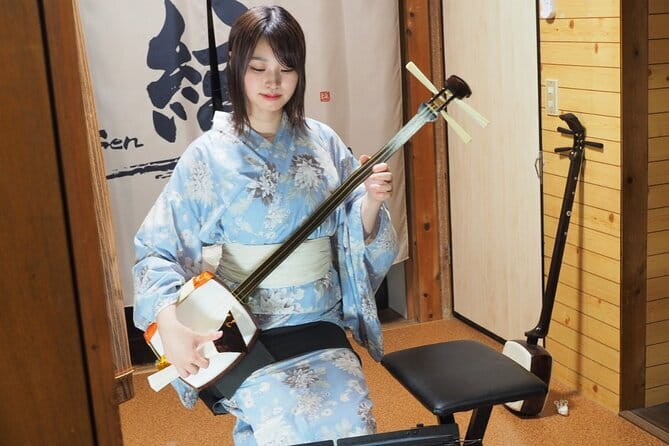
A conventional theater performance gives you a purpose-built room, formal staging, and often a longer program. This concert offers something different. The venue has an old public-bath identity, and its tiled interior remains part of the experience.
That difference makes the concert particularly appealing if you are tired of attractions designed only for visitors. Kujo-yu connects culture with a building that once served ordinary local life. The setting helps you understand the performance before a note is played.
The trade-off is that the experience may feel less polished or predictable than a major concert hall. The room was not originally built for music, and the exact program varies. I see that as part of the appeal, but it is worth knowing before you book.
The strongest reason to choose this event is not simply that it features Japanese instruments. Kyoto has other ways to hear music. The reason is the combination of koto and shamisen, a former sento, and a compact one-hour format near the station.
Should you book the Kujo-yu concert?
Book it if you want a memorable cultural stop with a clear local connection. The former bathhouse gives the music character, and the changing program keeps the event from feeling like a basic demonstration. At $32.52, it offers solid value when the setting matters as much to you as the performance.
Skip it if you need a long concert, a guaranteed set list, included refreshments, or private transportation. Those features are not part of the experience.
For most visitors with an interest in Japanese music or unusual Kyoto architecture, I would make room for it. It is short, practical, and different from the standard sightseeing circuit. The five-star response attached to the experience is easy to understand: the bathhouse is striking, the instruments are intriguing, and the format fits neatly into a busy day.
FAQ
Where does the concert take place?
The concert takes place at コワーケーションスペース九条湯, known as Kujo-yu, a renovated former Japanese sento near Kyoto Station.
How long does the concert last?
The concert lasts approximately one hour.
How much does the experience cost?
The listed price is $32.52 per person.
What instruments are featured?
The performance features traditional Japanese instruments including the koto and shamisen.
What is included with the ticket?
The ticket includes admission to the concert. Coffee, tea, and private transportation are not included.
Can I cancel for a full refund?
Yes. You can cancel at least 24 hours before the local start time for a full refund. Cancellations or changes made less than 24 hours before the start time are not accepted for a refund.
Just added around Japan
- Tsugaru shamisen performance over traditional dinner★ 5.0 · 9 reviews
- Japanaese tradtional Tsugaru Shamisen music lesson in Tokyo★ 4.5 · 3 reviews
- Easy for everyone! Now you can play handmade mini shamisen and show off to everyone! Musical instruments, sweets and live music★ 5.0 · 3 reviews
- Traditional Japanese Music show & Experience Tour in Osaka★ 5.0 · 25 reviews
- Private Japanese music concert★ 5.0 · 4 reviews
- Kyoto: Matcha & Traditional Japanese Music Immersive Experience★ 5.0 · 9 reviews
- Tokyo Underground Music Tours★ 5.0 · 9 reviews
- Kyoto: Kujo-yu Sento Traditional Japanese Instrument Concert★ 5.0 · 2 reviews
Kyoto Concerts, compared.
Kyoto: Traditional Concert at Townhouse or Bathhouse
Read our review →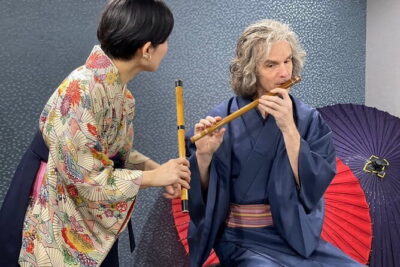
Traditional Japanese Music show & Experience Tour in Kyoto
Read our review →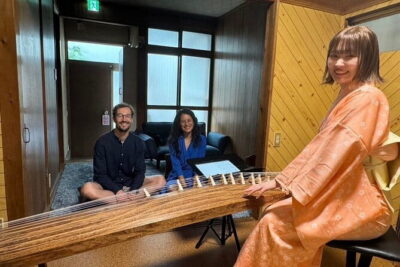
Concerts Played with Traditional Instruments in Kyoto
Read our review →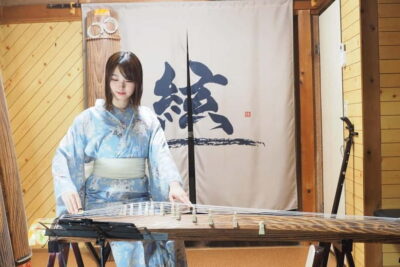
Kyoto: Japanese Koto & Shamisen Concert and Koto Class
Read our review →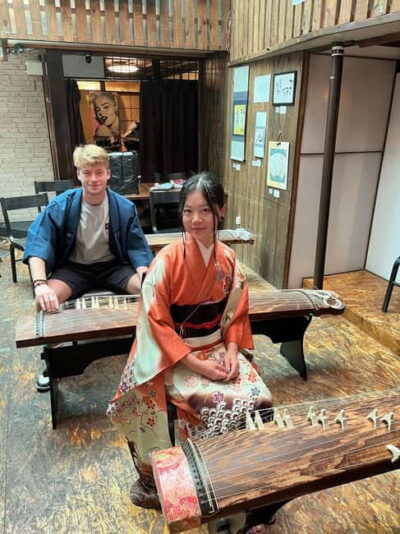
Kyoto: Matcha & Traditional Japanese Music Immersive Experience
Read our review →
Kyoto: Kujo-yu Sento Traditional Japanese Instrument Concert
Read our review →Browse the lists this tour appears in