
Review · JAPAN
Experience the Asakusa Kabuki Opera Show!
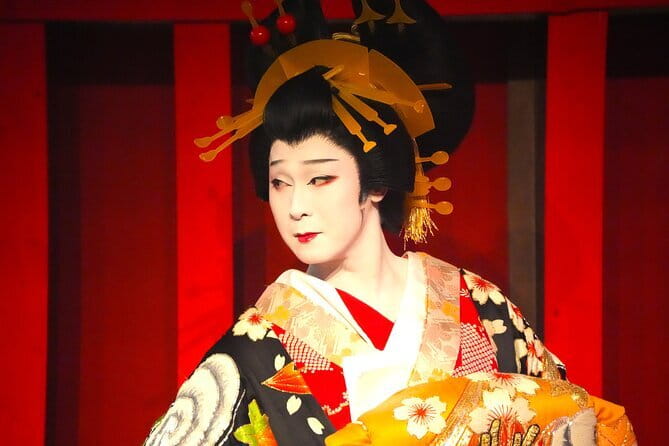
Carmen gets a striking Japanese makeover here. The Spanish heroine becomes Karume, an oiran in Asakusa’s old Yoshiwara district, while Kabuki movement, opera singing, drums, dance, and direct audience interaction reshape the familiar story. English subtitles make the plot easy to follow.
I like the 90-minute length, which fits neatly into an afternoon or evening in Asakusa. I also like the small-theater setting, where facial expressions, costumes, and the famous Kabuki stare are easier to see than they might be in a huge hall.
The main consideration is that the English subtitles may occasionally lag slightly behind the action. This is a live performance, not a film, so the translation can be close rather than perfectly timed.
Key Points Before You Book
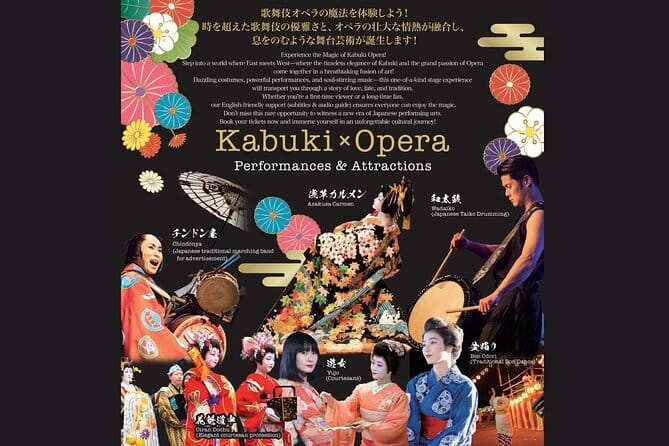
- Carmen becomes Karume: The famous free-spirited woman is recast as an oiran living in Edo-period Yoshiwara.
- Kabuki meets opera: Expect traditional Japanese acting and instruments alongside operatic storytelling and singing.
- English subtitles are included: You can follow the story without knowing Japanese.
- Audience interaction is part of the fun: The performance is more welcoming and participatory than a formal theater event.
- A compact 90-minute outing: The show works well alongside Asakusa’s temples, shops, and riverside sights.
- Snacks and one soft drink are included: Private transportation is not, but the theater is near public transit.
A Carmen Story Set in Asakusa’s Yoshiwara
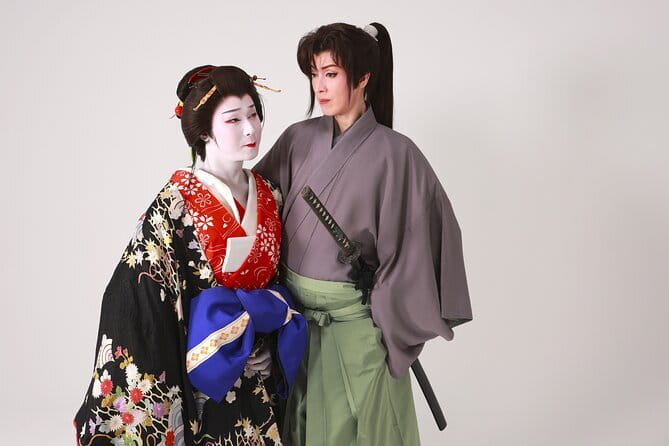
The heart of this performance is its change of place and identity. Bizet’s Carmen is usually tied to Spain, bullfighting, soldiers, and a woman who refuses to be controlled. Here, the story shifts to Edo-period Yoshiwara in Asakusa, where Karume is an oiran, a high-ranking courtesan.
That change is more than a costume swap. It gives the familiar story a Japanese social setting and a different kind of pressure. Carmen runs from the cage of convention. Karume is sold into one. Both women know what it means to be admired, desired, and controlled by men.
I find that contrast useful because it gives the production something to say beyond the novelty of mixing two art forms. The central question becomes freedom: who gets to choose a life, and what happens when a woman insists on making that choice?
The performance presents these two Carmens as reflections of one another. Their lives look very different, yet their loneliness and desire for control over their own futures connect them. You do not need a detailed knowledge of the original opera to understand the emotional stakes.
More Opera Performances in Japan:
- Venice: La Fenice Opera House Entry Ticket with Audio Guide
★ 4.6 · 11,742 reviews - Sydney Opera House Official Guided Walking Tour
★ 4.5 · 3,770 reviews - Florence: Santa Monaca Church Italian Opera Concert Ticket
★ 4.7 · 2,692 reviews
Kabuki Movement Meets Operatic Drama
Kabuki is not simply theater with traditional costumes. Its power comes from highly controlled movement, stylized gestures, dramatic poses, and facial expression. One famous element is the mie, the moment when a performer freezes in a powerful pose and fixes the expression for the audience.
You can expect those Kabuki qualities to share the stage with opera-inspired music and singing. The result is not a conventional Kabuki performance and not a standard production of Carmen. It is a new work built from both traditions.
The music also brings East and West together. Opera melodies and storytelling are joined by more traditional Japanese music and instruments, with drums and dance adding force to key moments. The blend gives the show a changing rhythm: one scene may feel grand and operatic, while the next relies on a sharp Kabuki gesture or a strong percussive beat.
I especially like this format for first-time theatergoers. You are not expected to sit through a long, formal presentation and already understand the conventions. The acting is broad, physical, and direct. Even when the words move quickly, the gestures and staging help carry the story.
Why the Small Theater Matters
Asakusa Kyugeki is described as a compact theater, and that affects the whole evening. You are closer to the performers, so faces and movements are easier to read. That matters in Kabuki, where a lifted chin, fixed stare, or carefully held pose can carry as much meaning as a speech.
A smaller room also helps the interactive sections feel natural. The production does not treat the audience as a distant block in the dark. It creates a more open exchange, which can make the show feel welcoming to people who have never attended Kabuki or opera before.
The tradeoff is that a compact performance space may feel less like a grand, traditional opera house. If you want a formal European opera setting with a large orchestra and monumental staging, this is not that experience. You are paying for closeness, energy, and a fresh format rather than scale.
English Subtitles Make the Story Accessible
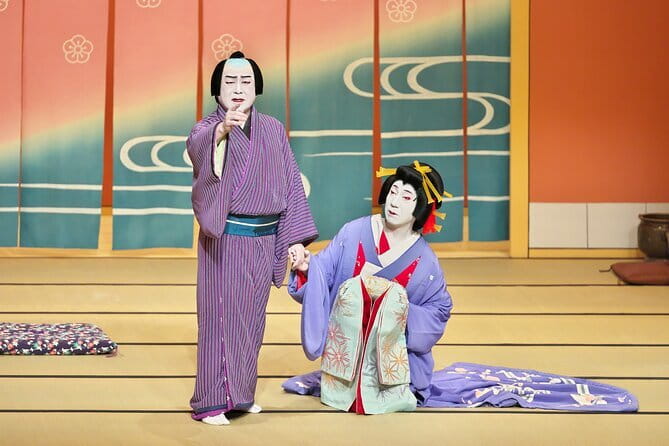
English subtitles are included throughout the show, which is one of the most important reasons to consider it. You can follow the plot, understand the relationship between Karume and the other characters, and catch the connections to Carmen without knowing Japanese.
The subtitles are designed to support a live show, so I would not expect every line to appear with perfect film-like timing. A slight delay has been noted, but the translation remains close enough to follow the action. The actors’ expressions, movement, and music also help you understand what is happening.
The production may include Japanese subtitles at times as well as English text and guidance on how to enjoy the performance. That makes the show suitable for both international visitors and Japanese audience members who are new to Kabuki or opera.
If you normally avoid Japanese theater because you worry about language, this is a sensible introduction. You will still encounter unfamiliar conventions, but you will not be left guessing at the basic story.
Same city, a different sound:
- Kyoto: Traditional Concert at Townhouse or Bathhouse
★ 4.9 · 224 reviews - Japanese Traditional Music Show in Tokyo
★ 5.0 · 72 reviews - Traditional Japanese Music show & Experience Tour in Kyoto
★ 5.0 · 57 reviews - Concerts Played with Traditional Instruments in Kyoto
★ 5.0 · 50 reviews
An Interactive Show Rather Than a Formal Recital
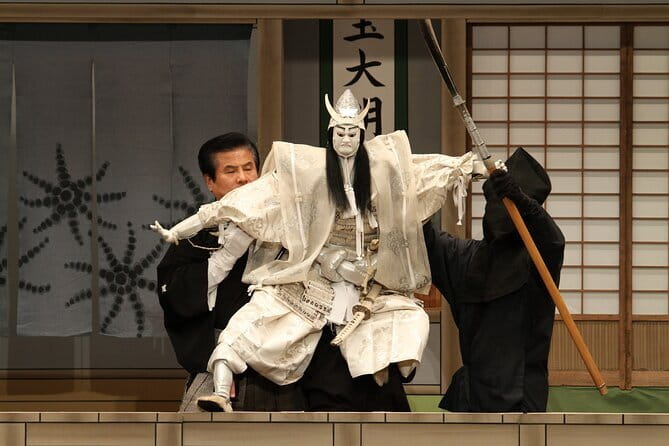
The word interactive matters here. You are not simply watching a distant stage from beginning to end. The production includes moments designed to involve the audience, creating a lighter and more social mood than a strictly traditional theater performance.
That interaction appears to be one of the strongest reasons this show works for people with different levels of theater experience. A person who has waited years to see Kabuki can appreciate the acting and costumes. Someone who has never attended Kabuki can still enjoy the jokes, singing, movement, and direct connection with the room.
I would still prepare for a performance rather than a casual street show. The story has serious themes, including exploitation, loneliness, love, and the wish to control one’s own destiny. The humor and audience contact make the production friendly, but the emotional scenes give it weight.
The balance is a good fit for an evening in Asakusa. You get culture without needing to commit to several hours of an unfamiliar classical form.
Costumes, Characters, and Gender Reversal
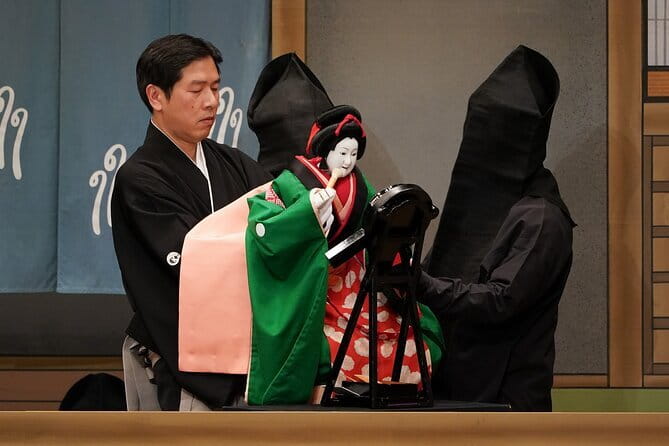
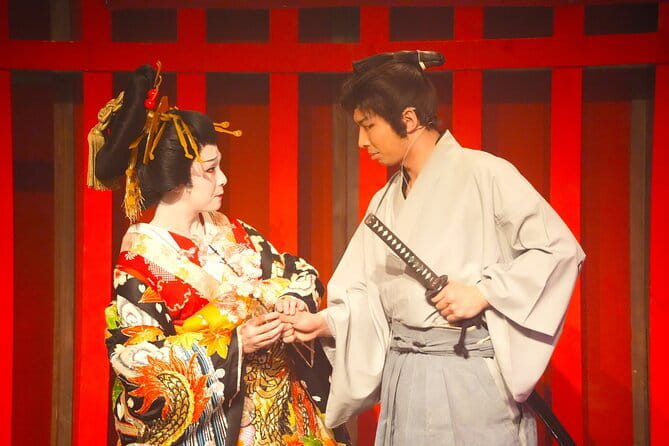
The oiran setting gives the show a strong visual identity. Costumes and stage presentation connect Karume to Yoshiwara, while the traditional Kabuki style shapes how the characters move and present themselves.
A particularly interesting feature is the gender-reversal casting described in the performance. The lead female character is played by a male actor, while a female actor plays the male lead. In traditional Kabuki, male performers play all roles, so this production uses that tradition while also making a more modern casting choice.
That can add another layer to the story. The characters are already dealing with freedom, desire, and social control. The casting invites you to think about how gender is performed onstage and how the audience reads a character through movement, voice, costume, and posture.
You do not need to analyze any of this to enjoy the show. The acting is designed to communicate clearly in the moment. Still, it gives the production more to discuss afterward than a simple tourist entertainment.
What You Get During the 90-Minute Visit
The admission includes the 90-minute performance, English subtitles, snacks, bottled water or one soft drink, and the performance fee. Those small extras do not transform the value of the ticket, but they make the evening easier and remove the need to buy a drink during the show.
At $49.68 per person, this is not the cheapest cultural activity in Tokyo. I would judge the price against the format rather than compare it with a short temple visit or a free neighborhood walk. You are paying for a full live production, trained performers, costumes, music, subtitles, and a theater experience that is easy for international visitors to understand.
The value is strongest if you want a Japanese performing arts experience but do not speak Japanese. A standard Kabuki production may require more preparation and may be harder to follow. Here, the subtitles and modern Carmen connection give you a clear way in.
The value is weaker if your main goal is a complete, traditional Kabuki program or a full-length opera with a large orchestra. This is a fusion production, and its appeal comes from the meeting of styles.
Fitting the Show Into an Asakusa Day
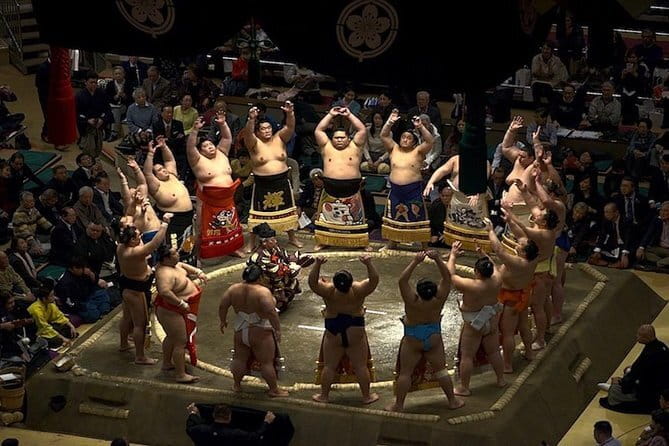
The performance takes place at Asakusa Kyugeki, in an area served by public transportation. Private transportation is not included, so you will need to make your own way to the theater.
The 90-minute duration makes planning simple. You can place it between visits to Asakusa’s major sights, use it as an evening activity, or schedule it when you want a break from walking. Since the exact show time is not included in the supplied details, check the selected departure time carefully when booking.
I would allow enough time to find the theater and settle in before the start. A mobile ticket is provided, which is convenient, but your phone should be ready to display it.
The show is booked an average of 34 days ahead, so I would not leave it until the final day of a short Tokyo visit. That is especially true if you have a fixed itinerary or want a particular performance time.
Who Will Enjoy This Most
I would recommend this production to you if you want:
- A first introduction to Kabuki with English support
- A short cultural activity that fits into a busy Tokyo schedule
- A live show with music, dance, comedy, drama, and audience interaction
- A fresh interpretation of Carmen rather than a traditional opera production
- A close theater setting where actors’ expressions are easy to see
- An activity suitable for people who do not speak Japanese
It is also a good choice for couples, families with older children, and friends who want something more memorable than another sightseeing stop. Most people can participate, according to the supplied information, though anyone feeling unwell should stay home, and participation can be refused for safety reasons.
I would be more cautious if you dislike subtitles, want a completely quiet and formal performance, or expect the full original Carmen with its usual Spanish setting. The production uses Carmen as a starting point, then takes the story in a strongly Japanese direction.
A Few Practical Things to Know
The ticket is mobile, and confirmation is provided at the time of booking. The theater is near public transportation, but private transfers are not included.
Free cancellation is available if you cancel at least 24 hours before the local start time. Cancellations or changes made inside that window are not accepted for a refund.
The included drink and snacks are useful, but they should be treated as a small convenience rather than a meal. If you are planning to make an evening of the show, eat before or after it in Asakusa.
Most importantly, keep your expectations centered on a live fusion performance. Subtitle timing can be slightly imperfect, and the show may not follow every detail of Bizet’s opera. Its strength is the way it turns Carmen into Karume and lets Kabuki expression, Japanese staging, opera, and direct audience contact work together.
Should You Book Asakusa Kabuki Opera?
I would book it if you want an accessible, lively introduction to Japanese theater. The combination of English subtitles, a familiar Carmen framework, a 90-minute running time, and an intimate venue gives you a practical way to try Kabuki without making your whole day revolve around it.
The strongest reason to go is the unusual concept. Carmen becomes an oiran, her struggle for freedom takes on a new setting, and the production adds Kabuki acting, Japanese instruments, opera, dance, and audience interaction. That is a much more distinctive evening than a standard stage show.
Skip it if you are seeking only traditional Kabuki or a faithful European opera. Book it if you want to see how two very different theatrical traditions can tell the same human story from a new angle.
FAQ
Where does the performance take place?
The show takes place at Asakusa Kyugeki in Tokyo, Japan.
How long does the experience last?
The performance lasts approximately 90 minutes.
What is the show about?
It reimagines Carmen through Kabuki. Carmen becomes Karume, an oiran living in the Yoshiwara district of Asakusa, and the story explores love, control, loneliness, and freedom.
Are English subtitles provided?
Yes. English subtitles are included so you can follow the story without knowing Japanese.
Is this a traditional Kabuki performance?
It is a fusion of Kabuki and opera. The production uses Kabuki acting and presentation while combining them with operatic storytelling, music, singing, dance, and Japanese instruments.
Is audience interaction part of the show?
Yes. The performance includes interactive elements and direct engagement with the audience.
What is included in the ticket?
The ticket includes the 90-minute performance, the performance fee, English subtitles, snacks, and bottled water or one soft drink.
Is transportation included?
No. Private transportation is not included, though the theater is near public transportation.
How much does the experience cost?
The listed price is $49.68 per person.
Can I cancel for a full refund?
Yes, if you cancel at least 24 hours before the experience’s local start time. Cancellations or changes made less than 24 hours before the start time are not eligible for a refund.
Just added around Japan
- Tsugaru shamisen performance over traditional dinner★ 5.0 · 9 reviews
- Japanaese tradtional Tsugaru Shamisen music lesson in Tokyo★ 4.5 · 3 reviews
- Easy for everyone! Now you can play handmade mini shamisen and show off to everyone! Musical instruments, sweets and live music★ 5.0 · 3 reviews
- Traditional Japanese Music show & Experience Tour in Osaka★ 5.0 · 25 reviews
- Traditional Concert in Public bath near Kyoto Station★ 5.0 · 5 reviews
- Kyoto: Matcha & Traditional Japanese Music Immersive Experience★ 5.0 · 9 reviews
- Private Japanese music concert★ 5.0 · 4 reviews
- Tokyo Underground Music Tours★ 5.0 · 9 reviews
Japan Concerts, compared.
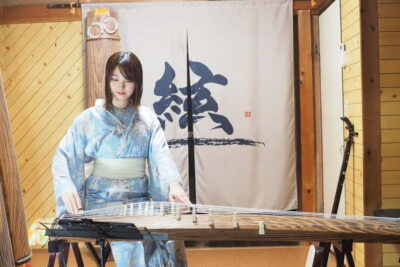
Kyoto: Traditional Concert at Townhouse or Bathhouse
Read our review →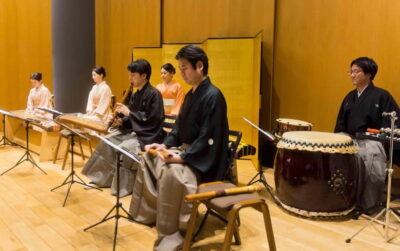
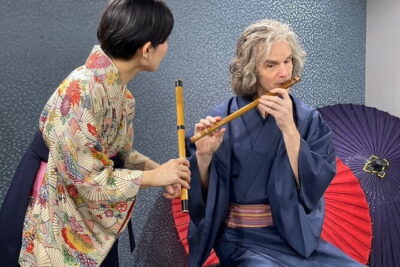
Traditional Japanese Music show & Experience Tour in Kyoto
Read our review →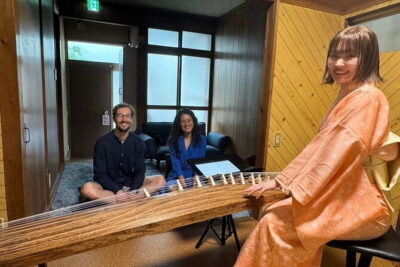
Concerts Played with Traditional Instruments in Kyoto
Read our review →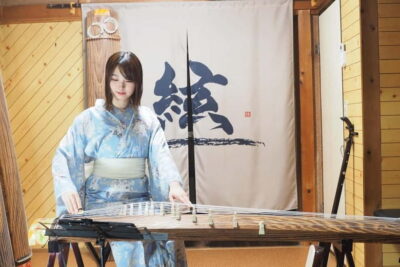
Kyoto: Japanese Koto & Shamisen Concert and Koto Class
Read our review →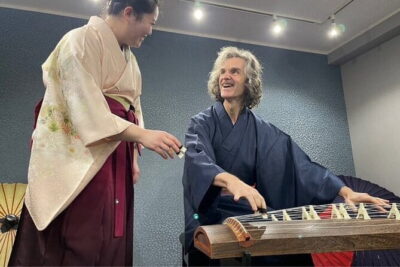
Traditional Japanese Music show & Experience Tour in Osaka
Read our review →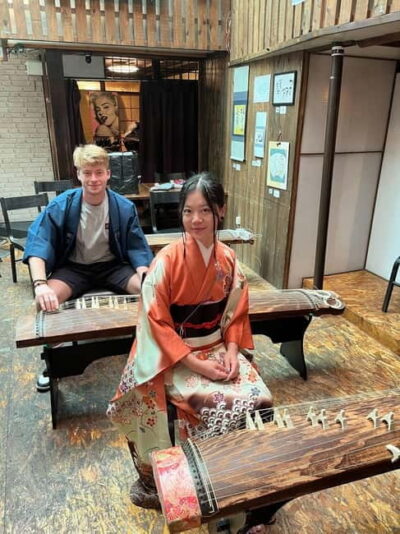
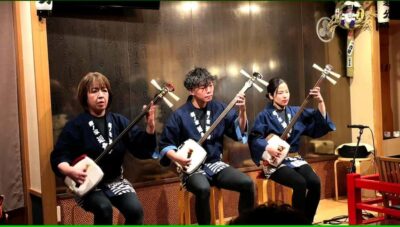
Tokyo: Traditional Asakusa Music Show with Dinner
Read our review →Browse the lists this tour appears in