
Review · VIENNA
Vienna: Classical Concerts in the Minorite Church Ticket
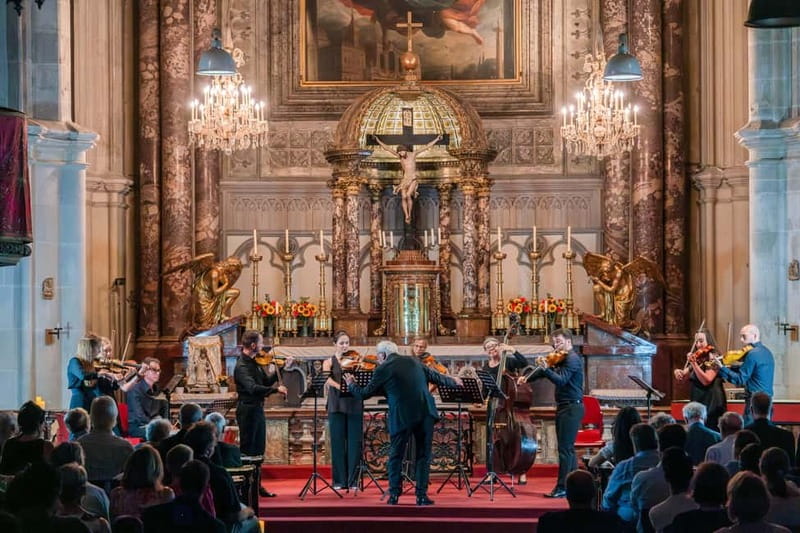
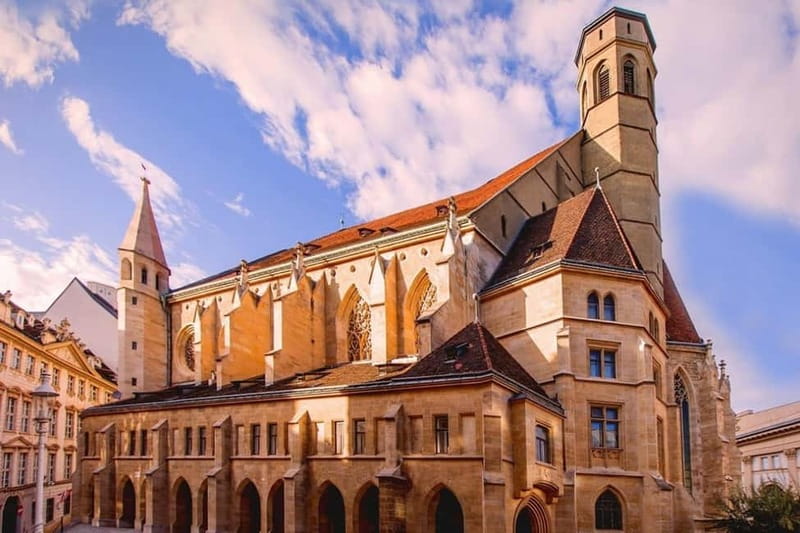
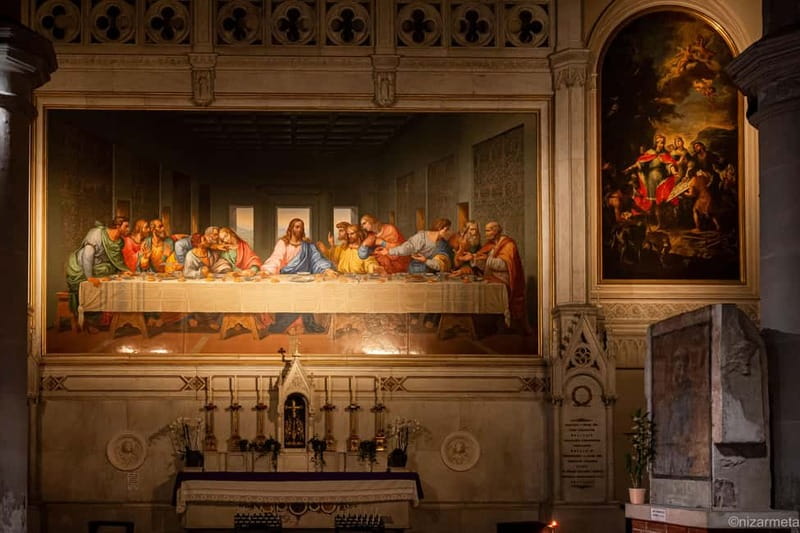
The most memorable part of this concert is the setting: you sit inside Minoritenkirche, a Gothic church in central Vienna, while live music fills the stone interior. I like the close-up feel, where you can often watch the musicians’ hands, and I like the changing programs, which include both famous works and less familiar pieces. The price, about $22 per person, is a sensible way to add live music to a Vienna evening.
The main thing to watch is seating. Seats are unnumbered, and a pillar, side position, or hard pew can affect your view and comfort. Arrive around the 30-minute admission time if you want the best available choice. The church is heated for concerts, but the seats may still be firmer than those in a modern concert hall.
Key points at a glance
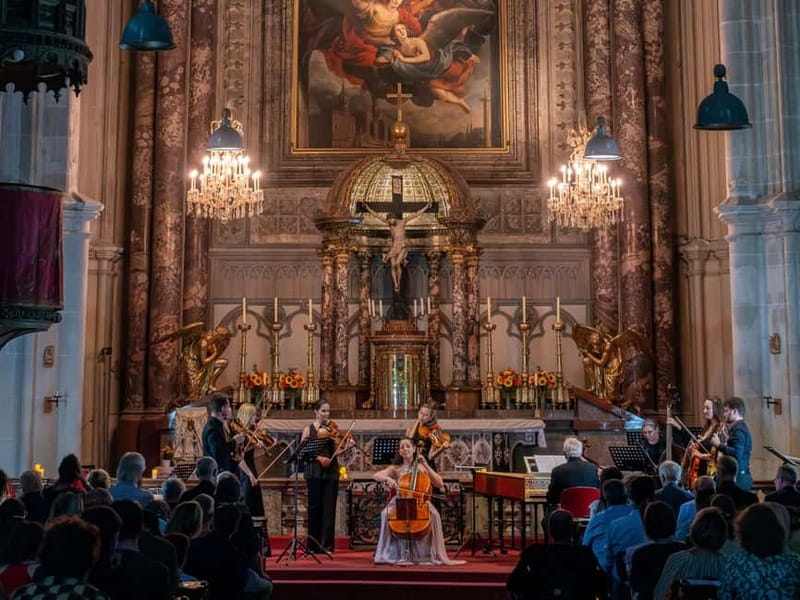
- A Gothic church for a concert venue: Minoritenkirche gives you soaring architecture, an altar backdrop, and natural acoustics.
- Programs change often: You may hear Mozart, Beethoven, Vivaldi, Bach, Haydn, Bruckner, Paganini, or contemporary composers.
- A compact evening activity: Performances run from one hour to about 70 minutes, making them easy to fit before or after dinner.
- Unnumbered seating matters: Staff guide you inside, but arriving early gives you a better chance at a preferred view.
- Strong value at about $22: You receive admission and a program sheet without committing to a full-length opera or major concert-hall production.
- Good for classical newcomers: The setting and manageable length make this a gentle introduction, though children under six are not admitted.
Why Minoritenkirche changes the concert
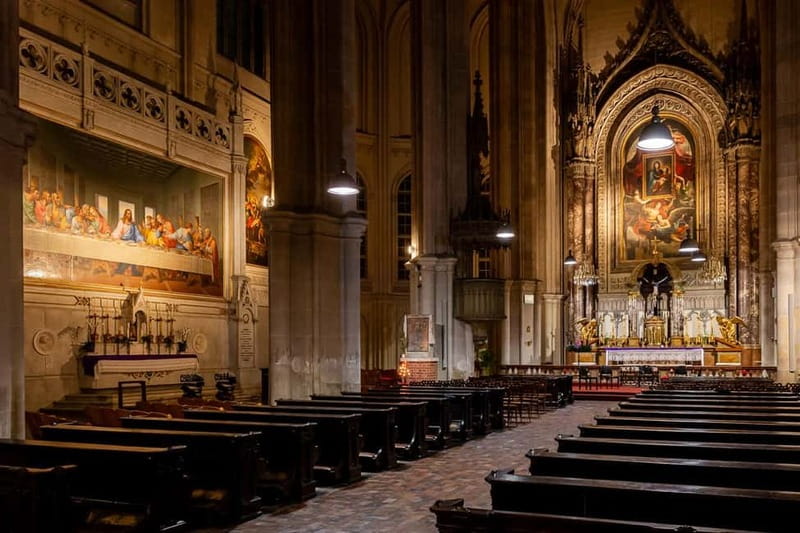
Vienna has no shortage of grand music halls, but a church concert offers a different kind of evening. At Minoritenkirche, the music is framed by Gothic stonework rather than velvet balconies and polished modern interiors. You are not just listening to a program. You are also sitting in a historic religious building, with the architecture forming part of the experience.
The church is in Vienna’s historic center, and its entrance is under the arcade of the building. That makes it useful for a night when you are already sightseeing in central Vienna. One review described the venue as being opposite a metro station, so public transport access appears convenient, though your exact meeting point can vary with the option you book.
The acoustics are a major reason to choose this concert. Strings and solo instruments carry naturally through the church, and the sound has more resonance than you would get in a small dry room. That can make Vivaldi’s quick passages feel expansive and gives slower Bach movements a lingering finish.
There is a tradeoff. Church acoustics can be less precise than a modern concert hall, especially if you sit far to the side or near a speaker. One attendee found a nearby speaker distracting, while another had a restricted view from a pillar. Your experience depends partly on where staff place you.
More Church Concerts in Austria
- Vienna: Classical Concert in St. Anne’s Church (Annakirche)
★ 4.6 · 3,414 reviews - Vienna Classical Concert at St. Peter’s Church
★ 4.5 · 2,039 reviews - Vienna: Classical Concert in St. Anne’s Church (Annakirche)
★ 4.5 · 1,000 reviews
A 60 to 70 minute evening that fits real itineraries
The concert lasts one hour to 70 minutes, a useful length for a city break. You can attend without giving up an entire evening, and the format is manageable if your attention span for classical music is untested.
Admission begins 30 minutes before the performance. You do not need to arrive much earlier than that, but I would use the full window if seating position matters to you. The seating is unnumbered, and staff welcome you at the entrance and direct you to suitable seats. The earlier you enter, the more choice you are likely to have before the main seating areas fill.
The program sheet helps you follow the evening. It is especially useful when a concert mixes familiar names with less common works. You may recognize Mozart or Vivaldi, then encounter a piece by Janáček, Salieri, Paganini, Michael Nyman, or Emmanuel Séjourné.
This is not a guided tour of the church. The staff or greeters speak English, German, Spanish, or Italian, and their role is mainly to welcome and seat you. If you want a detailed architectural explanation, visit the church or surrounding historic center separately.
The seating question: category, view, and comfort
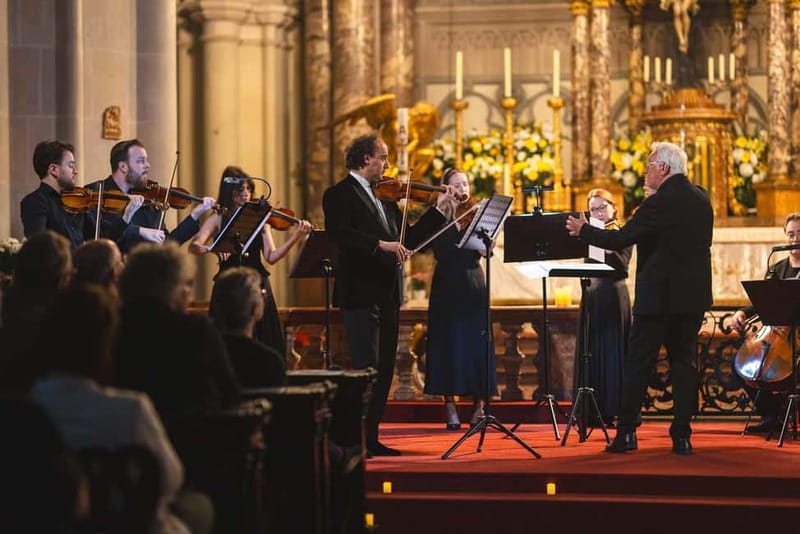
The seating deserves more attention than the simple ticket description suggests. Available options can include different categories, and some attendees have paid extra for preferred seating. Front sections bring you closer to the musicians and let you watch technique and expression more clearly.
That closeness matters most for a solo violinist, piano recital, or small string ensemble. At a larger orchestra concert, sound carries well throughout the church, so a rear or less expensive area may still work nicely. One attendee in a lower section wanted a closer view, while several others were pleased with front-row or upgraded seats.
Because seating is unnumbered, a category does not necessarily mean you select a specific chair. You may be shown to a place within the section. If you pay for a higher category, ask staff where that section begins and ends before sitting down. One complaint involved a supposedly better section that still had a less favorable position than expected.
Pews and church chairs can also be hard. Several comments praised the music but noted uncomfortable seating. For a performance of about an hour, most people will manage, but this is not the place to expect deeply padded auditorium seats.
What the changing programs offer
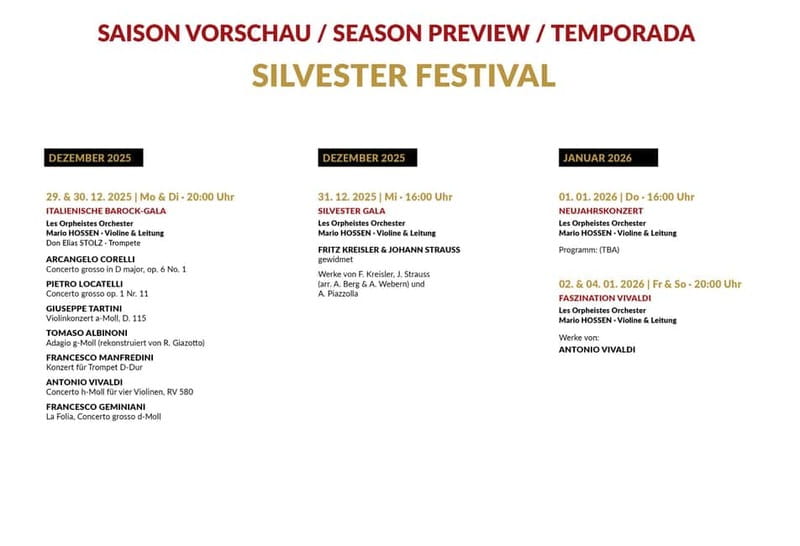
The attraction here is not one fixed show. The schedule changes, and that gives you a reason to check the exact date rather than booking the first available evening.
More Church Concerts in Vienna
- Vienna: Christmas & New Year’s Concert in St. Peter’s Church
★ 4.6 · 763 reviews - Concert at Vienna’s St. Stephen’s Cathedral
★ 4.0 · 432 reviews - Christmas and New Year Concert at St. Peter’s Church in Vienna
★ 4.5 · 155 reviews - Vienna: A Little Night Music – Concert at Capuchin Church
★ 4.8 · 145 reviews
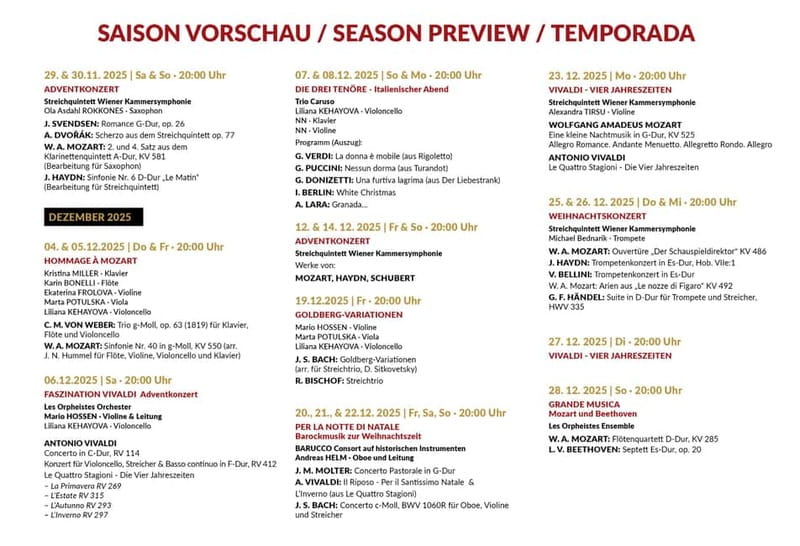
Piano Solo, March 7, 2026
Luis González Lladó performs Janáček’s Sonata 1. X. 1905, Manuel de Falla’s Fantasía Baética, and Liszt’s Sonata in B minor. This is a demanding solo recital with strong contrasts, moving from Janáček’s tense, dramatic writing to de Falla’s Spanish character and Liszt’s large-scale piano sonata.
Choose this date if you want one pianist and a serious recital rather than a selection of short, familiar melodies. The music may suit an experienced classical listener best, though the intimate setting gives you a clear view of the performer.
Bruckner’s Symphony No. 7, March 13, 2026
The Győr Philharmonic Orchestra performs under Martin Sieghart. Bruckner’s Seventh is a substantial symphonic work, so this date offers a fuller orchestral sound than the smaller chamber programs.
This is a good pick if you want the power of a symphony orchestra in a church setting. Keep in mind that the broad scale of Bruckner may feel more concentrated and serious than a light Viennese greatest-hits program.
Bach’s Goldberg Variations, March 28, 2026
Mario Hossen on violin, Alexander Gordon on viola, and Liliana Kehayova on cello perform Dmitri Sitkovetsky’s string-trio arrangement of Bach’s Goldberg Variations.
The arrangement is unusual. You are not hearing the work on solo keyboard, but as a conversation among three string instruments. That makes this a particularly interesting date for repeat concertgoers and anyone who already knows the original.
Easter concerts, April 3 to 6, 2026
The Easter schedule includes Bach’s St John Passion on April 3, Haydn and Mozart on April 5, and Vivaldi and Bach on April 6. The St John Passion uses Les Orpheistes Orchestra, chorus, soloists, and Martin Sieghart as conductor.
These dates offer more ceremonial programs than a regular chamber concert. If you want a holiday atmosphere, choose the specific Easter title carefully. An Easter concert with a string quintet is different from the large-scale St John Passion, and the exact performers can vary.
Vivaldi’s Four Seasons, April 18, 2026
The Wiener Kammersymphonie string quintet and violinist Cornelia Gradwohl perform Haydn’s Symphony No. 104 along with Vivaldi’s Four Seasons.
This is the safest choice if you want a famous work you will recognize. The church’s resonance suits Vivaldi’s flowing strings, and the small ensemble keeps the performance close and visible. It is also a good first classical concert for someone who does not regularly attend them.
Mozart and Schubert, April 25, 2026
The published program for this date lists Haydn’s Symphony No. 104 and Vivaldi’s Four Seasons, which does not match the event title Mozart and Schubert. That is a useful reminder to check the current program before booking. Concert titles and detailed contents may change.
Mozart Cycle, May 1 and 2, 2026
Mario Hossen conducts and plays violin with Les Orpheistes Orchestra. The program includes Mozart’s Divertimento in D major, Violin Concerto in A major, and Symphony No. 1 in E-flat major.
This is a strong choice if you want a focused Mozart evening rather than a mixed composer program. The combination of early symphonic writing, a violin concerto, and the Salzburg Divertimento shows different sides of Mozart in one sitting.
Vivaldi versus Paganini, May 15, 2026
Mario Hossen leads Les Orpheistes Orchestra as conductor and violinist. The program places Vivaldi concertos and movements from The Four Seasons beside Paganini works, including Le Streghe, Il Campanello, and the Sonata Preghiera.
This should appeal to anyone who likes virtuoso violin playing. Expect a more dramatic, showpiece-oriented evening than a quiet chamber recital. The program includes demanding solo writing, so seating near the front may be worthwhile if you want to watch the technique.
Breath and Strings, May 22, 2026
Massimo Mercelli joins the Wiener Kammersymphonie on flute. The program ranges from Paisiello and Salieri to Michael Nyman, Mozart’s Prague Symphony, and Carl Philipp Emanuel Bach’s Flute Concerto in D minor.
The title signals a blend of flute-led music and string ensemble writing. It is a good option if you want something beyond the standard Mozart, Beethoven, and Vivaldi circuit.
Between Fantasy and Variation, May 30, 2026
Natalia Rehling plays piano with Varga Quartet Vienna. The works include Mozart’s Fantasy in D minor, Schubert’s String Quartet No. 14, Death and the Maiden, and Chopin’s Variations on a theme from Don Giovanni.
This is another intimate program, with piano and quartet textures rather than a full orchestra. Schubert’s quartet is dark and powerful, while Mozart and Chopin bring different forms of variation and contrast.
La Passione, June 4 and 5, 2026
Les Orpheistes Orchestra performs with marimba soloist Christoph Sietzen under Martin Sieghart. The program includes Haydn’s Symphony in F minor, La Passione, Bach lute-suite movements, Sietzen’s improvisation, and Séjourné’s Marimba Concerto.
The marimba makes this one of the more unusual choices in the schedule. Pick it if you want a program that reaches beyond standard Viennese concert fare. The listed works suggest a mix of familiar classical structure, solo percussion color, and newer music.
How the music feels from inside a church
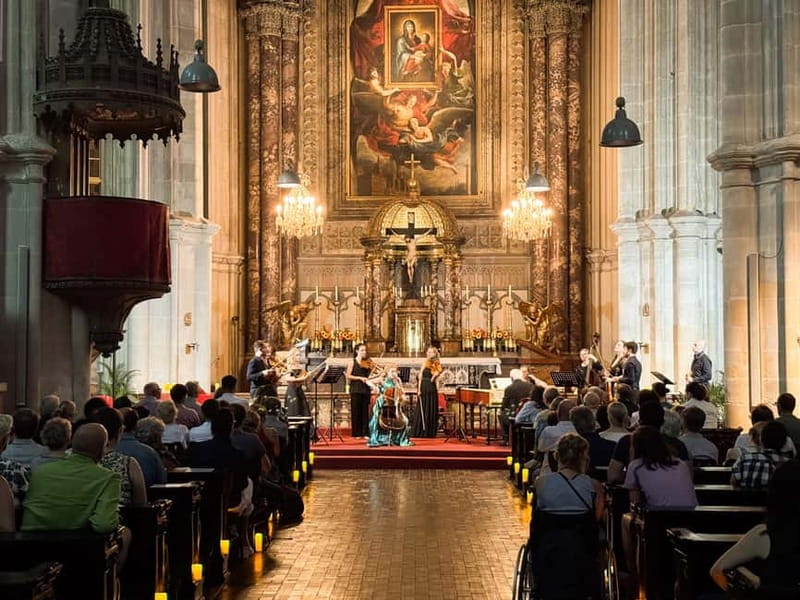
The best part of this format is proximity. In a large hall, you hear a polished blend. Here, especially in the smaller ensembles, you may see the bow changes, fingerwork, and physical coordination that create the sound.
That is particularly valuable for violin-led concerts. Mario Hossen appears in several programs, and the schedule also includes Cornelia Gradwohl and other named soloists. A front section can make the performance feel more personal, but you do not need the most expensive area to appreciate the acoustics.
The church setting also shapes the mood. The music begins in a space built for sound and reflection, not just entertainment. Some programs will feel solemn, especially Bach’s sacred works. Others, such as Paganini and Vivaldi, bring energy and theatrical skill.
The no-photography rule is important. Photography inside and video recording are not allowed, along with flash photography, food, drinks, smoking, alcohol, and drugs. I support the rule, since glowing phone screens and dropped devices can interrupt a quiet movement. Keep your phone away and let the room do its work.
Price and practical value at $22
At about $22 per person, this is an affordable way to hear professional musicians in a major European cultural city. You receive the entrance ticket and a program sheet, and the performance lasts about an hour to 70 minutes.
That price is especially good when you compare it with a full opera, major concert hall, or long evening production. You get a proper live performance without needing specialist knowledge or formal concert dress. It is also a smart use of a free evening when you want something more distinctive than another meal or bar.
Value depends on your seating expectations. If the lowest category places you at a side angle or on a hard pew, the bargain may feel less impressive. If the music is your priority, the church’s acoustics mean you can still enjoy the performance away from the front. If seeing the musicians clearly matters, consider a preferred section and arrive at admission time.
The 4.6 rating from 658 reviews points to a consistently strong experience, but the individual details matter more than the number. The repeated strengths are the church, sound, professional musicians, helpful staff, and manageable length. The repeated cautions are unnumbered seating, occasional blocked views, and hard chairs.
Who should book this concert?
I would recommend it to first-time Vienna visitors who want classical music without committing to a grand concert hall. It suits couples, solo visitors, and anyone who wants an easy evening activity in the historic center.
It is also a fine choice for classical regulars, especially if you pick an unusual program such as the Goldberg Variations for string trio, Vivaldi versus Paganini, or La Passione. The changing schedule gives you more to choose from than a standard tourist program.
Families should note that children under six are not admitted. Older children may appreciate the shorter running time, but the quiet setting and no-phone rules require respectful behavior.
I would hesitate only if you need guaranteed individual seat selection, very soft seating, or a fully explained historical tour. This is a concert in a church, not a guided church visit or a modern auditorium experience.
Should you book Minoritenkirche?
Book it if you want good classical music in a memorable setting at a moderate price. The church is the main draw, but the music is not an afterthought. The program schedule includes respected works, skilled named performers, orchestras, and chamber groups.
For the easiest first visit, choose Vivaldi’s Four Seasons, a Mozart program, or an Easter concert. For something less predictable, choose the Goldberg Variations, Breath and Strings, or La Passione. Check the exact date and program, then arrive when admission opens so you have a better say in your view.
This is not the right pick for everyone. Seating is not fully controlled, some church benches are uncomfortable, and a pillar or side position can matter. But if you accept those limits, Minoritenkirche offers one of Vienna’s most practical small-concert experiences: central, short, atmospheric, and priced so you can fit it into an ordinary sightseeing budget.
FAQ
Where does the concert take place?
The concert takes place in Minoritenkirche, a Gothic church in Vienna’s historic city center. The entrance is located under the church arcade.
How long does the concert last?
Performances last from one hour to about 70 minutes. Check the availability details for the exact start time of your chosen date.
When can I enter the church?
Admission begins 30 minutes before the concert starts. You do not need to arrive significantly earlier, though arriving at the start of admission may give you more seating choice.
Are seats numbered?
No. Seating is unnumbered, and staff guide you to suitable seats. Some options may offer preferred seating categories.
Is the concert wheelchair accessible?
Yes, the activity is listed as wheelchair accessible.
Are children allowed?
Children under six are not admitted.
Can I take photos or record the concert?
No. Photography inside, video recording, flash photography, food and drinks, smoking, alcohol, and drugs are not allowed.
More Classical Concerts in Vienna
- Vienna: Classical Concert at Mozart’s First House
2,423 reviews - Vienna: Mythos Mozart Experience
★ 4.5 · 895 reviews - Vienna Mozart Concert in Historical Costumes at the Musikverein
★ 4.5 · 888 reviews - Vienna: Classical Concert at Eschenbach Palace
★ 4.8 · 787 reviews
More Classical Concerts in Austria
- Vienna: Vivaldi’s Four Seasons Concert in Karlskirche
★ 4.7 · 14,951 reviews - Vienna: Classical Concert in the World-Famous Musikverein
★ 4.6 · 6,673 reviews - Vienna: Mozart Concert at the Musikverein – Golden Hall
★ 4.6 · 5,194 reviews - Vienna: Mozart and Strauss Concert at Schönbrunn
★ 4.5 · 2,967 reviews
Just added around Vienna
- Vienna’s Musical Heart: Private Walking Tour with a Local★ 5.0 · 2 reviews
- Vienna: Concert by the Vienna Baroque Orchestra★ 4.6 · 56 reviews
- Vienna: Strauss Museum – Music&History in Historic 1837 Hall★ 4.7 · 31 reviews
- Vienna Supreme Orchestra at Palais Niederösterreich★ 4.8 · 10 reviews
- Vienna: Sunday Brunch Danube Cruise & Live Music★ 4.2 · 42 reviews
- Vienna Private Walking Tour including State Opera★ 3.2 · 7 reviews
- Vienna: Romantic Classics Piano, Violin, and Cello Concert★ 4.7 · 60 reviews
- Vienna: Private Music Tour★ 5.0 · 8 reviews
Vienna Concerts, compared.
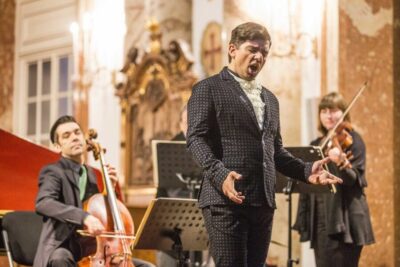
Vienna: Vivaldi’s Four Seasons Concert in Karlskirche
Read our review →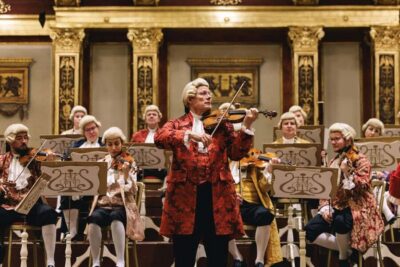
Vienna: Mozart Concert at the Musikverein – Golden Hall
Read our review →
Vienna: Classical Concert in St. Anne’s Church (Annakirche)
Read our review →
Vienna: Mozart and Strauss Concert at Schönbrunn
Read our review →
Vienna: Tickets for Mozarthaus Vienna with Audio Guide
Read our review →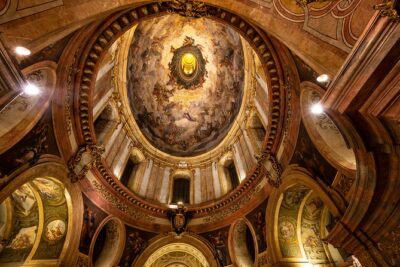
Vienna Classical Concert at St. Peter’s Church
Read our review →