
Review · VIENNA
Vienna: Mythos Mozart Experience
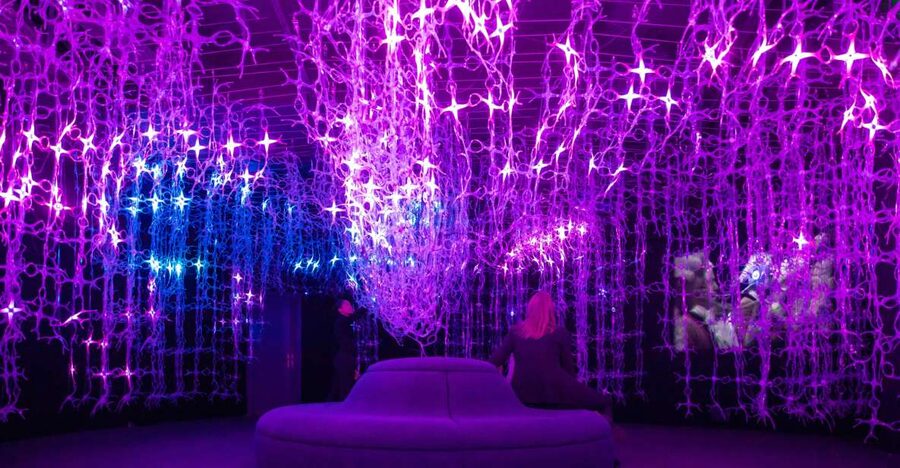
Mozart’s final Vienna home is now the setting for a one-hour multimedia show that treats his music as sound, light, film, and moving image. You begin among 1,500 candles, walk through a digital version of Vienna in 1791, play instruments, and watch the composer’s world shift into modern visual art.
I like the strong sensory variety, especially the candle room and the 360 degree city scenes. I also like that you do not need a music degree to enjoy it: the music carries the experience, while the screens and interactive displays keep children and casual listeners involved. The main drawback is that this is more an artistic portrait than a traditional museum, so you may leave wanting more facts about Mozart’s life and compositions.
Key points to know before you go
- Mozart’s last Vienna address: The exhibition occupies the building where Mozart spent the final year of his life and died in 1791.
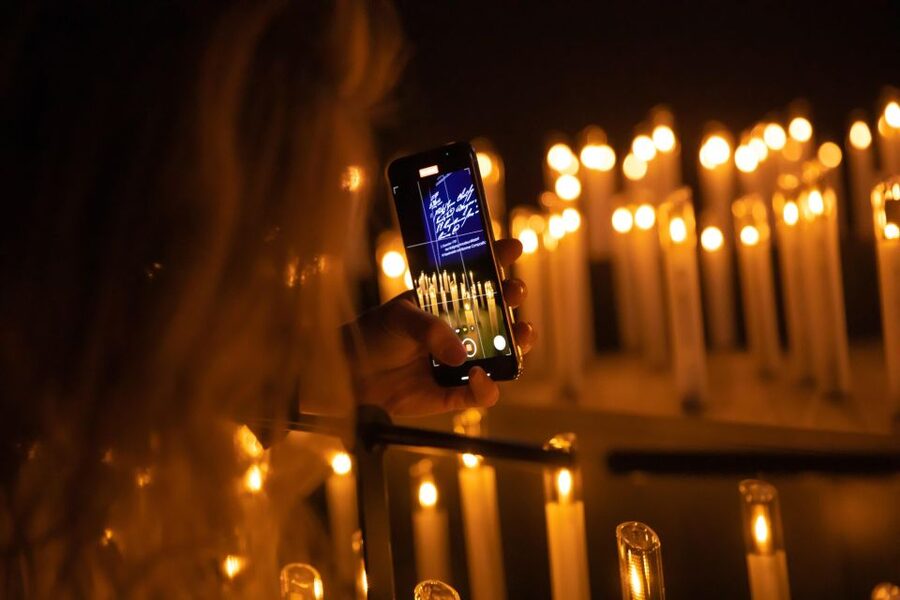
- A candlelit opening: The REQUIEM, MOZART’S DEATH room uses 1,500 candles and music to create the most solemn part of the visit.
- Vienna from above and within: The VIENNA, 1791 room offers 360 degree views, animated streets, rooftops, and a balloon ride through the city.
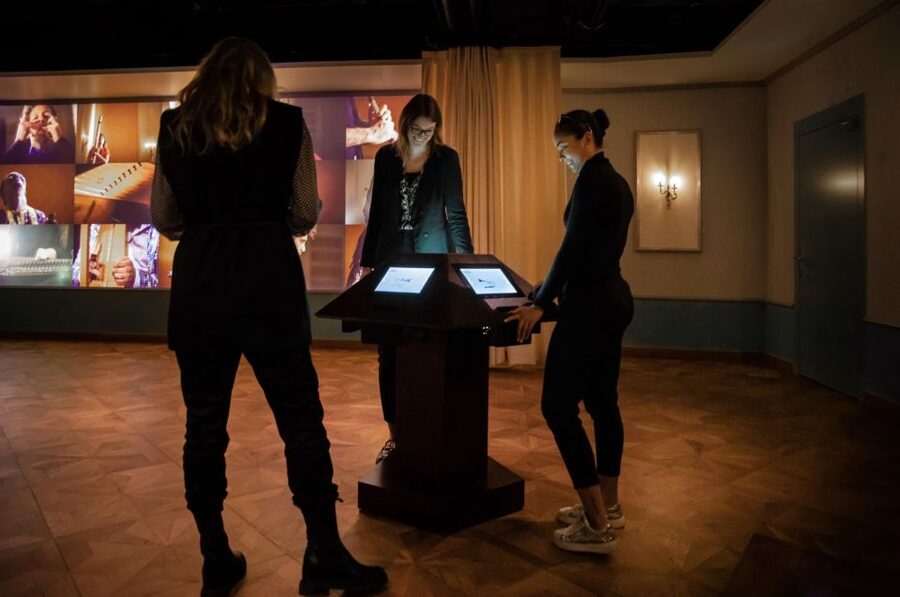
- Hands-on music: The Little Night Music room lets you play instruments from different parts of the world.
- A modern final act: The closing section uses contemporary technology and AI ideas to consider what Mozart might have done with 21st century tools.
- Good rainy-day value: At $27 per person for about an hour, it is a compact indoor stop with lockers, toilets, and access to a rooftop café.
What Mythos Mozart is really offering
Mythos Mozart is not a quiet house museum lined with original furniture and handwritten scores. It is a theatrical multimedia exhibition built inside a place tied directly to Mozart’s final year. That distinction matters when you decide how to spend your time in Vienna.
You will not move through a long series of display cases. Instead, you pass through several rooms, usually spending around ten minutes in each, while music, lighting, projections, and interactive features shape the story. The exhibition uses Mozart’s work to create a mood, then adds enough historical context to give the images meaning.
That makes the experience easy to enter. You can arrive knowing a great deal about Mozart, or only knowing his name and a few melodies. The presentation does not expect you to read music or recognize every composition. It works best when you let the sound and images do much of the teaching.
At the same time, you should set your expectations correctly. If your main goal is a detailed account of Mozart’s career, family, finances, and musical development, this will feel light. The focus is on sensation and atmosphere, not a full biography.
More Classical Concerts in Austria
- Vienna: Vivaldi’s Four Seasons Concert in Karlskirche
★ 4.7 · 14,951 reviews - Vienna: Classical Concert in the World-Famous Musikverein
★ 4.6 · 6,673 reviews - Vienna: Mozart Concert at the Musikverein – Golden Hall
★ 4.6 · 5,194 reviews
Starting in the REQUIEM room
The visit begins in the REQUIEM, MOZART’S DEATH room, a dark space filled with 1,500 candles. British German lighting designer Moritz Waldemeyer created the candle installation, and it gives the opening a serious, almost ceremonial feel.
This is an effective choice because the building is connected to Mozart’s final days. Mozart lived in the house during the last year of his life, died there in 1791, and worked on The Magic Flute and The Requiem during this period. The room does not try to recreate the deathbed as a historical scene. Instead, it uses light and music to place you in a reflective mood.
I would not rush through this part. The candle display is one of the exhibition’s most memorable visual elements, and its simple design gives the music room to breathe. It can feel eerie at first, particularly for children, but that is part of its purpose. The experience begins with mortality before moving into Mozart’s city, work, and imagination.
If you want a straightforward museum introduction, the opening may seem dramatic. If you enjoy concerts, stage design, or visual art, it sets the tone well.
Seeing Vienna as Mozart knew it in 1791
The VIENNA, 1791, MOZART’S CITY room changes the pace. Here, the exhibition presents Vienna as a moving, animated city rather than a fixed old town. You can stroll through streets, climb over rooftops in a balloon, and look toward the house where Mozart died.
The 360 degree panoramic views are useful because they give you a sense of place without requiring a long history lecture. Mozart’s life was tied to Vienna’s streets, churches, theatres, patrons, and crowded urban setting. This room turns that setting into something you can look around inside.
The historical city views are not a substitute for walking through central Vienna yourself. They are an imaginative reconstruction, not a preserved street scene. Still, they help connect the composer to a real city rather than treating him as a name floating above history.
The visual effects are also a good reason to visit on a rainy afternoon. You get a short indoor change from Vienna’s grand churches and palaces, while still seeing how the city looked in Mozart’s era.
Playing instruments in Little Night Music
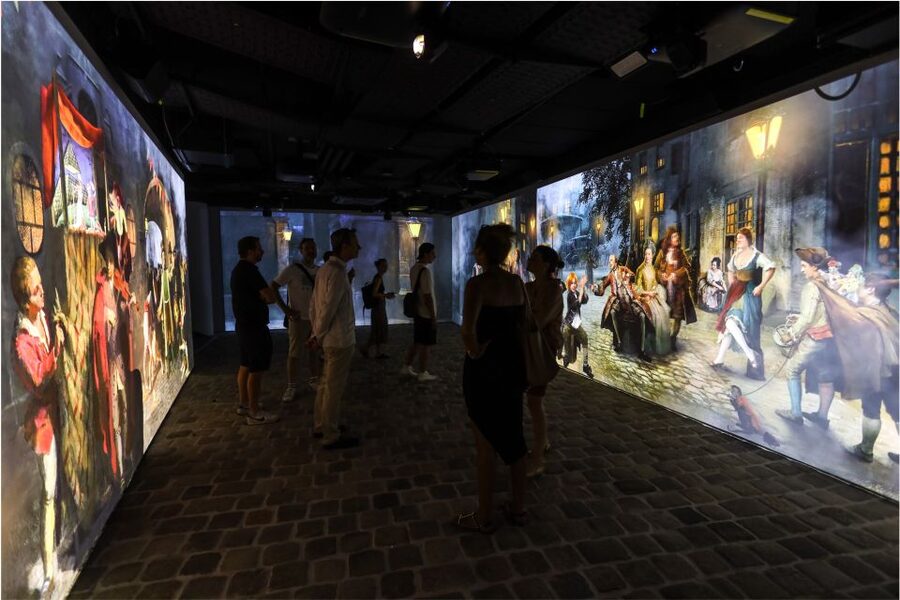
The Little Night Music room is the most playful section. It includes instruments from around the world and invites you to interact with them. You are not simply standing in front of another screen. You get a chance to make sounds and take part in the room’s musical idea.
This section helps keep the exhibition from becoming too solemn. After the candlelit opening and historical city scenes, the instruments bring people back into the present. Children can take an active role, and adults who do not usually visit music museums get a simple way to connect with the subject.
The room also makes an important point without spelling it out: music is not only something to study. It is something people create, test, and share. You do not need to know Mozart’s full catalogue to enjoy that.
The interactive displays can also make the visit feel more social. If you prefer a quiet museum with time to read, this may be less appealing. If you enjoy exhibits that ask you to participate, it is one of the stronger parts of the experience.
More Classical Concerts in Vienna
- Vienna: Classical Concert in St. Anne’s Church (Annakirche)
★ 4.6 · 3,414 reviews - Vienna: Mozart and Strauss Concert at Schönbrunn
★ 4.5 · 2,967 reviews - Vienna: Classical Concert at Mozart’s First House
2,423 reviews - Vienna Classical Concert at St. Peter’s Church
★ 4.5 · 2,039 reviews
The visual and musical finale
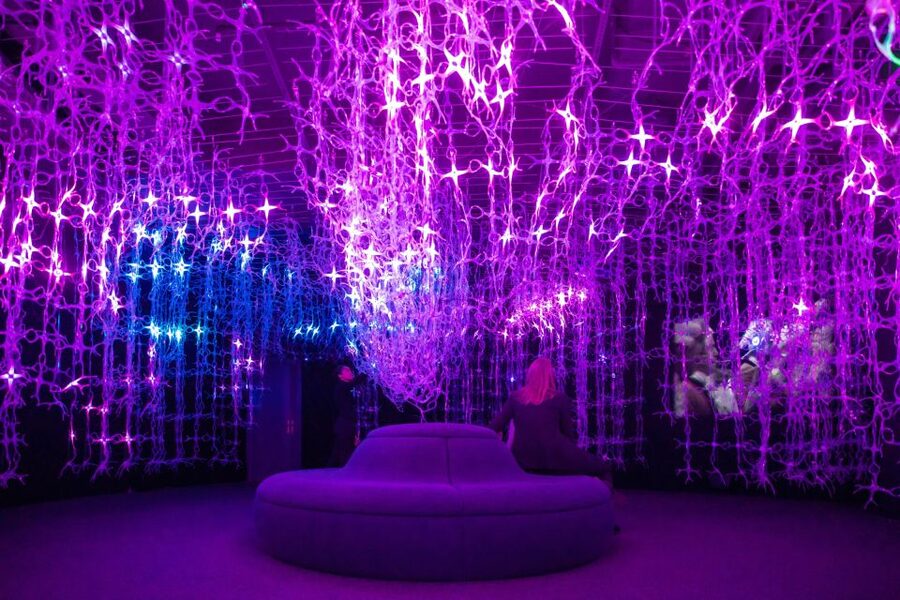
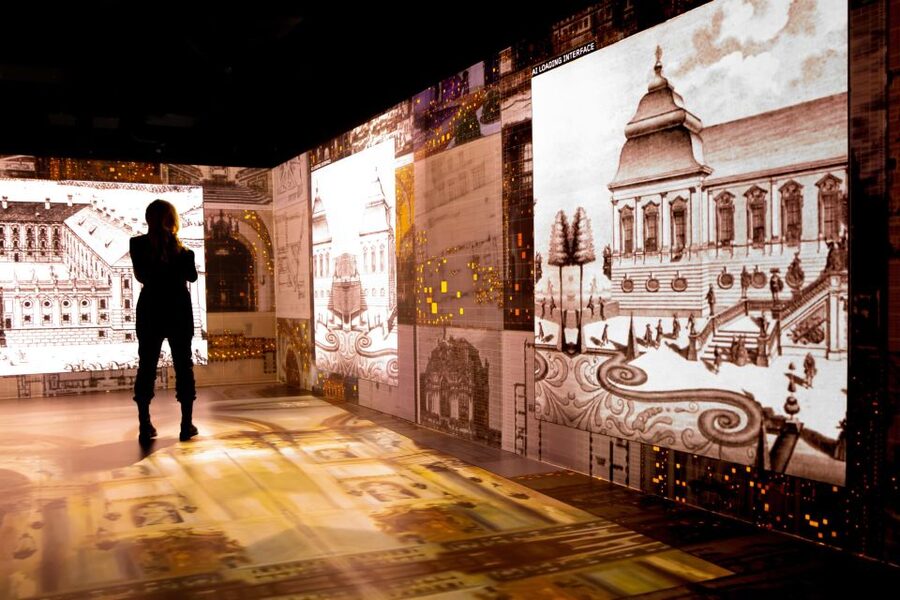
The final sections bring together Mozart’s music and current technology. Large LED screens, animation, sound, and visual effects create a more abstract presentation than the earlier rooms. One part considers AI and modern tools, asking you to imagine what Mozart might have made with technology unavailable in the 18th century.
This is where opinions may vary. Some people will find the contemporary approach exciting and inventive. Others may feel that the modern effects pull attention away from Mozart’s actual life and music. I see it as an artistic ending rather than a historical one.
The strength of this section is its emotional effect. The music is given space to feel large and physical, and the final piece has a strong sense of drama. The weakness is that technology can become the subject itself. If you came hoping for more explanation of how Mozart composed, you may find the AI material less useful.
Still, ending with the power and modernity of the music is a sensible choice. It reminds you that Mozart’s work is not limited to an old portrait or a period costume. The exhibition wants you to hear why the music still works, then imagine how a restless, inventive composer might use new tools.
How much Mozart history will you learn?
You will pick up useful facts, including the importance of the building, Mozart’s final year, and the connection to The Magic Flute and The Requiem. The audio and visual material also helps introduce the atmosphere of 18th century Vienna.
But I would not book this as your only Mozart education. The experience gives you an accessible starting point rather than a detailed scholarly account. Several parts rely on image, sound, and mood, so you may remember how the exhibition felt more clearly than a list of dates or compositions.
That is not necessarily a flaw. A first-time listener can enjoy the show without preparation, and a Mozart fan can appreciate the unusual presentation. It simply means you should pair it with a more traditional site if you want deeper context about his work and personal life.
The format works especially well for families and mixed-interest groups. One person can enjoy the music, another can focus on the visual effects, and a child can experiment with instruments. It is also a good introduction for someone who normally avoids classical music museums.
The rooftop views and Sky Café
After the exhibition, you can use the Sky Café and Restaurant, which has a large roof terrace. From there, you may see the First District, Karlskirche, the Giant Ferris Wheel, and St. Stephen’s Cathedral.
The rooftop is a useful bonus because the main exhibition lasts about an hour. You can add a drink or meal and turn the visit into a longer stop, although food and drinks are not included in the admission price.
The views also give the exhibition a practical ending. After seeing a digital Vienna from 1791, you can look out across the actual city. The contrast between the animated historical panorama and the modern skyline is part of the fun.
You do not need to use the café to enjoy the museum. Think of it as an optional extension, especially useful if you are already planning a break in central Vienna.
Price, timing, and practical value
Admission costs about $27 per person for a one-hour visit. That is not bargain-basement pricing, but the value is reasonable if you want a polished indoor attraction with several distinct rooms, interactive features, and rooftop access nearby.
The short length is both an advantage and a limitation. One hour fits neatly between a church visit, a coffee stop, or an evening concert. It is also long enough to feel like a complete activity rather than a single projection room. On the other hand, a person who wants a full afternoon museum may find the price high for the duration.
Most people spend around ten minutes in each room, and the pace is generally relaxed rather than hurried. You still need to reserve a time slot in advance and report to the Welcome Desk up to 15 minutes before your start time. Spontaneous entry may be possible when there is room, but I would not rely on it during a busy period.
The ticket includes entry to Mythos Mozart only. Hotel pickup, transport, food, and drinks are not included. The building has free lockers and toilets, which makes the visit easy to fit into a day of sightseeing.
You can cancel up to 24 hours ahead for a full refund, and the reserve now, pay later option is useful if your plans are still shifting. Bring a passport or ID card, and bring a student card if you are using one. Pets are not allowed.
The experience is wheelchair accessible. The host or greeter speaks English, and the activity information is provided in English. If you need detailed narration in another language, check before booking rather than assuming it will be available.
Who will enjoy Mythos Mozart most?
I would recommend it most strongly to:
- First-time Vienna visitors who want an easy introduction to Mozart
- People who enjoy music, projection art, lighting, or interactive museums
- Families looking for a cultural activity that is not built around long text panels
- Classical music fans who are open to a modern interpretation
- Anyone needing a one-hour indoor plan on a rainy day
- Visitors already exploring the First District
You may want to skip it if you strongly prefer original objects, quiet galleries, and detailed written history. It may also disappoint you if you expect a complete account of Mozart’s life or a formal guided tour with extensive commentary.
There is no named personal guide leading you from room to room. An English speaking host or greeter helps at the welcome desk, while the exhibition itself provides the main presentation through its rooms, sound, and visuals. This explains why some people find it clear and others would prefer more subtitles or commentary.
Is Mythos Mozart worth $27?
For me, the value comes from the range of the experience. You get the candle installation, panoramic Vienna, interactive instruments, large-scale music and images, and access to a rooftop café in a building tied to Mozart’s final year. That is more varied than a simple audiovisual show.
The price is harder to justify if you measure value by minutes alone or want a traditional museum. The exhibit lasts about an hour, and its historical information is selective. You are paying for the production, setting, and emotional presentation as much as for facts about Mozart.
The strongest element is the combination of music and visual design. The candle room gives the visit a memorable beginning, while the final modern presentation gives it a bold finish. The exhibition also succeeds at making classical music approachable without talking down to people who already know it well.
Should you book Mythos Mozart?
Book it if you want a compact, atmospheric activity that connects Mozart to his last Vienna home through music, light, projections, and participation. It is especially useful on a wet day, with children, or when your group has mixed interest in classical music.
Skip it if your priority is a detailed biography, original manuscripts, or a long guided explanation. For everyone else, the $27 ticket is a fair price for an unusual hour in central Vienna, provided you see it as multimedia art with historical content rather than a conventional museum.
FAQ
Where is Mythos Mozart located?
Mythos Mozart is in Vienna, in the building where Mozart spent the last year of his life and died in 1791.
How long does the Mythos Mozart experience last?
The experience lasts about one hour. Availability depends on the scheduled starting time.
What does the ticket include?
The ticket includes entry to the Mythos Mozart Immersive Experience. Hotel pickup and drop-off, food, and drinks are not included.
Is Mythos Mozart suitable for children?
Yes. The interactive instrument room and visual presentations can make it a useful and entertaining introduction to Mozart for children.
Is Mythos Mozart wheelchair accessible?
Yes, the experience is wheelchair accessible.
Do I need to book a time slot?
All visitors should book a time slot in advance and report to the Welcome Desk up to 15 minutes before the visit begins. Spontaneous visits may be possible if there is space.
Can I buy food or drinks at the venue?
Yes. Food and drinks can be purchased at the Sky Café and Restaurant, which has a large roof terrace with views over central Vienna.
Just added around Vienna
- Vienna’s Musical Heart: Private Walking Tour with a Local★ 5.0 · 2 reviews
- Vienna: Concert by the Vienna Baroque Orchestra★ 4.6 · 56 reviews
- Vienna: Strauss Museum – Music&History in Historic 1837 Hall★ 4.7 · 31 reviews
- Vienna Supreme Orchestra at Palais Niederösterreich★ 4.8 · 10 reviews
- Vienna: Sunday Brunch Danube Cruise & Live Music★ 4.2 · 42 reviews
- Vienna Private Walking Tour including State Opera★ 3.2 · 7 reviews
- Vienna: Romantic Classics Piano, Violin, and Cello Concert★ 4.7 · 60 reviews
- Vienna: Mozart, Beethoven, & Strauss Private Tour★ 5.0 · 4 reviews
Vienna Concerts, compared.
Vienna: Vivaldi’s Four Seasons Concert in Karlskirche
Read our review →
Vienna: Mozart Concert at the Musikverein – Golden Hall
Read our review →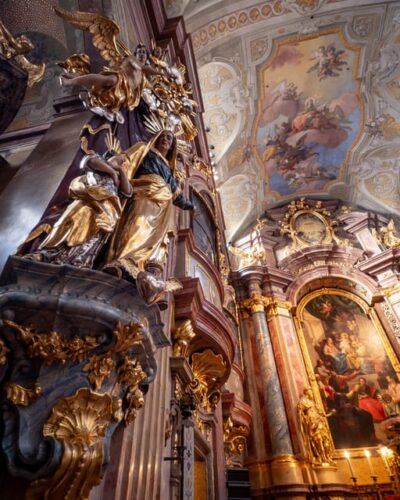
Vienna: Classical Concert in St. Anne’s Church (Annakirche)
Read our review →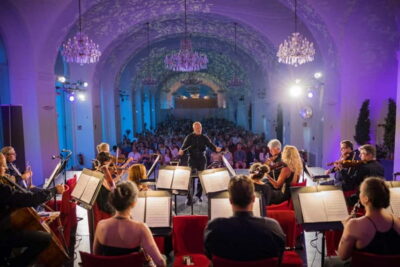
Vienna: Mozart and Strauss Concert at Schönbrunn
Read our review →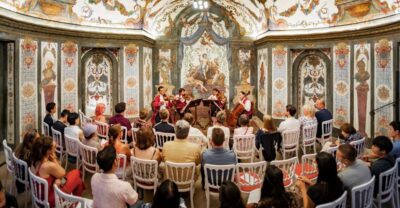
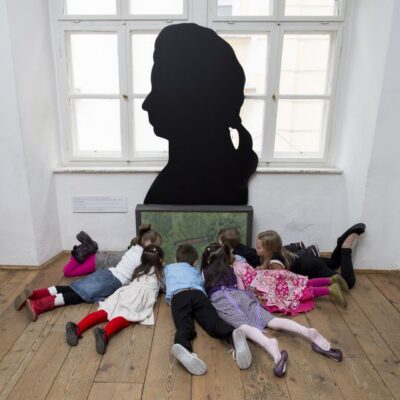
Vienna: Tickets for Mozarthaus Vienna with Audio Guide
Read our review →
Vienna Classical Concert at St. Peter’s Church
Read our review →Vienna: Classical Concert in St. Anne’s Church (Annakirche)
Read our review →Browse the lists this tour appears in