
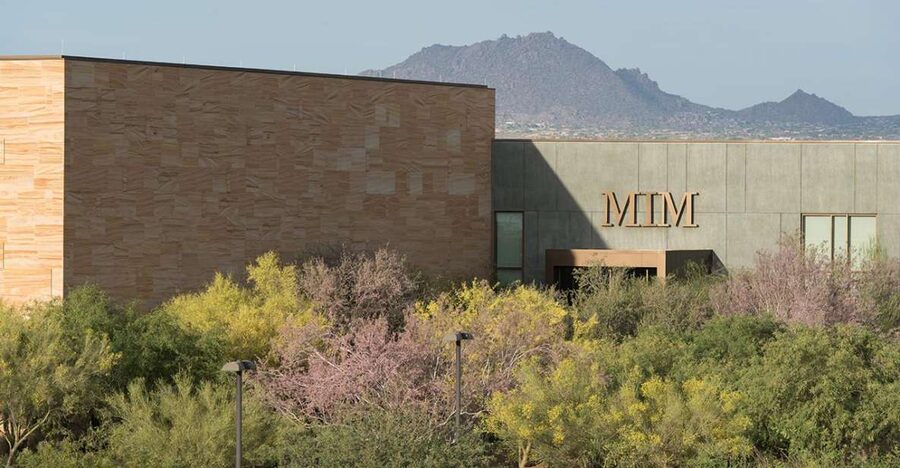
Review · USA
Phoenix: World’s Only Global Musical Instrument Museum
Phoenix’s Musical Instrument Museum puts 6,000 years of music under one roof. You move from Africa to Asia, Europe, the Middle East, Latin America, and North America, hearing the instruments through the included guidePORT system instead of simply staring at silent objects in glass cases.
I like the museum’s huge range and its focus on real musical settings, ceremonies, and performers. I also like the hands-on Experience Gallery, where you can stop looking and actually make some noise. The main consideration is time: with 4,300 instruments and material from more than 200 countries and regions, a quick visit will only skim the surface.
Key points to know before you go
- Hear the instruments in context: The guidePORT audio system links displays with music and videos of the instruments being played.
- Cover six major world regions: Exhibits include Africa, the Middle East, Asia and Oceania, Latin America, Europe, and the United States and Canada.
- See rare and important instruments: Displays include historically significant pieces and distinctive examples from many musical cultures.
- Play instruments yourself: The Experience Gallery gives you a welcome break from museum etiquette.
- Plan for more than a quick stop: Admission is valid for one day, and the collection is large enough to reward a long visit.
- Know the limits: General admission does not include concerts or special exhibitions, and food and drinks are restricted to Café Allegro.
Why Phoenix’s Musical Instrument Museum is different
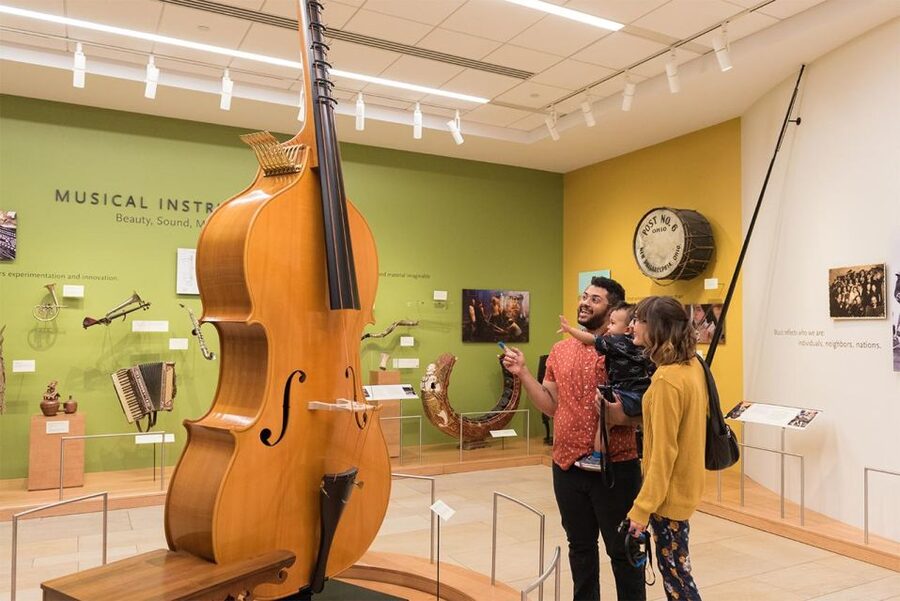
Many music museums focus on one country, one performer, or one period. This museum takes a much wider view. Its collection connects instruments to the people who made them, played them, and used them in daily life, ceremonies, and cultural events.
That matters because an instrument alone can be hard to read. A stringed object, drum, wind instrument, or electronic device behind glass tells only part of its story. The guidePORT system fills in the missing part with audio and video, letting you hear the sound and see the performance setting connected with the display.
The collection includes around 4,300 instruments. Some are rare. Some are fine examples of their type. Others matter because they belong to a distinctive musical tradition or show how people in a particular place shaped sound with local materials and ideas.
You do not need to be a musician to enjoy this. The museum works for anyone curious about how people communicate, celebrate, worship, work, and entertain themselves through music. If you already play an instrument, you may spend longer studying construction and technique. If you are visiting with a child, the chance to touch and play certain instruments gives the visit a more active rhythm.
More Musicals in the USA
- NYC: Aladdin the Musical on Broadway
★ 4.8 · 1,800 reviews - NYC: MJ the Musical on Broadway
1,510 reviews - NYC: Moulin Rouge! the Musical on Broadway
1,329 reviews
Starting with the six world regions
The museum organizes its displays by major world regions: Africa, the Middle East, Asia and Oceania, Latin America, Europe, and the United States and Canada. This makes it easier to build a route through the collection instead of wandering among unrelated cases.
I like this setup because it gives you a broad geographic frame. You can compare how different societies use similar families of instruments, then notice how materials, craftsmanship, performance styles, and cultural purpose change from place to place.
The Africa section may lead you toward instruments tied to community performance and ceremony. The Middle East section presents another set of musical traditions, with its own forms, sounds, and histories. Asia and Oceania cover a wide area, so you should expect plenty of variety rather than one single musical identity.
Latin America, Europe, and the United States and Canada complete the geographic sweep. The North American displays also help place modern music and electronic instruments within a longer story. This is not only a museum of old objects. It includes all genres of music and performers, along with examples that show how musical technology changes over time.
Because the collection covers so much ground, I suggest you choose a general pace before you begin. You can make a quick regional tour, focus on areas that matter most to you, or use the full day for a slower visit. The one-day admission gives you room to take breaks and return to sections that caught your attention.
The guidePORT system brings silent cases to life
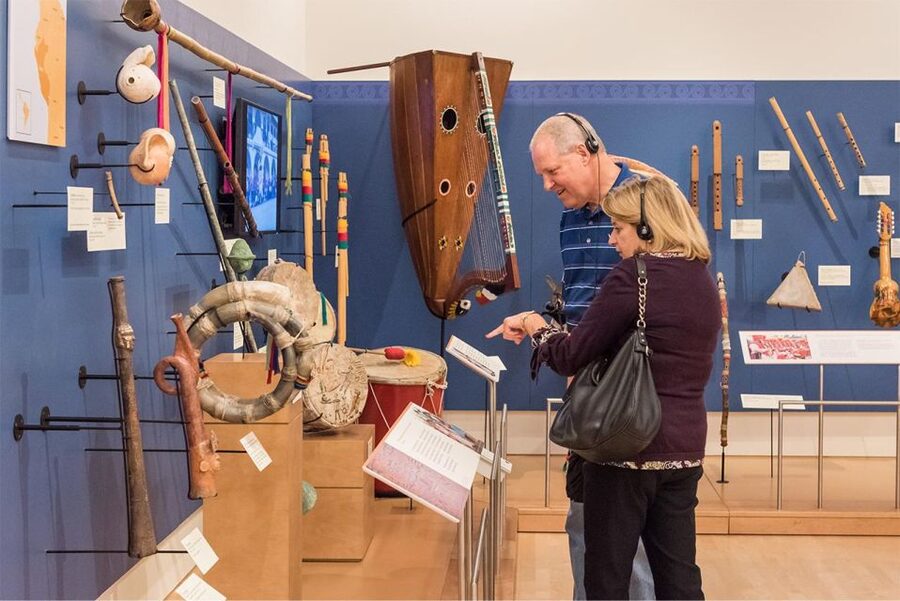
The included English guidePORT system is one of the most useful parts of the visit. As you move through the galleries, you can listen to music performed on the instruments and watch videos showing them in their original context.
This changes the way you read a display. Instead of asking only what an instrument looks like, you can hear its tone and see how it fits into a performance. That is especially helpful for instruments whose purpose or playing method is not obvious from their shape.
The system is designed to be easy to use, and it gives you control over how much information you want. You can spend time with a display that interests you, then move on without being tied to a fixed group schedule or a live guide.
The audio guide is in English, and the host or greeter service is also listed as English. If you prefer museums at your own pace, this arrangement is a strong fit. You are not waiting for a scheduled explanation, and you can choose where to linger.
One practical point: the audio and video content can make a visit feel much longer than a basic walk through the galleries. That is a good thing if you like detail, but it is also why a rushed visit may feel incomplete.
Rare instruments and the stories behind them
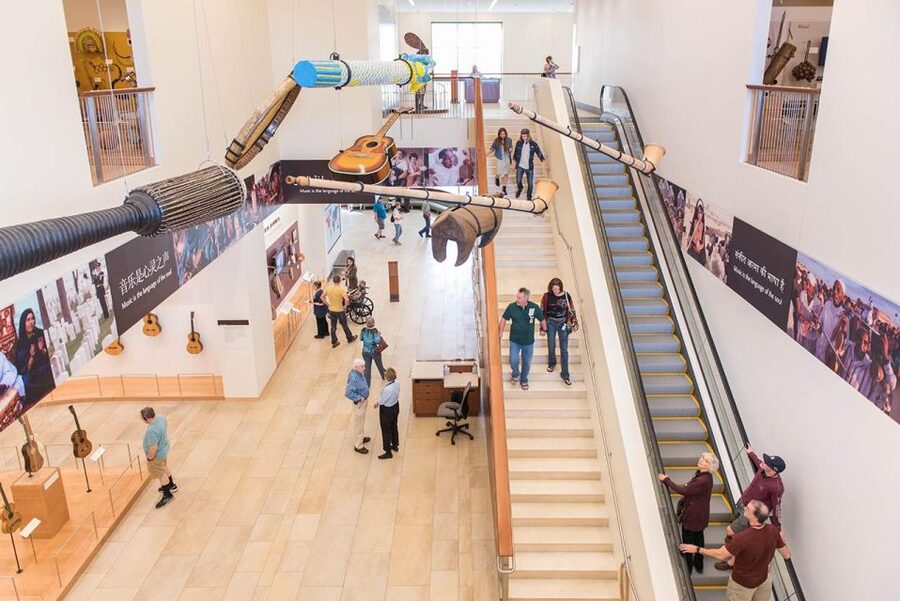
The collection is not simply a large pile of instruments. Many examples were selected because they are rare, historically important, finely made, or closely connected to a particular musical culture.
That gives you several ways to look at the displays. You might notice the design and materials first. Then the audio may show how the instrument sounds. Finally, the cultural information can explain why it matters beyond its physical form.
I find this three-part approach useful: object, sound, and setting. It helps you avoid treating music as a collection of strange shapes from distant places. Each instrument becomes part of a human activity, with a place in a ceremony, performance tradition, or everyday musical practice.
The museum also includes electronic instruments and modern musical examples. This was especially appealing to one musician-focused birthday visit, where the electronic displays added interest alongside older instruments. If you are visiting with someone who plays music, do not assume the museum is only about ancient or traditional objects.
At the same time, the enormous scope means that not every instrument will receive the same amount of attention from you. You will need to make choices. That is normal here, and it is better to spend meaningful time with selected displays than to race through every case.
Same city, a different sound:
- New Orleans Steamboat Natchez Jazz Cruise with Dinner Option
★ 4.0 · 7,533 reviews - New Orleans Steamboat Natchez Jazz Cruise
★ 4.5 · 5,334 reviews - New Orleans: Evening Steamboat Jazz Cruise + Optional Dinner
★ 4.3 · 4,548 reviews - New Orleans: Daytime Steamboat Jazz Cruise + Optional Lunch
★ 4.3 · 4,164 reviews
The Experience Gallery is where the visit becomes active
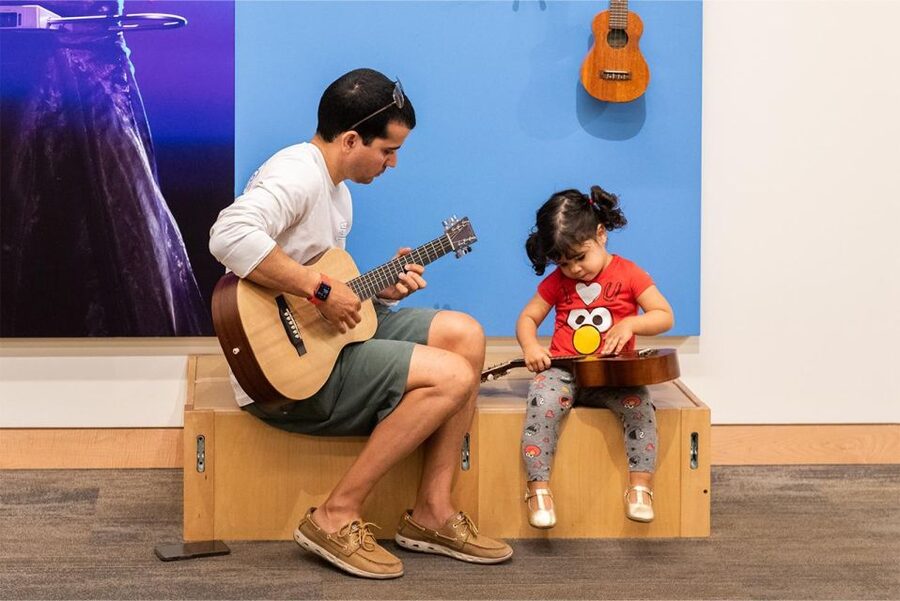
The Experience Gallery gives you a chance to touch and play some instruments. This is an important counterpoint to the main galleries, where the focus is on careful looking, listening, and learning.
For children, the hands-on section can keep the visit from becoming too passive. For adults, it offers a simple way to understand how an instrument responds to touch, breath, rhythm, or movement. You may understand a display more clearly after trying a related instrument yourself.
The gallery is also a good place to visit if different people in your group have different interests. One person can spend time with the audio guide while another explores the hands-on area. It gives the whole visit a more flexible feel.
Do not expect every display in the museum to be playable. The hands-on opportunity is specifically connected with the Experience Gallery. Elsewhere, the guidePORT system provides the main interaction through sound and video.
How much time should you allow?
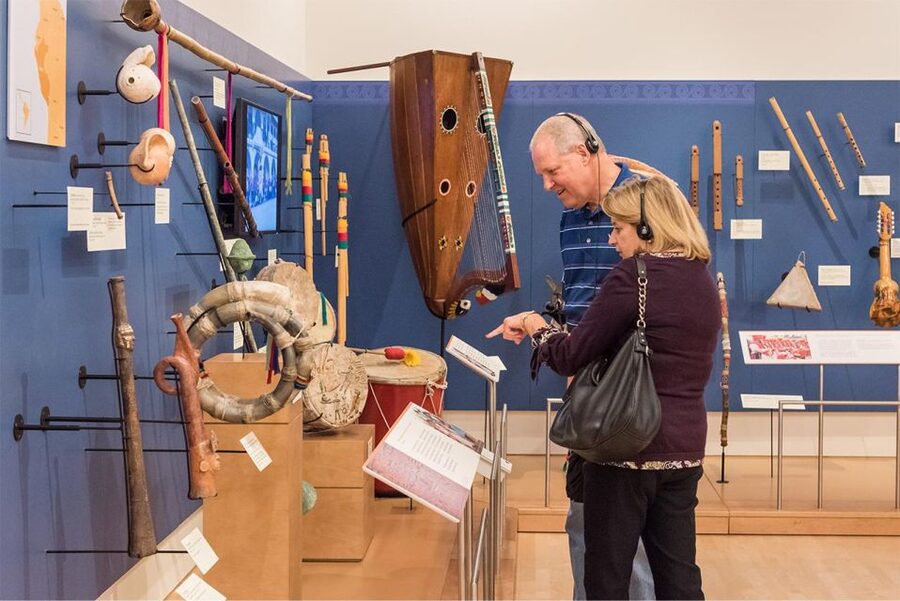
Your admission is valid for one day, and that is useful because this is not a small collection you can fully absorb in half an hour. One of the strongest reactions included with this experience came from someone who said they could easily have spent a full day there.
I would treat the museum as a substantial half-day or full-day plan, depending on how closely you use the guidePORT system and how many regions interest you. The supplied information does not set a fixed visit length, so you can shape the day around your own pace.
A quick visit can still work if you concentrate on a few regions or highlights. But if you listen to many recordings, watch the videos, explore the Experience Gallery, and stop for a meal or break, you will need more time.
Café Allegro is the only permitted place for food and beverages. Outside food and drinks, including water, are not allowed inside the museum. That rule is worth knowing before you arrive, especially if you are planning a long visit.
Price, parking, and what your ticket covers
General admission costs $20 per person. For a museum of this size, the value comes from the amount of material you can access in one visit: the geographic coverage, the 4,300 instruments, the guidePORT audio and video system, the map, and the Experience Gallery.
The price is easiest to justify if you plan to spend several hours there. A short stop still gives you access to the collection, but you will not get as much from the audio content and regional displays.
Your ticket covers general admission and the English guidePORT system. It does not cover concerts or special exhibitions, so check the details if either of those is important to your plan. They are separate from the standard museum visit.
Parking is complimentary. The parking lot entrance is on Mayo Boulevard, just south of Loop 101. That makes arrival straightforward if you are driving, and you do not need to budget extra for parking.
The experience is wheelchair accessible. For bags, backpacks, purses, and other items larger than 18 by 18 inches must be checked at Guest Service. Tripods, selfie sticks, umbrellas, and similar items also need to be checked. Non-stroller baby carriers are not allowed, while front-worn slings or carriers are permitted.
Who will get the most from this museum?
I would recommend this museum to anyone who likes cultural history, music, design, or hands-on learning. You do not need musical training. The audio system gives you enough context to follow along, while the displays offer plenty for a serious musician to study.
It is also a strong choice for families, especially if you use the Experience Gallery as part of the plan. The hands-on section gives younger visitors something to do, while the regional galleries provide plenty of visual and audio material for adults.
Musicians may want to allow extra time. The collection includes traditional instruments, modern examples, and electronic displays, so the experience is not limited to one kind of music. A birthday visit for a musician was particularly well suited to the museum because the displays offered material that connected with her interests.
I would be more cautious if you want a fast, tightly scheduled attraction. The museum rewards patience. You can move quickly, but the guidePORT recordings and videos are where much of the meaning comes through.
Practical advice for a smoother visit
Arrive with a simple plan. Choose whether you want a broad tour of all six regions or a closer look at two or three. That choice will keep the collection from feeling overwhelming.
Use the map when you enter, and let the audio system guide your priorities. You do not need to listen to every recording. Pick instruments that catch your eye, then give yourself permission to move on.
Wear clothing that allows easy movement between galleries and the Experience Gallery. Since food and drinks are restricted, plan your café break rather than carrying a water bottle through the museum.
Leave large bags and extra gear at home if possible. The bag-check rules cover many everyday items, including large purses, backpacks, umbrellas, tripods, and selfie sticks. Front-worn baby carriers are allowed, but non-stroller carriers are not.
If your schedule changes, you can cancel up to 24 hours in advance for a full refund. The reserve-now-and-pay-later option also lets you hold a place without paying at the time of booking, which is useful when your Phoenix plans are still moving.
Should you book the Musical Instrument Museum?
Yes, if you want more than a collection of objects behind glass. The guidePORT audio and video system, the six regional sections, and the hands-on Experience Gallery give you several ways to connect with the material.
The $20 admission is good value when you allow enough time to listen and explore. I would book it for a music lover, a curious family, or anyone who enjoys learning how cultures express themselves through sound.
Skip it only if your schedule allows for a very brief stop or if concerts and special exhibitions are your main goal, since those are not included. For a flexible one-day visit with free parking and a broad cultural focus, this is one of Phoenix’s more distinctive museum experiences.
FAQ
Where is the Musical Instrument Museum located?
The museum is in Phoenix, Arizona. The parking lot entrance is on Mayo Boulevard, just south of Loop 101.
How much does general admission cost?
General admission costs $20 per person.
How long is the admission valid?
Admission is valid for one day. The available starting times should be checked when booking.
What does the ticket include?
The ticket includes general admission, the English guidePORT audio system, and a brochure with a map.
Are concerts included with general admission?
No. Concert admission is not included.
Are special exhibitions included?
No. Special exhibitions are not included in general admission.
Is an audio guide available?
Yes. An English audio guide is included through the guidePORT system. It lets you hear music and watch videos connected with the instruments on display.
Can I play any of the instruments?
Yes. You can touch and play some instruments in the Experience Gallery.
Is the museum wheelchair accessible?
Yes. The activity is wheelchair accessible. Large bags, umbrellas, tripods, selfie sticks, and similar items must be checked at Guest Service.
More Museum Visits in the USA
- Little Havana Tour Private Cuban Podcaster Art, Museums, Music
★ 4.5 · 93 reviews - Bellagio Gallery of Fine Art: “American Duet: Jazz” Exhibit
★ 4.0 · 5 reviews - Tunica: Gateway to the Blues Museum Tour
★ 4.5 · 4 reviews - Venice: Vivaldi’s Four Seasons Concert & Music Museum Visit
★ 4.8 · 2,065 reviews
Just added around the USA
- Las Vegas: Zombie Burlesque Comedy Musical Show Ticket★ 4.5 · 62 reviews
- Tunica: Gateway to the Blues Museum Tour★ 4.5 · 4 reviews
- Sunset Cruise with Live Music★ 4.0 · 18 reviews
- St. Louis Blues Ice Hockey Game Ticket at Enterprise Center★ 4.0 · 5 reviews
- St Augustine Nights of Lights Tour with Live Music and Sunset Opt★ 4.5 · 69 reviews
- Savannah Live Music Walking Tour★ 4.5 · 18 reviews
- Savannah Riverboat Gospel Music Dinner Cruise★ 5.0 · 112 reviews
- Utah Jazz Basketball Game Ticket at Delta Center★ 4.5 · 2 reviews
USA Concerts, compared.

New Orleans Steamboat Natchez Jazz Cruise with Dinner Option
Read our review →
New Orleans: Evening Steamboat Jazz Cruise + Optional Dinner
Read our review →
New Orleans: Daytime Steamboat Jazz Cruise + Optional Lunch
Read our review →
Key West Sunset Sail with Open Bar, Live Music and Hors D’oeuvres
Read our review →

Key West Sunset Cruise: Dinner, Live Music & Drinks Included
Read our review →
NYC: Harlem Hallelujah! Gospel Wednesday Concert
Read our review →Browse the lists this tour appears in