
Review · LUCCA
Lucca: Musical Walking Tour with Puccini Museum Visit
Lucca’s music story reaches from Roman amphitheater shows to Puccini’s operas and concerts by David Bowie, Elton John, and The Rolling Stones. This two-hour walking tour ties those very different sounds to real streets, theaters, churches, and squares instead of treating the city as a string of unrelated sights.
I like the way live musical excerpts give the walk a sound as well as a storyline. I also like the route’s mix of classical names, including Puccini, Luigi Boccherini, and Niccolò Paganini, with modern performers such as Joe Cocker and Ray Charles. The main consideration is cost: the $34 tour price does not include museum entrance, which costs €5 on the day, and theater admission fees are also listed separately.
Key points at a glance
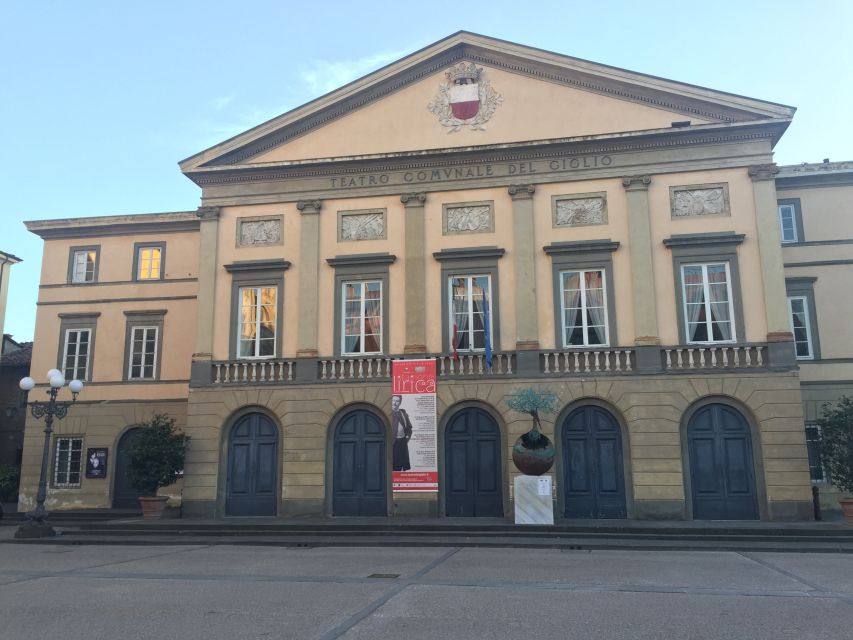
- Teatro del Giglio begins the story: Start inside Lucca’s historic theater, if it is open, with guided commentary and musical passages.
- Puccini is the main thread: Finish at the composer’s birthplace and museum, the most personal stop on the route.
- Classical and modern music share the route: Follow Boccherini and Paganini, then connect Piazza Napoleone and Piazza dell’Anfiteatro with major concert acts.
- The tour is more than sightseeing: Musical excerpts help you hear why each place matters.
- Budget an extra €5: Museum tickets can be bought from the guide on the day, while theater and museum entrance costs are not included in the tour price.
- Plan for a walking route: Comfortable shoes and clothes are sensible, and the activity is not recommended for people with mobility impairments despite being marked wheelchair accessible.
Why Lucca works so well as a musical city
Lucca is compact, old, and full of spaces that have served very different purposes over time. A theater, cathedral square, medieval lane, former Roman arena, and composer’s home can all fit into one short route. That makes this tour a useful choice if you want more than a standard introduction to the city.
The appeal is not just the number of famous names. The guide connects music to place. You hear about composers who lived or worked in Lucca, then walk to the buildings and squares tied to them. You also see how the city’s performance life has changed, from classical composition to large modern concerts.
I would not book this expecting a full concert. The musical excerpts are there to support the commentary, not replace it. Think of the activity as a guided city walk with a musical soundtrack, rather than a recital with a few streets added.
More Musicals in Italy:
- Rome: Musical Biography of Frank Sinatra Concert
★ 3.9 · 100 reviews - Musical masterpieces: The best of the Baroque concert
★ 5.0 · 17 reviews - NYC: Aladdin the Musical on Broadway
★ 4.8 · 1,800 reviews
Starting inside Teatro del Giglio
The tour begins at the ticket office of Teatro del Giglio. This is a strong starting point because the theater gives the subject an immediate sense of place. Instead of first hearing a long explanation about Lucca’s musicians, you enter a performance venue and begin with the setting where music was presented to an audience.
The guided visit to the interior is included as part of the route, but entrance fees are not included in the price. That distinction matters when you compare the tour with other Lucca walks. Ask your guide about the theater and museum costs on the day, since the activity information specifically notes that museum tickets can be purchased from the guide for €5.
The theater may occasionally be closed. If that happens, the tour replaces it with another place of similar musical interest. That protects the overall theme, but it means you should not treat the theater interior as guaranteed.
Musical passages are woven into the commentary here and at later stops. I like this format because a short excerpt can make a composer or performance tradition easier to grasp than a list of dates. The experience should suit you best if you enjoy hearing a little music while walking, rather than standing for long stretches with nothing but spoken explanation.
Piazza Napoleone and Lucca’s concert years
From the theater, the route goes outside to Piazza Napoleone. The square is linked with David Bowie, Elton John, and The Rolling Stones, who have performed concerts there. This changes the tone of the tour in a useful way.
Lucca is often presented through medieval walls, churches, and Roman remains. Piazza Napoleone adds a more recent layer. The point is not that these performers shaped Lucca in the same way as Puccini or Boccherini. Rather, the square shows that the city’s musical life did not end with the great composers of the past.
This is one of the tour’s most appealing choices for mixed groups. A classical music fan can follow the discussion of opera and composition, while someone more interested in popular music gets familiar names and concert connections. If your interests are narrow, keep that balance in mind. The route gives attention to several periods, so Puccini is important but not the only subject.
The information provided does not specify the concert dates or venues within the square, so you should expect context rather than a detailed concert archive. Still, the stop helps explain why a small Tuscan city can host major performances in a historic public space.
San Martino Cathedral and Lucca’s musical tradition
The route continues to the facade of San Martino Cathedral. The cathedral is included because musicians of high quality have been produced in connection with Lucca over the centuries. Even without entering, the facade gives the guide a useful place to talk about the city’s long connection with sacred and classical music.
This stop also breaks up the route. You move from a theater to an open square, then to a cathedral facade and the narrow streets beyond. That variety keeps the walk from feeling like a sequence of composer biographies.
You should not expect a full cathedral visit from the details provided. The focus here is the exterior and its connection to Lucca’s musicians. If entering the cathedral is important to you, plan that separately rather than assuming it is part of the tour.
The narrow medieval streets that follow are part of the experience, not just a way to get from one named site to another. The city’s old layout helps you picture how composers and performers moved through Lucca before modern concert halls and large event spaces became common.
More Music Walking Tours in Italy:
- Enjoyable music tour of the historical city of Lucca
★ 5.0 · 37 reviews - The Original Sound of Music Tour in Salzburg
★ 4.5 · 6,129 reviews - Salzburg: Original Sound of Music Tour
★ 4.8 · 5,059 reviews - London Rock and Roll Music Tour
★ 4.5 · 943 reviews
Boccherini and the conservatory
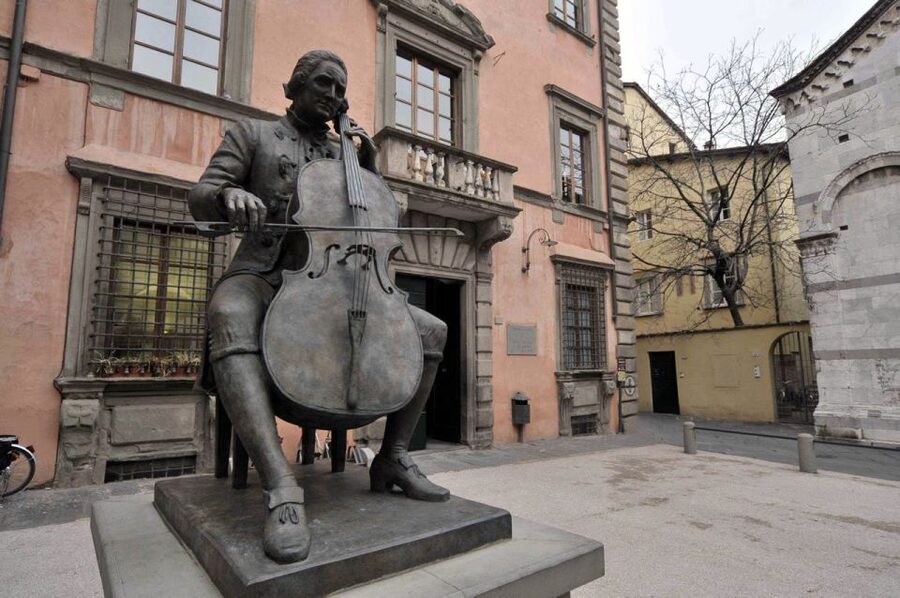
One of the more specific stops is the Luigi Boccherini Conservatory. It is named for Luigi Boccherini, the cellist and composer born in Lucca. For anyone who knows only Puccini, this part gives the city’s musical identity more depth.
Boccherini is a useful reminder that Lucca produced important musicians across different periods and instruments. The route does not reduce the city to one famous opera composer. Instead, it introduces a cellist and composer whose name remains attached to a local institution.
The conservatory also gives the guide a chance to explain how music education remains part of the city’s identity. The information supplied does not promise entry into the conservatory, so expect to view and discuss the site from the route rather than attend a class or performance.
I find this kind of stop valuable because it rewards curiosity. You do not need to know Boccherini’s work in advance. The musical excerpt and the guide’s explanation should give you a basic sense of why he belongs in Lucca’s story.
Piazza dell’Anfiteatro, from gladiators to Joe Cocker
The oval-shaped Piazza dell’Anfiteatro is one of Lucca’s most recognizable spaces. Its shape preserves the outline of the Roman amphitheater that once occupied the site, where gladiators fought. In more recent times, artists including Joe Cocker and Ray Charles have performed there.
This is the clearest example of the tour’s main idea: one place can carry several musical and cultural lives. The square began as a Roman arena, became part of the medieval city, and later served as a concert setting. The guide uses those layers to show how public performance changes while the setting remains.
The square can also be a busy place, but the supplied details do not give a typical group size or crowd pattern. Your ability to hear every word may depend on where the group stands and how much activity surrounds you. Stay close to the guide, especially during the musical excerpts.
I would set aside time to return here on your own if you want photographs or a quieter look. During the tour, the square is mainly a storytelling stop. The value comes from the connection between its unusual oval form, Roman past, and modern concerts.
Paganini’s Lucca connection
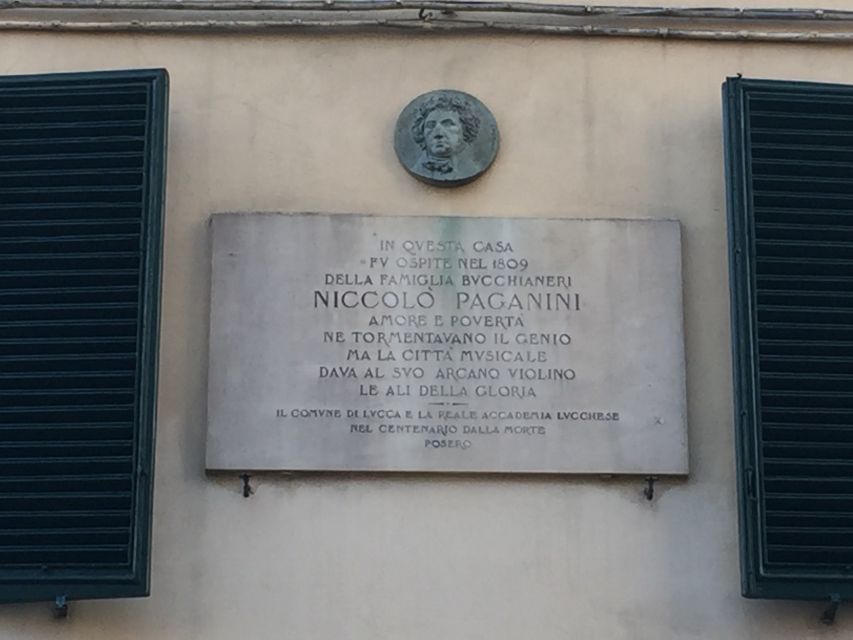
The route then reaches the residence where Niccolò Paganini lived while he was in Lucca. Paganini is best known as a violinist, and this stop adds another personal link between a famous musician and the city.
The musical detail here is especially distinctive. You hear the languid notes of one of Paganini’s guitar and violin serenades composed in Lucca. That gives the stop a more intimate quality than a simple address or plaque. You are not only told that Paganini stayed in the city, you are given a piece connected with his time there.
The details do not say that the residence interior is open to tour, so expect an exterior stop with explanation and music. That is typical of a city walking experience, but it is worth knowing if you prefer indoor visits.
This part should appeal to listeners who enjoy the contrast between Paganini’s famous public image as a virtuoso violinist and the softer sound of a serenade. It also keeps the tour from focusing only on opera.
Finishing at Puccini’s birthplace
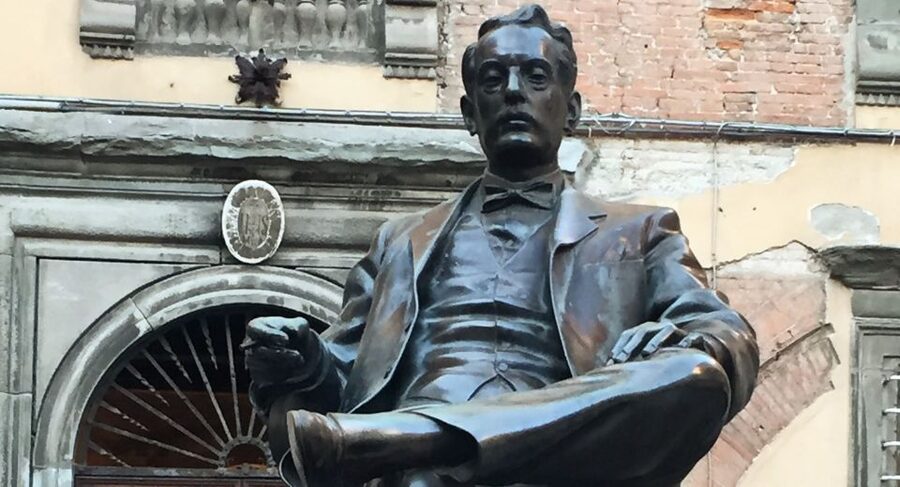
The final stop is the birthplace of Giacomo Puccini, now the Puccini Museum. This is the route’s most direct connection to Lucca’s best-known composer and celebrity. Ending here makes sense: the earlier stops establish the city’s wider musical world, then the walk arrives at the person most visitors are likely to recognize.
The museum entrance is not included in the $34 price. You can buy the ticket on the day from your guide for €5, and children under 15 go free on the walking tour but still pay the museum entrance fee. That extra cost is modest, but you should include it when working out your total.
The supplied information does not spell out how long you spend inside the museum or list every room on view. You should therefore treat the museum visit as the closing part of the guided route, not assume a long independent museum session. If Puccini is your main reason for booking, ask the guide how the visit is organized before the tour begins.
For me, the museum works best after the earlier stops. You have already heard about Lucca’s theaters, squares, performers, and composers. Puccini’s birthplace then feels like part of a larger local tradition instead of an isolated celebrity house.
The guides and the musical format
The tour is offered in English and Italian. A guide named Vitoria received especially strong praise for being passionate and well informed, so if you see her name available when booking, she would be a welcome match for this subject. Guide assignments can change, and the activity details do not guarantee a particular guide.
The guide’s role matters more here than on a basic orientation walk. The route depends on connections between people, places, musical styles, and time periods. A flat delivery would make those links feel like a list. A guide who enjoys the subject can make the musical excerpts and local stories work together.
The tour received an overall rating of 4.5 from 21 reviews, with repeated praise for the guide’s passion and the mix of classical and modern music. I would read that as a sign that the personal delivery is central to the experience. It is less about checking off famous buildings and more about how well the guide brings those buildings into the story.
Price, timing, and practical planning
The listed price is $34 per person for two hours. That is reasonable if you want a themed walk with a theater visit, guide commentary, musical excerpts, and a Puccini museum stop. It is less compelling if you plan to skip the indoor visits or have little interest in music.
Remember the added entrance costs. Museum admission is €5 and can be bought from the guide on the day. Theater and Puccini Birthplace Museum entrance fees are not included in the tour price, so confirm the exact total before the walk starts.
The tour begins at the ticket office of Teatro del Giglio and ends back at the same meeting point. That return makes planning easier, especially if you have a later train, meal reservation, or another Lucca sight to visit.
The duration is two hours, but starting times vary, so check availability for your date. Wear comfortable shoes and clothes. The route uses narrow medieval streets and several city squares, and the activity information says it is not suitable for people with mobility impairments. At the same time, it is marked wheelchair accessible, so anyone relying on a wheelchair should confirm the route conditions directly before booking rather than assume every surface and stop will work well.
Cancellation is flexible: you can cancel up to 24 hours before the start for a full refund. You can also reserve now and pay later. Those terms are useful if your Tuscany schedule is still shifting.
Who should book this walk
I would choose this tour if you want to understand why Lucca is linked with more than one composer. It is a good match for classical music fans, Puccini fans, and anyone who prefers a city walk with a clear theme.
It also works for a couple or family with mixed tastes. The Rolling Stones, Bowie, Elton John, Joe Cocker, and Ray Charles keep the route from becoming a purely academic discussion. Children under 15 can join the walking tour free, though they still pay the museum entrance fee.
I would think twice if you want a long, quiet museum visit, a complete theater performance, or a standard overview of Lucca’s churches and walls. The route gives those subjects only as they relate to music.
Should you book the Lucca Musical Walking Tour?
Book it if you like the idea of hearing Lucca as you see it. The strongest parts are the connections between Puccini, Boccherini, Paganini, historic venues, and modern concert squares, backed by musical excerpts and a guide who can make the subject personal.
Budget the extra museum cost, confirm accessibility, and remember that the theater visit depends on opening conditions. If those points suit you, this is a focused and enjoyable way to spend two hours in Lucca, with more character than a basic sightseeing loop.
FAQ
How long does the musical walking tour last?
The tour lasts two hours. Starting times vary, so check availability for your chosen date.
Where does the tour start?
It starts at the ticket office of Teatro del Giglio in Lucca.
Where does the tour finish?
The activity ends back at the Teatro del Giglio meeting point.
Is the Puccini Museum entrance included?
No. Museum entrance is not included. Tickets can be purchased from the guide on the day for €5.
Do children under 15 pay for the tour?
Children under 15 go free on the walking tour, but they still need to pay the museum entrance fee.
Is the Teatro del Giglio entrance included?
The guided tour includes a visit to the theater interior when the theater is open, but theater entrance fees are not included in the activity price.
What happens if the theater is closed?
If the theater is closed, the tour visits another place of equal musical interest.
Which languages are available?
The tour is offered in English and Italian.
Can I cancel for a refund?
Yes. You can cancel up to 24 hours in advance for a full refund. You can also reserve now and pay later.
More Walking Tours in Italy
- Arena di Verona Opera – Ticket + 1h City guided walking tour
★ 5.0 · 6 reviews - Sydney Opera House Official Guided Walking Tour
★ 4.5 · 3,770 reviews - London West End Musical Silent Disco Walking Tour Top 1% Rated
★ 5.0 · 1,057 reviews - Salzburg 2.5-Hour Walking Tour: Mozart, Old Town & More
★ 4.2 · 987 reviews
More Museum Visits in Italy
- Venice: Vivaldi’s Four Seasons Concert & Music Museum Visit
★ 4.8 · 2,065 reviews - Florence Duomo, Baptistery & Opera Museum Audioguided Tour
★ 4.2 · 607 reviews - Venice: Vivaldi Baroque Concert Ticket and Free Music Museum
★ 4.8 · 103 reviews - Vivaldi’s Four Seasons Concert and Music Museum Visit
★ 5.0 · 85 reviews
Just added around Italy
- Venice: Dinner & Concert★ 4.3 · 91 reviews
- Venice: Cooking Class + Guitar Concert at Chef’s Francesco★ 4.8 · 30 reviews
- Venice: Vivaldi Baroque Concert Ticket and Free Music Museum★ 4.8 · 103 reviews
- Venice: Golden Hour Cruise with Classical Music & Cocktail★ 4.7 · 59 reviews
- Venice: Live Concert with Dinner or Aperitif at LL JAZZ Club★ 4.3 · 74 reviews
- Venice: Around Vivaldi Concert Ticket★ 4.7 · 112 reviews
- Venice: concert byI MandolinVenice Quartet in St. George’s Church.★ 5.0 · 2 reviews
- Tuscany: Cooking, Dinner & Live Opera in the countryside★ 4.8 · 13 reviews
Lucca Concerts, compared.
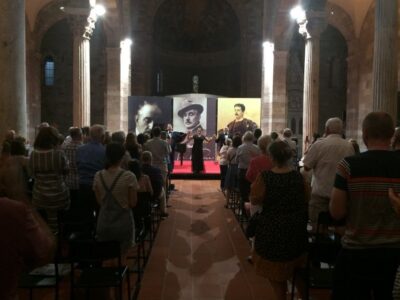
Lucca: Puccini Festival Opera Recitals and Concerts
Read our review →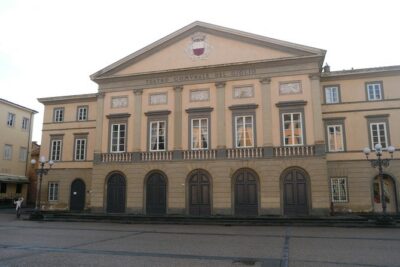
Enjoyable music tour of the historical city of Lucca
Read our review →
Private Concert in the Artist’s House on the Hills of Lucca
Read our review →
RomanticOpera concert in the artist’s house on the hills and wine tasting
Read our review →Browse the lists this tour appears in