
Review · LUCCA
Enjoyable music tour of the historical city of Lucca
Lucca’s musical story is much bigger than Puccini. This two to two-and-a-half-hour walk links the city’s opera houses, churches, concert squares, composers’ homes, and Roman-era piazzas with music played at the right places. You may hear Puccini near his birthplace, Paganini beside the house where he stayed, and Catalani’s La Wally near his memorial plaque.
I like the Teatro del Giglio interior visit, which gives the tour a proper opening rather than starting with a generic city walk. I also like that admission to the Puccini Museum is included, since the museum gives the final stop a clear purpose. The main consideration is timing: the walk can run closer to two and a half hours, so leave room afterward rather than booking a tight lunch or train connection.
Key points to know before booking
- Music accompanies the walk: Guides play short excerpts connected to the buildings, composers, and streets you visit.
- Two useful admissions are included: You enter Teatro del Giglio and the Puccini Museum, Casa Natale.
- Lucca’s music story goes beyond Puccini: The route covers Paganini, Boccherini, Catalani, Geminiani, and the Puccini family.
- Modern concert history is part of the route: Piazza Napoleone has hosted David Bowie, Bob Dylan, Elton John, and the Rolling Stones.
- The group can be small, but the maximum is 25: Some departures may feel almost private, while others can be fuller.
- Plan for a long walking stop: The advertised duration is about two to two and a half hours, with narrow streets and several standing explanations.
Why this Lucca music walk works
This is not simply a Puccini tour with a few extra names added. It uses music as a way to explain Lucca itself. You move from courtly and religious music to opera, classical instrumental music, and modern outdoor concerts. The result is a city walk with a clear theme and enough variety to keep it moving.
The guides use short pieces of music during the route. That small touch matters. A plaque or a name on a building can feel flat when you see it alone. Hearing a few notes beside the place connected to the composer gives you something to remember.
The guides named in the feedback include Vittoria, Roberta, Lucia, Paola, and Vittorio. Their approaches vary, but the strongest part of the guiding is the blend of music, architecture, and politics. You are not expected to know opera or classical music beforehand. The explanations are designed to connect the sound to the setting.
The tour is offered in Italian and English, with English available for the experience. At the start, meet by the Teatro del Giglio ticket office at 10:45 a.m. for an 11 a.m. departure. The route finishes at the Puccini Museum in central Lucca, so you end near Piazza San Michele rather than returning to the theatre.
More Music Walking Tours in Italy:
- Lucca: Musical Walking Tour with Puccini Museum Visit
★ 4.5 · 21 reviews - The Original Sound of Music Tour in Salzburg
★ 4.5 · 6,129 reviews - Salzburg: Original Sound of Music Tour
★ 4.8 · 5,059 reviews
Teatro del Giglio opens the story
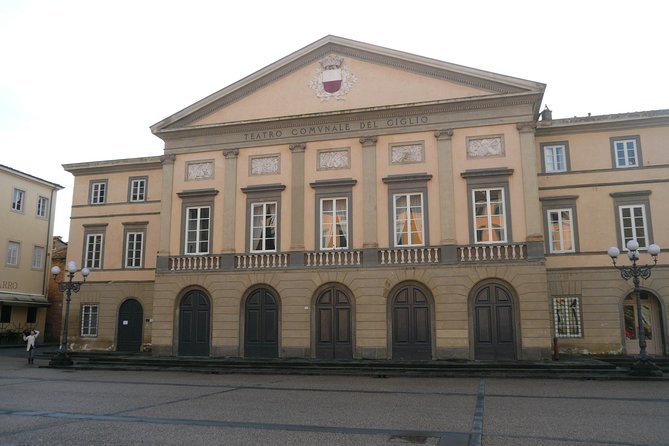
The first stop is Teatro del Giglio, at Piazza del Giglio 13/15. The theatre’s construction dates to 1675, giving the tour an impressive first chapter: Lucca’s music was not confined to private homes or churches. It had a formal stage and a long public life.
You enter the theatre with the guide and hear excerpts connected with performances held there in the past. This is one of the most worthwhile parts of the tour because the building itself provides a sense of scale. Music history becomes easier to grasp when you are standing inside the place built for it.
The included admission also improves the value of the tour. You are not paying only for a guide to point out a façade. You get inside one of Lucca’s major performance spaces before heading into the streets.
Allow about 30 minutes here. If you care mainly about outdoor sightseeing, this indoor stop may feel longer than expected. If you like opera, theatre design, or the social side of music, it gives the walk a strong start.
Piazza Napoleone and Lucca’s modern concert life
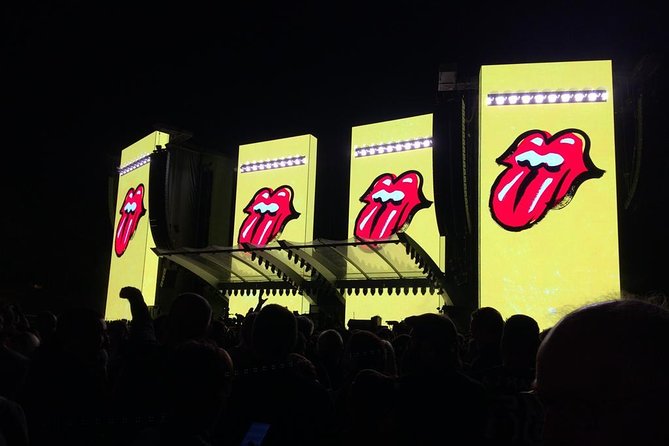
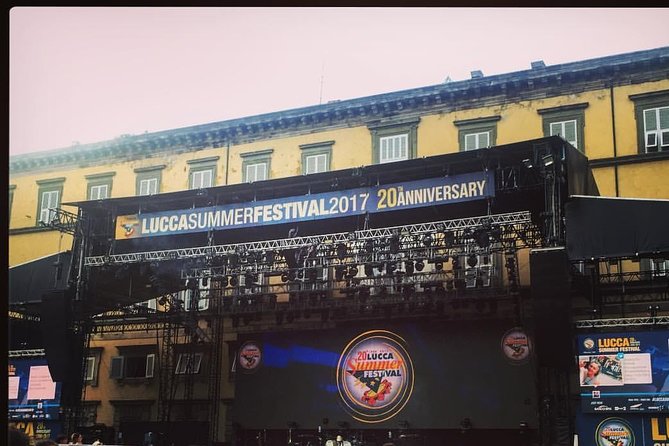
After leaving the theatre, the guide turns to Piazza Napoleone, the broad square beside it. The story shifts from centuries-old theatre music to large modern concerts. Over the past 20 years, the square has hosted rock, pop, jazz, and soul performances by major names including David Bowie, Bob Dylan, Elton John, and the Rolling Stones.
This is a useful reminder that Lucca is not only a city of medieval walls and opera composers. The same public spaces that once served civic purposes now accommodate outdoor music. The guide’s explanation helps you picture the square as a performance venue, even when no concert is taking place.
The stop lasts about 15 minutes and does not include a separate admission. That is fine because the value here comes from the setting and the story, not from entering a building.
San Giovanni and San Martino connect music to worship
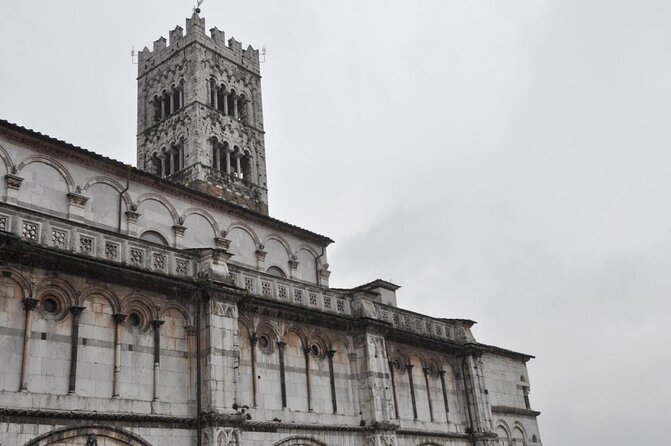
The route then reaches the Church of San Giovanni and the Cathedral of San Martino. These religious buildings are tied to Lucca’s long tradition of church music and recurring religious celebrations.
The cathedral is especially important to the Puccini family. Members of the family served as cathedral organists for 124 consecutive years. That detail changes the way you think about Puccini. Before he became an opera celebrity, his family had a long working relationship with Lucca’s religious and musical institutions.
The guide explains how churches helped produce and preserve music over the centuries. You are looking at religious buildings, but the subject is also training, performance, patronage, and family tradition.
This portion takes around 15 minutes. The information is delivered as part of the walking route, and the supplied details do not promise a separate interior visit or special church access. If entering the churches is important to you, ask the guide what is possible on the day.
More Heritage Tours in Italy:
- Porto: An Intimate Fado Show in a Historical Tavern
★ 4.8 · 2,055 reviews - Vienna Mozart Concert in Historical Costumes at the Musikverein
★ 4.5 · 888 reviews - Tenerife: History The Evolution of Music Show Entry Ticket
★ 4.8 · 620 reviews - Lisbon: Live Fado Show in Historic Alfama with Port Wine
★ 4.8 · 572 reviews
Boccherini, the amphitheatre, and a change of mood
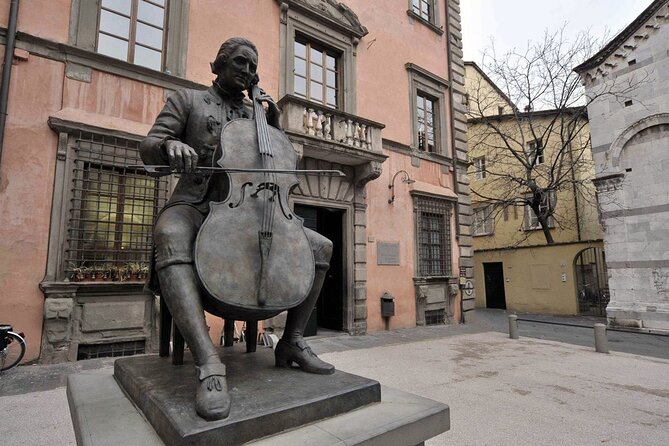
Lucca’s narrow medieval streets lead toward the conservatory named for Luigi Boccherini, the cellist and composer born in the city. The institute was founded in 1842 by composer Giovanni Pacini. Puccini’s father directed it for the two years before his death.
This is a particularly useful stop for anyone who wants to understand how musicians were trained in Lucca. It shifts the emphasis away from famous performances and toward education. A city does not produce notable musicians by accident. Schools, churches, families, and patrons all play a part.
From there, the route continues to Piazza dell’Anfiteatro. The oval piazza follows the shape of the Roman arena that once occupied the site. Gladiators performed here in ancient times. Today, the space is used for markets and performances, including jazz concerts.
The musical connection is easy to appreciate. A Roman arena became a medieval urban space and then a modern gathering place. You get a quick lesson in how Lucca reuses old settings without losing their shape.
This stop is listed as about 15 minutes. The piazza is also one of the places where you can pause and get your bearings. The walk uses narrow streets, so the open oval of the amphitheatre makes a welcome visual break.
Paganini, Palazzo Pfanner, and Lucca’s composers
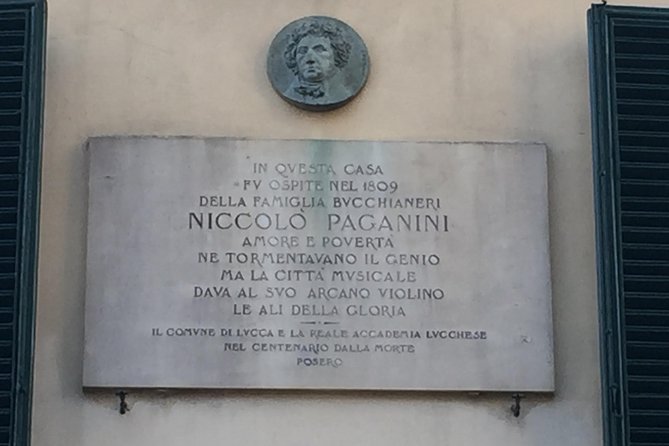
The next part brings in Niccolò Paganini, one of the most famous violinists in European music. He lived nearby during the first decade of the 1800s, when Elisa Bonaparte, Napoleon’s sister, ruled Lucca. These were important years in Paganini’s career.
The guide plays a piece associated with Paganini’s guitar and violin serenades composed in Lucca. This is exactly where the tour’s format pays off. You are not only told that Paganini lived in the city. You hear the type of music connected to his time there.
The route passes the late-17th-century Baroque garden of Palazzo Controni-Pfanner. The garden is described as an outdoor stage set, and the comparison fits the theatrical tone of the walk. You should not assume that the tour includes entry into the palace or garden. The stop focuses on the exterior setting and its connection to the city’s artistic life.
On Via degli Asili, you see a plaque honoring Alfredo Catalani. He died at only 39, yet his most successful opera, La Wally, remains part of his legacy. The guide pairs the plaque with music from the opera, giving a short, direct introduction to a composer you may not know.
This section lasts about 15 minutes. It is one of the more personal stretches of the walk because the city’s music story appears through homes, plaques, and short-lived careers rather than only through grand institutions.
Geminiani leads you to Puccini’s birthplace
Near the garden of Palazzo Diodati-Orsetti, the guide points out a plaque for Francesco Geminiani, a violinist and composer who left Lucca for England in the early 18th century. He later spent his final years in Ireland.
Geminiani adds another useful idea to the tour: musicians did not always stay in the city where they were born. Lucca’s musical connections spread across Europe through work, study, performance, and migration.
From there, you walk toward Piazza San Michele, considered the center of Lucca, and finish at the Puccini Museum, Casa Natale. The museum occupies Puccini’s birthplace and is included in the tour price.
The museum visit lasts about 30 minutes. You can expect a more focused look at Puccini’s family and career, with displays that include opera costumes. This is the stop most likely to appeal to someone who has come to Lucca specifically for Puccini.
Ending here is smart. You receive the broad city story first, then finish with its most famous composer. If you visited the museum before the walk, some of the route’s references would have less context. If you have already been, the city connections may give the collection new meaning.
What the $35.95 price includes
At $35.95 per person, the tour sits in a reasonable range for a two to two-and-a-half-hour guided experience, especially because two admissions are included. You enter Teatro del Giglio and the Puccini Museum rather than paying only for outdoor commentary.
The price also covers the guide’s prepared route and music excerpts. That is useful in Lucca, where many of the connections are easy to miss. You can walk past a plaque or palace and never know why it matters. Here, the guide supplies the link between place, person, and sound.
Value depends on your interests. If you only want a fast orientation to Lucca’s major sights, a standard city walk may cover more general landmarks in less time. If you care about Puccini, opera, classical music, theatre, or unusual local stories, this tour gives you a more focused experience.
The group maximum is 25 people. Some departures may be much smaller, and one reported outing had only four participants. A small group makes it easier to ask questions and hear the music clips, but you should not count on a private tour.
Timing, walking, and who should book
The 11 a.m. start is convenient for a morning in Lucca, but the finish may be closer to 1 or 1:30 p.m. than noon. One useful planning tip is to avoid scheduling a fixed lunch or transport immediately after the advertised two-hour mark.
The route uses city streets and includes several standing explanations. Most people can participate, but the information provided does not describe a special vehicle, seating plan, or step-free route. If you need specific mobility arrangements, contact the provider before booking.
I would choose this for:
- A first visit to Lucca when you want a themed introduction
- Puccini fans who want the birthplace museum included
- Classical music listeners who enjoy hearing short examples
- People who like architecture, political history, and cultural stories together
- Families with older children who can manage a two-hour walking experience
I would think twice if your schedule is very tight, if you prefer a general city tour, or if you want long visits inside every church and palace. Several stops are exterior explanations rather than full admissions.
The free cancellation policy allows a full refund if you cancel at least 24 hours before the start time. Changes or cancellations within 24 hours are not accepted for a refund.
Should you book the Lucca music tour?
Book it if you want Lucca explained through sound, not just monuments. The strongest parts are the theatre interior, the music played beside relevant sites, the wide range of composers, and the included visit to Puccini’s birthplace.
You do not need a serious music background. The route works best when you are curious about how churches, theatres, schools, rulers, and public squares shaped the city’s musical life. Just allow the full two and a half hours, arrive at the Teatro del Giglio ticket office by 10:45 a.m., and keep your afternoon plans flexible.
FAQ
How much does the Lucca music tour cost?
The tour costs $35.95 per person.
How long does the tour last?
The experience lasts approximately two to two and a half hours.
What time does the tour begin?
The tour begins at 11 a.m. You should meet the guide by the Teatro del Giglio ticket office at 10:45 a.m.
Where does the tour start?
It starts at Teatro del Giglio, Piazza del Giglio 13/15, 55100 Lucca, Italy.
Where does the tour end?
The tour ends at the Puccini Museum, Corte S. Lorenzo 9, 55100 Lucca, Italy.
Is the Puccini Museum admission included?
Yes. Admission to the Puccini Museum, Casa Natale, is included.
Is entry to Teatro del Giglio included?
Yes. The tour includes admission to the interior of Teatro del Giglio.
What language is the tour offered in?
The tour is bilingual in Italian and English, with English offered for participants.
What is the cancellation policy?
You can cancel at least 24 hours before the start time for a full refund. Cancellations or changes made less than 24 hours before the experience are not accepted for a refund.
Just added around Italy
- Venice: Dinner & Concert★ 4.3 · 91 reviews
- Venice: Cooking Class + Guitar Concert at Chef’s Francesco★ 4.8 · 30 reviews
- Venice: Vivaldi Baroque Concert Ticket and Free Music Museum★ 4.8 · 103 reviews
- Venice: Golden Hour Cruise with Classical Music & Cocktail★ 4.7 · 59 reviews
- Venice: Live Concert with Dinner or Aperitif at LL JAZZ Club★ 4.3 · 74 reviews
- Venice: Around Vivaldi Concert Ticket★ 4.7 · 112 reviews
- Venice: concert byI MandolinVenice Quartet in St. George’s Church.★ 5.0 · 2 reviews
- Tuscany: Cooking, Dinner & Live Opera in the countryside★ 4.8 · 13 reviews
Lucca Concerts, compared.
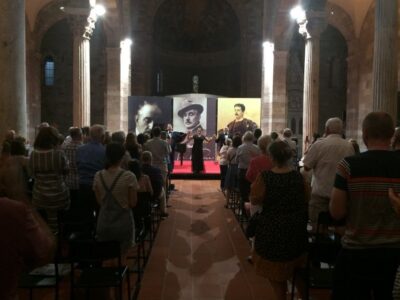
Lucca: Puccini Festival Opera Recitals and Concerts
Read our review →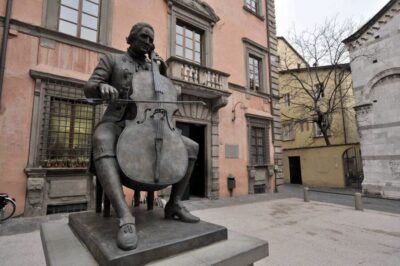
Lucca: Musical Walking Tour with Puccini Museum Visit
Read our review →
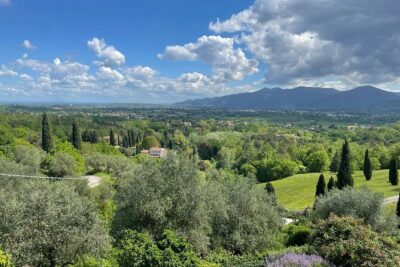
Private Concert in the Artist’s House on the Hills of Lucca
Read our review →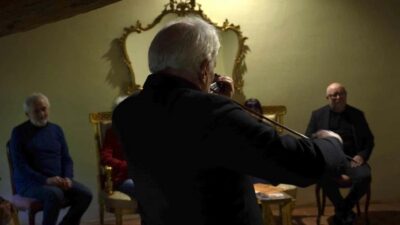
RomanticOpera concert in the artist’s house on the hills and wine tasting
Read our review →Browse the lists this tour appears in