
Review · VIENNA
The Viennese Sound of Music Tour & Ticket to Strauss Museum
Vienna’s music story comes alive on foot here, from the grand Musikverein to Mozart’s former apartment and the Strauss monument in Stadtpark. I like the small maximum of 15 people, which gives the guide room to answer questions, and I like the useful finish at the Johann Strauss Museum, where you can stay after the walking portion ends. The main drawback is pace: two and a half hours covers a lot of ground, but most stops are brief.
This is a tour for curious listeners, not only serious classical-music fans. Guides such as Nicoletta bring composer stories, concert advice, restaurant and café tips, and sometimes a small map or sightseeing booklet. Just remember that a classical concert is not included in the $47 price, even though the guide can help you choose one afterward.
Key points to know before booking
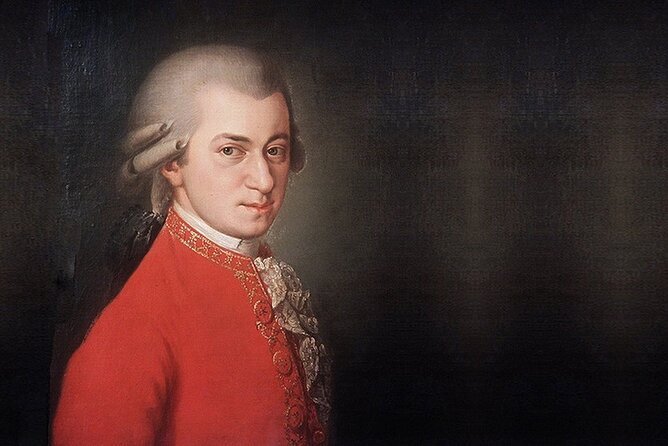
- The route links Mozart and Strauss: You visit places tied to both composers rather than focusing on just one musician.
- Mozart’s former home is a real highlight: Mozarthaus is the only one of Mozart’s 13 Vienna apartments still standing.
- The group stays small: A maximum of 15 people makes conversation and questions much easier.
- The museum ticket is included: The tour ends at the Johann Strauss Museum, where you may remain as long as you wish.
- The walk is central and practical: It begins at Musikverein and ends near Naschmarkt, the Secession, Karlsplatz, and the Opera.
- Concert tickets cost extra: Ask the guide for recommendations, but budget separately for any performance.
Why this music walk works in Vienna
Vienna can feel like one enormous museum of imperial buildings, churches, concert halls, and composer memorials. The challenge is knowing how those places connect. This tour gives you a musical thread through the center, tying famous buildings to the people who performed, lived, or found inspiration there.
I like the route because it does not stay inside one museum. You move between public squares, a city park, churches, concert halls, and historic houses. That change of setting helps you understand that Mozart and Strauss were not simply names on plaques. Their music was part of daily life in the city.
The tour starts at 1 p.m. and lasts about two hours and 30 minutes. The first portion is a guided walk, followed by about one hour and 15 minutes at the Johann Strauss Museum. Since the walking stops are short, you should arrive ready to keep moving and listen while standing outdoors.
The pace suits most people with moderate physical fitness. The route is near public transportation, and both the starting and ending points are in central Vienna. Still, wear comfortable shoes. The tour does not provide a vehicle, and the value comes from seeing the city streets between the major sights.
More Classical Concerts in Austria
- Vienna: Vivaldi’s Four Seasons Concert in Karlskirche
★ 4.7 · 14,951 reviews - Vienna: Classical Concert in the World-Famous Musikverein
★ 4.6 · 6,673 reviews - Vienna: Mozart Concert at the Musikverein – Golden Hall
★ 4.6 · 5,194 reviews
Starting at Musikverein and Karlskirche
The opening stop is the Musikverein, one of Vienna’s best-known concert halls. Its Golden Hall hosts the famous New Year’s Concert, a performance broadcast to 90 countries. Even if you have only seen the hall on television, hearing its place in Vienna’s concert life gives the building extra weight.
The visit here is brief, about 10 minutes, and admission is not listed as included. In practical terms, expect an exterior introduction rather than a full concert-hall visit. That is still useful because the guide can explain why this building matters before you continue through the city.
Next comes Karlskirche, or the Church of Saint Charles. You spend about five minutes here, again with no admission charge included. The church is associated with Vivaldi concerts, held in memory of the Italian composer.
This is one of the tour’s quick orientation stops. You will not have much time to study every detail, so if Karlskirche is a major priority for you, plan to return on your own. The benefit is that you get the church in context, as part of Vienna’s continuing performance tradition rather than as an isolated monument.
Composer statues in Stadtpark
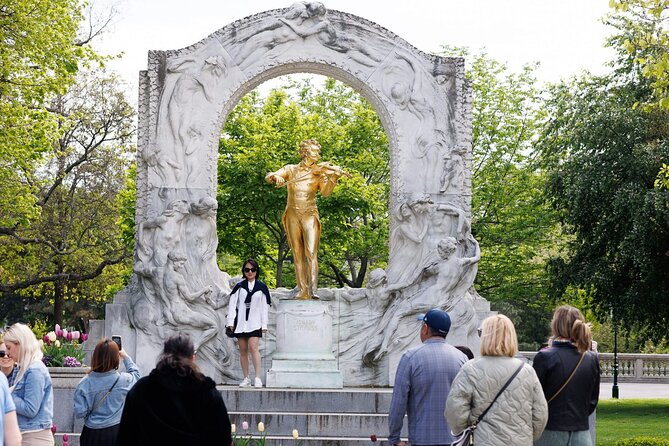
Stadtpark gives the tour a welcome change of pace. You spend around 20 minutes in the park, where monuments honor composers including Johann Strauss and Franz Schubert.
The Johann Strauss monument is especially important because Strauss returns at the end of the tour. Seeing his monument before entering the museum creates a useful link between public memory and the composer’s actual life and work.
This stop also gives your guide more room for storytelling. The route is not only a list of dates and buildings. Guides are encouraged to explain the personalities behind the music, including amusing details that can make the composers easier to remember. Families may find this part particularly helpful, since children studying instruments can connect the names on the monuments with stories about real people.
The park stop is also one of the better places to ask questions. The group size allows for a more personal exchange, and guides such as Nicoletta have been praised for explaining music history clearly and helping with photos. Do not expect a long free period, though. Twenty minutes passes quickly when the guide is covering several composers.
Inside Mozarthaus, Mozart’s surviving Vienna home
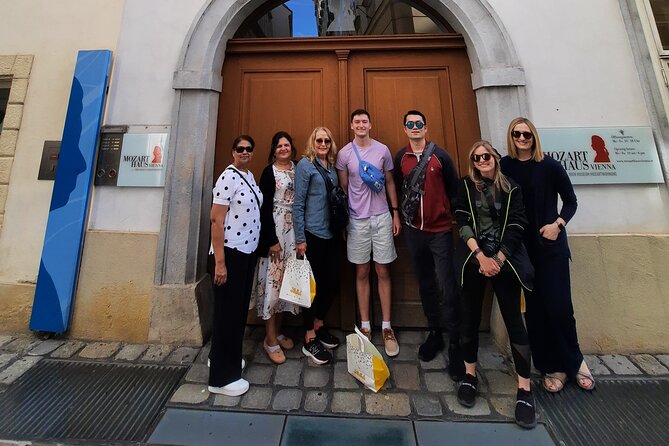
Mozarthaus Vienna is the most substantial Mozart stop on the route. Mozart lived in 13 different Vienna apartments, but this is the only one that still survives. The tour includes a visit to his former home, often referred to as the Figaro House.
That detail matters. You are not simply looking at another Mozart statue or hearing a story outside a grand building. You get a physical connection to the composer’s domestic life in Vienna. The tour allocates about 15 minutes here, enough for an introduction and orientation.
The timing also tells you how to plan your expectations. This is not a long, independent museum visit with hours to explore every display. The guide keeps the group moving, and the stop works best as part of the broader route. If you want a more detailed look at the museum, you may want to return separately, depending on opening arrangements and your schedule.
Even so, Mozarthaus is one of the strongest reasons to choose this experience over a general city walk. You get a clear sense of where Mozart lived, while the guide supplies the personal stories that make the address memorable.
More Classical Concerts in Vienna
- Vienna: Classical Concert in St. Anne’s Church (Annakirche)
★ 4.6 · 3,414 reviews - Vienna: Mozart and Strauss Concert at Schönbrunn
★ 4.5 · 2,967 reviews - Vienna: Classical Concert at Mozart’s First House
2,423 reviews - Vienna Classical Concert at St. Peter’s Church
★ 4.5 · 2,039 reviews
St. Stephen’s Cathedral and the Teutonic Order
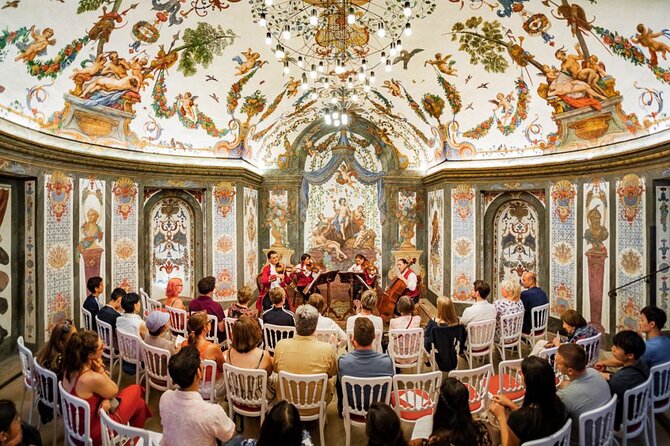
The walk continues to St. Stephen’s Cathedral, Vienna’s main cathedral and one of its defining landmarks. The scheduled stop is about five minutes, so the emphasis is on location and explanation rather than a full cathedral visit.
That short timing is a recurring feature of the tour. You see many important places, but you do not linger at each one. This makes the route efficient for someone with limited time in Vienna. It can feel rushed if you want detailed architectural study or quiet reflection inside every church.
The Church of the Teutonic Order follows, with another five-minute stop. This church is connected to one of the historic concert locations where Mozart performed. That connection is exactly the sort of detail that gives the walking route its purpose. The building is not being presented only for its appearance. It becomes part of the story of how music was performed and heard in Vienna.
If you are mainly interested in musical biography, these short visits should satisfy you. If your priority is religious art or architecture, treat them as introductions and make time for a separate visit.
The Opera and Vienna’s performance tradition
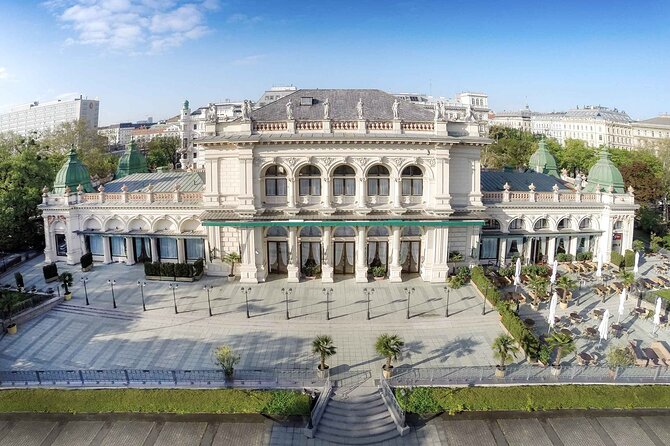
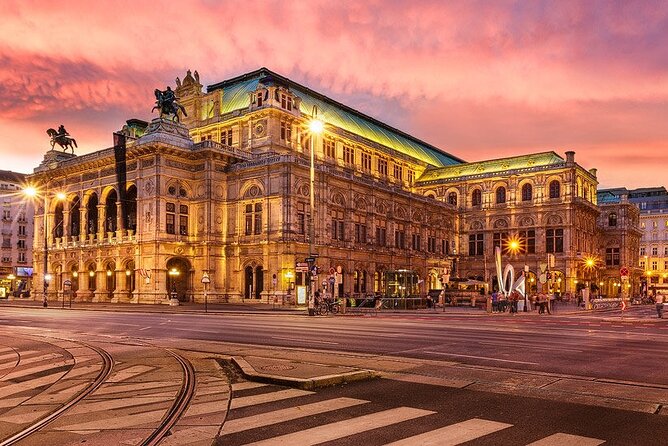
The Wiener Staatsoper, or Vienna State Opera, receives about 15 minutes. It is one of the city’s most important music halls, and its location helps show how central performance remains to Vienna’s identity.
This is a good point to ask about concert choices. The tour description says the guide can recommend classical performances, but no concert ticket is included. That distinction is important. The $47 price covers the guided experience and the Johann Strauss Museum ticket, not an evening at the Opera, Musikverein, Karlskirche, or another hall.
I would use the guide’s advice as a starting point rather than handing over your entire evening plan. Ask about the type of music, venue, seating, and price before buying anything. A helpful guide can point you in the right direction, but you remain responsible for the separate concert cost.
The Opera stop also helps you compare Vienna’s musical past with its living performance culture. Mozart and Strauss are not only historic figures here. Their names still shape the city’s concert calendar and visitor experience.
Finishing at the Johann Strauss Museum
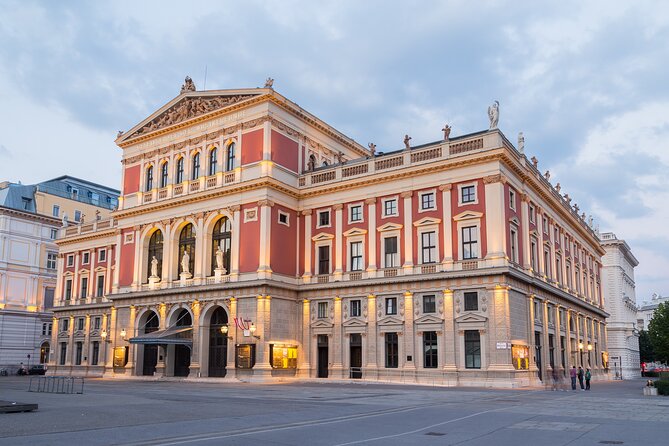
The tour ends at the Johann Strauss Museum, also called Johann Strauss Museum New Dimensions, on Friedrichstraße. The museum ticket is included, and you can stay as long as you wish after receiving your admission.
This is a smart ending. The walking portion gives you the citywide context first, then the museum lets you spend more focused time with Strauss. Unlike the five-minute church stops, this part has about 75 minutes assigned to it, and you are not forced to leave when the guide finishes.
The museum is near Naschmarkt and opposite the Secession museum. It is also about a five-minute walk from the Opera and Charles Square, so you finish in a useful part of central Vienna. You can continue sightseeing, find food at Naschmarkt, or walk back toward Karlsplatz without needing a long transfer.
The museum ticket adds real value to the price. A standard guided walk can leave you with only exterior views and stories. Here, you get both the route and a dedicated indoor stop focused on Strauss. If you are not sure how much time to spend inside, keep the full hour and 15 minutes available. The tour data allows you to stay as long as you wish, so you are not tied to the group once the guided portion is over.
What the $47 price really includes
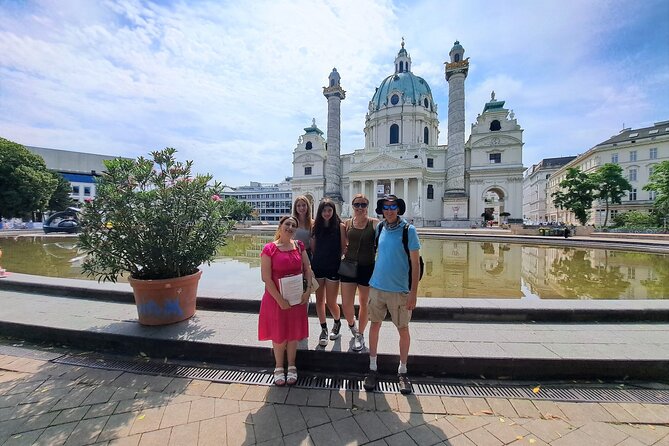
At $47, this is not the cheapest way to see central Vienna, since many of the landmarks are free to view from the outside. The value depends on how much you want from the guide.
You are paying for:
- A local, in-person guide
- A small group capped at 15
- A structured route connecting Mozart, Strauss, Vivaldi, Schubert, and Vienna’s concert halls
- Entry to the Johann Strauss Museum
- Guidance about possible classical concerts after the walk
The included museum ticket is the clearest financial benefit. The guide is the more important experience benefit. A self-guided route can take you to Musikverein, Stadtpark, St. Stephen’s Cathedral, and the Opera, but it will not automatically explain how the places fit into the lives of Mozart and Strauss.
Past tours have sometimes been much smaller than the 15-person limit. A group of three, for example, makes it easier for the guide to take photos, answer questions, and adjust the conversation. You should not assume every departure will be that small, but the cap keeps the experience from becoming a large crowd.
The guide may also offer practical extras, such as a map, a short booklet of Vienna tips, and suggestions for cafés or food stops. These are not the formal core of the tour, but they can be useful early in your stay when you are still finding your way around.
Who should book this tour?
I would choose this walk if you want a guided introduction to Vienna’s classical music story and prefer seeing several places rather than spending the entire afternoon in one museum.
It suits:
- First-time visitors who want orientation in central Vienna
- Classical-music fans who want context before attending a concert
- Families with children who study piano, viola, or another instrument
- Visitors who enjoy personal stories more than long blocks of technical detail
- People who want a museum visit included without planning a separate Strauss activity
It is less suitable if you want a slow architectural tour, a full interior visit at every church, or a concert included in the price. It may also feel quick if you want to read every museum display or stop for extended photography.
The walk is in English unless your booking states otherwise, so confirm language details when reserving if that matters to you. Since the tour needs good weather and a minimum number of participants, a cancellation or date change is possible if those conditions are not met. You can cancel for a full refund up to 24 hours before the 1 p.m. start time. Changes or cancellations inside 24 hours are not refunded.
Should you book the Viennese Sound of Music Tour?
Book it if you want the city to explain its composers to you, not just point them out on a map. The combination of Musikverein, Mozart’s surviving home, Stadtpark monuments, the Opera, and the Strauss Museum creates a clear half-day introduction to Vienna’s musical identity.
The strongest reasons are the small group, the guide’s storytelling, and the included Strauss Museum ticket. The chief limitation is the brief timing at several sights. My advice is to treat this as a well-organized musical orientation, then return to any church, concert hall, or museum that deserves more of your time.
FAQ
How long does the Viennese Sound of Music Tour last?
The experience lasts approximately two hours and 30 minutes. The walking route is followed by about one hour and 15 minutes at the Johann Strauss Museum.
Where does the tour begin?
It begins at the Vienna Music Society, Musikvereinsplatz 1, 1010 Vienna. The scheduled start time is 1 p.m.
Where does the tour end?
The tour ends at the Johann Strauss Museum New Dimensions on Friedrichstraße 7, 1010 Vienna. The museum is near Naschmarkt and opposite the Secession museum.
Is the Johann Strauss Museum ticket included?
Yes. The museum admission ticket is included, and you may stay at the museum as long as you wish after the guided tour ends.
Is a classical concert included in the price?
No. Concert tickets are not included. You can ask the guide for recommendations for a concert after the tour.
How many people can join the tour?
The tour has a maximum of 15 participants. It requires a minimum number of participants to operate, and poor weather can also lead to a date change or full refund.
More Music Walking Tours in Vienna
- Private Vienna Music Tour
★ 5.0 · 23 reviews - Vienna: Private Music Tour
★ 5.0 · 8 reviews - Vienna Private Classical Music Tour: Museum Entry & Concert
★ 5.0 · 5 reviews - Bratislava/Vienna: Hallstatt, Salzburg, & Alpine Music Tour
★ 5.0 · 3 reviews
More Sound of Music Tours in Vienna
- The Original Sound of Music Tour in Salzburg
★ 4.5 · 6,129 reviews - Salzburg: Original Sound of Music Tour
★ 4.8 · 5,059 reviews - Salzburg: Hallstatt and Sound of Music Tour
★ 4.7 · 522 reviews - Salzburg Super Saver: Hallstatt & Original Sound of Music Tour
★ 4.5 · 162 reviews
Just added around Vienna
- Vienna’s Musical Heart: Private Walking Tour with a Local★ 5.0 · 2 reviews
- Vienna: Concert by the Vienna Baroque Orchestra★ 4.6 · 56 reviews
- Vienna: Strauss Museum – Music&History in Historic 1837 Hall★ 4.7 · 31 reviews
- Vienna Supreme Orchestra at Palais Niederösterreich★ 4.8 · 10 reviews
- Vienna: Sunday Brunch Danube Cruise & Live Music★ 4.2 · 42 reviews
- Vienna Private Walking Tour including State Opera★ 3.2 · 7 reviews
- Vienna: Romantic Classics Piano, Violin, and Cello Concert★ 4.7 · 60 reviews
- Vienna: Mozart, Beethoven, & Strauss Private Tour★ 5.0 · 4 reviews
Vienna Concerts, compared.
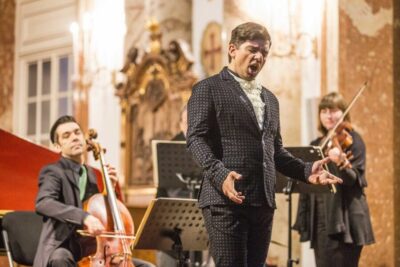
Vienna: Vivaldi’s Four Seasons Concert in Karlskirche
Read our review →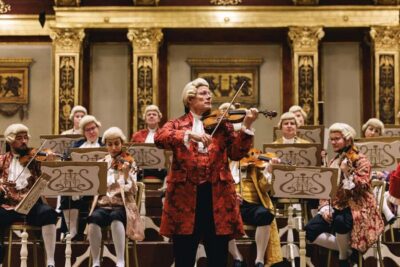
Vienna: Mozart Concert at the Musikverein – Golden Hall
Read our review →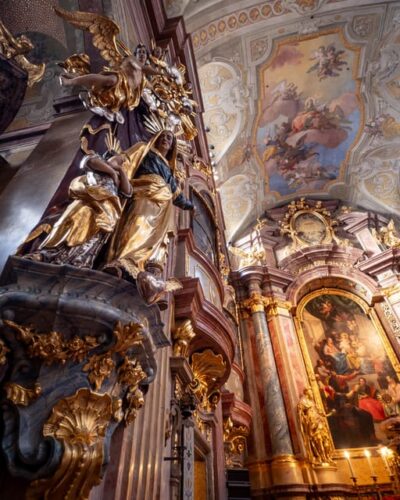
Vienna: Classical Concert in St. Anne’s Church (Annakirche)
Read our review →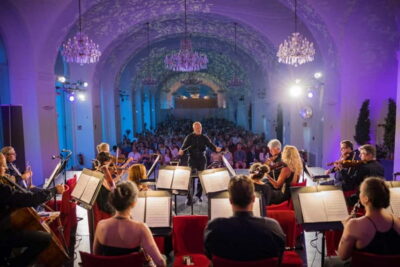
Vienna: Mozart and Strauss Concert at Schönbrunn
Read our review →
Vienna: Tickets for Mozarthaus Vienna with Audio Guide
Read our review →
Vienna Classical Concert at St. Peter’s Church
Read our review →