
Review · NEW ORLEANS
The Soul of New Orleans: Jazz History Private Tour
New Orleans jazz begins long before the famous clubs. This private walk starts near Congo Square, where you learn about the cultural roots of the music, then follows the story through voodoo traditions, Creole culture, historic homes, old recording sites, and today’s Frenchmen Street. I like the focus on real places rather than a lecture in a museum, and I like that guide Holley adds practical advice on music and food.
You also get the guide’s full attention, which matters when the route moves through busy French Quarter streets and the subject jumps from Louis Armstrong to Tennessee Williams. The possible drawback is that the tour lasts about two and a half hours while covering ten stops, so most visits are brief. You get a broad introduction, not long visits inside every venue.
Key points at a glance
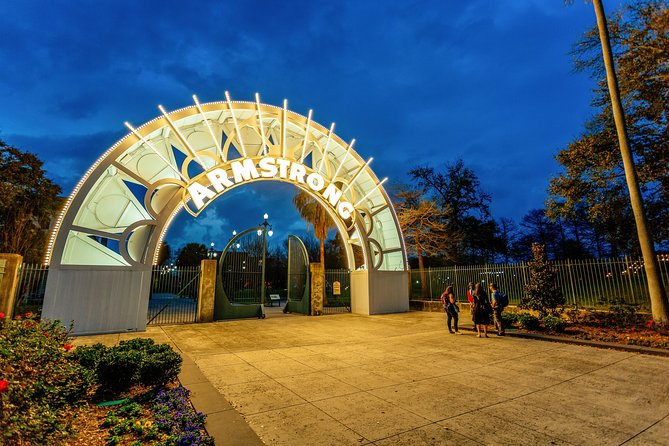
- Congo Square sets the tone: Learn why Louis Armstrong Park matters to the origins of New Orleans jazz.
- Holley brings music into the story: Her enthusiasm for the city and its music helps connect landmarks with the people who shaped them.
- The route mixes jazz with local culture: Expect Creole history, voodoo traditions, historic homes, and major French Quarter sights.
- You finish on Frenchmen Street: Get practical advice about music venues and browse the Louisiana Music Factory.
- Private touring changes the pace: Your group alone participates, making it easier to ask questions and follow your own interests.
- The price rewards a small group: At $111.20 per person, the value improves when shared by several people who want a focused music tour.
Why Congo Square is the right place to begin
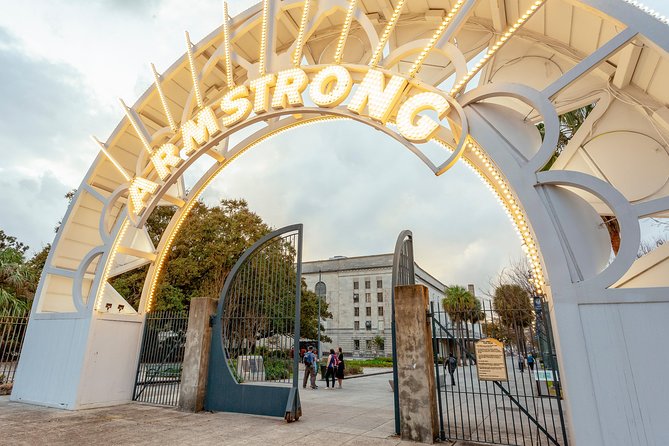
The tour starts at the Best Western Plus French Quarter Courtyard Hotel on North Rampart Street and moves toward Louis Armstrong Park. The first stop is Congo Square, where the guide explains the cultural roots that helped shape New Orleans music.
This is the most important stop for understanding the theme. Jazz did not appear out of nowhere in a club. Congo Square gives you a place to consider African musical traditions, community gatherings, rhythm, and the long cultural story behind the sound New Orleans later made famous.
You have about 15 minutes here. That is enough for an introduction and questions, but not a full historical seminar. I would listen closely at this stop, since it gives meaning to the later visits. Without it, the clubs and musicians can seem like a collection of unrelated names.
The setting also helps you get your bearings. Louis Armstrong Park is near the starting point, and the tour returns to the area for another stop on Rampart Street. You should expect a route through public streets and open spaces rather than a series of long indoor visits.
More Jazz Concerts in New Orleans
- New Orleans Steamboat Natchez Jazz Cruise with Dinner Option
★ 4.0 · 7,533 reviews - New Orleans Steamboat Natchez Jazz Cruise
★ 4.5 · 5,334 reviews - New Orleans: Evening Steamboat Jazz Cruise + Optional Dinner
★ 4.3 · 4,548 reviews
Voodoo, Creole culture, and the streets around Saint Ann
At Saint Ann Street, the subject shifts from jazz itself to voodoo and Creole culture. The tour points out the Home of the Voodoo Queen and uses the surrounding streets to explain a part of New Orleans culture that is often reduced to costume-shop clichés.
That makes this a useful part of the walk. You are not only following the careers of musicians. You are also learning about the cultural setting that made the city distinct. The subject can be sensitive and easily treated as entertainment, so a guide who explains it with care adds real value.
Again, the planned visit is about 15 minutes. Think of it as a focused explanation from your guide, followed by time for questions, rather than a formal building tour. If voodoo is your main interest, this stop will feel too short. If you want it as part of a wider New Orleans story, the timing works better.
The walking route also gives you a look at the French Quarter beyond postcard views. Saint Ann Street links the city’s past with the neighborhoods where music, food, religion, and daily life overlap.
A laundromat with a music past on Rampart Street
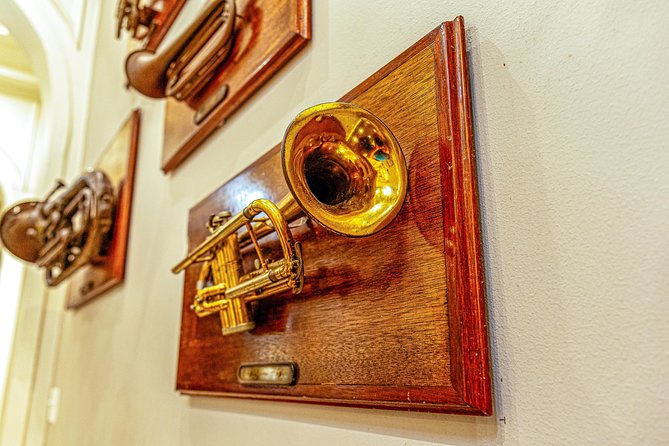
The next stop returns to Louis Armstrong Park and nearby Rampart Street. Here, the guide points out a regular-looking laundromat that once served as a recording studio for well-known musicians.
This is exactly the sort of detail that can make a city walk worthwhile. The building does not need a grand entrance or a polished museum display. Its ordinary appearance is part of the point. Music history can hide in places you would pass without a second thought.
You have roughly 15 minutes for the story. Since the tour does not include admission to a recording studio, the value comes from the explanation and the connection to the street around you. Take notes if you care about recording history, because the name of the studio and the artists connected with it are the kind of details that can otherwise slip away.
This stop also shows the tour’s wider approach. It is not only about the most famous venues. It tries to point out places that help you see how music was made and heard around the city.
Tennessee Williams and the city’s creative circle
The former home of Tennessee Williams adds a literary note to the music tour. Williams was a major playwright and a devoted music fan, so his house helps show how New Orleans attracted artists working in different forms.
This stop is best understood as context. You are not visiting a dedicated Tennessee Williams museum, and the planned time is short. Instead, the house becomes one piece of a larger portrait of the city’s creative life.
I like this change of subject because it prevents the tour from becoming a list of jazz facts. New Orleans culture is not divided into tidy boxes. A playwright’s home, a church, a hotel, a square, and a club can all help explain the city’s character.
If your group includes people with mixed interests, this kind of stop can keep everyone engaged. If every member of your group wants only detailed musician biographies, the literary detour may feel less essential.
More Jazz Concerts in the USA
- New Orleans: Daytime Steamboat Jazz Cruise + Optional Lunch
★ 4.3 · 4,164 reviews - Paddlewheeler Creole Queen Jazz Dinner Cruise in New Orleans
★ 4.0 · 1,469 reviews - New Orleans: Evening Jazz Boat Cruise with Optional Dinner
★ 4.4 · 1,024 reviews - Sunday Jazz Brunch Cruise in New Orleans
★ 4.0 · 889 reviews
St. Mark’s Church and the old St. Pierre Hotel
Near St. Mark’s United Methodist Church, the tour points you toward the St. Pierre Hotel. Inside the hotel, you learn about its connection to music and its earlier role as what is described as the world’s first jazz museum.
The church gives the route another architectural and neighborhood reference point. The hotel then brings the focus back to jazz institutions and the way the city has preserved its musical identity.
The 15-minute stop is not designed for a long hotel visit. You should expect your guide to explain why the place matters and point out its connection to jazz history. This is another moment when the private format helps. You can ask Holley to clarify the museum connection or explain how the hotel fits into the wider story.
The stop may appeal most to visitors who enjoy the history of music spaces, not just live performances. It shows that jazz culture includes archives, former museums, hotels, and informal places as well as concert halls.
Preservation Hall and the value of a short introduction
Near Place de Henriette Delille, the tour brings you to Preservation Hall on St. Peter Street. The venue presents intimate acoustic New Orleans jazz concerts more than 350 nights a year, featuring ensembles drawn from a current group of more than 50 local master practitioners.
This is one of the most useful practical stops. Preservation Hall is a major name in New Orleans music, and your guide can explain what kind of performance to expect and why the venue matters. The tour does not include a concert ticket, so do not treat this as a performance visit.
Instead, use the stop to decide if you want to return later for a show. The setting is close to the heart of the French Quarter, making it easy to consider as part of your evening plans. A short daytime explanation can save you from choosing a venue at random later.
Because this is a private tour, you can ask about the difference between an intimate acoustic hall and the larger or louder club settings you may encounter elsewhere. That practical comparison is one of the strongest reasons to choose a private guide.
Jackson Square puts the music story in its city setting
Jackson Square is a National Historic Landmark and one of the best-known public spaces in the French Quarter. The tour uses it as a historical pause between music venues.
At first, this may seem like a general sightseeing stop. It earns its place because it reminds you that New Orleans jazz developed within a real city, surrounded by public spaces, neighborhoods, churches, homes, and markets. The square also gives you a familiar landmark that helps organize the route.
You have about 15 minutes. That is enough to hear why the square matters and take in the setting, but not enough for an extensive treatment of every building around it. If you have already visited Jackson Square, the stop may feel familiar. The guide’s interpretation is what makes it useful rather than the view alone.
This is also a good place to ask Holley to connect earlier themes, such as Creole culture and public musical traditions, with the places you have already seen.
Palm Court Jazz Café and the promise of an evening plan
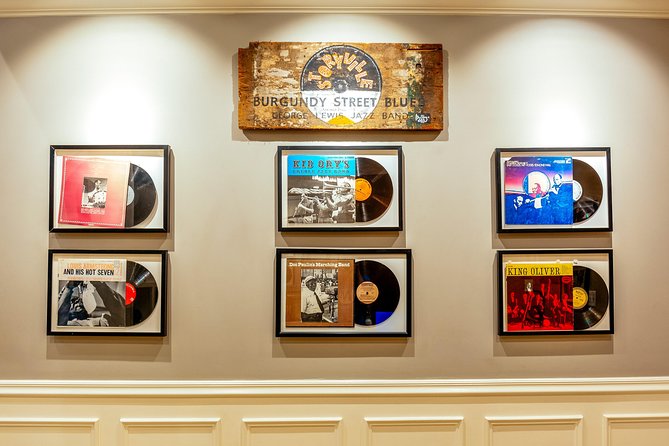
Near La Maison Perrilliat, the route calls at Palm Court Jazz Café, described as one of the city’s finest music venues. The stop is aimed at helping you understand where to go for live music after the tour ends.
That practical advice is a major strength. New Orleans has plenty of music, but choosing a place can be confusing when you have limited nights in the city. A guide who knows the local scene can help you make better use of your evening.
The tour does not include food, drinks, or a performance. You are getting an introduction to the venue and its place in the city’s music life. Keep that distinction in mind when judging the price.
The nearby historic house adds another layer to the stop, but Palm Court is the main reason music fans will pay attention here. Ask Holley for suggestions that fit your taste, since the tour is private and the advice can be tailored to your group.
Louisiana Jazz Museum before the final street
Before Frenchmen Street, the route stops near the Louisiana Jazz Museum. The guide points out the collections inside and explains their value to the city’s musical story.
This stop gives you a chance to think about preservation. Live music changes from night to night, while museum collections hold onto recordings, objects, and stories that might otherwise be lost. The tour does not include a long museum visit, so you should plan a separate visit if you want to study the collections properly.
That is an important planning point. The tour gives you a map of what matters. It does not replace a full museum afternoon or an evening concert. I see that as a strength for a first visit, as long as you understand the limits.
The stop also prepares you for the final section, where the focus shifts from jazz history to the current music scene.
Frenchmen Street ends the tour with practical advice
The tour finishes on Frenchmen Street, a well-known music corridor in New Orleans. You stroll along the street while Holley explains which venues may suit different kinds of evenings and how to make the most of them.
This is where the tour becomes most immediately useful. You finish in an area where you can continue exploring on your own, rather than being dropped at a random endpoint. The route also includes the Louisiana Music Factory, whose shelves hold albums from across the ages.
For music lovers, the record store is a fine final stop. It gives you a physical way to continue the subject after the tour, and it may help you find recordings connected to the musicians and styles discussed during the walk. The tour does not include purchases, so any albums are your own expense.
Frenchmen Street can also be a crowded and energetic place, especially around music venues. The private guide’s advice matters here because you can ask where to go, what to expect, and how to avoid spending your evening in a place that does not fit your interests.
What $111.20 per person buys you
The price is $111.20 per person. That is not the cheapest way to see the French Quarter, but it is easier to justify for a small group that wants focused attention from a local guide.
You are paying for a private 2.5-hour experience, not admission to a concert, museum, or historic house. The included service is the guide, and the value rests on the quality of the explanations and advice. If your group is passionate about jazz, the chance to ask questions and shape the conversation can make the cost reasonable.
The value is weaker if you want long visits at each site or several included attractions. Ten stops in 150 minutes means about 15 minutes assigned to each location before walking time. This is a moving overview, not a slow-paced museum tour.
One particularly useful benefit is the evening guidance. A good recommendation for Preservation Hall, Palm Court Jazz Café, or Frenchmen Street can help you spend your limited nights well. The supplied comment about Holley points to her enthusiasm for music and her willingness to offer tips about both music and food. That is the kind of personal help that can add value beyond the route itself.
Who should book this New Orleans jazz walk
I would choose this tour if you are visiting New Orleans for the first time and want the city’s music story explained in place. It suits couples, families, and small groups who would rather ask questions than follow a large group.
It is also a good fit if you want more than club suggestions. The route covers Congo Square, voodoo, Creole culture, historic homes, churches, hotels, public squares, museums, recording spaces, and live music streets. That range gives you a fuller picture of the city.
You should think twice if you dislike walking, since the route moves through parks, streets, and French Quarter locations. The stated requirement is moderate physical fitness. You should also avoid booking it if you expect included performances, museum entry, hotel transportation, food, or drinks. None of those are included.
The tour begins at the Best Western Plus French Quarter Courtyard Hotel on North Rampart Street and ends on Frenchmen Street. It is near public transportation, but hotel pickup and drop-off are not provided. Confirmation arrives when you book, and free cancellation is available up to 24 hours before the start time. Changes or cancellations inside that window are not accepted for a refund.
Should you book The Soul of New Orleans
Book it if you want a clear introduction to jazz in the places where the story happened, plus useful advice for planning your own evening music. The strongest parts are the opening at Congo Square, the overlooked recording history on Rampart Street, the Preservation Hall and Palm Court suggestions, and the final time on Frenchmen Street.
I would not book it as a substitute for a concert or a full museum visit. You get short stops and a broad story, not long time inside each location. For a private group that values personal questions and local music guidance, $111.20 per person can be fair. For a solo visitor seeking the lowest-cost sightseeing option, it may feel expensive.
The best choice is to schedule it early in your New Orleans stay. That gives you time to use Holley’s music and food suggestions during the rest of your visit.
FAQ
How long is The Soul of New Orleans tour?
The tour lasts approximately 2 hours and 30 minutes.
Where does the tour begin?
The meeting point is the Best Western Plus French Quarter Courtyard Hotel at 920 N Rampart St, New Orleans, Louisiana 70116.
Where does the tour end?
The tour ends on Frenchmen Street in New Orleans.
Is the tour private?
Yes. Only your group participates, and a local guide leads the experience.
Is hotel pickup and drop-off included?
No. Hotel pickup and drop-off are not included.
What level of fitness is required?
A moderate level of physical fitness is recommended.
Can I cancel for a full refund?
Yes. You can cancel at least 24 hours before the experience start time for a full refund. Changes or cancellations made less than 24 hours before the start time are not accepted for a refund.
More Heritage Tours in New Orleans
- New Orleans Jazz History and Music Walking Tour
★ 4.5 · 477 reviews - New Orleans Jazz History and New Orleans People of Color
★ 5.0 · 2 reviews - Porto: An Intimate Fado Show in a Historical Tavern
★ 4.8 · 2,055 reviews - Vienna Mozart Concert in Historical Costumes at the Musikverein
★ 4.5 · 888 reviews
Just added around New Orleans
- Private VIP Frenchmen Street Live Music Pub Crawl New Orleans★ 4.5 · 17 reviews
- Small-Group New Orleans Jazz Tour★ 4.5 · 16 reviews
- New Orleans Music Tour★ 4.5 · 65 reviews
- New Orleans Music Tour★ 4.5 · 35 reviews
- French Quarter Shrimp Boil & Live Music★ 5.0 · 177 reviews
- New Orleans Jazz Walking Tour★ 5.0 · 80 reviews
- New Orleans Jazz History and New Orleans People of Color★ 5.0 · 2 reviews
- Creole Queen Weekend Jazz Brunch Cruise on the Mississippi River★ 4.0 · 6 reviews
New Orleans Concerts, compared.
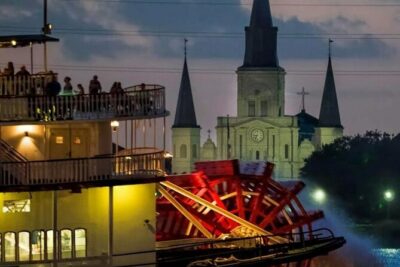
New Orleans Steamboat Natchez Jazz Cruise with Dinner Option
Read our review →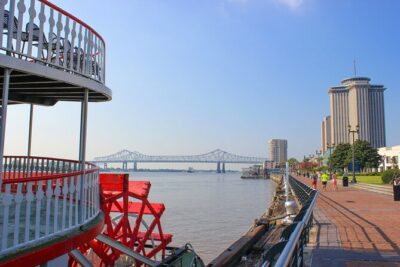
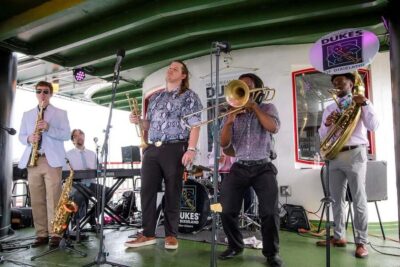
New Orleans: Evening Steamboat Jazz Cruise + Optional Dinner
Read our review →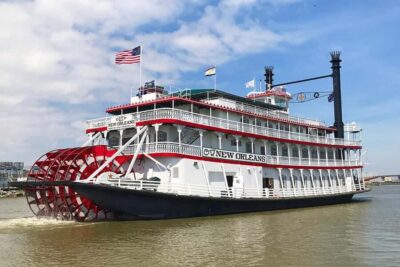
New Orleans: Daytime Steamboat Jazz Cruise + Optional Lunch
Read our review →
Paddlewheeler Creole Queen Jazz Dinner Cruise in New Orleans
Read our review →
New Orleans: Evening Jazz Boat Cruise with Optional Dinner
Read our review →
VIP Jazz Dinner Cruise with Private Tour and Open Bar Option
Read our review →Browse the lists this tour appears in