
Review · NEW ORLEANS
New Orleans Music Tour
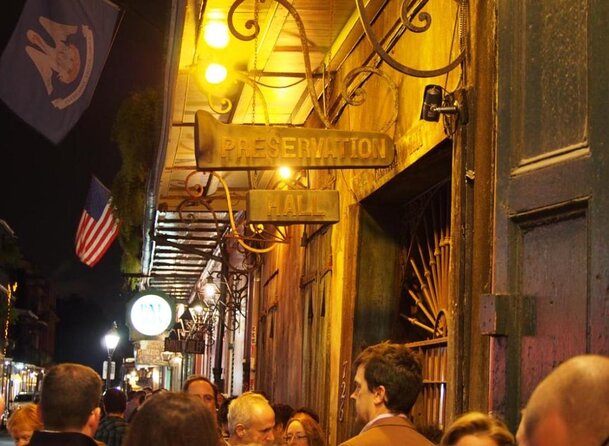
New Orleans music comes with a place, a person, and a story. This two-hour walk connects the city’s early jazz, African musical traditions, rhythm and blues, and modern bounce to sites around the French Quarter, Treme, and Louis Armstrong Park. Congo Square is the heart of the route, while the former J&M Studios adds a powerful link to the city’s postwar sound.
I like two things right away. First, you get a useful city orientation for only $25, with a small group capped at 15 people. Second, guides such as David bring serious enthusiasm to the subject, tying music to food, religion, politics, architecture, and dance instead of treating jazz as a list of famous names.
The main caution is that this is a music-history walk, not a concert. Live music is not promised, and the route may not unfold exactly as described. One outing stayed mostly in Armstrong Park, while another ended after about an hour in hot weather, so ask at the start what your guide plans to cover.
Key points to know before you book
- Congo Square anchors the story: Learn why this historic gathering place is linked to New Orleans jazz and many later popular music styles.
- The route covers four major areas: St. Louis Cemetery No. 1, Storyville, Louis Armstrong Park, and the former J&M Studios site.
- David is a particularly praised guide: His tours combine music, local history, humor, and hands-on moments, including a piano opportunity on one outing.
- Expect explanation more than performance: You may hear about musicians and musical traditions, but a live jazz set is not part of the stated plan.
- The $25 price is strong value: You get roughly two hours with a local guide, but food, drinks, and transportation are not included.
- Heat and weather matter: The walk begins at 2 p.m., and the route is outdoors, so summer conditions can affect comfort and pace.
Why this walk is useful for first-time New Orleans visitors
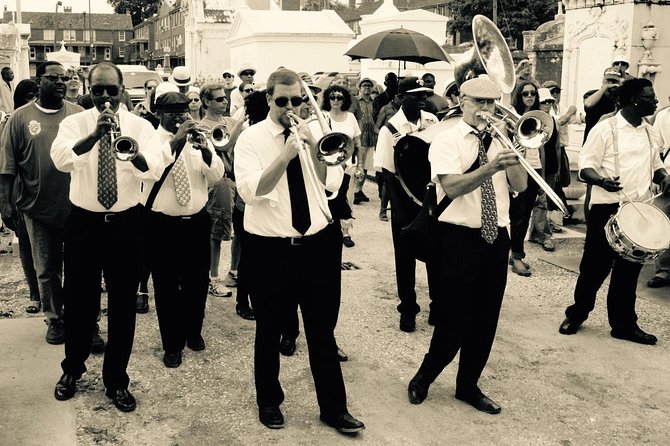
New Orleans can feel like several cities at once. French Quarter balconies, Treme streets, cemetery architecture, brass bands, blues clubs, and modern bounce all belong to the same story, but the connections are not always obvious when you explore alone.
This tour gives you a framework. Instead of simply pointing out a jazz landmark, the guide explains how people, places, and social traditions shaped the sound. You hear about early jazz figures such as Buddy Bolden, King Oliver, Jelly Roll Morton, and Sidney Bechet, then move toward Professor Longhair, Fats Domino, Allen Toussaint, and other musicians tied to the later New Orleans sound.
That makes the walk valuable even if you already know the big names. I like tours that help you understand what you are hearing later that night in a club or on a street corner. After this walk, a performance can feel less like an isolated show and more like part of a long local tradition.
The experience is also a good orientation tool. It begins and ends at 806 North Rampart Street, at 2 p.m., and lasts about two hours. You are not being driven between far-flung attractions. You move through a compact part of the city on foot, with the guide supplying the links.
More Music Walking Tours in New Orleans:
- New Orleans Jazz History and Music Walking Tour
★ 4.5 · 477 reviews - New Orleans Music Tour
★ 4.5 · 65 reviews - The Original Sound of Music Tour in Salzburg
★ 4.5 · 6,129 reviews
St. Louis Cemetery No. 1 and the New Orleans Musicians Tomb
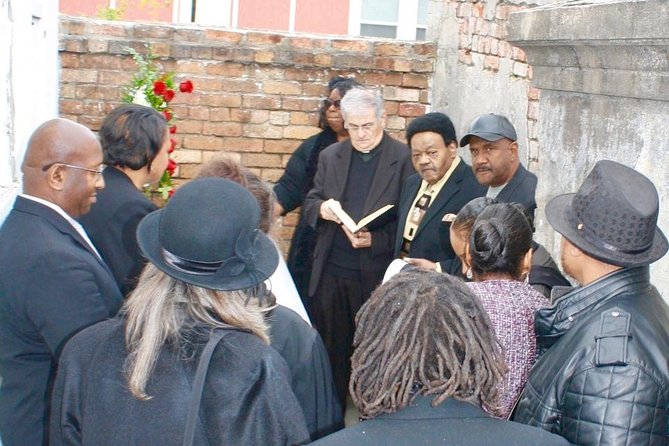
The first stop is St. Louis Cemetery No. 1, reached by way of the Tango Belt. The focus here is the New Orleans Musicians Tomb, donated by the Barbarin family for the free burial of musicians.
The first burial was Lloyd Washington of the Ink Spots on October 23, 2004. That detail gives the stop a modern connection. This is not only a discussion of long-dead jazz pioneers. It is also about how New Orleans continues to honor working musicians.
You should expect about 30 minutes here. Admission to the stop is included, and there is no separate ticket cost.
The cemetery offers a useful opening because it sets the tone for the rest of the walk. Music in New Orleans is not presented as background entertainment. It is tied to family, community, memory, and public identity.
A practical note: the cemetery is one of several stops, but the route can change. A guide may spend more time explaining one place than moving quickly through every point named in the plan. If St. Louis Cemetery No. 1 is especially important to you, confirm early that it will be covered that day.
Storyville and the places where jazz took shape
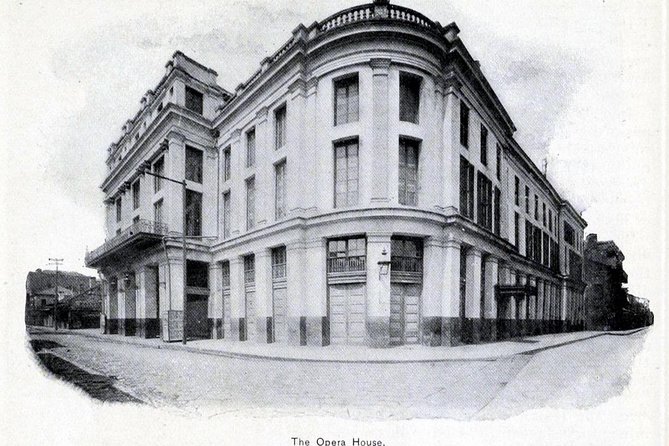
From the cemetery, the walk turns toward Storyville, the former red-light district associated with the birth of jazz. The district itself no longer survives in its original form, so this section is about traces, stories, and the musicians who once played in its parlors.
One detail gives the area a memorable hook: Frank Early’s My Place Saloon, connected with the writing of Pretty Baby. The guide also places major early figures in the setting, including King Oliver, Buddy Bolden, Jelly Roll Morton, and Sidney Bechet.
This is where the tour moves beyond the simple story that jazz appeared out of nowhere. You hear about the rooms, businesses, and audiences that helped musicians earn a living and develop new sounds. The setting was complicated, and the music grew inside a social world that included nightlife, migration, race, commerce, and improvisation.
The advertised time here is about 30 minutes. As with the cemetery, do not expect a preserved district with a full row of original venues. Much of the value comes from the guide’s explanation of what once stood in the area and why it mattered.
If you want a tour built around pretty buildings and restored interiors, this may feel light on physical sights. If you enjoy reconstructing a vanished place through stories and names, it is more rewarding.
Louis Armstrong Park, Basin Street, and Treme connections
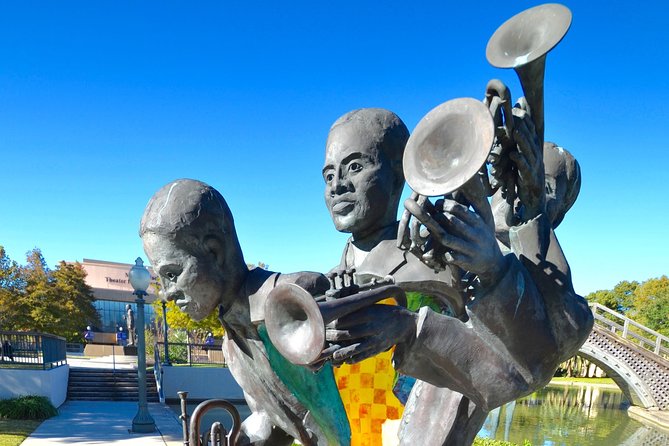
The next section takes you toward Basin Street Station and Louis Armstrong Park. The park is tied to Congo Square, Treme, and the city’s African American musical traditions.
This is also the part of the route that requires the most expectation-setting. The plan describes a move from Storyville into the park, followed by a later walk to the former J&M Studios site. In practice, at least one outing remained in Louis Armstrong Park for the full experience, with the guide using statues and park spaces as teaching points.
That is not automatically a bad tour. A strong guide can make one area hold two hours of history. But you should know that the physical route may be shorter than expected, and the emphasis can shift toward talking rather than seeing a long list of landmarks.
The park is still a meaningful place to study New Orleans music. It gives the guide a chance to explain how early musical traditions, public gatherings, and neighborhood life fed into later jazz. The discussion may also touch on architecture, religion, politics, and dance.
The guide’s style matters greatly here. David is repeatedly praised for his energy, humor, and ability to tell a story. One family even had a chance for a child to play piano with him. That sort of personal touch can make a history walk feel alive, but it depends on who leads your departure.
Same city, a different sound:
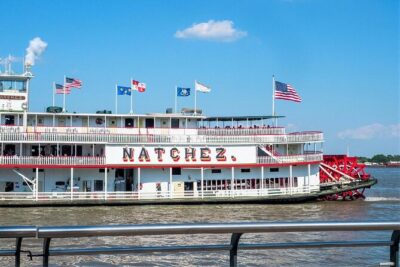
- New Orleans Steamboat Natchez Jazz Cruise with Dinner Option
★ 4.0 · 7,533 reviews - New Orleans Steamboat Natchez Jazz Cruise
★ 4.5 · 5,334 reviews - New Orleans: Evening Steamboat Jazz Cruise + Optional Dinner
★ 4.3 · 4,548 reviews - New Orleans: Daytime Steamboat Jazz Cruise + Optional Lunch
★ 4.3 · 4,164 reviews
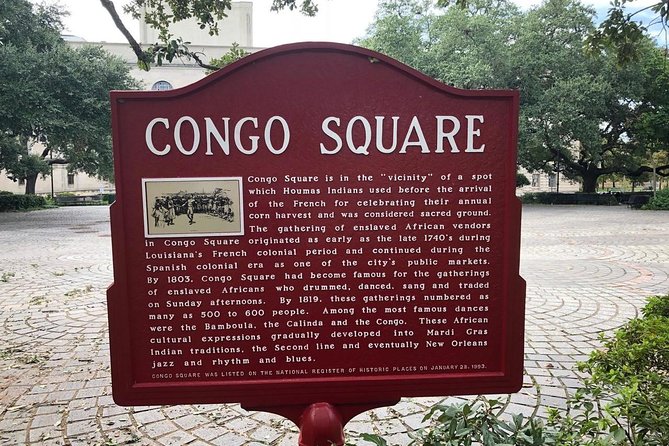
Congo Square and the roots of New Orleans sound
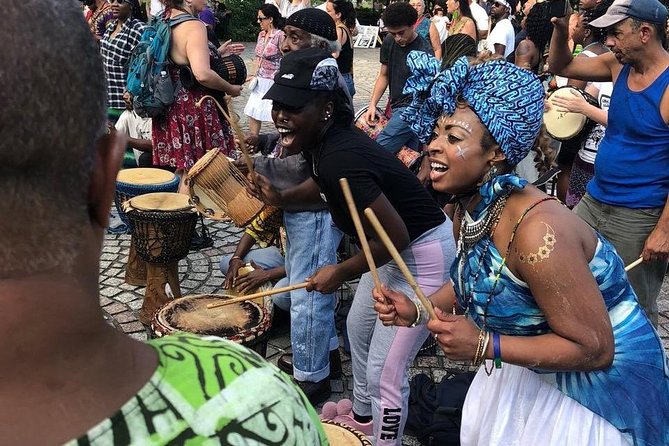
Congo Square is the intellectual center of the experience. It is described as the source of New Orleans music and, by extension, a major influence on much of modern popular song.
The site is connected with African people gathering under slavery, where West African religious and musical traditions continued in a public setting. The subject deserves care, and the tour uses music to explain survival, adaptation, and cultural exchange.
You also hear that Congo Square hosted the first New Orleans Jazz and Heritage Festival in 1970 and that the Municipal Auditorium is nearby. These details connect older traditions with the city’s modern music institutions.
I find this section especially useful because it pushes past the familiar party image of New Orleans. The city’s music is not only about nightlife. It also reflects displacement, faith, resistance, family, and the ability to carry tradition forward under harsh conditions.
The stop is listed at about 30 minutes, but the actual length may vary. If your guide is especially engaged, this may become the longest discussion of the afternoon. If you prefer constant movement or live sound, it may feel too talk-heavy.
The former J&M Studios and the New Orleans Sound
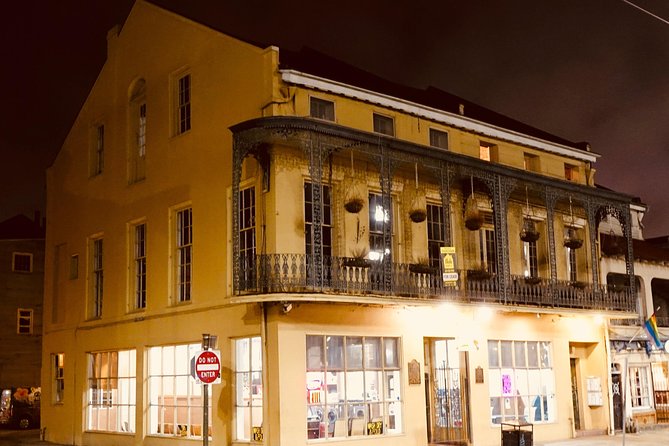
After Armstrong Park, the route enters the building that housed J&M Studios, the recording site linked with what became known as the New Orleans Sound.
The names here are impressive: Professor Longhair, Dave Bartholomew, Fats Domino, Guitar Slim, Shirley and Lee, Lloyd Price, Ernie K-Doe, Allen Toussaint, and Clarence Frogman Henry. Visitors from outside New Orleans also recorded there, including Little Richard, Ray Charles, and Jerry Lee Lewis.
This stop broadens the tour beyond early jazz. You move into rhythm and blues, piano-driven music, rock and roll, and the recording industry that carried local styles across the country.
You should not expect a working studio visit or a full performance unless your guide specifically arranges something. The value is in standing at the site and understanding how many major recordings are tied to one New Orleans address.
The final musical thread is bounce music, a New Orleans style that developed much later and remains part of the city’s living sound. The tour also points you toward street musicians who continue that tradition in public spaces.
That ending is smart. It prevents the walk from treating New Orleans music as something finished in the past. The story reaches from African traditions to early jazz to studio recordings and present-day street performance.
What the guides add to the experience
The guide can make or break this tour. David is the name most closely associated with the strongest experiences in the available feedback. He is described as funny, artistic, energetic, and able to adjust to a mixed group. His explanations connect music with local culture rather than keeping the subject inside a narrow jazz timeline.
That range matters. You might arrive expecting names and dates, then find yourself discussing food, dancing, religion, politics, and building design. One couple described the tour as a fresh way to see New Orleans culture from its roots to the present.
Other outings were less consistent. A guide named Cindy reportedly shortened the walk in hot summer weather, and one group found the experience too focused on Armstrong Park. The overall score is 4.3 out of 5 from 35 ratings, which points to a generally good experience with real variation from one departure to another.
My advice is simple: introduce yourself and tell the guide what you want. If you want early jazz, ask for Buddy Bolden and Jelly Roll Morton. If you care about Fats Domino or Allen Toussaint, say so. If you want to hear music rather than only discuss it, ask directly what sound or demonstration is planned.
Price, group size, timing, and comfort
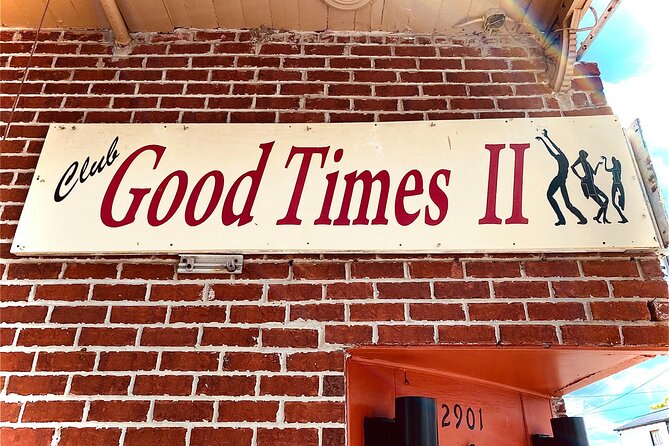
At $25 per person, this is an inexpensive way to get two hours of local context. A private history guide would normally cost much more, and the group limit of 15 keeps the walk from feeling like a large crowd.
The value is strongest if you use the tour as a starting point for the rest of your stay. Take notes on the musicians and places mentioned, then seek out a performance or recording afterward. The walk itself does not include food, drinks, hotel pickup, or hotel drop-off.
The 2 p.m. start is convenient for fitting around breakfast and lunch, but it has a weakness in summer. New Orleans heat and humidity can be hard on an outdoor walking tour, and the afternoon sun may affect both the guide and the group. Wear light clothing, bring water, and avoid assuming that the walk will feel easy in July or August.
Cold, damp weather can also affect the mood. One group still found the tour worthwhile in unpleasant conditions, but you should dress for the forecast because much of the experience takes place outside.
The activity is offered in English and uses a mobile ticket. Most people can participate, but the information provided does not promise a specific accessibility format or route adjustment. If that matters to you, ask before booking.
The tour is often reserved about 27 days ahead. That suggests planning is wise during busy periods, especially if you want a particular date. Free cancellation is available up to 24 hours before the start time. Inside that window, payment is not refunded.
Who should book this music walk?
You are a good match if you:
- Want a compact introduction to New Orleans music and culture
- Prefer stories, context, and local personalities to a formal concert
- Are curious about jazz, rhythm and blues, bounce, or recording history
- Like walking through places connected with music
- Want a low-cost activity for your first afternoon
- Appreciate a guide who can connect music with broader city life
You may want something else if you need guaranteed live music, a fixed route, indoor comfort, or a tour centered only on famous jazz landmarks. The description promises a musical walking tour, but the experience may lean toward a historical talk, and the route can vary.
Should you book the New Orleans Music Tour?
I would book it for the right reason: to understand how New Orleans music developed and why the city’s neighborhoods matter. At $25, the price is fair, especially with a small group and a guide such as David who brings warmth and humor to the subject.
I would not book it expecting a jazz concert or a perfectly fixed circuit of stops. Confirm the route at the beginning, ask about live music, and plan for outdoor weather. If you are happy to listen, walk, and think about the city’s past and present, this is a useful first look at New Orleans through sound.
FAQ
How long is the New Orleans Music Tour?
The tour lasts approximately two hours.
What time does the tour start?
The tour starts at 2:00 p.m.
Where does the tour begin?
It begins at 806 N Rampart St, New Orleans, Louisiana 70116.
Where does the tour end?
The activity ends back at the meeting point.
What sites are included?
The route is planned to include St. Louis Cemetery No. 1, the former Storyville District, Louis Armstrong Park, Congo Square, and the building that housed J&M Studios.
Is live music included?
Live music is not listed as an included feature. The tour focuses on music history, musicians, cultural traditions, and New Orleans musical development.
How much does the tour cost?
The price is $25 per person.
Can I cancel for a refund?
Yes. You can cancel at least 24 hours before the experience start time for a full refund. Cancellations or changes made less than 24 hours before the start time are not accepted for a refund.
Just added around New Orleans
- The Soul of New Orleans: Jazz History Private Tour★ 5.0 · 4 reviews
- Small-Group New Orleans Jazz Tour★ 4.5 · 16 reviews
- Private VIP Frenchmen Street Live Music Pub Crawl New Orleans★ 4.5 · 17 reviews
- New Orleans Music Tour★ 4.5 · 65 reviews
- French Quarter Shrimp Boil & Live Music★ 5.0 · 177 reviews
- New Orleans Jazz Walking Tour★ 5.0 · 80 reviews
- New Orleans Jazz History and New Orleans People of Color★ 5.0 · 2 reviews
- Creole Queen Weekend Jazz Brunch Cruise on the Mississippi River★ 4.0 · 6 reviews
New Orleans Concerts, compared.
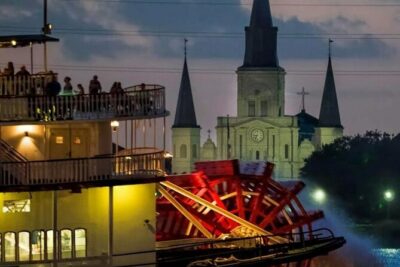
New Orleans Steamboat Natchez Jazz Cruise with Dinner Option
Read our review →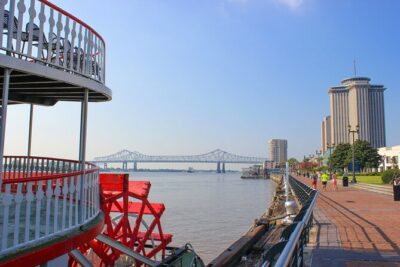
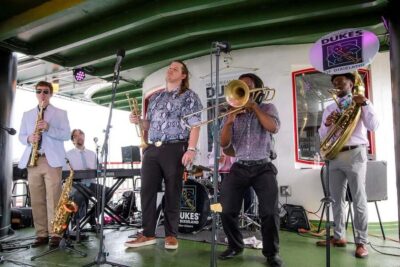
New Orleans: Evening Steamboat Jazz Cruise + Optional Dinner
Read our review →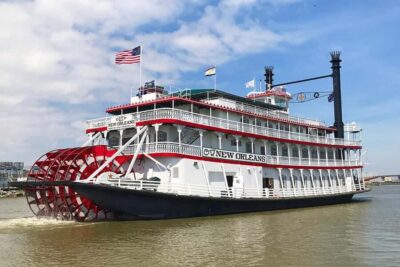
New Orleans: Daytime Steamboat Jazz Cruise + Optional Lunch
Read our review →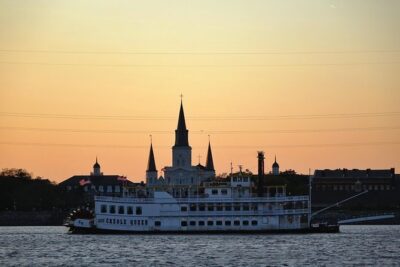
Paddlewheeler Creole Queen Jazz Dinner Cruise in New Orleans
Read our review →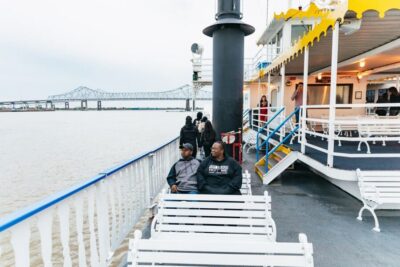
New Orleans: Evening Jazz Boat Cruise with Optional Dinner
Read our review →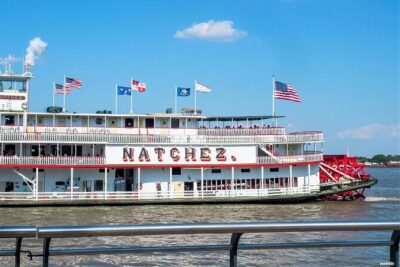
VIP Jazz Dinner Cruise with Private Tour and Open Bar Option
Read our review →Browse the lists this tour appears in