
Review · NEW ORLEANS
New Orleans Music Tour
New Orleans music does not begin in a recording studio or a famous club. This tour starts at Congo Square, where enslaved Africans gathered, danced, worshiped, and kept musical traditions alive. From there, you follow the city’s path from early jazz to rock ’n’ roll, stopping at places tied to Louis Armstrong, Fats Domino, Little Richard, and other major figures.
I like the tour’s strong historical frame and its focus on the link between slavery and American music. I also like the modest $25 price, small maximum group of 20, and the chance to hear current street musicians rather than only looking at old landmarks.
The main caution is consistency. Some guides, especially David Higgins, are praised for vivid storytelling and musical detail, while a few people found the tour too focused on talking, phone or tablet clips, and Armstrong Park. The exact route and depth can depend heavily on your guide.
Key points to know before you book
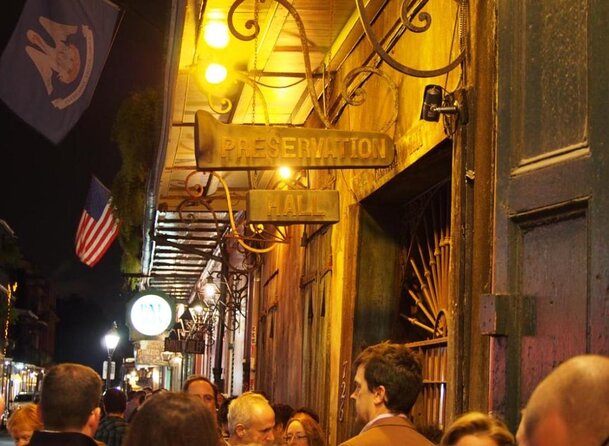
- Congo Square gives the tour its heartbeat: You learn why African musical and religious traditions matter to the story of New Orleans music.
- Cosimo Matassa’s J&M Studios connects jazz to rock: The site is tied to Professor Longhair, Fats Domino, Allen Toussaint, Little Richard, and Ray Charles.
- Storyville adds a complicated jazz chapter: Basin Street recalls the old red-light district and the musicians who played in its clubs.
- Guide quality matters: David Higgins receives especially strong praise for linking music, politics, culture, and national influence.
- It is a walking history lesson, not a concert: You may hear street music and musical samples, but a live Preservation Hall performance is not included.
- The $25 price is fair for context: It works best as a first look at New Orleans music, followed by your own club or concert plans.
Why Congo Square is the right place to begin
The tour starts at the Rampart Treehouse, at 740 North Rampart Street, at 2 pm. From there, your guide leads you into Louis Armstrong Park, one of the most meaningful places on the route.
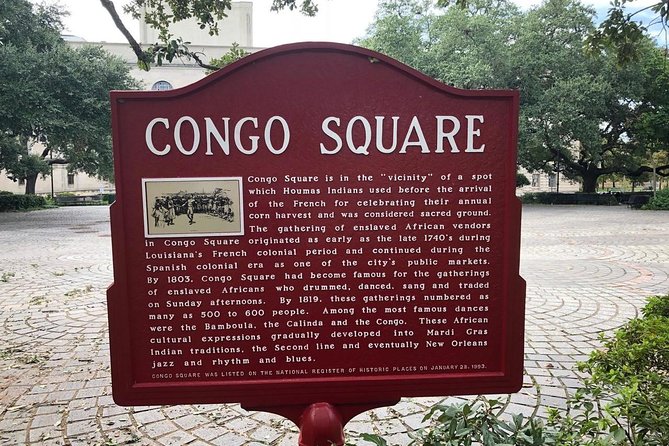
Congo Square is the key. Under slavery, African people in New Orleans gathered there on Sundays. The site became a place for music, dance, religious practice, and social life. The tour presents Congo Square as the source of New Orleans music and, by extension, a major source of modern popular music across the world.
That is a large claim, but the setting helps you understand it. New Orleans music was not created in isolation. It grew from African traditions, forced migration, European instruments, Caribbean influence, church music, dance, and life in a port city.
Your guide also connects Congo Square with the New Orleans Jazz and Heritage Festival, which began in 1970. That link brings the story into the present. You are not simply looking at a historic patch of ground. You are considering how an old gathering place still shapes the city’s public identity.
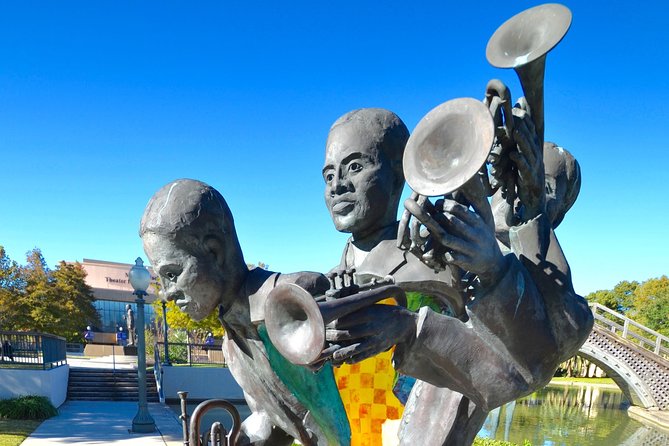
Louis Armstrong Park also contains sculptures and memorials to musical figures. A good guide uses those objects as prompts for stories rather than treating them as a checklist. David Higgins is especially well regarded for explaining music alongside political and cultural change. Other named guides include Eva, Margie, Rob, and Anna, so the style may vary from one departure to the next.
One practical point matters here: you spend a substantial portion of the tour in the park. If you want a fast procession from landmark to landmark, this may feel slow. If you want background and discussion, the time gives the subject room to breathe.
More Music Walking Tours in New Orleans:
- New Orleans Jazz History and Music Walking Tour
★ 4.5 · 477 reviews - New Orleans Music Tour
★ 4.5 · 35 reviews - The Original Sound of Music Tour in Salzburg
★ 4.5 · 6,129 reviews
J&M Studios and the making of the New Orleans sound
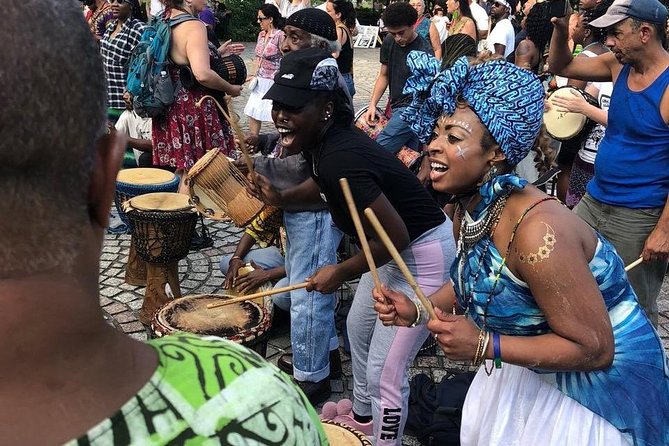
From Armstrong Park, you view the building associated with J&M Studios, the recording place linked to Cosimo Matassa. The studio helped create what is often called the New Orleans sound.
The list of musicians connected with the studio is impressive: Professor Longhair, Dave Bartholomew, Fats Domino, Guitar Slim, Shirley and Lee, Lloyd Price, Ernie K-Doe, Allen Toussaint, and Clarence Frogman Henry. Visitors from outside New Orleans, including Little Richard, Ray Charles, and Jerry Lee Lewis, also recorded there.
The point is not only that famous people once worked in the building. The studio helped capture a local style built on rhythm, piano, horns, blues, gospel, and dance. The tour treats it as a birthplace of rock ’n’ roll, a useful reminder that rock was shaped by Black musicians and by New Orleans performers whose influence reached far beyond Louisiana.
You should set your expectations carefully. The experience is a look at the building and its importance, not a studio tour with recording equipment or a performance. The site itself may feel ordinary compared with the sound created there. That contrast is part of the lesson: major cultural change can come from an unassuming place.
Some guides use a tablet or phone to show photographs and play brief musical samples. That can make the story easier to follow, especially if you do not already know the artists. Still, sound quality and timing may not be ideal outdoors. I would treat these clips as support for the guide’s explanation, not the main event.
Basin Street, Storyville, and early jazz
The next section takes you to Basin Street Station and along Basin Street. This area recalls Storyville, New Orleans’ famous red-light district, which operated around the turn of the 20th century.
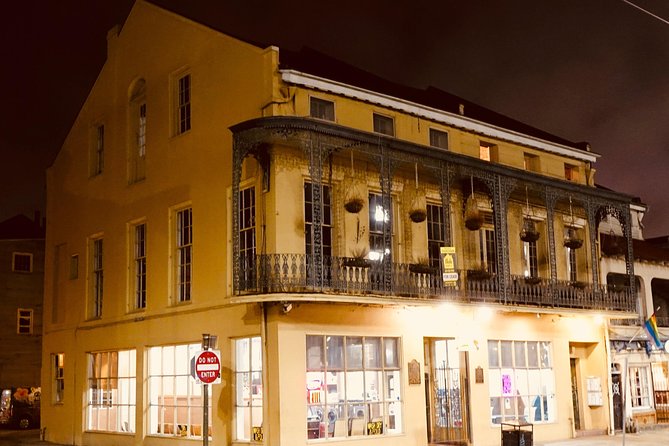
Storyville was not simply a collection of brothels. Its clubs and parlors created paid work for musicians and brought different musical styles into close contact. The tour mentions Frank Early’s My Place Saloon, associated with the song Pretty Baby, and musicians such as King Oliver, Buddy Bolden, Jelly Roll Morton, and Sidney Bechet.
This is one of the route’s best chances to see how social history and music overlap. The growth of jazz did not happen in a clean, respectable setting. Musicians played in places shaped by segregation, vice, poverty, migration, and changing city rules. Your guide can help separate legend from the more complicated reality.
Do not expect a preserved entertainment district. Much of Storyville is gone, and what remains may be fragments or nearby buildings rather than a complete historic scene. The value comes from learning what once occupied this part of the city and imagining the sound of early jazz in a place that has changed.
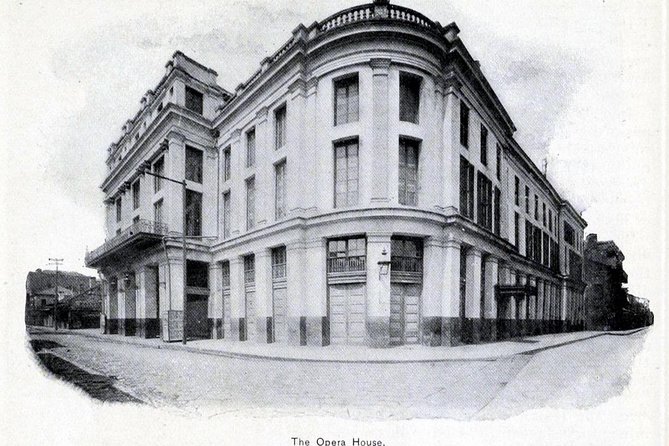
The route then moves through the Tango Belt toward May Baily’s Place and the former site of the Old French Opera House. These stops add another layer to the story. New Orleans music was not confined to one neighborhood or one audience. Opera, dance halls, saloons, formal theaters, and street corners all helped shape the city’s musical life.
The walk through the French Quarter
The walking portion is relatively compact, but you should still wear comfortable shoes. The tour lasts about two hours and begins in the afternoon, when heat, sun, or rain can affect your comfort. Bring water, sunscreen, a hat, and some form of rain or sun protection.
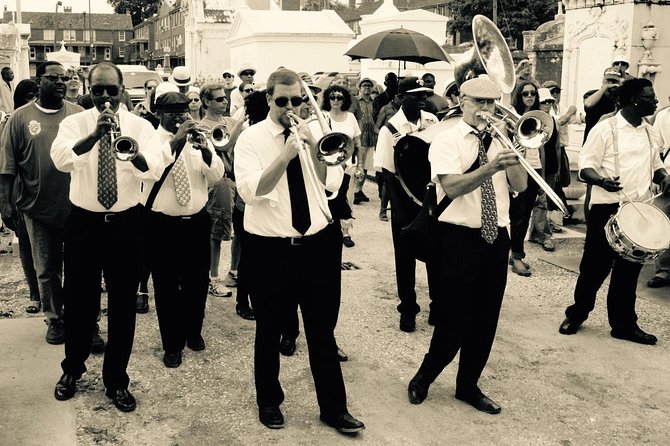
The route ends at Preservation Hall on St. Peter Street. The hall represents the continuing life of traditional New Orleans music, not only its past. You also hear about New Orleans bounce music and the street performers carrying local traditions into the present.
That mix is important. A music tour that stops with early jazz can make New Orleans seem frozen in time. This one at least attempts to connect Armstrong and Storyville with bounce, current street performers, and the music you can hear in the city now.
Preservation Hall is an endpoint, not an included concert. The tour finishes at 726 St. Peter Street, where people may already be lining up for the 5 pm show. That timing can be useful if you want to continue your music day, but you will need to arrange and pay for any performance separately.
The ending also comes with a practical limitation. Some departures have not entered the hall, and some people have found the stop less satisfying than expected. You may view Preservation Hall from outside, then continue on your own. If seeing a performance there is central to your plan, book the show separately and confirm the details before you go.
Same city, a different sound:
- New Orleans Steamboat Natchez Jazz Cruise with Dinner Option
★ 4.0 · 7,533 reviews - New Orleans Steamboat Natchez Jazz Cruise
★ 4.5 · 5,334 reviews - New Orleans: Evening Steamboat Jazz Cruise + Optional Dinner
★ 4.3 · 4,548 reviews - New Orleans: Daytime Steamboat Jazz Cruise + Optional Lunch
★ 4.3 · 4,164 reviews
What the guides add to the experience
The strongest part of this experience is the guide’s voice. David Higgins receives the most consistent praise for his enthusiasm, personal connection to music, and ability to explain how New Orleans musicians influenced the country and the world.
His background as a musician and someone raised in a musical family gives the stories a personal angle. He is also praised for taking questions, using photographs and recordings, and linking music to politics and local culture. One small musical moment has even included playing jazz on Royal Street.
Eva is described as warm and passionate, with a gift for combining stories about people, places, and history. Margie is praised for making the tour informative and enjoyable. Rob is associated with musical samples and historical detail.
That range matters because a walking tour is only partly about the route. The same park, former studio, and street can feel alive with one guide and flat with another. A few people found their guide rambling or spending too long in Armstrong Park. Others felt the two hours were too short for the amount of material.
I would book this tour if you enjoy a guide-led conversation and do not mind pausing to listen. I would skip it if you want nonstop music, multiple indoor venues, or a scheduled concert.
The $25 price and the value you get
At $25 per person, this is an inexpensive way to organize your first look at New Orleans music. You are paying for a guide, a planned route, and historical context. The landmarks themselves do not require admission fees, except that the listed Congo Square visit is included as part of the experience.
The value is strongest when you are new to the city’s music story. A good guide can give you names, neighborhoods, and connections to pursue later. Afterward, you will have a better idea why Fats Domino matters, how Storyville fits into jazz, and why Congo Square belongs near the beginning of any discussion about New Orleans music.
The value is weaker if you expect access to working music venues or a performance. No concert ticket is included. You may hear street musicians, musical clips, or an impromptu musical moment, but none of those is guaranteed in the same form every time.
A private or nearly private departure can make the price feel especially good. Some groups have been very small, allowing the guide to answer questions and adjust the discussion. The maximum group is 20, so you should not assume every outing will be intimate.
Who should take this music walk?
I would recommend it for first-time visitors who want a clear introduction before choosing evening music. It also suits people who enjoy jazz, early rock, music history, and the social forces behind art.
Families can enjoy it if children are willing to walk and listen. The subject includes slavery, prostitution, segregation, and the hard conditions that shaped music, so it is not a simple children’s entertainment activity. Still, the stories can give older children a useful way to understand New Orleans.
Music fans who already know the major names may find the route less rewarding unless they enjoy local context. You will not spend two hours inside clubs listening to sets. This is a street-based lesson with music as its subject.
The tour is also a good fit if you want to connect famous names with actual places. Seeing the former studio site, Basin Street, Congo Square, and the French Quarter makes the story easier to remember than a museum display alone.
Practical details for a smoother afternoon
The start point is the Rampart Treehouse at 740 North Rampart Street. The tour begins at 2 pm and ends at Preservation Hall, 726 St. Peter Street. Because it is a point-to-point walk, plan to leave yourself time to reach the starting location and to make later plans from the French Quarter.
The experience is offered in English and uses mobile tickets. It is near public transportation, and service animals are allowed. Most people can take part, but you should be prepared to walk outdoors for roughly two hours.
Good shoes matter more than dressy clothes. Carry water, protect yourself from the sun, and bring rain protection. The tour requires good weather, so a cancellation for poor conditions leads to a new date or full refund.
You can cancel for a full refund up to 24 hours before the start time. Inside that window, changes and refunds are not accepted. That rule is worth noting in New Orleans, where sudden rain can affect outdoor plans.
Should you book the New Orleans Music Tour?
Book it if you want the story behind the sound. At $25, the tour offers a useful introduction to Congo Square, Storyville, J&M Studios, early jazz, rock ’n’ roll, bounce, and today’s street music.
Go in expecting a walking lecture with musical examples, not a concert crawl. Your experience may be excellent with a guide such as David Higgins, Eva, Margie, or Rob, but the route can feel too slow or too talk-heavy with a less effective presentation.
My advice is simple: choose this as an afternoon foundation, then spend the evening hearing live music on your own. If your main goal is to sit inside Preservation Hall or visit several active clubs, put your $25 toward a performance instead. If you want to understand why New Orleans music sounds the way it does, this tour is a sensible and fairly priced place to start.
FAQ
How much does the New Orleans Music Tour cost?
The tour costs $25 per person.
How long does the tour last?
It lasts approximately two hours.
What time does the tour begin?
The tour starts at 2 pm.
Where does the tour begin?
It begins at the Rampart Treehouse, 740 N Rampart Street, New Orleans, Louisiana 70116.
Where does the tour end?
It ends at Preservation Hall, 726 St. Peter Street, New Orleans, Louisiana 70116.
Is a Preservation Hall concert included?
No. The walking tour ends at Preservation Hall, but a concert ticket is not included.
Is the tour offered in English?
Yes. The tour is offered in English.
How large can the group be?
The maximum group size is 20 people.
Can I cancel for a refund?
Yes. You can cancel at least 24 hours before the start time for a full refund. Cancellations or changes made within 24 hours are not refunded, and poor weather may lead to a new date or full refund.
Just added around New Orleans
- The Soul of New Orleans: Jazz History Private Tour★ 5.0 · 4 reviews
- Private VIP Frenchmen Street Live Music Pub Crawl New Orleans★ 4.5 · 17 reviews
- Small-Group New Orleans Jazz Tour★ 4.5 · 16 reviews
- New Orleans Music Tour★ 4.5 · 35 reviews
- New Orleans Jazz Walking Tour★ 5.0 · 80 reviews
- French Quarter Shrimp Boil & Live Music★ 5.0 · 177 reviews
- New Orleans Jazz History and New Orleans People of Color★ 5.0 · 2 reviews
- Creole Queen Weekend Jazz Brunch Cruise on the Mississippi River★ 4.0 · 6 reviews
New Orleans Concerts, compared.
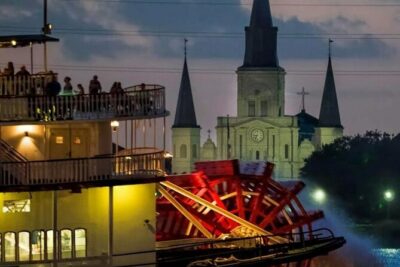
New Orleans Steamboat Natchez Jazz Cruise with Dinner Option
Read our review →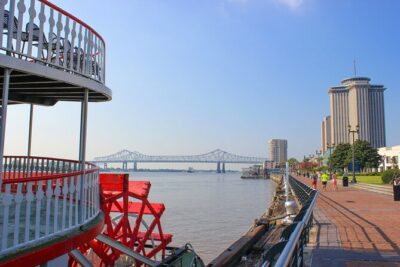
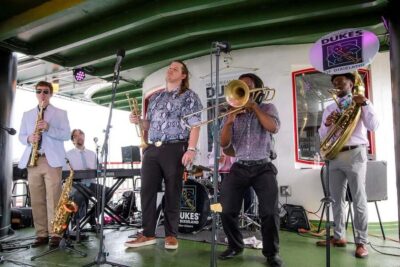
New Orleans: Evening Steamboat Jazz Cruise + Optional Dinner
Read our review →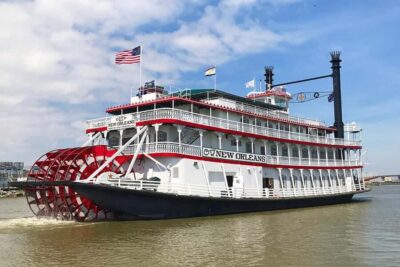
New Orleans: Daytime Steamboat Jazz Cruise + Optional Lunch
Read our review →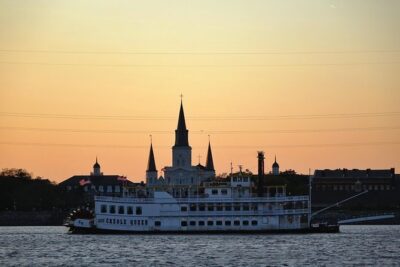
Paddlewheeler Creole Queen Jazz Dinner Cruise in New Orleans
Read our review →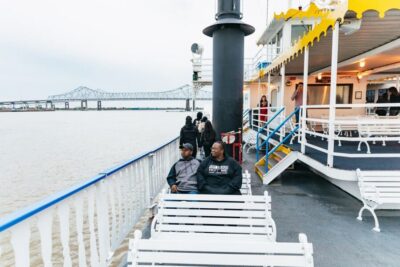
New Orleans: Evening Jazz Boat Cruise with Optional Dinner
Read our review →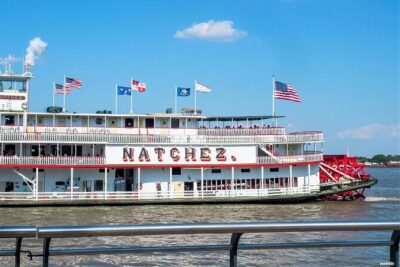
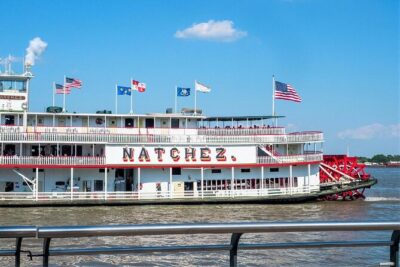
VIP Jazz Dinner Cruise with Private Tour and Open Bar Option
Read our review →Browse the lists this tour appears in