
Review · BERLIN
Berlin: Historical Walking Tour with Live Music
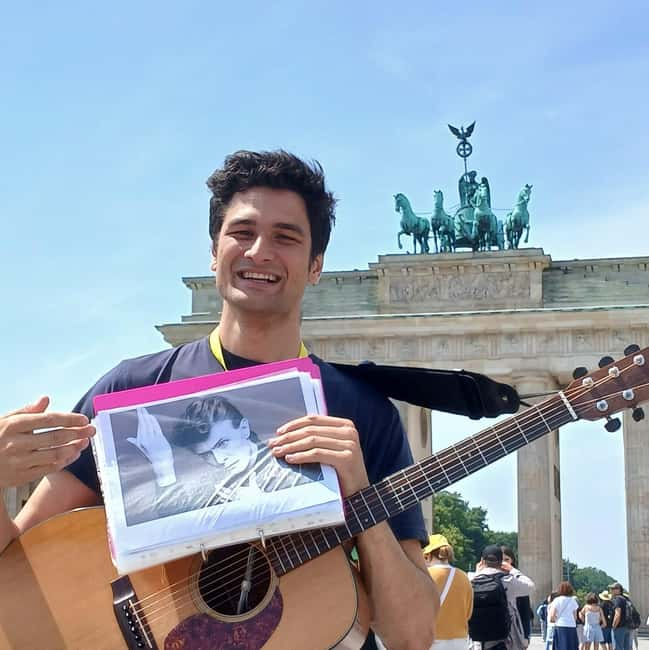
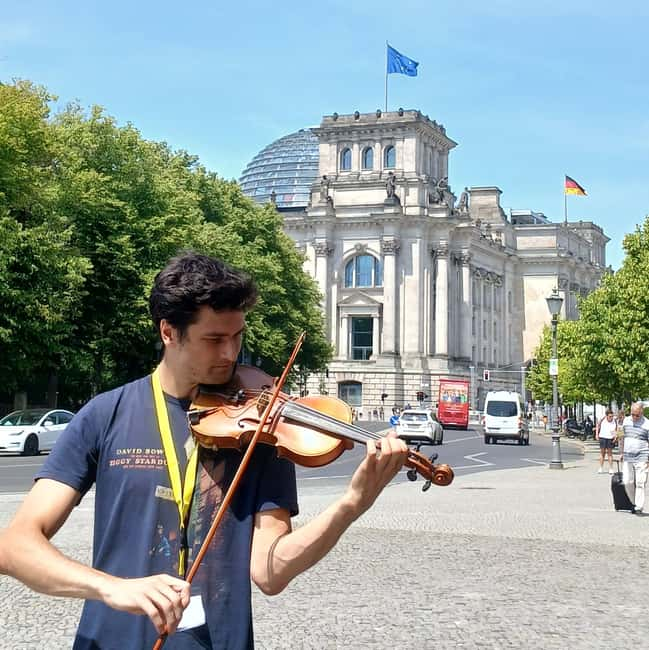
Berlin’s past is often told in dates, dictators, walls, and memorials. This tour adds something unusual: live music at each major stop, with songs linked to propaganda, resistance, David Bowie’s 1970s Berlin, and the city’s divided years. Axel Glorvigen leads the walk with guitar, singing, and violin, turning a standard city-center route into a moving history lesson.
I like two things right away. First, the route covers Berlin’s essential central sights without asking you to pay for transport. Second, the music gives each place a different emotional weight, especially when the tour moves from the Brandenburg Gate to the Holocaust Memorial and then toward the Berlin Wall. The main consideration is simple: this is a fully walked 2.5-hour tour, so good shoes and suitable weather matter.
Key points to know before you book
- Live music is built into the history lesson: Expect guitar, singing, and violin connected to each main stop.
- The route is practical for first-time visitors: You walk from Pariser Platz through the central sights to Checkpoint Charlie.
- Axel Glorvigen leads in English: He combines spoken explanation with music and visual points at significant locations.
- The tour covers more than famous buildings: Topics include Nazi propaganda bands, East German songwriters, and David Bowie in 1970s Berlin.
- The price is unusually low: At $12 per person, the tour costs less than many short sightseeing activities.
- Plan for a real walk: The full experience takes 2.5 hours and has no included transport.
Why music changes the way you see central Berlin
A conventional walking tour gives you facts at a series of outdoor stops. This one asks you to listen as well as look. That small change matters in Berlin, where many important places are open spaces with few surviving buildings to explain what happened there.
At the Brandenburg Gate, you are not only looking at one of Berlin’s best-known monuments. You are beginning a story about power, public image, war, division, and reunification. A song can make that setting feel less like a photograph on a postcard and more like a place shaped by people and political ideas.
The musical choices also reach beyond the usual tour script. You hear about the way the Nazis used propaganda bands, the role of songwriters under East German rule, and the creative pull Berlin had for David Bowie in the 1970s. These subjects show how music can be used by governments, challenged by artists, and shaped by a city’s mood.
I would not book this expecting a concert with a little sightseeing attached. The core experience is still a guided historical walk. The songs are there to support the stories, not replace them. That balance is useful if you want context but prefer something more personal than a long lecture.
More Heritage Tours in Germany:
- Berlin Sightseeing Musical-Historical Walking Tour
★ 4.6 · 10 reviews - Porto: An Intimate Fado Show in a Historical Tavern
★ 4.8 · 2,055 reviews - Vienna Mozart Concert in Historical Costumes at the Musikverein
★ 4.5 · 888 reviews
Starting at Pariser Platz with a guitar in view
The meeting point is Pariser Platz, in front of the Starbucks. Look for Axel carrying a guitar. This is a handy landmark in a busy part of Berlin, and the instrument gives you a clear way to identify the guide.
The tour is conducted in English. Axel’s role is more than pointing out buildings and reciting dates. He presents the history verbally and visually, then links the subject to a song or musical passage. That combination gives the route a clear rhythm: walk, stop, listen, and move on.
Because the tour takes place outdoors, you should check the weather before setting out. Bring comfortable shoes, since the whole activity is on foot. The experience is listed as wheelchair accessible, but you should still be ready for a long period outdoors and ask the provider about any personal mobility concerns before booking.
Pariser Platz is also a sensible starting point for a first look at central Berlin. You are close to several major sights, and the route quickly places you in the middle of the city’s most important 20th-century stories.
Brandenburg Gate: a symbol with several chapters
The Brandenburg Gate is usually treated as a quick photo stop. Here, you spend about 20 minutes sightseeing and hearing how its meaning changed over time.
That is important because the gate has not always represented the same Berlin. It has been used in political imagery, linked to the city’s division, and later embraced as a sign of reunification. The musical element helps underline the contrast between official messages and the human stories beneath them.
This is likely one of the more accessible sections for children and first-time visitors because you can see the landmark while hearing why it matters. You do not need prior knowledge of German history to follow the discussion.
The limitation is that the stop remains outdoors. You will not be entering the Brandenburg Gate or spending time inside a museum. If you want detailed architectural study, this tour will give you a useful overview rather than a specialist treatment.
The Holocaust Memorial and the weight of silence
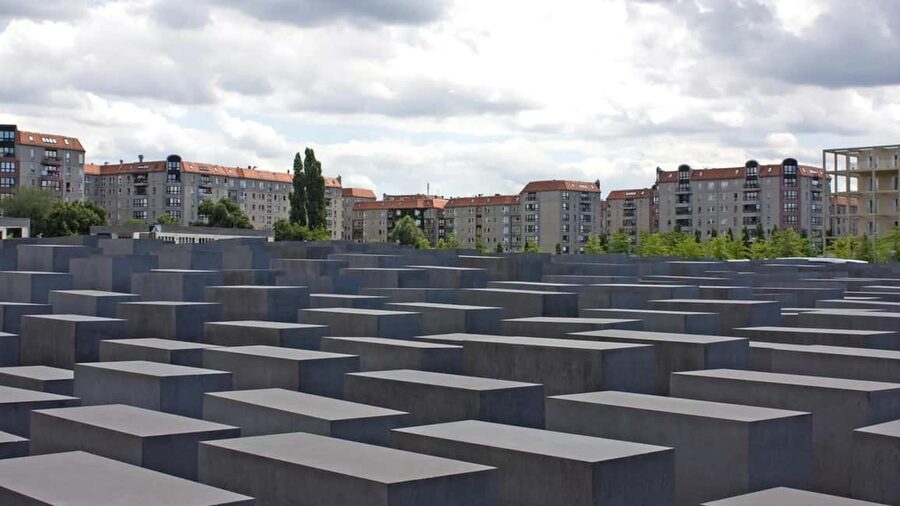
The walk continues to Berlin’s Holocaust Memorial, where you spend around 20 minutes. This is a serious stop, and the musical format needs a careful touch here. The memorial is not simply another backdrop for entertainment. It is a place for remembrance, and the value of the guide’s approach lies in connecting the site to the wider political and cultural story without treating it casually.
The route includes discussion of Nazi propaganda bands. That subject helps explain how music can serve power. It also gives you a more specific way to think about propaganda, not just as speeches and posters, but as public sound and organized performance.
You should expect the tone to change here. The tour’s songs are meant to bring the history closer, but they do not make the subject light. If you prefer silent, self-guided time at the memorial, you may find the guided musical format less suitable. If you want help placing the memorial within Berlin’s story, this is one of the most meaningful stops.
A practical point: the memorial is outdoors, so weather can affect your ability to focus. A raincoat or sun protection may make a real difference during this part of the walk.
More Walking Tours in Germany:
- Hamburg: St. Pauli Walking Tour with Live Music
★ 4.0 · 3 reviews - Sydney Opera House Official Guided Walking Tour
★ 4.5 · 3,770 reviews - London West End Musical Silent Disco Walking Tour Top 1% Rated
★ 5.0 · 1,057 reviews - Salzburg 2.5-Hour Walking Tour: Mozart, Old Town & More
★ 4.2 · 987 reviews
The Berlin Wall: music under a divided regime
The Berlin Wall stop shifts the tour toward the Cold War and the experience of a city split in two. You spend roughly 20 minutes sightseeing and learning how Berlin’s division affected everyday life and public expression.
This is where the discussion of East German songwriters becomes especially useful. Music under a restrictive government was not always a simple matter of open protest. Artists had to work within limits, find indirect ways to express themselves, and decide how far they could push against official control.
A song can make that tension easier to grasp than a list of political terms. You hear how creative work could carry meaning when direct criticism was risky. The result is a more human view of the Cold War, one that includes artists and listeners as well as leaders and border guards.
The tour does not appear to be a long wall-focused walk, so do not book it if your main goal is to study every remaining section of the Wall or visit a museum exhibition. This stop works best as part of a wider central-Berlin overview.
David Bowie and the city’s creative pull
Berlin’s music story is not limited to government propaganda or resistance. The tour also explains how David Bowie found inspiration in 1970s Berlin.
That topic gives the route a welcome change of tone. You move from state control and political division to the way artists respond to a city’s atmosphere. Bowie’s Berlin period is part of the city’s wider cultural identity, and it shows how a place marked by conflict can also attract experimentation and new ideas.
The connection is useful for anyone who knows Berlin through music as much as through monuments. It also keeps the tour from becoming a narrow Nazi and Cold War circuit. You get a sense of the city as a place where politics, memory, and art have always crossed paths.
The tour does not promise a full music-history survey, so expect selected examples rather than a complete account of Berlin’s musical life. The strength is the connection between sound and location, not a long list of performers.
Finishing at Checkpoint Charlie
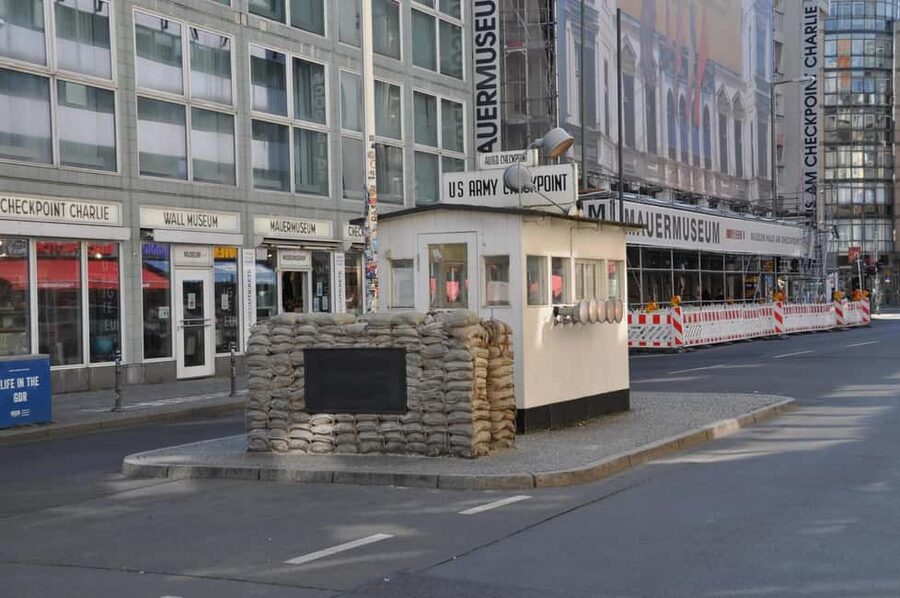
The walk ends at Checkpoint Charlie, one of Berlin’s most famous Cold War sites. This makes practical sense: the route moves from the symbolic center around the Brandenburg Gate toward a place strongly associated with the former border between East and West Berlin.
Checkpoint Charlie is visually familiar, but its history can be flattened into a quick photo and a few dramatic facts. A guide helps place it within the broader story of divided Berlin. By the time you arrive, you have already heard about power, memory, propaganda, artistic resistance, and the effects of separation.
Ending here also gives you a useful point for continuing your day. You can stop after the tour, explore nearby sights, or use the central location to plan your next activity. The experience itself includes no extra transportation, and you do not need to arrange a ride between the stops.
Keep your expectations in check. The tour finishes at Checkpoint Charlie rather than returning you to Pariser Platz. That is convenient if you want to continue exploring, but you should allow for your own onward plans.
How much value do you get for $12?
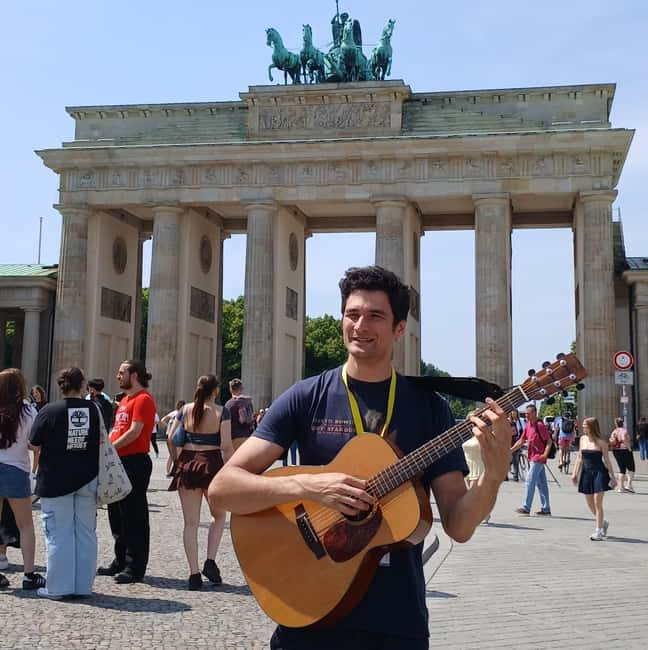
At $12 per person, this is a low-cost way to spend 2.5 hours in central Berlin. The value comes from the combination of three things: a route through major landmarks, a live English-speaking guide, and original music tied to the subjects being discussed.
Many inexpensive city walks offer a basic introduction and little else. This tour adds a performance element without charging a separate concert price. You are not paying for a vehicle, entrance tickets, or an indoor attraction. Since the walk is fully on foot, there are no added transportation costs for the activity itself.
The low price also makes it a reasonable choice early in a Berlin visit. You can use the route to get your bearings while learning which locations deserve more time later. Just remember that a budget price does not mean a short or effortless activity. Two and a half hours on foot is a proper outing.
Free cancellation is available up to 24 hours before the start time, and you can reserve now and pay later. Those terms help if your schedule is still shifting, though you should check the available start times when booking.
Who will enjoy this tour most?
I would recommend it most to first-time visitors who want Berlin’s major central sights explained in a memorable way. It also fits people who enjoy live performance, songwriting, or cultural history and want more than a standard monument-to-monument walk.
The tour may suit families with older children, especially if a traditional history talk would lose their attention. The songs provide a change of pace, while the route keeps the experience grounded in real places.
It is also a good match for visitors who already know some Berlin history but want to explore the role of music in political life. The subjects range from Nazi propaganda to East German songwriting and Bowie, so the tour reaches beyond a single period.
You may want something else if you dislike group walking tours, need frequent indoor breaks, or want extended time at each monument. You should also choose another activity if you are looking for a museum visit, a private tour, or a detailed architectural study.
Practical tips for a better walk
Wear shoes you can comfortably use for 2.5 hours. This is the most important preparation, since the tour is fully walked.
Check the forecast before leaving. There is no indoor transport segment to provide shelter, and the principal stops are outdoor sites.
Arrive at Pariser Platz in front of the Starbucks and look for the guide with a guitar. That detail should make the meeting point easier to find.
Keep some space in your schedule after the tour. Since you finish at Checkpoint Charlie, you may want to continue sightseeing from there rather than rush to another appointment.
Finally, listen for the link between each song and each place. The music is not an extra added at random. It is the method that ties political history, personal memory, and the physical city together.
Should you book Axel Glorvigen’s musical Berlin walk?
Book it if you want a low-cost introduction to Berlin’s central sights with a creative twist. Axel Glorvigen brings together guitar, singing, violin, spoken history, and visual stops in a format that gives familiar landmarks more feeling.
The strongest reason to choose it is the music’s close connection to the subject. You are not simply walking past the Brandenburg Gate, Holocaust Memorial, Berlin Wall, and Checkpoint Charlie. You are hearing how music can promote a regime, resist it, or capture the mood of a changing city.
Skip it if you want a quiet self-guided visit or a specialist tour with long, detailed time at one site. For most visitors seeking a practical overview with something genuinely different, $12 is a very reasonable price.
FAQ
How long is the Berlin Historical Walking Tour with Live Music?
The tour lasts 2.5 hours.
What language is the tour conducted in?
The live tour guide speaks English.
Where does the tour begin?
It begins at Pariser Platz, in front of the Starbucks.
How will I recognize the guide?
The guide, Axel Glorvigen, will be carrying a guitar.
Where does the tour finish?
The tour finishes at Checkpoint Charlie.
Which major sights are included?
The route includes the Brandenburg Gate, the Holocaust Memorial, the Berlin Wall, and Checkpoint Charlie.
Is transportation included?
The tour is fully walked, so transportation is not needed during the activity.
What music will I hear?
The experience includes live guitar, singing, and violin. The songs relate to the places and subjects discussed on the tour.
Is the tour wheelchair accessible?
Yes, the activity is listed as wheelchair accessible.
Can I cancel for a full refund?
Yes. You can cancel up to 24 hours in advance for a full refund.
Can I reserve now and pay later?
Yes. You can reserve your place and pay nothing at the time of booking.
Just added around Germany
- Medieval Knight’s Dinner Show with Live Music in Munich★ 3.0 · 2 reviews
- Dresden: New Green Vault and Semper Opera Tour★ 4.5 · 19 reviews
- City tour (including visit to the Frauenkirche) and Semper Opera Tour★ 5.0 · 21 reviews
- Nymphenburg classical music à la Mozart★ 4.7 · 3 reviews
- Festive Concert at Schleißheim with Residence-Soloists★ 4.7 · 25 reviews
- Festive Concert in the All-Saints Court Church★ 4.6 · 11 reviews
- Mozart and German Composers Private Tour in Munich★ 4.8 · 4 reviews
- Hamburg: St. Pauli Walking Tour with Live Music★ 4.0 · 3 reviews
Berlin Concerts, compared.
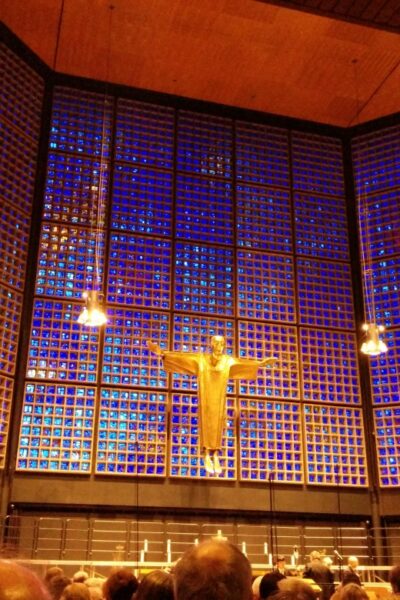
Berlin: Classical Concert at Kaiser Wilhelm Memorial Church
Read our review →
Berlin: Cabaret – The Berlin Musical at Tipi am Kanzleramt
Read our review →
Berlin: “All You Need is Love!” The Beatles Musical Ticket
Read our review →
Berlin: Classical concerts at the Bode Museum Berlin
Read our review →
Berlin Sightseeing Musical-Historical Walking Tour
Read our review →
Berlin: Classical concerts in Köpenick Palace – Aurora Hall
Read our review →Browse the lists this tour appears in