
Review · VIENNA
Vienna: Classical Concert in the historic 1837 Strauss-Hall
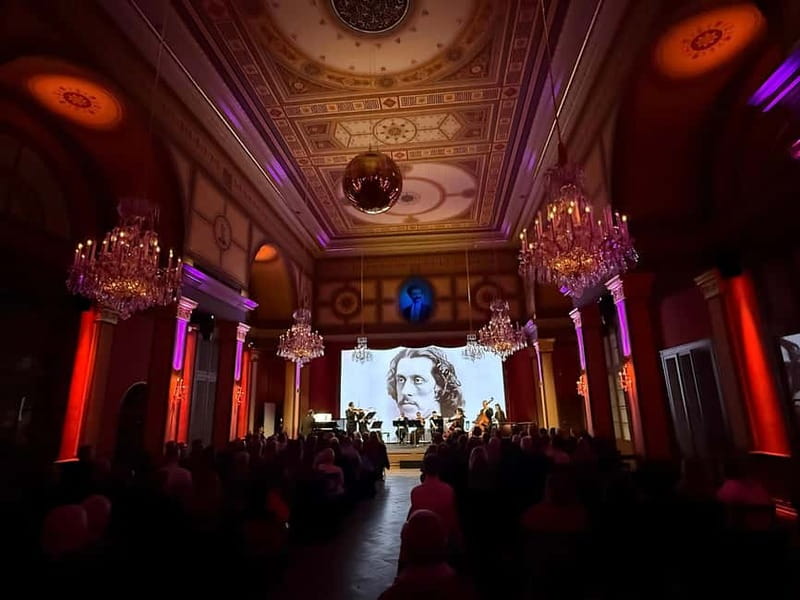
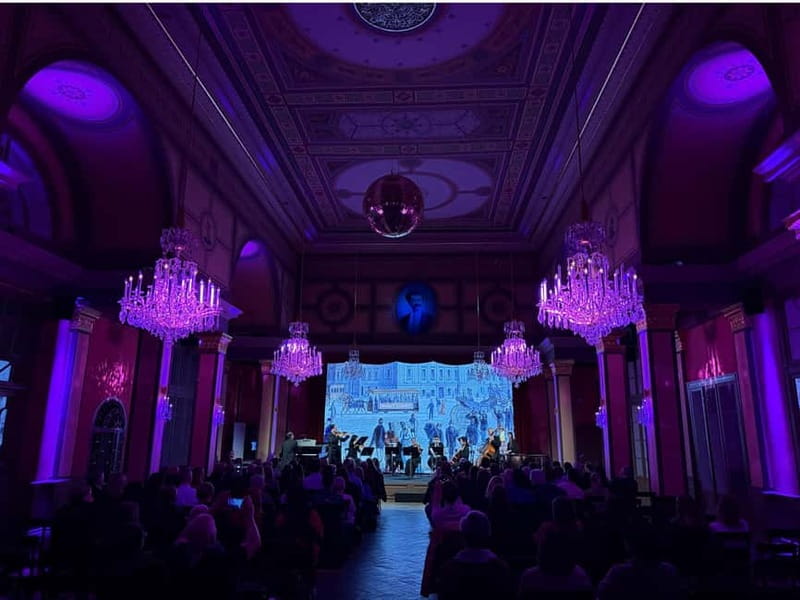
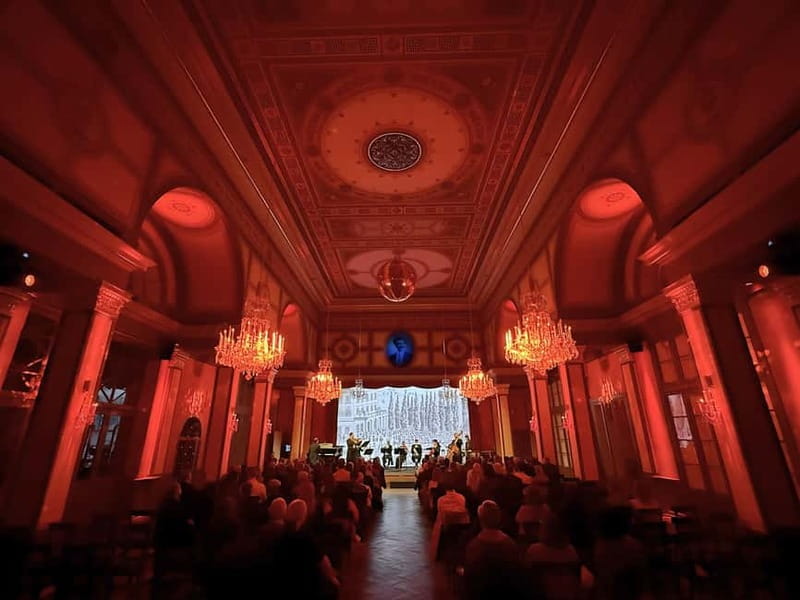
The best part of this Vienna evening is the setting. You hear Strauss and Mozart in the historic 1837 Strauss Hall, with painted details, elegant decoration, and acoustics that put you close to the music. A soprano adds drama to selected pieces, while a synchronized light show gives the concert a visual story.
I like the included Strauss Exhibition, which gives the music a useful Viennese setting, and I like the simple pleasure of a glass of Austrian sparkling wine before the performance. The main consideration is that this is not a long, formal concert of uninterrupted music. Commentary, theatrical touches, and visual effects share the evening with the orchestra.
Key points
- The evening follows a clear three-part schedule: museum from 7:00 or 7:30 PM, sparkling wine at 8:00, and concert from 8:30 to 9:30 PM.
- The 12-piece orchestra performs without amplification, giving the music a direct, old-fashioned sound, though the violins may not fill the hall as forcefully as an amplified ensemble.
- The soprano is a major highlight, appearing in selected pieces rather than singing throughout the concert.
- The light and sparkle show is synchronized with the music, adding scenes of Viennese balls, emotion, and historical context.
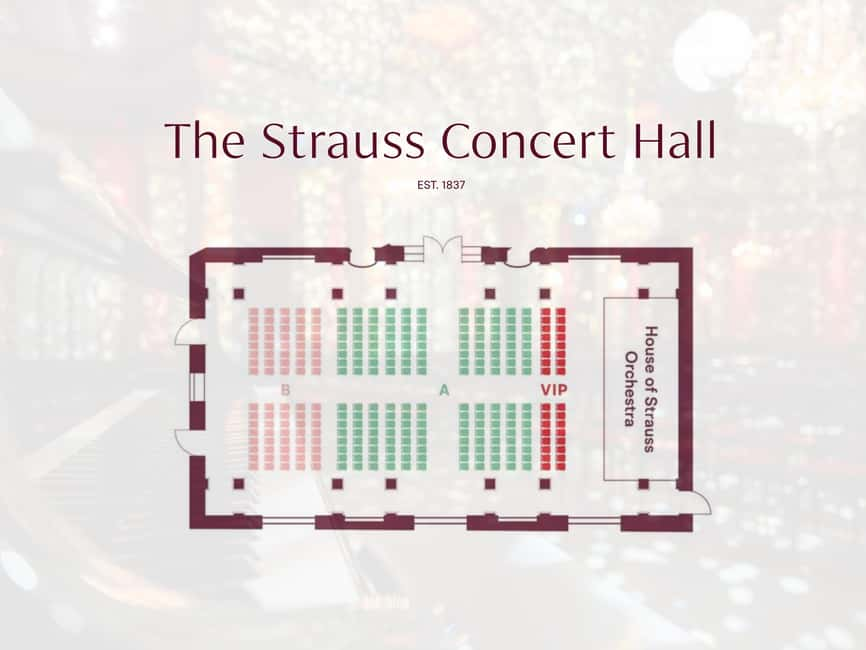
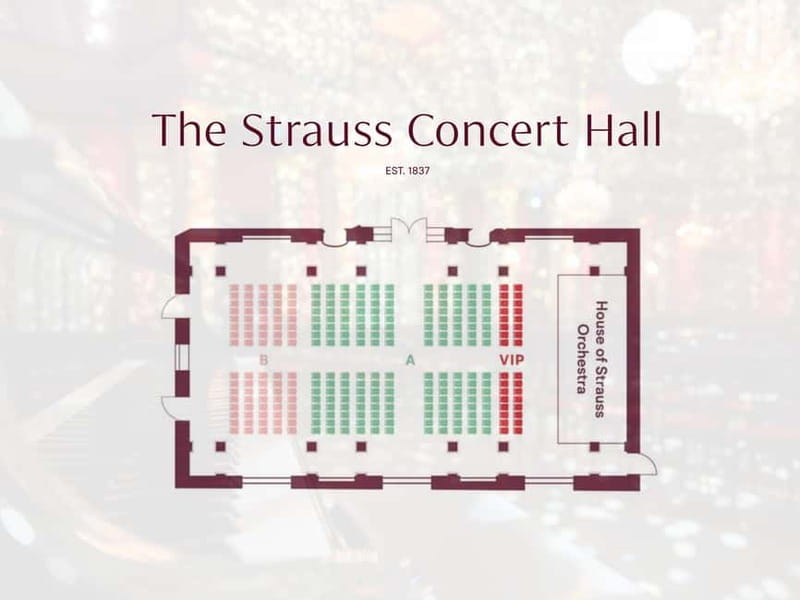
- VIP seating covers rows 1 and 2, Category A covers rows 3 to 13, and Category B covers rows 14 to 18.
- The $76 price includes more than the concert: museum entry, the performance, visual effects, and one glass of Austrian sparkling wine.
Why this concert feels different from a standard Vienna recital
Vienna has no shortage of classical concerts. Many feature familiar composers, grand halls, and musicians in formal dress. This experience takes a different route. It packages music with a museum visit, a reception, spoken context, and theatrical lighting.
That mix makes the evening approachable. If you already know every Strauss waltz by heart, you may want more music and less explanation. If classical music is not yet your strong suit, the visual material and short commentary help you follow the mood and story of each piece.
The program focuses on Johann Strauss and Wolfgang Amadeus Mozart. Strauss supplies the Viennese flavor: waltzes, elegance, and the spirit of the city’s 19th-century ballrooms. Mozart adds a wider classical range, with overtures, symphonic passages, and vocal music.
The performers include the original Strauss Capelle, a 12-piece orchestra, and a soprano soloist. The orchestra performs without amplification, which gives the sound a natural quality. You hear the instruments as they blend in the room rather than through a speaker system.
That choice has a tradeoff. The natural sound is part of the charm, but the string section may not feel as powerful as a larger orchestra in a concert hall designed for modern amplification. Your seat matters, particularly if you want the clearest balance between orchestra and solo voice.
More Classical Concerts in Austria
- Vienna: Vivaldi’s Four Seasons Concert in Karlskirche
★ 4.7 · 14,951 reviews - Vienna: Classical Concert in the World-Famous Musikverein
★ 4.6 · 6,673 reviews - Vienna: Mozart Concert at the Musikverein – Golden Hall
★ 4.6 · 5,194 reviews
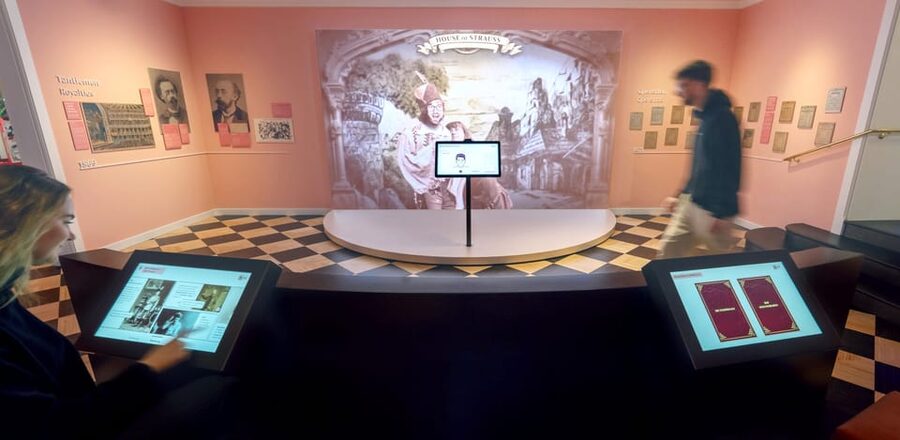
Entering the Strauss Exhibition before the music
Your evening begins with access to the House of Strauss Museum. The stated museum opening time is 7:00 PM, while the schedule also describes museum entry from 7:30 PM, so check the exact time shown for your chosen date. In either case, plan to arrive early enough to see the exhibits without rushing into the concert.
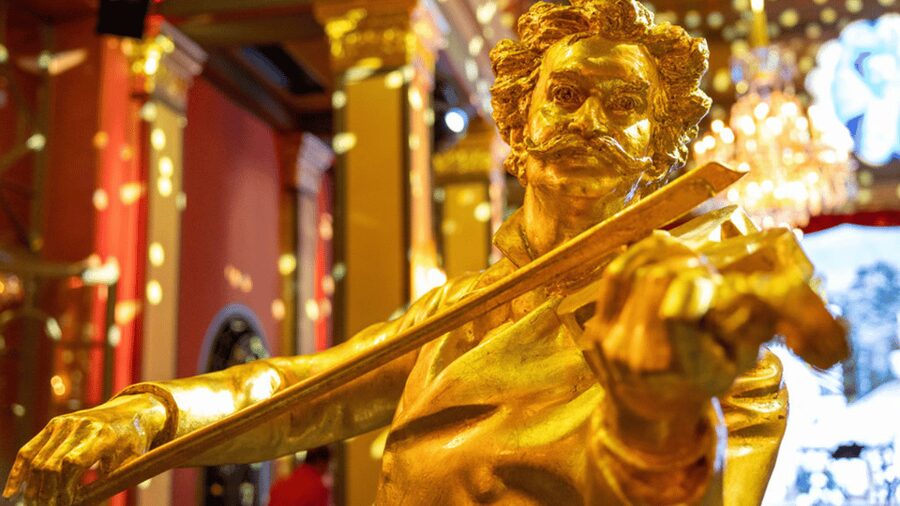
The museum explains the Strauss dynasty and its place in Viennese culture. You can learn about the family’s musical influence, the city’s golden age of entertainment, and the setting in which these works became popular.
The exhibits use multimedia and interactive material rather than relying only on wall text. That helps if you are visiting with someone who is curious about Vienna but not already familiar with classical music. The museum gives you names, dates, and cultural context before you hear the works performed.
I find this part valuable because Strauss music can sound polished and familiar without immediately revealing its setting. The exhibition connects the melodies to Vienna’s social life and to the Strauss family’s role in shaping the city’s musical identity.
Do not expect a full museum visit before the concert. The performance lasts 70 minutes, and the museum is one part of a tightly scheduled evening. Give yourself enough time to look around, but treat the exhibition as an introduction rather than a large standalone museum visit.
A glass of Austrian sparkling wine in the octagon
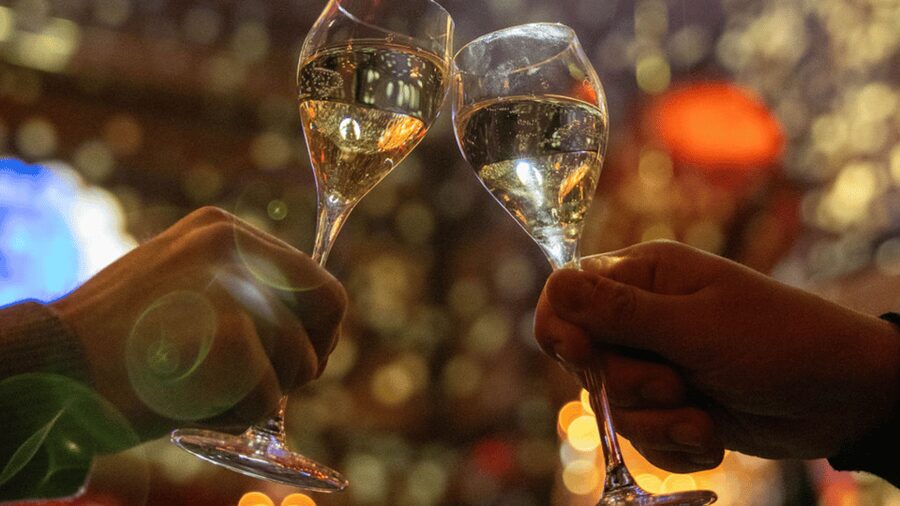
At 8:00 PM, you move into the hall’s stylish octagon for a complimentary glass of Austrian sparkling wine. It is a small inclusion, but it gives the evening a pleasant pause between the museum and the music.
The reception also gives you a chance to appreciate the venue before the lights go down. The hall’s decorative details are part of the experience. Painted surfaces and period-style design help create the feeling of an old Viennese music room rather than a plain modern auditorium.
The wine is included with every ticket, so you do not need to budget separately for that drink. If you want a full meal, you can arrange one independently at the restaurant. A pre-concert meal can work well with the schedule, but it is not part of the ticket price.
I would keep the meal timing sensible. The museum, reception, and concert already create a steady sequence, and arriving late would undercut the calm start of the evening. The supplied schedule places hall entry at 8:00 PM and the concert at 8:30 PM.
The 8:30 concert: Strauss, Mozart, and a soprano
The performance begins at 8:30 PM and runs until about 9:30 PM. That gives you a focused 70-minute program, long enough to feel like a proper night out but short enough to fit easily into a busy Vienna itinerary.
The orchestra plays a selection of Strauss and Mozart. Expect a program built around recognizable classical forms, including waltzes, overtures, symphonic sections, and vocal pieces. The music is presented as an evening of highlights rather than a single complete opera or a full-length symphony.
The soprano appears in selected sections. This is important when setting expectations. You are not attending a soprano recital, but her appearances add a strong emotional change of pace. Her voice gives certain pieces a more personal and theatrical feeling than the instrumental numbers alone.
The most effective moments are likely to be the contrast between the orchestra and voice. Strauss can suggest ceremony, movement, and ballroom elegance. Mozart brings a different kind of clarity and drama. The soprano then turns the focus toward the human voice, making the program feel less like a parade of instrumental pieces.
Commentary is provided in English with German subtitles, and the available instruction languages are German and English. This is useful for visitors who want context, but it does mean the concert is not music from start to finish. One practical choice is to decide what matters most to you: explanation and visual storytelling, or the largest possible amount of uninterrupted playing time.
More Classical Concerts in Vienna
- Vienna: Classical Concert in St. Anne’s Church (Annakirche)
★ 4.6 · 3,414 reviews - Vienna: Mozart and Strauss Concert at Schönbrunn
★ 4.5 · 2,967 reviews - Vienna: Classical Concert at Mozart’s First House
2,423 reviews - Vienna Classical Concert at St. Peter’s Church
★ 4.5 · 2,039 reviews
How the light show changes the music
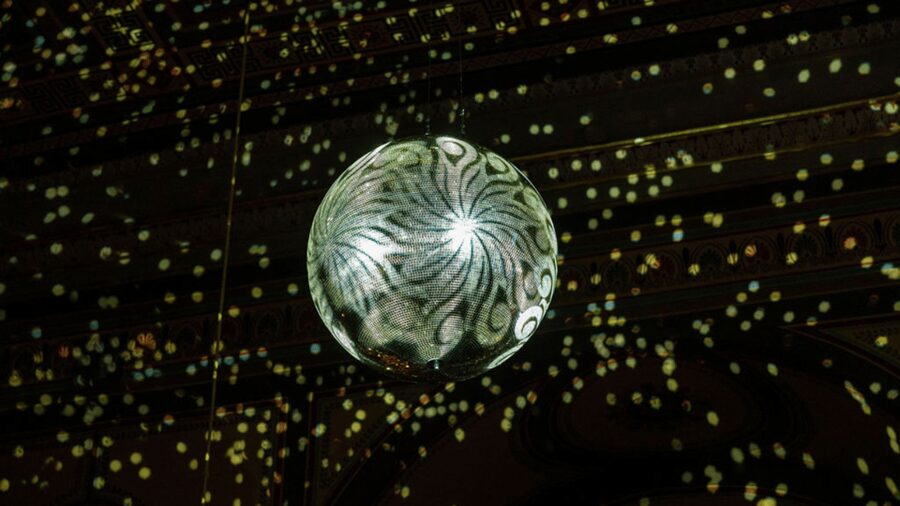
The light and sparkle show is the feature that most clearly separates this event from a traditional classical concert. The effects are synchronized with the pieces and designed to illustrate emotion, historical setting, and musical themes.
You may see the hall transformed to suggest grand Viennese balls or other scenes connected with the music. The lighting gives your eyes something to follow while you listen, and it can make familiar compositions easier to understand as dramatic moments rather than background music.
This approach will not suit everyone. A purist may find the visual effects distracting, especially during quiet passages. If you prefer to sit in a dark hall and concentrate only on the orchestra, a conventional recital would be a better match.
For many first-time classical listeners, though, the light show gives the concert a helpful frame. It turns abstract changes in tempo and mood into something more immediate. Category B seats in rows 14 to 18 are specifically described as offering a full light show experience, so sitting farther back may actually help you take in the whole room.
Choosing between VIP, Category A, and Category B
The seating choices are straightforward:
- VIP, rows 1 and 2: Best view and the closest position to the musicians.
- Category A, rows 3 to 13: Strong visibility and sound, with a good balance between proximity and an overall view.
- Category B, rows 14 to 18: A wider perspective and a full view of the light show.
VIP makes sense if seeing the musicians closely is your top priority, or if the concert is a special occasion. You will be near the soprano and orchestra, but the wider lighting effects may be easier to appreciate from farther back.
Category A is probably the safest all-around choice. You remain close enough to see the performers clearly while keeping a useful view of the hall’s decorative details and projections.
Category B may offer the best perspective for someone most interested in the visual production. The sound should still serve the program, but the experience will feel less intimate than in the first rows.
The ticket price is $76 per person. That is not the cheapest way to hear classical music in Vienna, but it includes the museum, sparkling wine, orchestra, soprano, commentary, and light show. I see the value in the package if you want a complete cultural evening rather than a concert alone.
The value is weaker if you plan to skip the museum, do not care about the light effects, and mainly want a long stretch of serious orchestral music. In that case, you are paying for elements you may not use.
The hall, acoustics, and natural sound
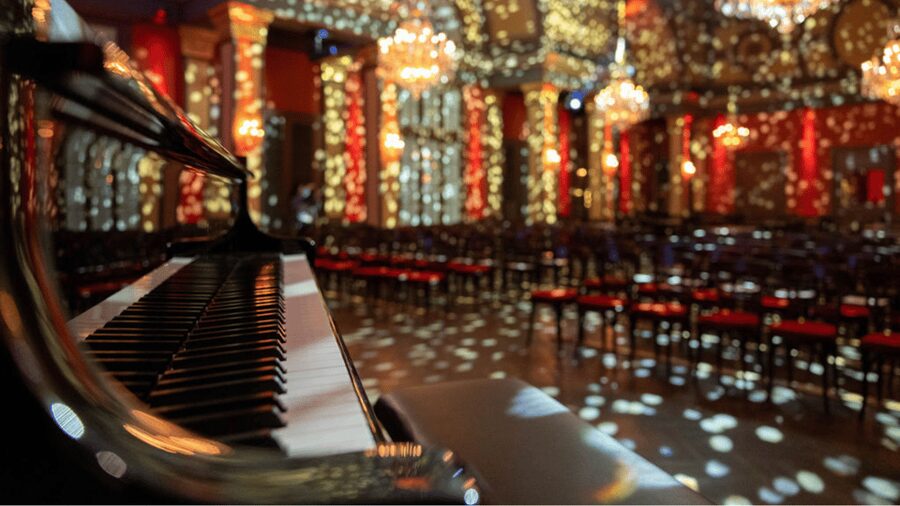
The venue is one of the main reasons to choose this experience. The detailed paintings and decoration create an elegant backdrop, and the preserved setting helps connect the concert to Vienna’s 19th-century musical culture.
The acoustics receive especially strong praise. The orchestra’s natural sound can feel clear and immediate, with no electronic amplification between you and the musicians. That direct quality suits Strauss’s lighter orchestral writing and lets you hear the soprano without turning the concert into a large modern spectacle.
There is a limit to the format. A 12-piece orchestra cannot produce the same weight as a full symphony orchestra. The natural approach may also mean that the violins do not always project with maximum volume, particularly for listeners expecting a large concert-hall sound.
That is not a flaw so much as a question of taste. I would choose this performance for atmosphere, closeness, and a connection to the Strauss setting. I would choose a larger orchestra for sheer scale.
Timing your evening in Vienna
The schedule is easy to manage if you treat it as one planned evening:
- Museum access begins at 7:00 PM according to the timing information, with another schedule reference listing 7:30 PM.
- Entry to Strauss Hall is at 8:00 PM.
- Sparkling wine is served during the reception.
- The concert runs from 8:30 to 9:30 PM.
Because the times differ slightly for museum access, check the start time for your booking. Arriving early is still the sensible move. It gives you room to view the exhibition, settle into the hall, and enjoy the reception without watching the clock.
The whole program lasts 70 minutes for the concert experience, while the museum and reception add time around it. This is a good fit if you want a cultural activity that ends at a reasonable hour and does not take up an entire day.
The event is wheelchair accessible. Commentary is available in German and English, with English commentary and German subtitles described in the program information.
Who will enjoy this Strauss Hall evening
I would recommend it most strongly to:
- First-time Vienna visitors who want a polished introduction to Strauss and Mozart.
- Couples looking for an elegant evening with music and sparkling wine.
- Families or mixed groups where some people are new to classical music.
- Classical music fans who enjoy historic rooms and theatrical presentation.
- Visitors who want a compact event that fits around other Vienna plans.
I would be more cautious if you want a complete opera, a full symphony, or a concert with no commentary or visual production. The program is designed as a multimedia cultural event. It is not trying to recreate a silent, formal recital.
The soprano and orchestra are the heart of the experience. The museum, commentary, and projections provide the frame. You should book with that full combination in mind.
Is the $76 ticket good value?
At $76, I would call this a fair value for the right kind of evening. You receive more than admission to a 70-minute performance. The ticket includes the House of Strauss Museum, multimedia exhibits, a glass of Austrian sparkling wine, the live orchestra and soprano, and the visual program.
The price also reflects the venue. You are paying for a historic setting and a carefully packaged cultural experience, not only for the musicians’ playing time.
The strongest value comes when you use the whole package. Arrive early, spend time with the exhibition, enjoy the reception, and let the lighting and commentary add context to the music. If you arrive just before 8:30 PM and care only about the orchestra, the same price may feel high.
Free cancellation up to 24 hours before the experience and the reserve-now, pay-later option make it easier to fit into a changing Vienna schedule. The activity can be booked in German or English, and tickets skip the ticket line.
Should you book the Strauss Hall concert?
Book this experience if you want Viennese music with atmosphere, context, and visual drama. The historic hall, natural acoustics, soprano, museum access, and synchronized light show give the evening a clear identity.
Choose VIP or Category A if the performers matter most to you. Choose Category B if you want a broad view of the lighting and room. Arrive early enough for the exhibition and reception, and remember that the concert is a 70-minute highlight program, not a full-length symphony or opera.
I would book it as a memorable first classical evening in Vienna, especially for a couple or a mixed-interest group. I would look elsewhere only if you want uninterrupted music, a larger orchestra, or a strictly traditional recital.
FAQ
Where does the concert take place?
The concert takes place in the historic Strauss Hall at the House of Strauss in Vienna.
What composers are featured?
The program features music by Johann Strauss and Wolfgang Amadeus Mozart.
How long is the concert?
The concert runs from 8:30 PM to 9:30 PM and the stated duration is 70 minutes.
When can I visit the museum?
The timing information lists museum access from 7:00 PM, while another schedule reference gives 7:30 PM. Check the exact starting time for your selected date.
Is sparkling wine included?
Yes. Every ticket includes one glass of Austrian sparkling wine during the reception in the hall’s octagon.
Is a soprano part of the performance?
Yes. A soprano soloist performs selected vocal pieces during the concert.
What are the seating categories?
VIP seating is in rows 1 and 2. Category A is in rows 3 to 13. Category B is in rows 14 to 18.
Is the event wheelchair accessible?
Yes, the experience is listed as wheelchair accessible.
Can I cancel my booking?
Yes. You can cancel up to 24 hours in advance for a full refund. A reserve-now, pay-later option is also available.
More Heritage Tours in Vienna
- Vienna Mozart Concert in Historical Costumes at the Musikverein
★ 4.5 · 888 reviews - Vienna Classical Concert – Strauss in Historic 1837 Hall
★ 5.0 · 136 reviews - Vienna State Opera House Mozart Concert in Historical Costumes
★ 4.0 · 120 reviews - Vienna: Strauss Museum – Music&History in Historic 1837 Hall
★ 4.7 · 31 reviews
Just added around Vienna
- Vienna: Concert by the Vienna Baroque Orchestra★ 4.6 · 56 reviews
- Vienna’s Musical Heart: Private Walking Tour with a Local★ 5.0 · 2 reviews
- Vienna: Strauss Museum – Music&History in Historic 1837 Hall★ 4.7 · 31 reviews
- Vienna Supreme Orchestra at Palais Niederösterreich★ 4.8 · 10 reviews
- Vienna: Sunday Brunch Danube Cruise & Live Music★ 4.2 · 42 reviews
- Vienna Private Walking Tour including State Opera★ 3.2 · 7 reviews
- Vienna: Romantic Classics Piano, Violin, and Cello Concert★ 4.7 · 60 reviews
- Vienna: Mozart, Beethoven, & Strauss Private Tour★ 5.0 · 4 reviews
Vienna Concerts, compared.
Vienna: Vivaldi’s Four Seasons Concert in Karlskirche
Read our review →
Vienna: Mozart Concert at the Musikverein – Golden Hall
Read our review →
Vienna: Classical Concert in St. Anne’s Church (Annakirche)
Read our review →
Vienna: Mozart and Strauss Concert at Schönbrunn
Read our review →
Vienna: Tickets for Mozarthaus Vienna with Audio Guide
Read our review →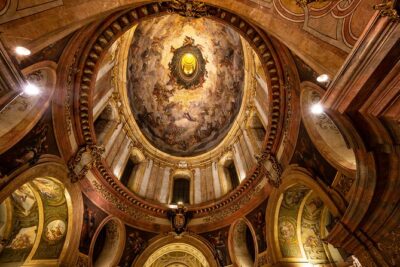
Vienna Classical Concert at St. Peter’s Church
Read our review →Vienna: Classical Concert in St. Anne’s Church (Annakirche)
Read our review →Browse the lists this tour appears in