
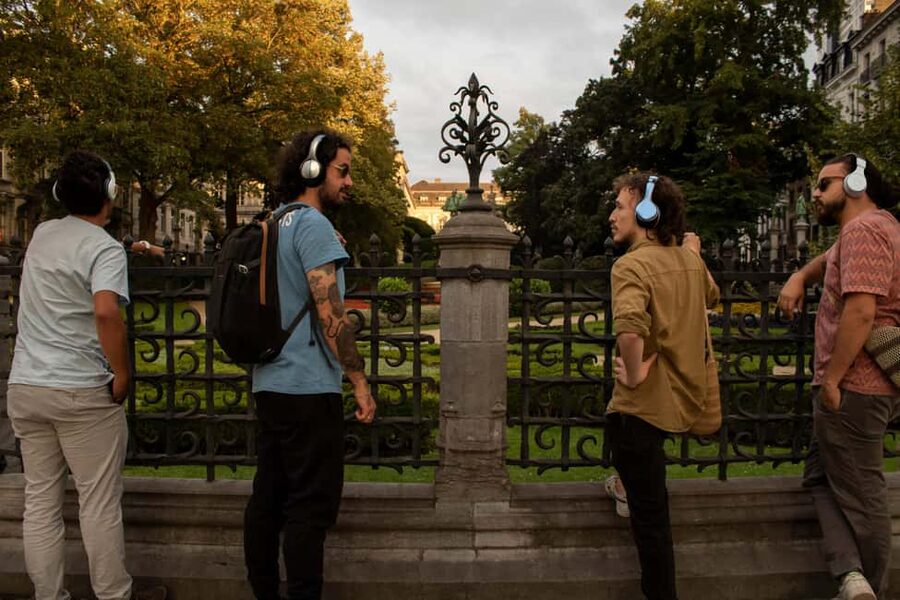
Review · MUSIC WALKING TOURS
MUSIC TOUR OF BRUSSELS (SPANISH)
Brussels gets a different soundtrack on this two-hour Spanish walking tour, which links landmarks to the music connected with them. You begin at the Palace of Justice, take in a broad city view, and finish at the Royal Theatre of La Monnaie, the birthplace of Belgian opera. In between, headphones add songs, anthems, and opera fragments to the streets.
I like two things here. First, the route covers famous sights but gives them a fresh angle, from Adolphe Sax and the Museum of Musical Instruments to Jacques Brel and the city’s African musical influence. Second, at $14, it offers a lot for the price, especially if you want a quick introduction rather than another standard facts-and-dates walk.
The main caution is the sound system. One participant praised the concept but noticed occasional interference, which is understandable in busy streets. You also need to walk for two hours, and the experience is not suitable for wheelchair users, hearing-impaired people, babies under one, or people over 80 or over 95.
Key points to know before booking
- A soundtrack for each stop: Music is selected to match the site, period, or story being discussed.
- A smart central route: The walk connects the Palace of Justice, Petit Sablon, Mont des Arts, Manneken Pis, Grand Place, Bourse, and La Monnaie.
- Spanish throughout: You receive a live Spanish-speaking guide and a Spanish audio guide.
- Julián has led memorable departures: He is known for adding practical tips about bars and food, along with a song list.
- Headphones help in noisy streets: They keep the guide and music clear, though occasional interference can occur.
- Expect a walking experience, not museum admission: The value comes from interpretation, music, views, and the route between landmarks.
Brussels begins with a view and a change of rhythm
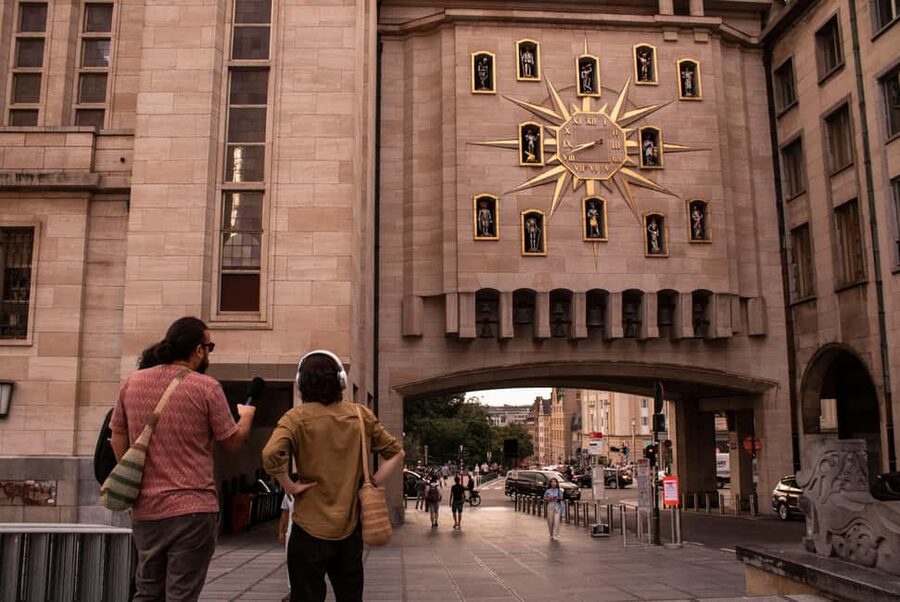
The tour starts at the Brussels Palace of Justice, where the high position gives you a useful look across the city. This is a good opening point because Brussels can feel like a collection of handsome squares, steep streets, grand buildings, and sudden surprises. The view helps you place the center before walking downhill into it.
Your guide uses music to explain how Brussels changed over time. That approach matters because the city’s story is not only political or architectural. Music can show how people celebrated, protested, worshipped, performed, and built a shared identity.
Look for the guide carrying an open umbrella with the MUSA logo. That is the meeting-point marker, a practical detail in a crowded city. Arrive early enough to find the group without rushing. One failed meeting-point experience reported a long wait in cold weather, so confirming the exact meeting place and watching for the umbrella is sensible.
The walk is in Spanish, with a live guide and a Spanish audio guide. Some music or material may remain in its original language. That is part of the design, since songs lose something when every word is translated, but you should be comfortable following some material without a Spanish version.
More Music Walking Tours in the world:
- Fado: Musical Walking Tour with Food & Live Show
★ 5.0 · 121 reviews - Savannah Live Music Walking Tour
★ 4.5 · 18 reviews - Brussels: Private Beers, Bars, and Live Music Tour by Night
★ 5.0 · 6 reviews
Petit Sablon and the sound of power
From the Palace of Justice, the route heads to the Square of Petit Sablon. This elegant square occupies the setting associated with the former palace of Count Egmont, and it sits close to the Royal Conservatory of Brussels.
The conservatory connection gives the stop its purpose. Rather than treating the square as a pretty photo break, the guide ties it to Belgian musical education and the artists who developed there. You get a sense of Brussels as a place where music was taught, practiced, and passed on, not simply performed for visitors.
This is also where the tour’s format starts to make sense. You are not just hearing a guide describe a building. You are hearing a selected piece of music while standing in a place connected to artistic training and public life. The effect depends on your taste, but it should appeal to you if a song helps you remember a place better than a paragraph of facts.
The walk does not promise a concert or an extended indoor visit. The emphasis is on the streets, stories, and sound. If you want time inside every museum or conservatory, this is not the right format.
Mont des Arts and Brussels viewed through many cultures
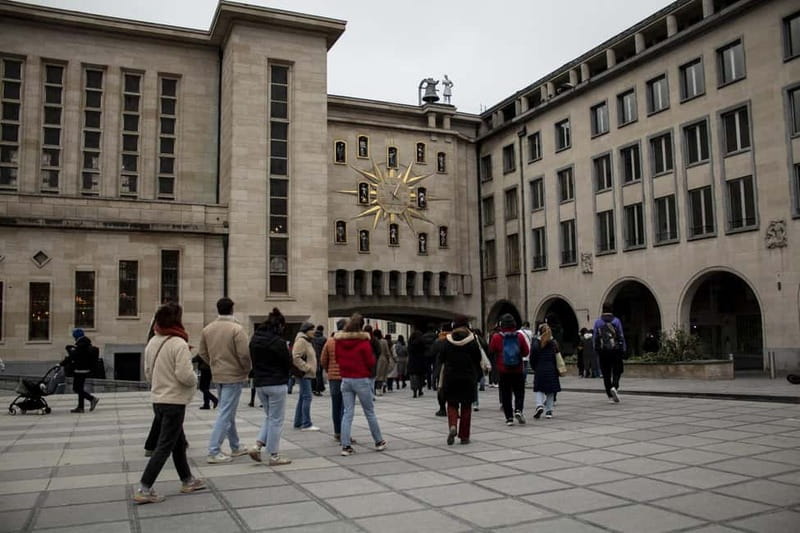
The route continues to Mont des Arts, one of the city’s best-known viewpoints and a useful link between the upper and lower parts of central Brussels. The area is also surrounded by major art museums, so it places music in a wider cultural setting.
Here, the tour looks at the influence of African music in Brussels. That is an important subject because it broadens the city’s musical story beyond opera, classical training, and Belgian chanson. Brussels has been shaped by many communities, and this stop gives that wider exchange a place in the tour.
The viewpoint is one of the better moments for taking in the city without stopping the story. You can enjoy the view, listen through your headphones, and connect the city’s visual center with its sound. Keep your attention on the group, though. Public viewpoints can be busy, and the tour moves on a schedule.
Headphones are included at every stage. They are useful here and at later stops, especially when traffic, conversations, or other groups compete with the guide. The equipment also makes the walk feel more like a planned audio journey than a guide speaking to a loose crowd.
Adolphe Sax and the world inside musical instruments
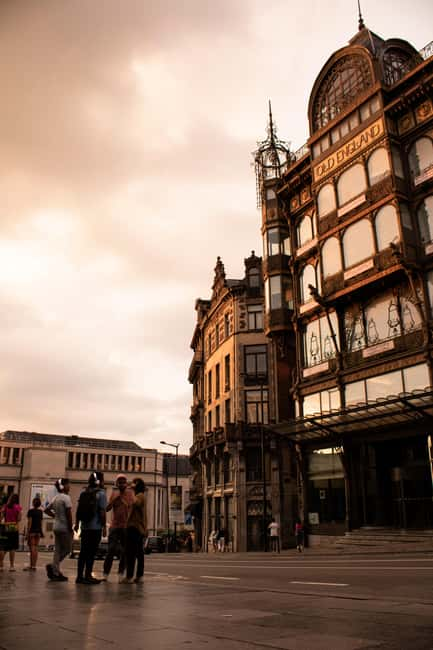
The route brings you to the Museum of Musical Instruments, where the subject widens from Brussels to sounds from around the world. The key local figure here is Adolphe Sax, the Belgian inventor whose name lives on in the saxophone.
That story gives the tour a memorable piece of national identity. The saxophone is familiar almost everywhere, but its Belgian connection may not be. Linking the instrument to the city makes a museum building and an inventor feel relevant to the street outside.
The tour’s information says you will discover the history of the saxophone and hear music linked to each stop. It does not state that museum admission is included, so plan on experiencing this section from the walking route unless your booking details say otherwise. That distinction matters if you are hoping to spend time examining instruments indoors.
I like this stop because it gives the tour a concrete object. Not every subject remains abstract. You can connect a recognizable sound to a Belgian creator and then carry that sound with you as the route continues.
Same city, a different sound:
- Vienna: Vivaldi’s Four Seasons Concert in Karlskirche
★ 4.7 · 14,951 reviews - Budapest Danube Cruise and Dinner Options, Live Music and Dance
★ 4.5 · 7,428 reviews - Paris: 3-Course-Dinner Cruise on the Seine with live music
★ 4.7 · 7,248 reviews - Vienna: Classical Concert in the World-Famous Musikverein
★ 4.6 · 6,673 reviews
From independence movements to music as protest
Another part of the walk examines music used in independence movements. The selected pieces are linked to change and resistance, showing that songs can work as public statements as well as entertainment.
This is one of the tour’s strongest ideas. A city’s music can reveal what people wanted, feared, or fought for. You may know Brussels through its architecture, but songs help you consider the people who filled those spaces and gave them meaning.
The guide connects these themes to Brussels rather than presenting a general lecture on protest music. Expect stories and musical examples, not a long academic talk. That balance should suit you if you want context in manageable portions while continuing through the city center.
Because the content includes music tied to political and social change, some pieces may be presented in their original language. The guide and Spanish audio material provide the explanation, but the original sound remains part of the point.
Jacques Brel brings the walk down to a human scale
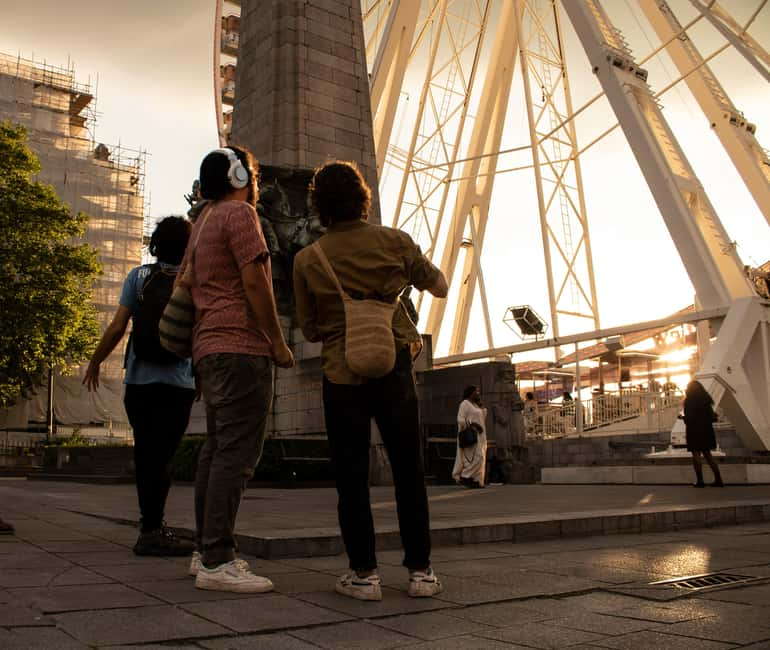
The route pays tribute to Jacques Brel at the foundation associated with the Brussels-born artist. Brel is one of Belgium’s best-known chanson performers, and his work gives the tour a more personal, emotional turn.
After viewpoints, institutions, instruments, and movements, this stop focuses on a single artist and the feeling of a song. Brel’s music is connected with strong emotional expression and Belgian identity, so you get a clearer sense of how a city can be represented by one voice.
This section may be especially rewarding if you already enjoy chanson. If you do not know Brel, it still gives you a useful entry point into Belgian popular music. A song list is provided on some departures, and guide Julián has also shared practical suggestions for bars and food. Those extras can help you continue the musical theme after the walk.
The foundation stop is not presented as a full performance or a long indoor visit. Think of it as a musical and cultural tribute along the route.
Manneken Pis, with less solemnity and more mischief
At Manneken Pis, the tone shifts. This small, irreverent statue has inspired songs and festivals, and it offers a reminder that Brussels does not take every symbol seriously.
The stop works because it adds humor to a walk that also discusses protest, identity, opera, and artistic tradition. Manneken Pis is easy to visit quickly, but the musical angle gives you another reason to pause. The story connects the statue with public celebration and the city’s taste for playful tradition.
Do not expect a long, quiet viewing. The statue is a popular stop, and the surrounding area can be crowded. Keep your headphones secure and stay close to the guide. The experience is designed to move through the center, not to give you extended time at each landmark.
Grand Place and the city as a stage
The Grand Place is the route’s grandest setting. Its architecture and status as a UNESCO World Heritage Site make it an obvious Brussels highlight, but the tour looks beyond the façades to the festivals and concerts that have filled the square.
The Ommegang is a key example. This cultural heritage festival shows how public celebration can join music, ceremony, and civic identity. The Grand Place has not simply been a backdrop. It has served as a stage where Brussels presents itself to residents and visitors.
This is a good place for the headphones because the square carries plenty of sound of its own. The selected music gives you a second layer to the stone buildings and open space. I like the contrast between the square’s formal architecture and the living, changing events held there.
Allow yourself a moment to look up. A music-focused tour can make you concentrate on listening, but the Grand Place deserves your eyes too. The guide will keep the story moving, so take photos when the group pauses rather than falling behind.
Bourse and the city’s social changes
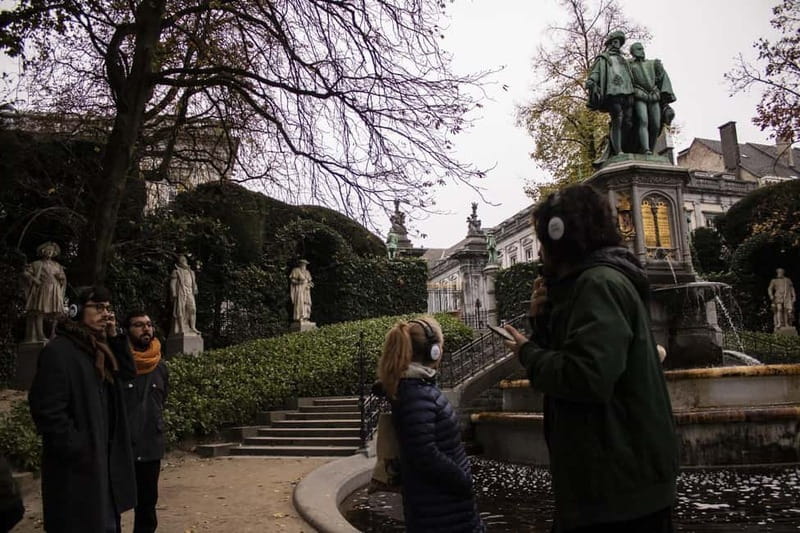
The walk then reaches Bourse, a symbol of Brussels’ social and cultural development. The site has also been linked with musical events, reflecting the way public spaces change as a city changes.
This stop is less about one famous composer or instrument. Instead, it shows how music belongs to ordinary public life. Meeting places, streets, and civic buildings can become places for performance, gathering, and debate.
That broader view gives the route balance. You hear about major artists, but you also consider the role of public spaces. Brussels comes across as a city shaped not only by official institutions but by the people who use its squares and streets.
The exact amount of time at each location is not specified, and the full walk lasts two hours. You should expect a brisk pace with short stops rather than a slow, detailed examination of every landmark.
La Monnaie closes the story with Belgian opera
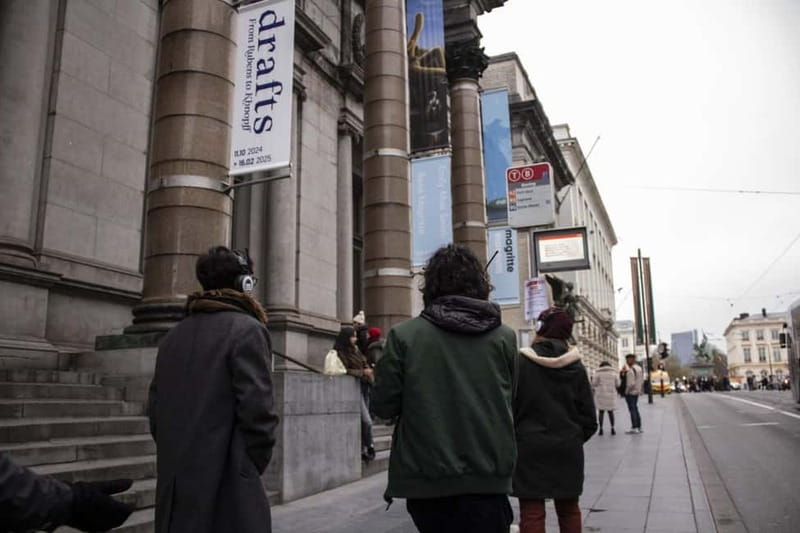
The final stop is the Royal Theatre of La Monnaie, described as the birthplace of Belgian opera. Its imposing architecture provides a fitting ending because the tour finishes with opera fragments and a final sound experience.
After starting with a city view and moving through instruments, protest songs, chanson, festivals, and public spaces, the route ends with a formal art form. Opera brings together music, words, architecture, performance, and public life, making it a natural closing subject.
This ending also supports the tour’s central idea that music is freedom. You are not asked to see Brussels as a silent collection of monuments. You are encouraged to hear how different forms of music helped shape the city’s identity.
The finish is in the center, near other sights and places to eat, but no onward transport or meal is included. Plan your next stop before you arrive if you have a tight schedule.
Is $14 good value for two hours?
At $14 per person, the tour offers strong value if you want a guided introduction to central Brussels in Spanish. You receive a live guide, Spanish audio support, headphones, a planned route, and music selected for the different locations.
The value comes from the connections, not from admission to paid attractions. You are paying for interpretation and atmosphere while walking between major sights. That makes it less useful for you if your priority is entering museums or spending a long time inside historic buildings.
The price is also low enough to pair with a separate museum visit later. You can use the walk to decide which areas deserve more time, then return on your own. Free cancellation up to 24 hours in advance and reserve-now, pay-later booking add flexibility, provided those terms suit your plans.
Who should book this music walk?
I would recommend it to you if you:
- Want a Spanish-language introduction to Brussels
- Enjoy music as a way to remember places
- Have two hours for a central walking route
- Like famous sights but want a less standard theme
- Are interested in Jacques Brel, opera, instruments, festivals, or protest songs
- Prefer a guide who can add local food and bar suggestions
I would think twice if you need a wheelchair-accessible route, have hearing difficulties, dislike headphones, or want a slow museum tour. The published restrictions also exclude babies under one and people over 80 or over 95.
The tour also asks you not to record the audio. That is reasonable for a guided experience, but it means you should not treat the walk as a podcast to save for later. Listen in the moment, and note down song names if you want to explore them afterward.
Should you book the Music Tour of Brussels?
Book it if you want to hear Brussels rather than simply look at it. The route covers many essential central sights, but its real value is the link between place and sound: Sax at the musical instruments museum, Brel at his foundation, festival music at Grand Place, and opera at La Monnaie.
The main risk is practical rather than artistic. Meeting-point confusion and occasional headphone interference can affect the experience, so arrive early, look for the MUSA umbrella, and stay near the guide. At $14, the concept is worth trying for Spanish-speaking visitors who enjoy music and can manage a two-hour walk.
FAQ
What language is the tour conducted in?
The live tour guide speaks Spanish, and a Spanish audio guide is included. Some content is presented in its original language.
How long does the Music Tour of Brussels last?
The tour lasts two hours. Starting times depend on availability when you book.
Where does the tour start and finish?
It starts at the Brussels Palace of Justice and finishes at the Royal Theatre of La Monnaie.
What landmarks are included?
The route includes the Palace of Justice, Petit Sablon, Mont des Arts, Manneken Pis, Grand Place, Bourse, and La Monnaie. It also connects the walk with the Museum of Musical Instruments and the Royal Conservatory of Brussels.
Are headphones included?
Yes. Headphones are provided so you can hear the guide and selected music in noisy areas or larger groups.
Is the tour suitable for wheelchair users or people with hearing difficulties?
No. The experience is not suitable for wheelchair users or hearing-impaired people. It is also not suitable for babies under one, people over 80, or people over 95.
Just added around the world
- Wrocław: Chopin & Friends piano concerts★ 4.6 · 28 reviews
- Warsaw: Chopin Concert Ticket With Glass of Champagne★ 4.7 · 59 reviews
- Warsaw: Guided Walking Tour with a Private Chopin Concert★ 5.0 · 13 reviews
- Warsaw: Candlelight Concert at Fryderyk Concert Hall★ 4.7 · 110 reviews
- Viva Blackpool: ABBA Bottomless Brunch with Live Music★ 5.0 · 2 reviews
- Waitangi: Treaty Grounds Hāngī and Concert Combo Pass★ 4.7 · 67 reviews
- Vienna: Concert by the Vienna Baroque Orchestra★ 4.6 · 56 reviews
- Vienna: Sunday Brunch Danube Cruise & Live Music★ 4.2 · 42 reviews
Music Walking Tours, compared.


New Orleans Jazz History and Music Walking Tour
Read our review →

Salzburg Super Saver: Hallstatt & Original Sound of Music Tour
Read our review →
Original Sound of Music Tour Salzburg With Schnitzel and Noodle
Read our review →Browse the lists this tour appears in