
Review · GERMANY
Medieval Musical Tour of Rothenburg ob der Tauber
Rothenburg’s medieval streets become a small open-air concert hall on this music-led walking tour. Amelia, a classically trained singer who lives in town, guides you as Margarete von Schwangau, explaining Minnesang, medieval chant, courtly love, plague, war, and daily life before singing pieces connected to each place.
I like the way the tour joins music with real locations, from the Town Hall clock to a 12th-century city wall and the acoustics of Holy Ghost Church. I also like the value for a private group: the listed price is $237.26 for up to eight people, with gratuity included. The main consideration is pace. You walk for about 1 hour 45 minutes, often stopping briefly, so people wanting a standard architectural tour or long museum visits may prefer something else.
Key points to know before you book
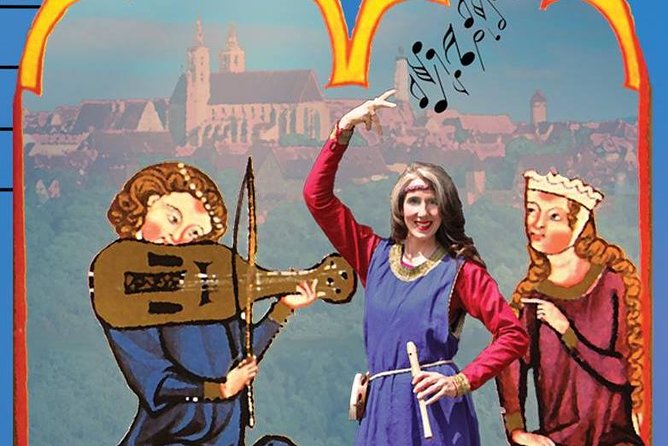
- Amelia’s live singing drives the tour: You hear songs by Oswald von Wolkenstein, Wolfram von Eschenbach, Neidhart von Reuental, Walter von der Vogelweide, and other medieval composers.
- The route uses Rothenburg itself as the classroom: Stops include Market Square, Plönlein, the Tauber Valley viewpoint, Spitalviertel, Holy Ghost Church, and Spital Bastion.
- The music has context: Amelia explains the meaning of lyrics and the difference between high and low Minnesang before performing.
- The experience suits small groups: Options include single tickets, small groups of up to 15 people, and private tours for up to 15 adults, depending on the booking format.
- You get a strong town introduction: The tour links city walls, mills, churches, towers, Renaissance buildings, and local legends in one compact walk.
- Weather matters: The activity requires good weather, and cancellation for poor conditions brings a choice of a new date or a full refund.
Why music changes the way you see Rothenburg
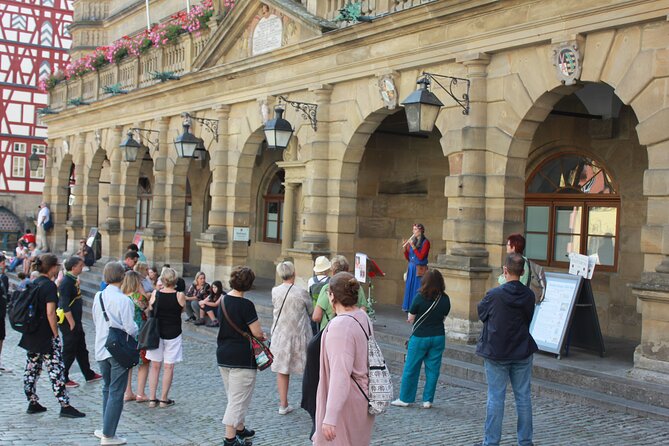
Rothenburg can sometimes feel like a place built for photographs: half-timbered houses, narrow lanes, steep roofs, and the famous yellow building at Plönlein. This tour gives those sights a human voice.
Instead of hearing only dates and building names, you hear the kinds of songs that once belonged to courts, churches, taverns, and soldiers. Amelia explains what the words meant, then sings the piece in the setting where its subject makes sense. A song about courtship works beside a valley view. A chant gains force inside a church. A military song belongs near a fortification.
That structure is the tour’s chief strength. You are not simply walking between landmarks. You are learning how medieval people used music to express love, faith, politics, social class, and fear.
The route also moves beyond Rothenburg’s postcard center. You see the Town Hall and Plönlein, of course, but you also reach the Spitalviertel and the Spital Bastion. Those places explain how the city expanded and defended itself. The result is a useful introduction to Rothenburg’s physical growth, not just a parade of pretty facades.
More Musicals in Germany
- Berlin: Cabaret – The Berlin Musical at Tipi am Kanzleramt
★ 4.5 · 303 reviews - Cologne: Moulin Rouge! The Musical Entry Ticket
293 reviews - Berlin: “All You Need is Love!” The Beatles Musical Ticket
★ 4.8 · 41 reviews
Starting at the Town Hall and Market Square
Meet at Marktplatz 1, beside Rothenburg’s Town Hall. This is a sensible starting point because Market Square gives Amelia room to explain both the city and the musical tradition.
The opening subject is Minnesang, the medieval German tradition of song associated with love, courtly behavior, and poetry. You also meet Margarete von Schwangau, Amelia’s tour character. The role adds a touch of theater without turning the walk into a costumed stage show.
The first historical story is the legend of the Master Draught, or Meistertrunk. Amelia connects the tale to Rothenburg’s famous clock and Glockenspiel at Market Square. This is a good early stop because you get local legend, public ritual, and music in one place.
The live performance here comes from Oswald von Wolkenstein, a medieval and Renaissance-era composer. Hearing his work beside the Town Hall gives you an immediate sense of the tour’s method: short explanation, historical setting, then song.
This opening lasts about 10 minutes. That short length matters. The tour does not ask you to stand in one spot for a long lecture before the walk begins.
Chant, plague, and the old city wall
The next section brings you toward St. Johannes Church and the Medieval Crime and Justice Museum. Admission to the museum is not included, and the route does not present a museum visit as its main purpose. Instead, you see an original section of city wall dating to the 12th century and learn how the church and nearby buildings functioned in medieval Rothenburg.
The music changes here. Amelia introduces medieval chant and connects it to the Black Death and plague. That link gives the subject emotional weight. Chant was not simply church music in an abstract sense. It belonged to a world shaped by illness, prayer, uncertainty, and the power of religious institutions.
The live chant performance is brief, about eight minutes. If you are interested in medieval music, this stop may be one of the most useful because it shows how different chant sounds from the courtly songs heard elsewhere. If your main interest is architecture, the surrounding church and wall may matter more than the performance itself.
Plönlein, the Tauber Valley, and medieval romance
The Plönlein is Rothenburg’s most recognizable scene, but the tour uses it for more than a quick picture. Amelia explains the buildings, the first major expansion of the old city wall, and the meaning of the name and location.
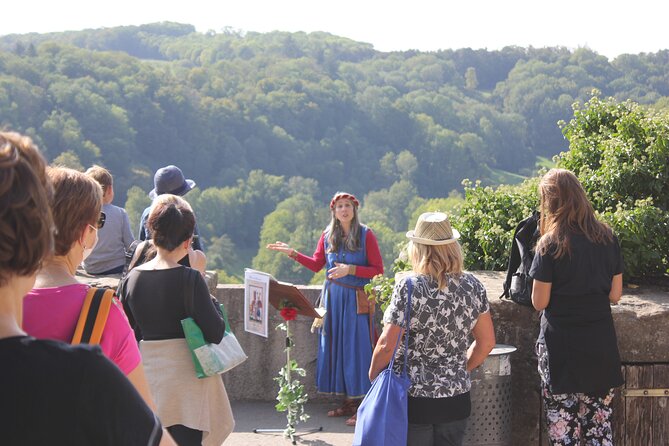
The route also includes the An der Eich observation deck, with a view toward the Tauber Valley, the medieval double bridge, and the vineyard area below. From here, Amelia discusses the castle of Rothenburg and the Staufer dynasty, as well as the earthquake of 1356.
That combination of view and story helps you understand that Rothenburg was not an isolated collection of old houses. Its position, fortifications, castle, and surrounding valley shaped its importance.
The composer introduced here is Wolfram von Eschenbach. Amelia uses his work to discuss love and romance in medieval German culture. The setting is well chosen. A broad valley view gives the subject room, and the song helps explain how courtly love was expressed in medieval poetry.
Back at Plönlein, the focus shifts to Neidhart von Reuental. His lyrics offer a different social angle, portraying middle and lower-class life rather than only noble ideals. This is one of the tour’s most valuable details. Medieval music was not one uniform style, and the social world behind the songs varied greatly.
This portion includes several short stops, with the Plönlein explanation and performance lasting about eight minutes. Expect pauses rather than a long seated program.
Same city, a different sound:
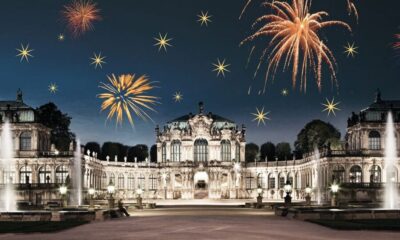
- Dresden: Gala Concert in the Dresden Zwinger
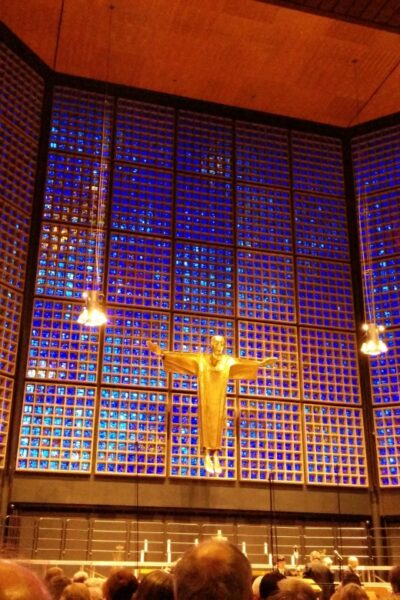
★ 4.7 · 1,510 reviews - Berlin: Classical Concert at Kaiser Wilhelm Memorial Church
★ 4.6 · 387 reviews - Munich: Classical Concert at the Residenz Palace
★ 4.6 · 299 reviews - Hamburg: 2.5-Hour Beatles Music Tour
★ 4.7 · 194 reviews
The Linden Tree and Nag’s Mill
Between major points, the walk touches the Linden Tree and Fischturm area. Amelia explains the importance of the linden tree in German culture, both in medieval times and today. She also introduces Walter von der Vogelweide and performs Under the Linden.
This song leads back to Minnesang and its development over time. Amelia explains high Minnesang and low Minnesang, giving you a way to hear differences in subject and social setting instead of treating every medieval song as the same.
The next stop is Nag’s Mill, a notable Renaissance building in the center of town. Here, the subject shifts from poetry to practical life. Amelia explains the mill’s importance and how medieval communities stored grain.
That change is useful. A tour focused only on composers could leave you with a narrow view of Rothenburg. The mill and grain discussion bring in food, work, storage, and the basic systems that kept a walled city functioning.
The stop lasts about nine minutes and is free to enter as described. You should expect to view and discuss the building rather than spend time inside a full working mill.
Spitalviertel and the city’s final expansion

The Hospital Quarter Square marks the second and final expansion of Rothenburg’s medieval city wall. Amelia explains the location of the hospital, its church, and the buildings used by staff.
This stop gives you a clear way to read the city plan. Rothenburg did not grow all at once. The earlier walls and later expansion reflect changing needs, population, defense, and public care.
The area also includes Renaissance architectural details, so the stop helps bridge the tour’s time periods. The music began with medieval traditions, but Rothenburg’s buildings often show later changes. Amelia keeps those layers connected rather than pretending the entire town belongs to one exact year.
At about five minutes, this is one of the shortest stops. That is useful if you like a moving tour, but it also means you will not receive a long architectural lecture here.
Holy Ghost Church and the mystery composer
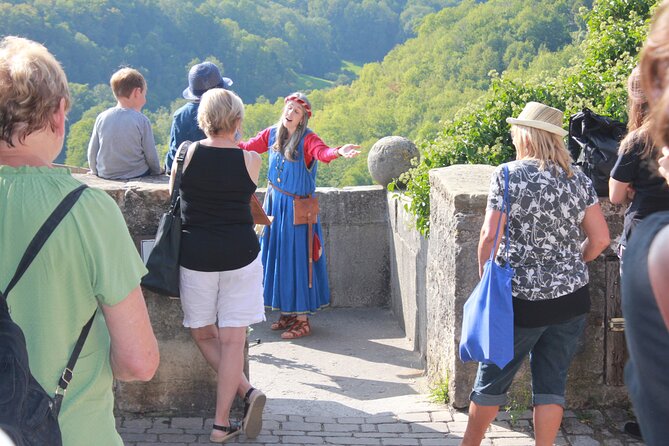
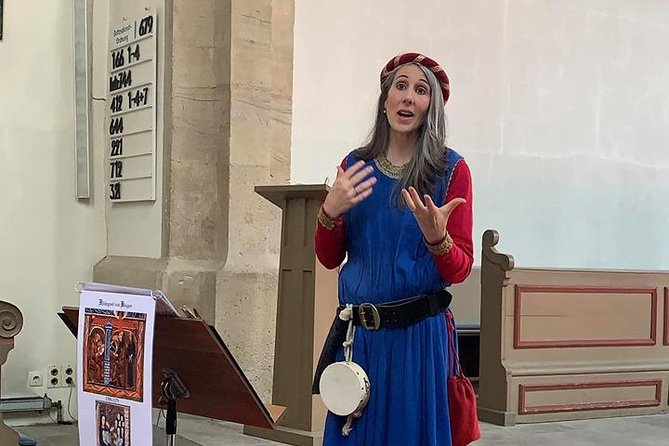
Holy Ghost Church provides the tour’s strongest musical setting. You enter the church and learn about a medieval composer whose identity is described as mysterious, a nun born in 1098.
The discussion reaches beyond music. Amelia explains the composer’s influence on politics, science, and Christianity, then performs one of her works inside the church. The acoustics give this stop a different character from the outdoor performances.
The church setting also lets you hear how sacred music works in a religious space. You are not simply told that medieval music was connected to Christianity. You hear a piece where the building itself helps shape the sound.
This portion lasts about eight minutes. Church access can sometimes depend on local conditions, but the tour information identifies Holy Ghost Church as a stop where you enter for the musical presentation. Keep your expectations practical: this is a short performance and explanation, not a full concert.
Finishing inside the Spital Bastion
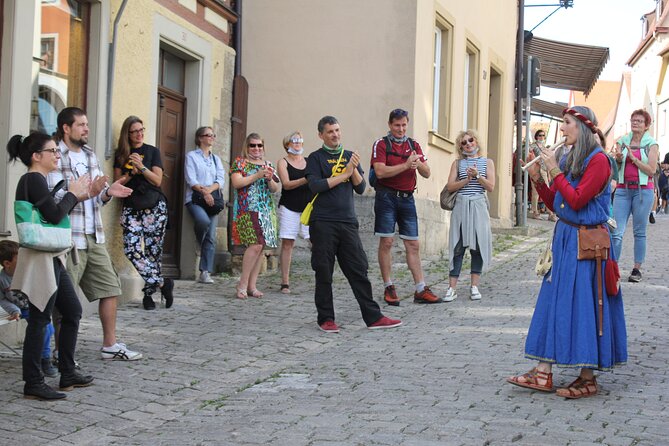
The tour ends at the Spital Bastion, also called the Hospital Bulwerk or Spital fortification. You step inside Rothenburg’s largest and youngest fortification and learn why the site mattered to the city’s defense.
The final historical topic is the role of mercenary soldiers during the Renaissance. Amelia introduces a composer connected with a song written for those soldiers, then performs the piece at the fortification.
This ending works well because it shifts the mood from courtly love and church chant to military life. The city walls are no longer just a scenic backdrop. They become evidence of the money, labor, and armed force needed to protect Rothenburg.
The final stop lasts about eight minutes. Since the route ends here rather than returning to Market Square, plan your next activity from the Spitalbastei area. The ending location is useful for continuing along the walls or heading back into town, but the supplied details do not specify the walking time to any particular hotel, station, or attraction.
Price, group size, and practical value
The listed price is $237.26 per group of up to eight people. For a full private group, that works out to about $29.66 per person, before any changes tied to the selected booking format. Gratuity is included, which makes the final cost easier to judge.
The tour also offers single tickets on selected days, small group tours that may combine people up to a stated limit of 15, and private tours for up to 15 adults. Because the headline price refers to a group of up to eight while the private option allows up to 15 adults, check the exact format and party size before paying.
For a group of friends or family, the price makes good sense if everyone enjoys history, live music, or both. A standard walking tour may cover more dates and buildings, but it will not usually include live performances tailored to each stop.
Children 12 and younger are free. Children 13 and older count as adults. That can make the experience more practical for a family, though the short talks and medieval music will suit older children best.
The total time is about 1 hour 45 minutes. The listed stops themselves are short, but the route includes walking between them. Wear comfortable shoes and expect the experience to move through public streets, churches, viewpoints, and fortifications rather than remain in one controlled venue.
Confirmation normally arrives at booking. If you book within nine days of the date, confirmation may take up to 48 hours and depends on availability. Free cancellation is available until 24 hours before the start time. A cancellation within that final 24-hour window is not refundable, and weather-related cancellation brings a new date or full refund.
The tour is offered in English. Service animals are allowed, the route is near public transportation, and most people can participate. The details do not promise a step-free route, so you should ask before booking if stairs, uneven paving, church access, or fortification entrances could be a concern.
Who will enjoy this most
I would choose this tour if you want Rothenburg to feel like more than a picture-perfect medieval town. It suits music lovers, history fans, couples, families with older children, and anyone who prefers a guide with a strong personal connection to the place.
Amelia’s voice is a central part of the experience. The musical quality matters because the songs are not background decoration. They are the way the tour explains changing ideas about love, faith, class, work, and war.
You may want a different tour if you prefer long museum visits, detailed architectural measurements, or a quiet walk with little performance. The Medieval Crime and Justice Museum is only part of the route, and admission is not included. The stops are brief, so the experience favors variety and atmosphere over extended study of any single site.
Should you book the Medieval Musical Tour?
Book it if you want a memorable introduction to Rothenburg that combines local stories with live medieval and Renaissance music. The performances by Amelia, the role of Margarete von Schwangau, the church acoustics, and the route from Market Square to Spital Bastion give the walk a clear identity.
Think twice if your group dislikes singing, needs a fully specified accessible route, or wants a conventional sightseeing lecture. For everyone else, especially a small private party that can share the cost, this is a smart way to see the city’s famous sights while hearing the cultural world behind them.
FAQ
Where does the tour begin?
It begins at Market Square beside the Town Hall, at Marktplatz 1, 91541 Rothenburg ob der Tauber, Germany.
Where does the tour end?
The tour ends at Spitalbastei, also known as the Spital Bastion, in Rothenburg ob der Tauber.
How long does the tour last?
The experience lasts approximately 1 hour and 45 minutes.
What language is the tour offered in?
The tour is offered in English. German tours are also mentioned as an option to ask about.
How many people can join?
The activity has a maximum of 20 travelers. Booking formats include single tickets, small group tours that may include up to 15 people, and private tours for up to 15 adults. The listed group price is for up to eight people.
Are children charged?
Children 12 and younger are free. Children 13 and older are charged as adults.
Can I cancel for a full refund?
Yes. You can cancel at least 24 hours before the local start time for a full refund. Cancellations or changes made less than 24 hours before the start time are not accepted for a refund. If poor weather cancels the activity, you will be offered another date or a full refund.
Just added around Germany
- Medieval Knight’s Dinner Show with Live Music in Munich★ 3.0 · 2 reviews
- Dresden: New Green Vault and Semper Opera Tour★ 4.5 · 19 reviews
- City tour (including visit to the Frauenkirche) and Semper Opera Tour★ 5.0 · 21 reviews
- Nymphenburg classical music à la Mozart★ 4.7 · 3 reviews
- Festive Concert at Schleißheim with Residence-Soloists★ 4.7 · 25 reviews
- Festive Concert in the All-Saints Court Church★ 4.6 · 11 reviews
- Mozart and German Composers Private Tour in Munich★ 4.8 · 4 reviews
- Hamburg: St. Pauli Walking Tour with Live Music★ 4.0 · 3 reviews
Germany Concerts, compared.
Berlin: Classical Concert at Kaiser Wilhelm Memorial Church
Read our review →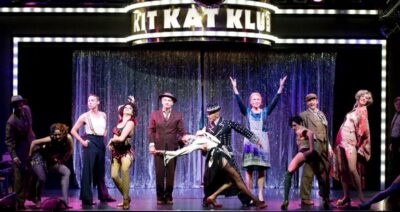
Berlin: Cabaret – The Berlin Musical at Tipi am Kanzleramt
Read our review →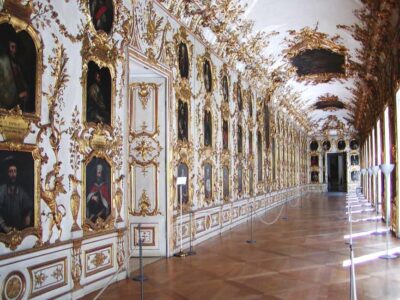
Munich: Classical Concert at the Residenz Palace
Read our review →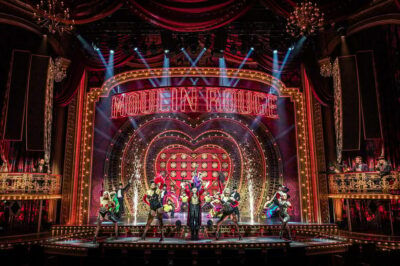

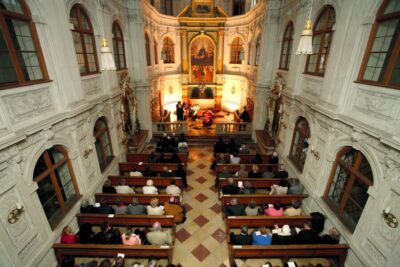
Munich: Concert in the Court Chapel of the Residenz
Read our review →
Browse the lists this tour appears in