
Review · MEXICO CITY
Colonia Roma Musical Walking Tour
The most interesting part of this Colonia Roma walk is the way it connects ordinary places to big Mexican stories. You move from a 16th-century chapel to a tortilla shop, from apartment architecture to corridos about crime and revolution, all within one neighborhood.
I like the small group, limited to 12 people, and the focus on places that are easy to miss on a standard city tour. I also like the range of subjects: architecture, housing, religion, politics, food, and popular music. The main drawback is that this is a discussion-heavy walk, not a sightseeing tour built around major indoor attractions.
- La Romita sets the tone: Begin at a tiny chapel and former village with a link to the Virgin of Guadalupe.
- Eleven locations, one neighborhood: The route keeps you in Colonia Roma instead of sending you across Mexico City.
- Architecture tells the story: Apartments, plazas, and private houses reveal how Roma changed from a residential suburb into a service district.
- Music meets politics: Avenida Álvaro Obregón opens a conversation about corridos and crime reporting during the Mexican Revolution.
- Everyday Mexico matters: A tortilla shop and a museum of daily-life objects balance the grander architectural stops.
- Good value for curious walkers: At $41.63, the price pays for a focused, English-language interpretation rather than entrance tickets.
A 16th-century chapel in the middle of modern Roma
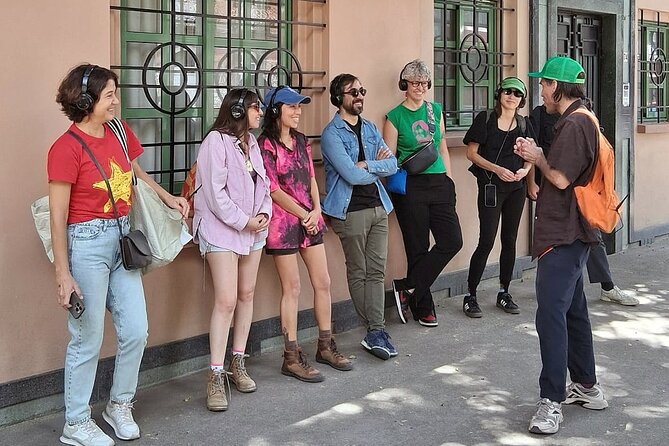
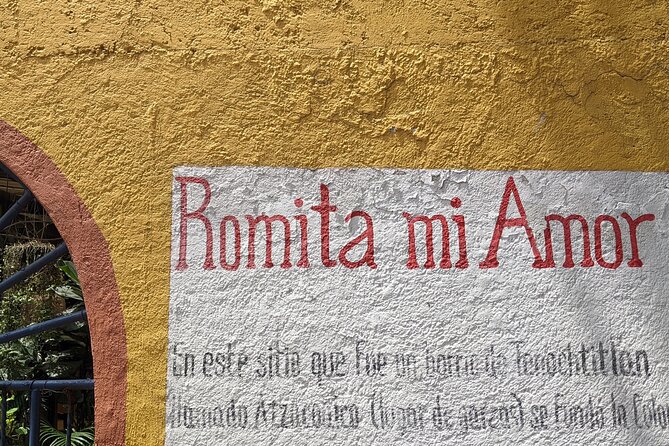
The meeting point is Capilla de San Francisco Javier de la Romita, at Pl. Romita 30. This small chapel gives you an immediate sense that Colonia Roma is not simply a polished district of early-20th-century houses and cafés. A much older settlement remains part of the neighborhood.
The chapel dates from the 16th century. A small town grew around it and kept its own identity until the 20th century. That long survival helps explain why the opening conversation is not just about architecture. It is also about how Mexico City absorbed older communities as the capital expanded.
Gabriel Acevedo Velarde uses the chapel to discuss the origin of the Virgin of Guadalupe. That subject gives the walk a religious and cultural starting point, then the route moves into the changing urban identity of Roma.
You should allow a few minutes to find the meeting point and arrive ready to walk. The tour begins at 10:30 a.m., and the starting address is in La Romita, within the Cuauhtémoc borough. The chapel is an especially useful first stop because it quickly shows that the neighborhood has more than one historical layer.
Why the route stays inside Colonia Roma
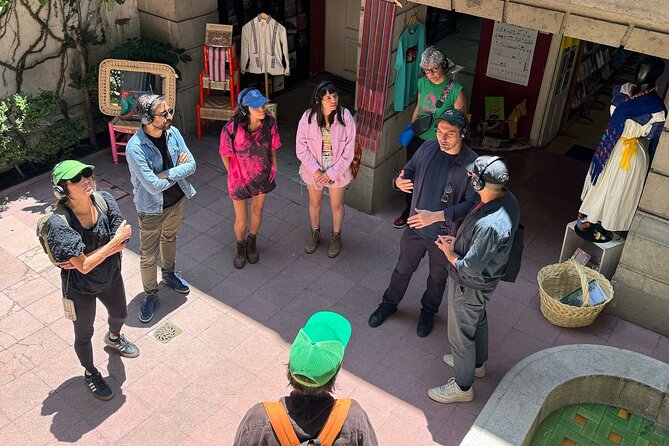
The full walk remains in Colonia Roma and visits 11 locations. That is a smart design choice. You do not lose time in a vehicle, and the guide can build one argument from stop to stop: Roma was planned, occupied, adjusted, and eventually reshaped by the needs of a growing city.
Some stops are not classic tourist sights. That is part of the appeal, but it also sets expectations. You are not checking off grand monuments. You are learning to read streets, façades, plazas, shops, and small details as evidence of social change.
The route lasts about two hours and 15 minutes. With a maximum of 12 people, the group should remain small enough for questions and conversation. The information provided does not promise a private tour, but the group limit is far more manageable than a large urban walking group.
The experience is offered in English and uses a mobile ticket. Admission is listed as free at the stops, so the $41.63 price is for the guided experience rather than a package of museum entries or meals.
More Musicals in Mexico:
- NYC: Aladdin the Musical on Broadway
★ 4.8 · 1,800 reviews - NYC: MJ the Musical on Broadway
1,510 reviews - NYC: Moulin Rouge! the Musical on Broadway
1,329 reviews
Everyday objects and a house built for confidence
One stop brings you to an amusing museum devoted to objects from everyday life in modern Mexico. The details provided do not give the museum a name or say how long you spend inside, so you should think of it as a short interpretive stop rather than the main event.
Its value is clear. A city is not only shaped by famous buildings and political leaders. Household objects can show how people lived, what they used, and how modern Mexican identity took shape in ordinary settings. This stop also gives the walk a lighter change of pace after the chapel and its religious history.
The route also includes a house connected with the Lamm family. The family did not actually live there, but the building reflects a confident approach to space. That matters because Mexico City was facing a serious housing shortage when it was built.
This is a useful architectural lesson. A large or self-assured house can reveal the gap between what some owners wanted and what the wider city needed. You get more than a lesson in style. You get a look at how private ambition and public pressure existed side by side.
Because the house is discussed from the outside, expect interpretation rather than an interior visit. This is typical of the tour: the streets and buildings are the material.
Corridos and crime reporting on Avenida Álvaro Obregón
Avenida Álvaro Obregón is one of Roma’s best-known roads, and the tour uses it for a subject that reaches beyond the avenue itself. Here, Gabriel connects corridos, the narrative musical form, with the crime press during the Mexican Revolution.
This is one of the walk’s strongest ideas. Music and newspapers may seem like separate subjects, but both can tell stories about violence, public figures, scandal, and events that official accounts might present differently. The corrido carried stories through popular culture, while crime reporting helped shape the way the public understood events.
The stop lasts about eight minutes. That is long enough for a focused explanation without turning the walk into a lecture on the entire Revolution. If you enjoy social history and popular culture, this may be one of the most memorable sections.
The tour is described as musical, but the information provided points to discussion of corridos rather than a promise of live performance. You should book it for the cultural connections, not because you expect a concert.
Plaza Luis Cabrera and the housing question
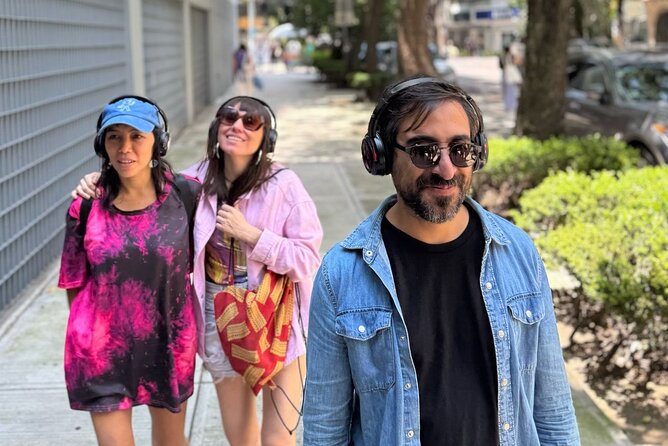
At Plaza Luis Cabrera, the conversation turns to a 1933 debate between conservative and modernist architects. This debate opens a wider question: what should a growing city build, and for whom?
The discussion links architectural ambition with Mexico City’s pressing need for homes. The city was doubling its population every decade, creating a conflict between aspirational designs and practical housing demands. A plaza becomes a place to consider how buildings express hopes about the future while residents still need enough space to live.
I like this stop because it gives architecture a human scale. You are not asked to admire a façade in isolation. You are asked to think about who could afford such spaces, what planners wanted to achieve, and what a rapidly growing city required.
The stop lasts around 10 minutes. That timing suggests a clear, concentrated explanation rather than a long architectural seminar. You will get the most from it if you are interested in how urban design reflects class, politics, and population growth.
More Music Walking Tours in Mexico:
- Music Tour & Lunch
★ 5.0 · 60 reviews - The Original Sound of Music Tour in Salzburg
★ 4.5 · 6,129 reviews - Salzburg: Original Sound of Music Tour
★ 4.8 · 5,059 reviews - London Rock and Roll Music Tour
★ 4.5 · 943 reviews
Plaza Río de Janeiro shows Roma changing course
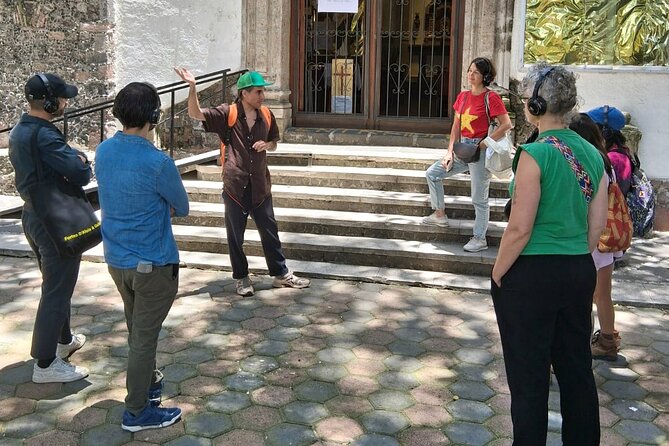
Roma was originally planned as an exclusively residential neighborhood. That idea did not last. Planners and owners soon saw that residents needed basic services close to home, and Plaza Río de Janeiro reflects the shift toward a more self-sufficient district.
This is one of the route’s useful themes: neighborhoods rarely remain exactly as their designers intended. A residential plan can sound tidy on paper, but daily life demands shops, food, services, and places to gather.
The plaza also gives the tour a clear sense of destination. It was part of the neighborhood’s first plan in 1902 and is described as Roma’s main plaza. The walk ends at Calle Durango and Orizaba, so you finish in a central part of Roma Norte rather than returning to the chapel.
That one-way route is practical. You can continue exploring the neighborhood after the tour instead of retracing your steps. The end point also helps you compare the original residential idea with the district’s later commercial and social life.
La Casa de las Brujas and the rise of services
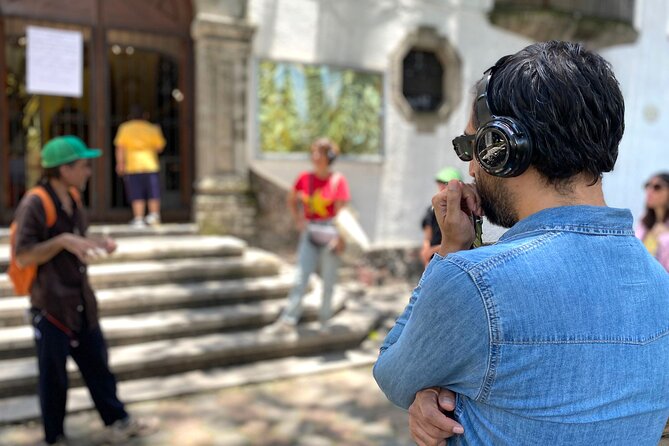
La Casa de las Brujas, or the Witches’ House, was originally built as a hotel but became an apartment building. Its eclectic architecture offers another way to trace Roma’s changing identity.
The building represents a neighborhood in transition. Roma was no longer only a place for private homes. It was becoming an area that served a larger part of Mexico City. Architecture here is not frozen decoration. It reflects how the neighborhood was used.
This stop lasts about five minutes, making it one of the shorter pauses. That is enough for a quick explanation and a look at the building, but not a full architectural study. If you want extensive time for photographs or interiors, this tour may feel brisk at certain stops.
Still, the short visit fits the overall rhythm. The route covers many locations, so each one contributes a piece of the larger story.
Tortillería Premier and the origin of tortillas
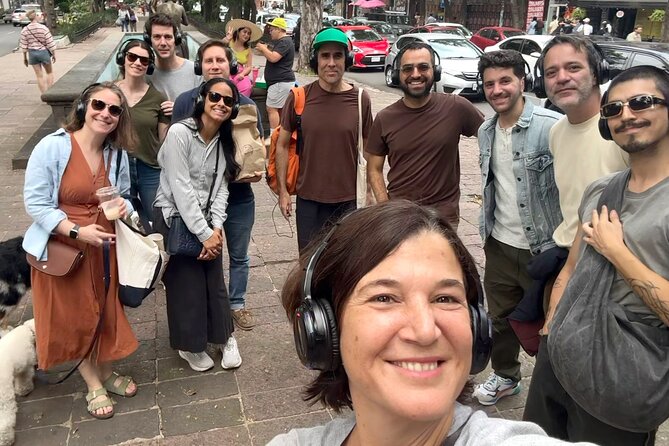
Near Roma Norte, the tour stops at Tortillería Premier, a typical tortilla shop. The subject is unexpectedly broad: the invention of tortillas and its connection to the first Zapotec state, five centuries before Christ.
That link is exactly the kind of detail that gives this walk its personality. You may think of a tortilla as an everyday food, but the tour uses it to connect ancient history, Indigenous state formation, and modern urban life.
The stop takes about eight minutes. You should not assume that food is included, since no tasting or meal is specified. The value lies in the explanation and the setting. A working tortilla shop makes the subject feel connected to present-day life rather than trapped in a museum.
This is also a good example of the guide’s method. Gabriel Acevedo Velarde makes connections between subjects that do not seem related at first, such as tortillas and the first Zapotec state. That approach was specifically praised in the available feedback, along with the mix of traditional sights and less familiar venues such as tortilla makers and newspaper stands.
What $41.63 gets you
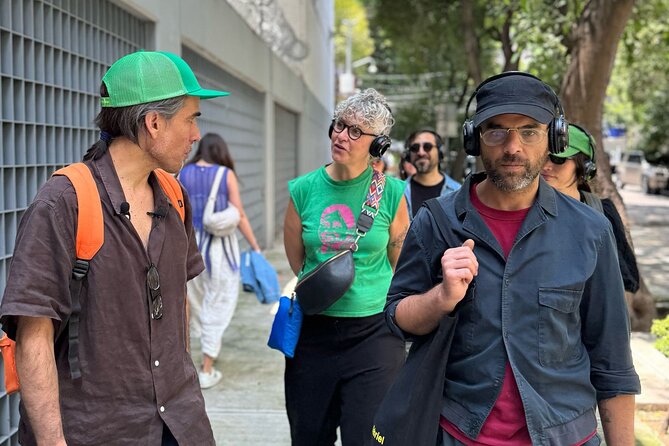
At $41.63 per person, this is not the cheapest way to stroll through Roma. You are paying for a specialized English-language guide, a carefully linked route, and a small group capped at 12 people.
The stops themselves list free admission. There is no meal, transport, or major ticketed attraction included in the information provided. So the value depends on how much you want context. If you only want to photograph the neighborhood, you can walk it on your own for far less.
I think the price makes better sense for someone who wants to understand why the neighborhood looks and works as it does. The tour combines architecture, religion, housing, journalism, music, food, and urban planning. That range is more useful than a simple list of pretty buildings.
The five-star rating from seven submitted reviews is positive, though the sample is small. I would treat it as a good sign, not proof that every visitor will love the pace or subject matter.
Who should book this walk?
I would choose this tour if you enjoy city history that begins with ordinary evidence. A chapel, plaza, apartment building, tortilla shop, and museum of daily objects can tell you a great deal when the connections are clearly explained.
It suits you especially well if you:
- Want an English-language introduction to Colonia Roma
- Prefer a small group to a large bus-style tour
- Like architecture when it is tied to housing and social change
- Enjoy Mexican cultural history beyond the most famous landmarks
- Are curious about corridos, crime reporting, and Indigenous history
- Do not need a long indoor museum visit or included food
You may want another kind of tour if you are looking for tastings, extensive shopping time, major art museums, or a performance. The musical angle here comes through corridos and cultural interpretation. It does not appear to include live music.
Wear comfortable walking shoes and plan for outdoor conditions. The tour requires good weather, and poor weather can lead to a different date or a full refund. The route is near public transportation, service animals are allowed, and most people can participate, but no detailed accessibility information is provided.
You can cancel for a full refund up to 24 hours before the start time. Changes or cancellations made less than 24 hours before the 10:30 a.m. start are not accepted for a refund.
Should you book the Colonia Roma Musical Walking Tour?
Book it if you want Colonia Roma explained rather than simply displayed. The best parts are the unexpected links: La Romita and the Virgin of Guadalupe, Álvaro Obregón and corridos, Plaza Luis Cabrera and the housing crisis, and Tortillería Premier and Zapotec history.
Skip it if your main goal is food tasting, live music, or entry to famous attractions. For an attentive walker who values a small group and unusual local history, $41.63 is a fair price for two hours and 15 minutes with Gabriel Acevedo Velarde. The route leaves you at Plaza Río de Janeiro with a more useful understanding of how Roma became the neighborhood you see today.
FAQ
Where does the tour begin?
It begins at Capilla de San Francisco Javier de la Romita, Pl. Romita 30, La Romita, Centro, Cuauhtémoc, Mexico City.
What time does the tour start?
The start time is 10:30 a.m.
Where does the tour end?
It ends at Plaza Río de Janeiro, at Calle Durango and Orizaba in Roma Norte.
How long does the experience last?
The walk lasts approximately two hours and 15 minutes.
What language is the tour offered in?
The tour is offered in English.
How much does the tour cost?
The listed price is $41.63 per person.
How large is the group?
The tour has a maximum of 12 participants.
Is a mobile ticket available?
Yes. The experience includes a mobile ticket.
Is the tour suitable for most people?
Most people can participate. Service animals are also allowed, and the route is near public transportation.
What happens if the weather is poor?
The experience requires good weather. If it is canceled because of poor weather, you will be offered another date or a full refund.
More Walking Tours in Mexico
- Sydney Opera House Official Guided Walking Tour
★ 4.5 · 3,770 reviews - London West End Musical Silent Disco Walking Tour Top 1% Rated
★ 5.0 · 1,057 reviews - Salzburg 2.5-Hour Walking Tour: Mozart, Old Town & More
★ 4.2 · 987 reviews - New Orleans Jazz History and Music Walking Tour
★ 4.5 · 477 reviews
Just added around Mexico
- Music Tour & Lunch★ 5.0 · 60 reviews
- Lucha Libre and Mariachi★ 3.5 · 3 reviews
- Live a Mexican Night in Plaza de los Mariachis★ 3.0 · 2 reviews
- Mariachi Night in Garibaldi and Dinner at Bellini★ 4.5 · 3 reviews
- Adventure tour Between Charros, Mariachi and Parián de Tlaquepaque★ 4.5 · 3 reviews
- Horseback Ride in Guanajuato with Live Music and Food★ 5.0 · 39 reviews
- Your Romantic Dinner in Cancun, includes national open bar and live music★ 4.5 · 37 reviews
- Feel the love on a romantic dinner at Cancun sea, with live music and open bar.★ 5.0 · 13 reviews
Mexico City Concerts, compared.
CDMX: Xochimilco Trajinera Party, Drinks, Mariachi & Tacos
Read our review →
Trajinera Party at Xochimilco with Drinks, Mariachi & Snacks
Read our review →
Dinner at a panoramic restaurant and show at Plaza de los Mariachis
Read our review →
Mariachi Night in Garibaldi and Dinner at Bellini
Read our review →
Browse the lists this tour appears in