
Review · VIENNA
Vienna Private Walking Tour including State Opera
Vienna’s grandest stories come together on this three-hour private walk: Roman Vindobona, Habsburg emperors, Mozart, the world wars, and the city’s famous opera tradition. I like the broad sweep of the route, and I like having a guide who can connect the monuments rather than leave you staring at one ornate facade after another. The private format also lets your group move at its own pace, up to 15 people.
The main caution is the State Opera visit. The tour description promises an inside experience, but one booking found it amounted only to the lobby, while another said a separate opera tour had to be booked and paid for. Confirm exactly what is included before you commit. The overall rating is 3.2 from seven reviews, so guide quality and opera arrangements deserve careful attention.
Key points to know before booking
- State Opera access can be limited: The included visit may be a lobby stop rather than a full backstage or auditorium tour.
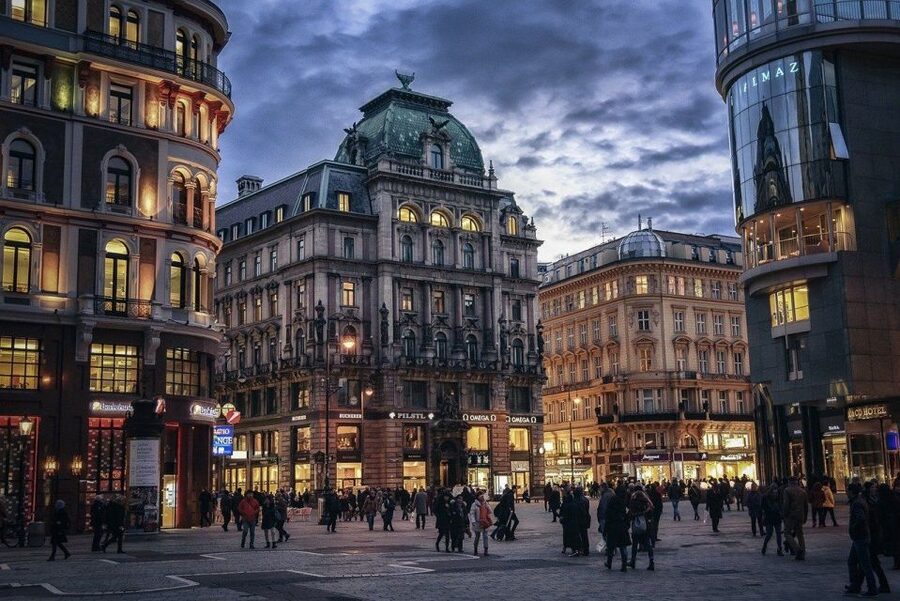
- The route covers Vienna’s imperial core: Expect Stephansplatz, Graben, Hofburg, Michaelerkirche, the museums, and opera-related sights.
- You get a private guide: The group can include up to 15 people, with tours offered in English or German.
- The history stretches from Rome to the Second Republic: The walk links ancient ruins, Habsburg power, music, fine art, and 20th-century upheaval.
- The price works best for a full group: At $323 per group, the cost is about $21.53 per person for 15 people, before any extra entrance fee.
- Comfortable shoes matter: The route is a walking tour through central Vienna and is not suitable for people with mobility impairments.
A strong start in Vienna’s historic center
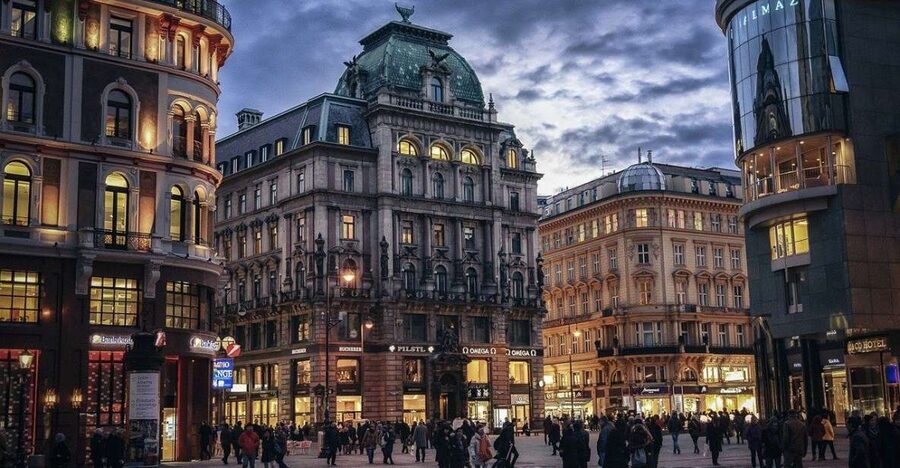
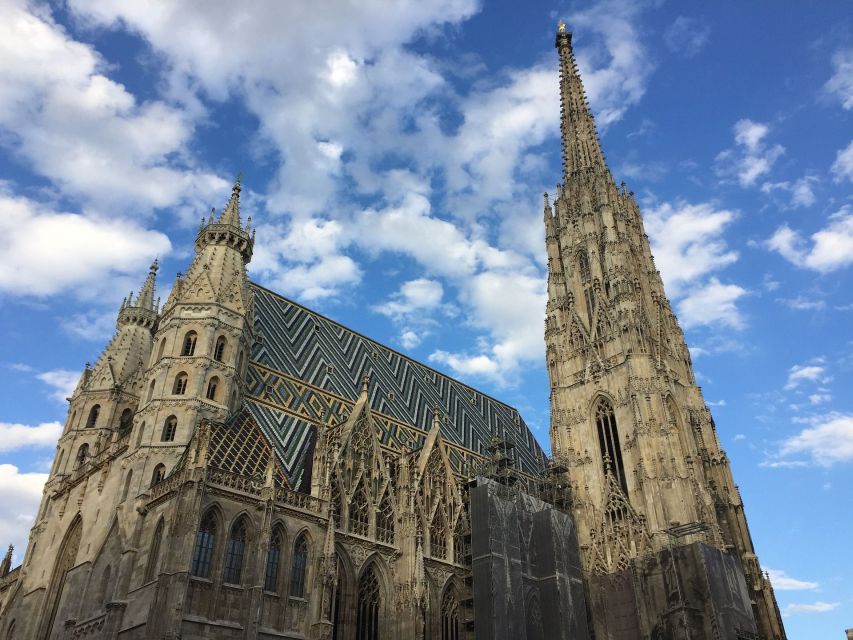
The meeting point is at Stephansplatz 8A, in the heart of central Vienna. That puts you beside St. Stephen’s Cathedral, or Stephansdom, one of the city’s most recognizable buildings and the natural place to begin a story about Vienna.
The route is designed as a broad introduction rather than a single-site tour. You move through several centuries in a compact area, from Roman traces and medieval defenses to the imperial Habsburg court and the cultural life of 19th and 20th-century Vienna.
I like this approach for a first visit. Vienna can seem like one enormous collection of palaces, churches, and ceremonial streets. A guide gives those sights a timeline. You learn how Roman Vindobona shaped the early city, how the Holy Roman Empire and later Austro-Hungarian Empire influenced Vienna, and how the city changed after the world wars and the creation of the Second Republic.
The trade-off is pace. Three hours sounds generous, but the route includes many major subjects. You should expect an overview with stories at key stops, not a detailed study of every building.
More Opera Performances in Austria
- Vienna: Mozart Concert at the Vienna State Opera
★ 4.6 · 461 reviews - Vienna: Musical Tickets THE PHANTOM OF THE OPERA
★ 4.9 · 132 reviews - Vienna State Opera House Mozart Concert in Historical Costumes
★ 4.0 · 120 reviews
The State Opera and the fine print on entry
The Vienna State Opera is the headline attraction, and it is an excellent place to discuss the city’s musical identity. The building dates from the 1860s, when it was known as the Vienna Court Opera. Its name changed in 1920 as the early Austrian Republic took shape.
The opera house is tied to works such as La Traviata, La Clemenza di Tito, and Verdi’s Don Carlo. Its past directors include Gustav Mahler, Herbert von Karajan, and Claudio Abbado. Those names help explain why the opera house is more than a pretty building. It is part of Vienna’s political and artistic story.
You can also expect discussion of the composers who shaped the city’s reputation: Wolfgang Amadeus Mozart, Josef Haydn, Ludwig van Beethoven, Franz Schubert, Johann Strauss the elder and younger, Johannes Brahms, and Gustav Mahler. The tour presents opera and classical music as part of everyday Viennese identity, not as an isolated museum topic.
But be precise about what you are paying for. One review says the State Opera stop was only a visit to the lobby. Another says the full opera tour had to be purchased separately, despite the activity title suggesting that it was included. The provided details list the State Opera visit as included, but also say entrance fees are not included. Those statements do not fit neatly together.
My advice is simple: ask the operator, Travmonde OÜ, whether your booking includes only access to the public lobby or a scheduled guided tour inside the opera house. Ask about any entrance charge before booking. If you specifically want the auditorium, backstage areas, or a formal opera-house tour, do not assume the walking tour price covers it.
Mozart, museums, and the imperial court
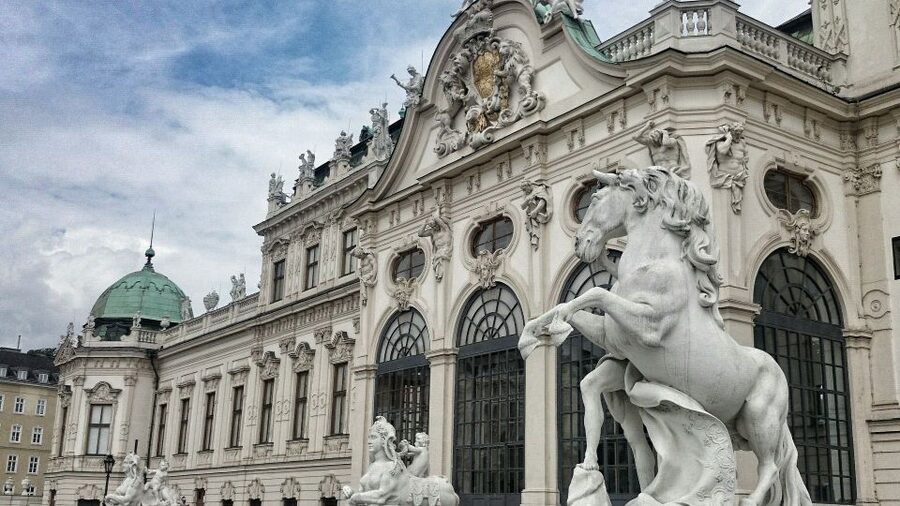
The Mozart Monument provides a natural bridge between music and empire. From there, the route takes in the facades of the Art History Museum and the Hofburg.
The Art History Museum represents the Habsburg taste for collecting and display. Even if you do not enter, its exterior helps explain the scale of imperial Vienna. The Hofburg, for centuries the home of the Habsburg rulers, gives the walk its strongest political setting. Here, the guide can put royal ceremony beside the less glamorous work of governing a vast empire.
I find this part of the route useful because it keeps the Habsburg story from becoming a parade of grand names. The tour also covers the Holy Roman Empire and the Austro-Hungarian Empire, two different political arrangements that are easy to blur together. A live guide can clarify how Vienna’s role changed across those periods.
The museums and Hofburg are mainly viewed from outside on this walk. Entrance fees are not included, so you should not expect time inside the Art History Museum or the imperial palace unless you arrange that separately. If museum interiors are your priority, allow another half-day or more on your own.
Michaelerplatz and the layers beneath the palace
Passing through the Michaeler Gate, you reach St. Michael’s Church, or Michaelerkirche. It served as the official church of the emperors for many years, making it another useful stop for understanding the connection between religion, court life, and imperial ceremony.
Michaelerplatz also reveals Vienna’s older layers. Ancient Roman ruins sit in the center of the square, while medieval walls and remains of the old Burg Theatre add later chapters. This is where the city’s past becomes unusually visible in one place.
I like these archaeological details because they break up the imperial grandeur. Vienna is not only palaces and polished stone. Under and around the ceremonial center are traces of a Roman settlement, medieval fortifications, and earlier buildings that disappeared as the city changed.
Still, this is an outdoor sightseeing stop, not an archaeological excavation visit. The exact amount of time spent at each feature depends on the guide and the group. If you want a long look at the ruins or a detailed account of the old Burg Theatre, mention that early in the walk.
More Opera Performances in Vienna
- STATE OPERA – PRIVATE guided tour (tickets included)
★ 5.0 · 14 reviews
Graben and St. Peter’s Church
The route continues along Graben, one of Vienna’s best-known central streets. Its origins reach back to the Roman period, and the tour connects it with Richard the Lionheart’s entry into the city. That detail gives the street more depth than its elegant shops and decorative columns suggest.
Graben is a good example of how this tour works. You get the setting, a piece of medieval and Roman context, and a reminder that the same street has served very different versions of Vienna. It is also a practical orientation point, since it links several central sights.
St. Peter’s Church, or Peterskirche, is another highlight. The information provided for the tour places a church here since the fourth century, while the present building is associated with Vienna’s long religious tradition. Its prominent position makes it easy to include on a central walking route.
Do not expect every site to receive the same amount of attention. The tour has a lot to cover, and the church is one stop among many. If sacred architecture is your main interest, tell the guide. If you prefer political history, music, or city planning, the private format should let you steer the emphasis somewhat.
Stephansdom and the close of the walk
The route returns to Stephansplatz and its dominant building, Stephansdom. Vienna’s cathedral is described as a Roman-Gothic masterpiece and one of the tallest churches in the world. Its scale gives the tour a fitting ending, since the cathedral brings together religion, architecture, civic identity, and centuries of change.
The cathedral is also a useful reminder of the tour’s central idea. Vienna’s story is not one straight line from empire to modern city. Roman foundations, medieval walls, church power, Habsburg ceremony, music, war, and the Second Republic all overlap in the same compact center.
The route may sound easy on a map, but three hours on foot can be tiring. Wear comfortable shoes, and be prepared for outdoor walking between stops. The activity is specifically listed as unsuitable for people with mobility impairments, so anyone with walking concerns should ask for precise route details before reserving.
How the private format affects the experience
The private setup is one of the tour’s clearest advantages. Your group can include up to 15 people, and the guide speaks English or German. You are not sharing the walk with a large public crowd, which can make it easier to ask about a particular composer, building, or period of history.
One January 2025 booking described the guide as very competent and found the three hours passed quickly. That is the strongest praise this experience receives: a good guide can make a dense itinerary feel lively and manageable.
Another booking, from December 2023, said the guide was relaxed and allowed time to look around. That matters in Vienna, where the facades and public squares deserve more than a quick pointing gesture. A walk that pauses at the right moments is far better than one that races from one name to the next.
The private format also means the guide’s personal approach matters a great deal. One negative booking from Germany reported politically charged comments about foreigners, local politics, social housing, and the persecution of Jewish people during the Nazi period. The same booking identified the guide as Franziska Pfisker and criticized the language used when discussing people murdered in concentration and forced-labor camps.
That is a serious concern, especially on a tour covering Vienna’s Jewish quarter and the world wars. Historical subjects need accuracy and respect. Because guide quality appears to vary, I would ask for the assigned guide’s name and request a replacement if the tone or content is inappropriate. This is not a minor matter, and it lowers my confidence despite the positive comments about other guides.
Is $323 a fair price?
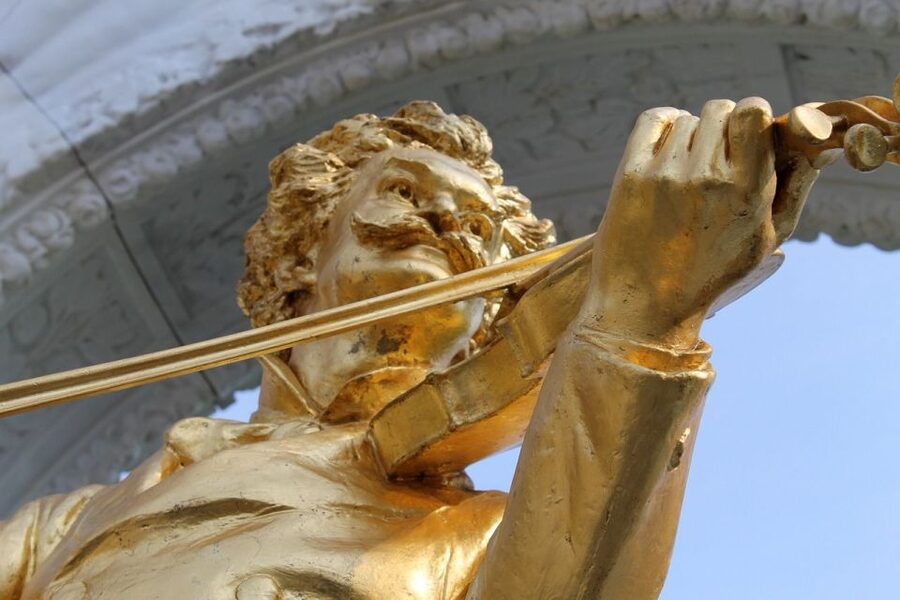
The listed price is $323 for the group, up to 15 people. At the maximum group size, that works out to roughly $21.53 per person for three hours with a private guide. For a family or group of friends, that can be a reasonable way to get oriented quickly.
For two people, the calculation changes sharply. You would effectively pay about $161.50 each, before any opera entrance fee. At that price, you should want a strong guide and clear access to the State Opera.
The value depends on what you want. If you need a first look at central Vienna and appreciate a private explanation of the Habsburgs, music, religion, and 20th-century history, the price can make sense. If your main goal is a full State Opera tour, this is a risky choice unless the operator confirms the exact entry arrangements in writing.
The reservation terms are flexible: you can cancel up to 24 hours before the tour for a full refund, and you can reserve now and pay later. Starting times vary, so check availability. One booking had an 11 a.m. start moved to 2 p.m. because of opera scheduling, then found that the promised opera tour did not happen. Treat any schedule change as a reason to reconfirm the whole plan, not just the start time.
Who should book this Vienna walk?
I would consider it for a first-time visitor who wants a fast orientation to Vienna’s central sights and prefers a private guide to a large group. It suits people who enjoy connecting architecture with politics, religion, music, and changing government.
It also works well for a full group of friends or relatives. The fixed group price becomes much more attractive when divided among several people, and a private guide may be able to spend more time on the subjects your group cares about.
I would be cautious if you have limited mobility, want extended museum visits, or are booking mainly for a full opera-house interior tour. The route is active, entrance fees are not included, and the State Opera wording is unclear.
Should you book it?
Book this walk if you want a private introduction to Vienna’s imperial center and you are willing to treat the opera visit as something that needs confirmation. The itinerary covers an impressive amount of ground, and the best guide can make the Habsburg story, Roman remains, cathedral, and musical tradition fit together neatly.
I would not book without asking two direct questions: Is the State Opera visit only the lobby, and are any additional fees required for a full tour? I would also confirm the guide and request a professional approach to Vienna’s difficult 20th-century history.
With a full group, the price is fair. For a couple, or for anyone focused on opera access, the uncertainty makes a separate opera tour and a self-guided walk through the historic center worth comparing.
FAQ
Where does the tour meet?
The meeting point is Stephansplatz 8A, 1010 Wien, Austria.
How long does the walking tour last?
The tour lasts three hours.
Is the tour private?
Yes. It is offered as a private group experience for up to 15 people.
What languages are available?
The live guide speaks English or German.
Is a visit to the State Opera included?
The activity details list a State Opera visit as included, but the exact access is unclear. One booking described the stop as only the lobby, and another said a separate opera tour had to be booked and paid for. Confirm the details before booking.
Are entrance fees included?
No. Entrance fees are listed as not included.
What should I bring?
Bring comfortable shoes for the walking route.
Is the tour suitable for people with mobility impairments?
No. The activity is listed as unsuitable for people with mobility impairments.
Can I cancel for a refund?
Yes. You can cancel up to 24 hours in advance for a full refund. You can also reserve now and pay later.
More Walking Tours in Vienna
- Vienna: Meet Beethoven Life Private Guided Walking Tour
★ 5.0 · 5 reviews - Vienna’s Musical Heart: Private Walking Tour with a Local
★ 5.0 · 2 reviews - Sydney Opera House Official Guided Walking Tour
★ 4.5 · 3,770 reviews - London West End Musical Silent Disco Walking Tour Top 1% Rated
★ 5.0 · 1,057 reviews
Just added around Vienna
- Vienna’s Musical Heart: Private Walking Tour with a Local★ 5.0 · 2 reviews
- Vienna: Concert by the Vienna Baroque Orchestra★ 4.6 · 56 reviews
- Vienna: Strauss Museum – Music&History in Historic 1837 Hall★ 4.7 · 31 reviews
- Vienna Supreme Orchestra at Palais Niederösterreich★ 4.8 · 10 reviews
- Vienna: Sunday Brunch Danube Cruise & Live Music★ 4.2 · 42 reviews
- Vienna: Romantic Classics Piano, Violin, and Cello Concert★ 4.7 · 60 reviews
- Vienna: Mozart, Beethoven, & Strauss Private Tour★ 5.0 · 4 reviews
- Vienna: Private Music Tour★ 5.0 · 8 reviews
Vienna Concerts, compared.
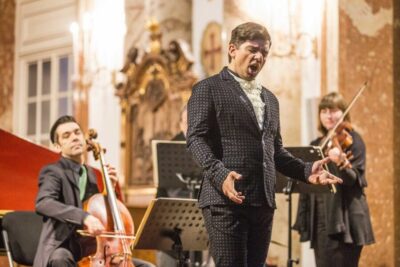
Vienna: Vivaldi’s Four Seasons Concert in Karlskirche
Read our review →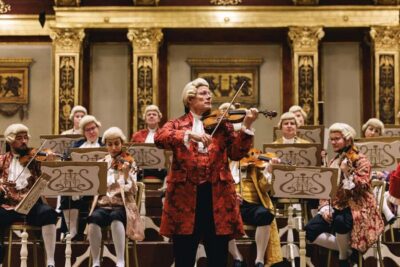
Vienna: Mozart Concert at the Musikverein – Golden Hall
Read our review →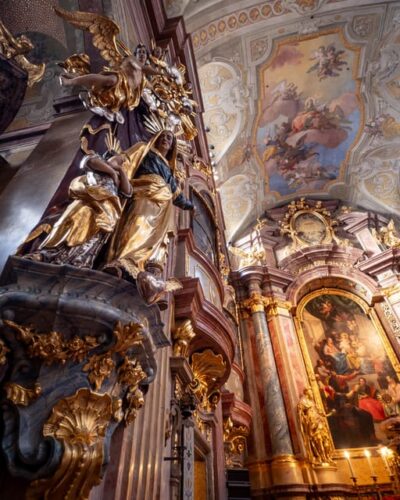
Vienna: Classical Concert in St. Anne’s Church (Annakirche)
Read our review →
Vienna: Mozart and Strauss Concert at Schönbrunn
Read our review →
Vienna: Tickets for Mozarthaus Vienna with Audio Guide
Read our review →
Vienna Classical Concert at St. Peter’s Church
Read our review →Vienna: Classical Concert in St. Anne’s Church (Annakirche)
Read our review →Browse the lists this tour appears in