
Review · VIENNA
Vienna: Meet Beethoven Life Private Guided Walking Tour
Vienna’s Beethoven story comes alive best when you connect the music to actual streets, buildings, and rooms. This private walking tour does just that, linking the Secession’s famous golden dome, the Theatermuseum where Beethoven conducted the Eroica, and the apartment where he lived and worked.
I like the personal scale, since your group gets its own licensed guide. I also like the Pasqualatihaus visit, which includes Beethoven’s notes, piano, paintings, and personal stories behind works such as Für Elise and Fidelio.
The main drawback is the price: $264.50 per person is a serious outlay, especially for a small group. Much of the route is exterior sightseeing, and the concert is an optional extension rather than part of every booking.
Key points to know before booking
- Beethoven’s apartment is the heart of the tour: The two-hour Pasqualatihaus visit gives you the most direct connection to the composer.
- The route doubles as a Vienna introduction: You see the Opera, Hofburg, Ringstrasse, Rathaus, Volksgarten, and central squares along the way.
- Private guiding makes the pace flexible: The guide can adjust the route and may add Stephansplatz, St. Stephen’s Cathedral, Karlsplatz, or Karlskirche on request.
- The concert upgrade is separate from the daytime walk: Evening performances usually begin between 5:30 and 8 pm, with the exact time printed on your ticket.
- English is the offered language: The tour is conducted for your group alone, with group discounts available.
- Plan for walking and changing pace: The tour is advertised at roughly three to five hours, but individual stops range from quick exterior views to a long museum visit.
Why Beethoven’s Vienna works so well on foot
Vienna can feel like a grand collection of palaces, churches, museums, and formal squares. Beethoven gives those sights a human thread. You are not simply looking at an impressive building. You are hearing how a composer moved through this city, performed in it, argued with it, and created some of his most important music here.
That connection is the strongest reason to choose this experience over a standard old-town walk. The guide explains Beethoven’s life alongside Vienna’s architecture and civic history. The result should suit both a serious Beethoven fan and someone who knows only the famous names and melodies.
A private guide also matters for mixed-interest groups. One child or adult might know every detail of Beethoven’s career, while another may be hearing the story for the first time. A guide such as Ingrid has been praised for adjusting the level of detail, while Sergio has also led the experience. You can ask questions freely and request more music history or more city history as you go.
More Classical Concerts in Austria
- Vienna: Vivaldi’s Four Seasons Concert in Karlskirche
★ 4.7 · 14,951 reviews - Vienna: Classical Concert in the World-Famous Musikverein
★ 4.6 · 6,673 reviews - Vienna: Mozart Concert at the Musikverein – Golden Hall
★ 4.6 · 5,194 reviews
Starting beneath the Secession’s golden dome
The meeting point is at Friedrichstraße 12, near the Secession Building. You identify your guide by looking for a holding card with your name. This is a simple arrangement, but it is worth arriving with the address ready on your phone because the tour does not begin inside the building.
The Secession is an excellent first stop. Its white exterior and gold-leaf dome make it one of Vienna’s most recognizable modern buildings. The Beethoven connection is not obvious from the street, which makes the guide’s explanation useful. You will spend about 10 minutes here, and admission inside is not included.
If you want to enter the Secession, an optional ticket costs about 4.50 to 9.50 euros. The tour itself is primarily about seeing the building from outside, so decide in advance if the interior exhibition matters to you. This is a short opening stop, not a full museum visit.
Vienna’s historic center and the Ringstrasse
The next hour provides the broad city lesson. You walk through Vienna’s historic center and along parts of the Ringstrasse, the grand boulevard lined with civic buildings, monuments, and parks.
This section is valuable because it places Beethoven in the larger story of Vienna. You see the city’s Baroque character, monumental public architecture, and later 19th-century additions. The tour does not treat Beethoven as an isolated genius. It shows the city that supported his career and provided the stages, patrons, churches, theaters, and audiences around him.
Expect a guided exterior walk rather than a series of long interior visits. That keeps the route moving, but it also means you should not book this as a museum-heavy experience. You are paying for interpretation, context, and private attention more than for a stack of entry tickets.
Beethovenplatz, the Opera, and Albertina
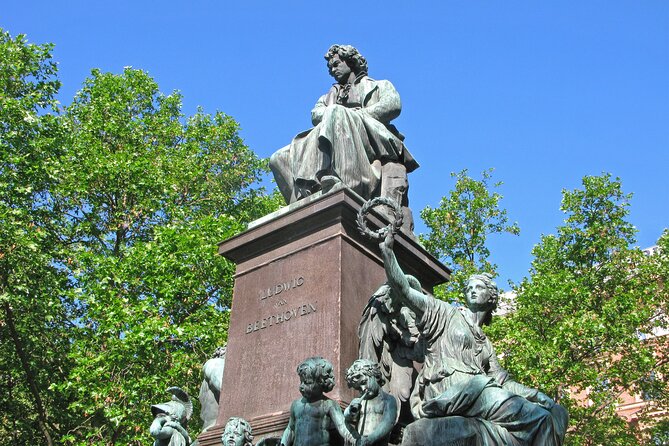
At Beethovenplatz, a bronze statue of the composer gives the tour a literal portrait stop. You spend about 25 minutes here, enough time for explanation and photographs. The square provides a quieter setting than some of the major central streets, and it gives the story a clear focal point.
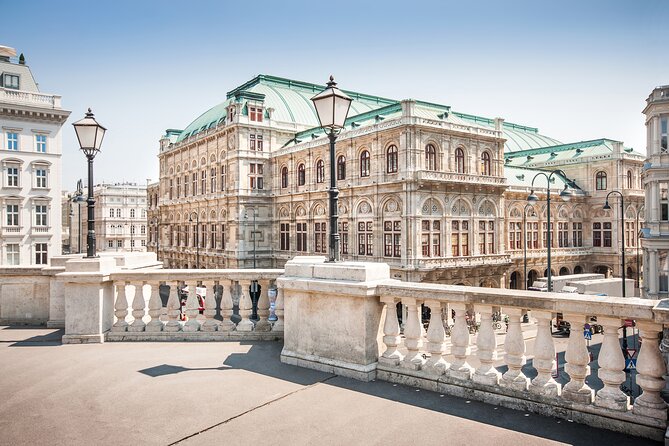
The Vienna State Opera follows with a short exterior visit. Vienna’s musical reputation is closely tied to this building, and your guide explains its place in the city’s performance tradition. You will not be attending an opera during this stop, so think of it as a historical orientation point.
The Albertina is another 10-minute exterior stop. Its horse-rider statue and grand position make it easy to recognize, while the museum itself holds major works associated with artists such as Leonardo da Vinci, Raphael, Michelangelo, Dürer, and Rembrandt. The tour does not include entry, so art lovers should treat this as a useful introduction, not a substitute for visiting the galleries.
More Classical Concerts in Vienna
- Vienna: Classical Concert in St. Anne’s Church (Annakirche)
★ 4.6 · 3,414 reviews - Vienna: Mozart and Strauss Concert at Schönbrunn
★ 4.5 · 2,967 reviews - Vienna: Classical Concert at Mozart’s First House
2,423 reviews - Vienna Classical Concert at St. Peter’s Church
★ 4.5 · 2,039 reviews
The Eroica connection at the Theatermuseum
The Theatermuseum is one of the more specific Beethoven stops. Here, Beethoven conducted a private Viennese premiere of his Third Symphony, known as the Eroica.
That detail gives the building more meaning than a quick architectural glance. You can look at the exterior and picture the musical world in which the symphony was first heard. The stop lasts about 10 minutes, and admission inside is not included.
This is a good example of how the tour works at its best. The building itself may not be the main reason you came to Vienna, but the Beethoven story turns it into a meaningful point on the walk.
Hofburg, Volksgarten, and the civic Ringstrasse
The Hofburg Palace appears as an exterior stop. Its size and layers of architecture make an impression from the street, but the tour does not take you inside. If you want palace interiors, this experience is not designed to provide them.
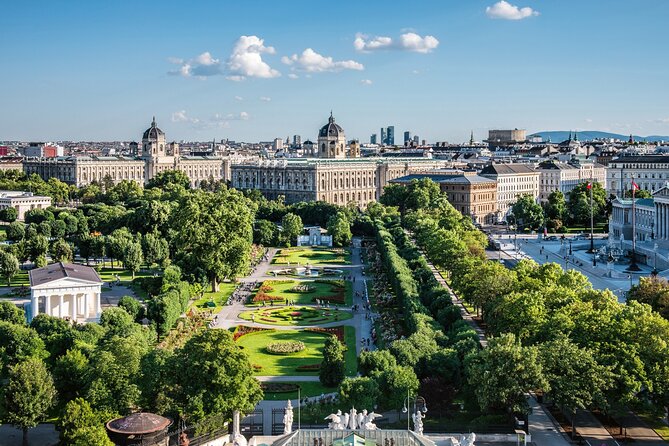
The nearby Volksgarten offers a change of pace. You have about 25 minutes in the park, with its green spaces and rose garden. After several formal buildings, this pause helps the walk feel less like a march through monuments. It is also a useful place to ask your guide questions or simply catch your breath.
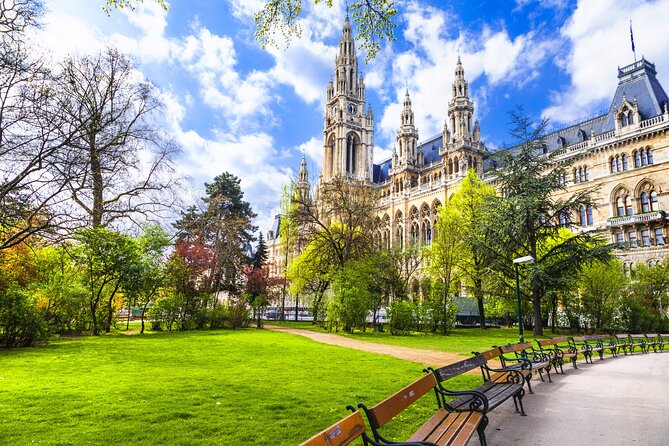
You then see the Burgtheater, Rathaus, and nearby public buildings. The Burgtheater has an elaborate exterior and an important place on the Ringstrasse. Rathaus is more imposing still, with a massive civic design said here to involve some 30 million bricks. The nearby square also puts the Austrian Parliament Building and University of Vienna within view.
The Ringstrasse section lasts only about 10 minutes as a named stop, but the boulevard appears across the route. Your guide points out several sights between the Opera and Rathaus, explaining why Vienna developed such a grand civic face in the late 19th century.
Two hours at Beethoven Pasqualatihaus
The Pasqualatihaus is the main reason to book this particular tour. You enter an authentic Beethoven residence, located in part of the remains of Vienna’s old fortifications. The visit lasts about two hours, making it far more than a quick room-and-photo stop.
Inside, you can expect a collection that includes Beethoven’s notes, piano, photographs, and paintings. The setting helps turn biographical facts into something concrete. You are seeing the sort of rooms connected with his daily work rather than only viewing a statue in a public square.
The guide also explains stories linked with Für Elise and Fidelio. Those details matter because they connect the composer’s private life and working habits to pieces you may already know. If you are a Beethoven enthusiast, this is where the tour will likely earn its price. If you are only mildly interested, two hours devoted to one composer’s residence may feel long.
That difference is important. The tour is not a quick introduction that happens to mention Beethoven. Beethoven is the main subject, and the Pasqualatihaus receives the most time. I would choose it for a music-focused visit, a family group with a dedicated Beethoven fan, or anyone who wants more than a standard Vienna highlights walk.
Optional Stephansplatz, Karlsplatz, and Karlskirche
The advertised route can be adjusted. If you request it, the guide may take you to Stephansplatz and St. Stephen’s Cathedral, Karlsplatz, or Karlskirche.
Stephansplatz is a natural place to watch central Vienna unfold, with old and new architectural styles around Austria’s best-known cathedral. St. Stephen’s Cathedral is described as one of the country’s main symbols and one of Europe’s taller cathedrals, but entry is not part of this tour.
Karlsplatz and Karlskirche provide another strong architectural pairing. The church is viewed from outside unless you arrange otherwise through a different experience. These additions are useful if you are building a first-day orientation to Vienna, but they may also make the walk longer. Ask about the day’s timing before adding every optional stop.
The concert upgrade and what it really adds
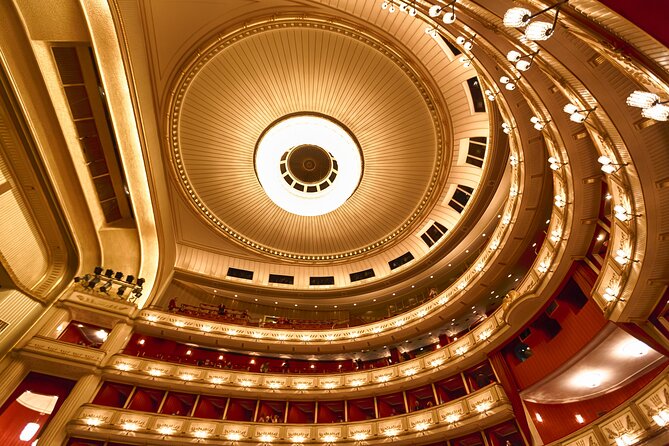
The extended option includes a ticket for a classical music concert featuring works by Beethoven, Mozart, Strauss, or Schubert. Venues are located in Vienna’s old town, and the exact location can change according to the group size, date, time, and availability.
The concert is a separate evening attraction, not a performance immediately attached to the walking route. Concerts usually begin between 5:30 and 8 pm. Your exact time appears on the concert ticket sent by email, and you need to arrive on time.
This upgrade makes sense if you want the music to continue after the city walk. Hearing a live program after visiting Beethoven’s residence gives the day a satisfying shape. Still, check the ticket details carefully before planning dinner or another activity, since the venue and start time are not fixed in advance.
The program may focus on Beethoven, but it can also include Mozart, Strauss, or Schubert. If you require an all-Beethoven performance, confirm the program before booking.
Is $264.50 per person good value?
At $264.50 per person, this is not a budget walking tour. The price includes a private licensed guide, Beethoven-related sightseeing, and admission to Pasqualatihaus. The concert ticket is included only with the extended option, so compare the correct package before paying.
The value improves if you are sharing the experience with family or friends and can use a group discount. A private tour spreads the guiding cost across your party while giving you control over questions and pacing. For one or two people, the price is harder to justify unless Beethoven is a major reason for your Vienna visit.
You are also paying for the guide’s interpretation of places that are often free to view from the street. The Opera, Rathaus, Hofburg, Volksgarten, Ringstrasse, and Beethovenplatz do not require admission. That is not a flaw, but it means the quality of the commentary matters more than the number of tickets included.
The Pasqualatihaus is the key paid sight. If you would visit it on your own anyway, the private route and explanations may offer solid value. If you mainly want Vienna’s famous buildings, a less specialized city walk may cost less and cover more interiors.
Who should book this private Beethoven walk?
I would recommend it to a group with a clear interest in Beethoven, especially if people in the group have different levels of music knowledge. The private format lets the guide adjust the conversation instead of giving everyone the same fixed script.
It also suits a first visit to Vienna. You see many major central sights while learning how they relate to the city’s musical identity. The route provides useful orientation, though you should not expect long indoor visits to the Hofburg, Opera, Albertina, or cathedral.
Families and friends may find the format more comfortable than joining a large group. The guide can answer personal questions, adjust the pace, and consider optional stops. Most people can participate, the meeting point is near public transport, and the activity is offered in English.
I would skip it if you have limited interest in Beethoven, prefer a food or neighborhood tour, or want a full museum schedule. The long Pasqualatihaus visit gives the experience its character, but it also makes the tour less suitable for someone who wants only quick photo stops.
Practical details that affect your day
The duration is listed as approximately three to five hours. That range matters because the route includes many short exterior stops and a two-hour visit at Pasqualatihaus. Your final timing may depend on the pace of your group and any requested additions.
Check your email the day before for important information. The confirmation arrives when you book, and the concert ticket, when included, gives the exact evening start time. Free cancellation is available if you cancel at least 24 hours before the local start time. Changes or cancellations made later are not refunded.
Wear comfortable shoes and allow room in your schedule. Even though the route is in central Vienna and close to public transportation, you are walking between several locations. The activity ends back at the meeting point.
Should you book it?
Book this tour if Beethoven is a priority, you value private guiding, and the idea of spending two hours at Pasqualatihaus appeals to you. The strongest parts are the personal format, the link between Beethoven and Vienna’s civic center, and the option to finish with a classical concert.
Think twice if you are price-sensitive or mainly want interior access to Vienna’s grand buildings. At $264.50 per person, the tour needs to match your interests. For the right group, especially one with a devoted Beethoven fan, it offers a focused and flexible way to hear Vienna through the life of one of its defining composers.
FAQ
Where does the tour start?
The tour starts at Friedrichstraße 12, 1010 Wien, Austria, by the Secession Building.
Where does the tour end?
The activity ends back at the meeting point.
How long does the tour last?
The walking tour lasts approximately three to five hours.
Is the tour private?
Yes. Only your group participates in the private activity.
What language is offered?
The tour is offered in English.
Is admission to Beethoven Pasqualatihaus included?
Yes. Admission to Beethoven Pasqualatihaus is included.
Is admission to the Secession Building included?
No. Entry is optional and costs about 4.50 to 9.50 euros.
Does the tour include a classical concert?
A classical concert is included only with the extended option. The program may feature Beethoven, Mozart, Strauss, or Schubert.
When does the optional concert usually begin?
Concerts usually start between 5:30 and 8 pm. The exact time is printed on the concert ticket sent by email.
Can the itinerary be adjusted?
Yes. On request, the guide may include Stephansplatz, St. Stephen’s Cathedral, Karlsplatz, or Karlskirche.
Is cancellation free?
You can cancel for a full refund up to 24 hours before the experience starts. Cancellations made less than 24 hours before the start time are not refunded.
More Walking Tours in Vienna
- Vienna Private Walking Tour including State Opera
★ 3.2 · 7 reviews - Vienna’s Musical Heart: Private Walking Tour with a Local
★ 5.0 · 2 reviews - Sydney Opera House Official Guided Walking Tour
★ 4.5 · 3,770 reviews - London West End Musical Silent Disco Walking Tour Top 1% Rated
★ 5.0 · 1,057 reviews
Just added around Vienna
- Vienna’s Musical Heart: Private Walking Tour with a Local★ 5.0 · 2 reviews
- Vienna: Concert by the Vienna Baroque Orchestra★ 4.6 · 56 reviews
- Vienna: Sunday Brunch Danube Cruise & Live Music★ 4.2 · 42 reviews
- Vienna: Strauss Museum – Music&History in Historic 1837 Hall★ 4.7 · 31 reviews
- Vienna Supreme Orchestra at Palais Niederösterreich★ 4.8 · 10 reviews
- Vienna Private Walking Tour including State Opera★ 3.2 · 7 reviews
- Vienna: Romantic Classics Piano, Violin, and Cello Concert★ 4.7 · 60 reviews
- Vienna: Mozart, Beethoven, & Strauss Private Tour★ 5.0 · 4 reviews
Vienna Concerts, compared.
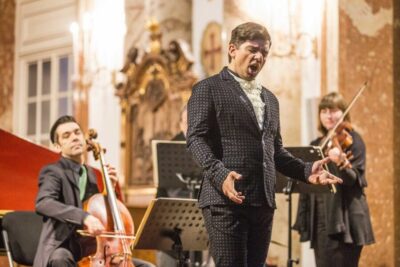
Vienna: Vivaldi’s Four Seasons Concert in Karlskirche
Read our review →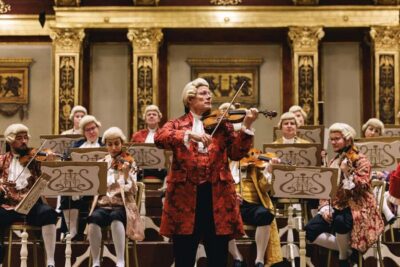
Vienna: Mozart Concert at the Musikverein – Golden Hall
Read our review →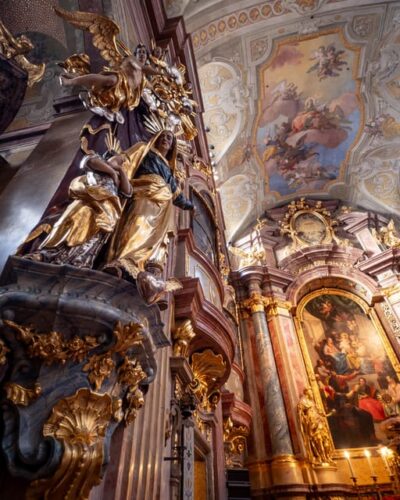
Vienna: Classical Concert in St. Anne’s Church (Annakirche)
Read our review →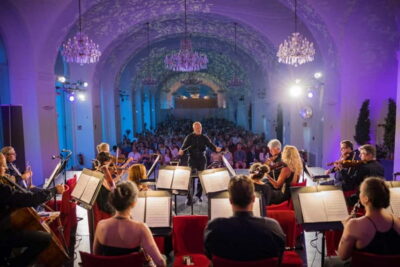
Vienna: Mozart and Strauss Concert at Schönbrunn
Read our review →
Vienna: Tickets for Mozarthaus Vienna with Audio Guide
Read our review →
Vienna Classical Concert at St. Peter’s Church
Read our review →Vienna: Classical Concert in St. Anne’s Church (Annakirche)
Read our review →Browse the lists this tour appears in