
Review · VIENNA
Private Tour of Beethoven’s Vienna – Retracing Original Venues with an Expert
Beethoven’s Vienna comes alive in the rooms where his music first shook the city. This private walk takes you to the Academy of Sciences, the former Lobkowitz palace, Theater an der Wien, and the Pasqualatihaus, linking each place to a specific work or performance. The special prize is the Eroica Hall, a small room where Beethoven’s Third Symphony received its private premiere.
I like the personal scale of this tour, and I like that it does not stop at the famous Beethoven monuments. Guide Frank can adjust the conversation to your level, whether you know every symphony or simply want a clear introduction. The main drawback is its narrow appeal: at $229.87 per person, it makes the most sense for serious music lovers, especially since some sites are former venues rather than working concert halls.
Key points
- See the Eroica Hall inside the former Lobkowitz palace, normally not open to the general public.
- Stand in the Academy of Sciences, once one of Vienna’s leading concert halls around 1800.
- Connect Beethoven’s homes to major works, including Fidelio, the Fifth and Sixth Symphonies, and Für Elise.
- Learn what disappeared, including theaters and performance spaces changed by more than two centuries of city life.
- Enjoy a private conversation with an expert guide, with time to ask detailed questions.
- Plan for a 2.5-hour walk, near public transport and requiring moderate physical fitness.
Why Beethoven’s Vienna feels different on this private walk
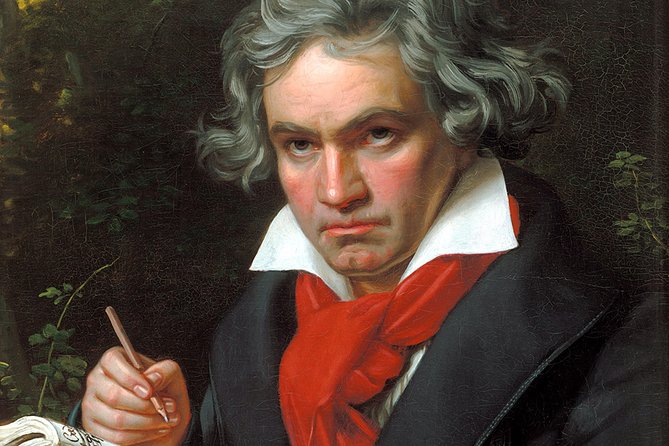
Many classical music tours in Vienna point you toward statues, plaques, and grand concert buildings. This one asks a more interesting question: where did Beethoven actually work, rehearse, conduct, and hear his music performed?
That approach gives the tour its character. You are not simply checking off Beethoven addresses. You are piecing together the working city around him. Some rooms remain. Some have changed purpose. Some theaters have vanished, leaving only traces and the stories attached to them.
The private format matters here. You share the walk only with your own group, so you can spend more time on the works that interest you. If Fidelio is your passion, you can ask about the opera’s long road to the stage. If the symphonies matter most, you can focus on the Eroica, the Fifth, the Sixth, and Beethoven’s public performances.
Guide Frank is singled out by name in the supplied material, and the experience clearly depends heavily on his ability to connect music, buildings, and biography. One particularly useful feature is the time for conversation after the formal route. This is not a quick talk followed by a wave goodbye. A devoted Beethoven fan may want to ask far more than the planned stops allow.
More Classical Concerts in Austria
- Vienna: Vivaldi’s Four Seasons Concert in Karlskirche
★ 4.7 · 14,951 reviews - Vienna: Classical Concert in the World-Famous Musikverein
★ 4.6 · 6,673 reviews - Vienna: Mozart Concert at the Musikverein – Golden Hall
★ 4.6 · 5,194 reviews
The Academy of Sciences and Beethoven’s concert world
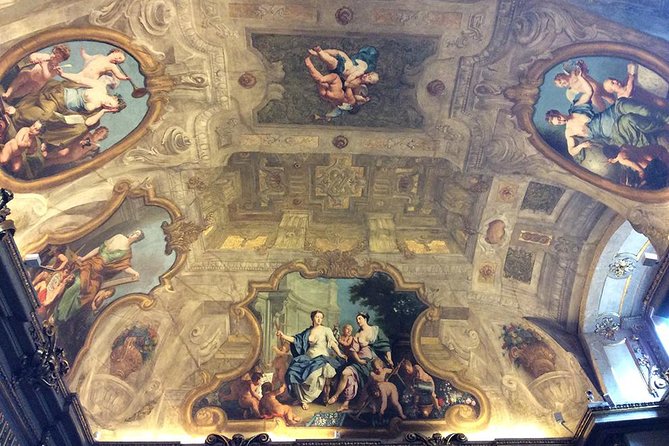
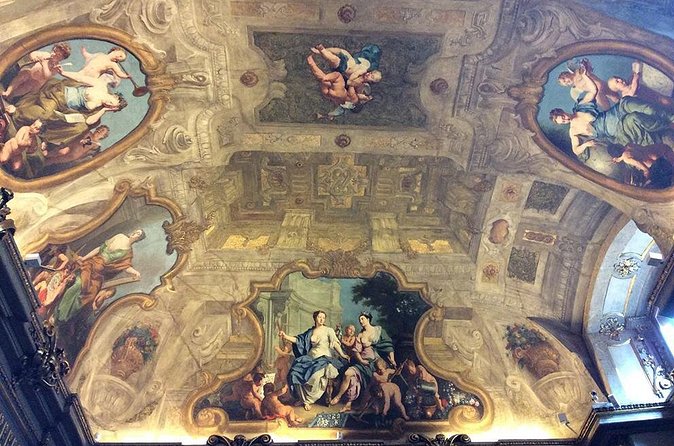
The tour begins at the Aula of the Academy of Sciences on Wollzeile 27 in Vienna’s first district. The former assembly hall of the University of Vienna now serves as a ballroom for the Austrian Academy of Sciences, but around 1800 it was one of the city’s important concert halls.
This setting helps you picture Beethoven as a working musician in a competitive city. The room was not just a backdrop. Its acoustics shaped what could be performed there, and the biggest musical occasions called for a large cast of leading performers.
Beethoven conducted Wellington’s Victory here in 1813. The piece celebrated the decisive defeat of Napoleon, and its performance required the participation of many famous musicians available in Vienna. The orchestra included names such as Louis Spohr, Johann Nepomuk Hummel, Giacomo Meyerbeer, and Antonio Salieri.
That detail gives the stop real weight. You are not hearing a vague story about Beethoven being famous in Vienna. You are hearing about a particular hall, a particular conductor, a particular political moment, and an orchestra packed with major figures.
The stop lasts about 50 minutes, making it the longest part of the route. Admission is included at no extra charge. Since the room is now used by the Academy of Sciences, the experience is about understanding the space and its past rather than attending a concert there.
I would pay close attention to the guide’s explanation of the hall itself. Beethoven’s music is often discussed as if it existed apart from architecture. Here, the room becomes part of the story. You can consider why a composer might choose one space for a large public event and another for a private performance.
The meeting point is listed at the Aula of Sciences, Wollzeile 27A, 1010 Vienna. It is near public transport, which makes the start practical, though you should allow time to find the exact entrance.
Pasqualatihaus and the works Beethoven wrote at home
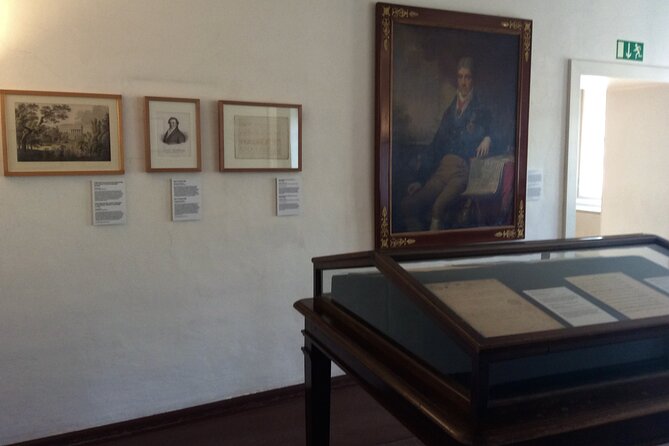
The Wien Museum Beethoven Pasqualatihaus connects Beethoven’s daily life with several of his best-known works. Beethoven lived in this house for eight years, a remarkably long period for a composer whose life in Vienna involved frequent changes of address.
The house is tied to Fidelio, the Fifth Symphony, the Sixth Symphony, and the small piano piece Für Elise. That list alone makes the stop important. You are not visiting a residence linked to one minor episode. You are looking at a place associated with several very different sides of Beethoven’s work.
The contrast between the works is worth considering. Fidelio is Beethoven’s only opera, while the Fifth Symphony is famous for its force and compact opening idea. The Sixth turns toward nature and countryside imagery, and Für Elise belongs to the intimate world of piano music. A single address connects all four.
The visit lasts around 30 minutes, with admission included. It is a smaller, more focused stop than the Academy of Sciences. You should expect a museum setting rather than a large performance hall, with the value coming from the connection between rooms and composition.
The Pasqualatihaus also helps correct a common picture of Beethoven as a figure who existed only in grand public moments. He wrote major music in ordinary domestic surroundings, dealing with the practical realities of city life while producing works that later became central to the concert repertory.
The supplied account describes the tour ending at Pasqualatihaus, while the listed route places it as one of the four main stops. Because the exact order can matter for your schedule, confirm the final sequence when your booking is confirmed. The important point is that the house belongs to the core of the experience, not a quick optional stop.
The Eroica Room inside the Lobkowitz palace
The Theatermuseum occupies the Lobkowitzpalais, one of the most significant places on this route. Inside is the Eroica Hall, where Beethoven’s Third Symphony received its private premiere in 1804.
This is likely the emotional high point for anyone who considers the Eroica a turning point in Beethoven’s career. The private performance took place on June 9, 1804. A public performance followed on April 7, 1805.
The room is small, which makes the story more striking. Beethoven’s Third Symphony is large in ambition and sound, yet its first private hearing took place in an intimate palace room. You can better understand the difference between a work being written, tested before a select audience, and later presented publicly.
Access is the unusual feature. The general public is not normally admitted to the Eroica Room, but the tour’s arrangements can provide a private entrance through the current owners of the building. This is the kind of access that gives the experience its price and its distinctiveness.
You should treat this stop as a special arrangement, not as a standard museum visit with guaranteed open access at any hour. Confirmation is subject to availability, and the tour operates Monday through Friday between 10 a.m. and 3 p.m. The room may be the single best reason to choose this tour over a standard Beethoven walking route, but it is also the detail you should verify before setting your expectations.
The tour also reaches the original door of the Burgtheater, associated with Beethoven’s Ninth Symphony. That detail broadens the story beyond the Eroica. You are not only standing where a famous composition was first heard privately. You are also following the path of later public musical life, even when the original theater itself has changed or disappeared.
More Classical Concerts in Vienna
- Vienna: Classical Concert in St. Anne’s Church (Annakirche)
★ 4.6 · 3,414 reviews - Vienna: Mozart and Strauss Concert at Schönbrunn
★ 4.5 · 2,967 reviews - Vienna: Classical Concert at Mozart’s First House
2,423 reviews - Vienna Classical Concert at St. Peter’s Church
★ 4.5 · 2,039 reviews
Theater an der Wien and the unfinished opera story
Theater an der Wien is tied closely to Beethoven’s work on Fidelio. He lived here for part of 1803 and 1804 while composing the opera.
This stop is less about a preserved personal room and more about location. Theater an der Wien is one of the places where Beethoven’s creative work and theatrical life met. An opera is not written in isolation. It must eventually find singers, musicians, stage space, and an audience.
The visit lasts about 30 minutes, and admission is listed as free. Since the stop may involve a converted or changed venue, do not expect every part of Beethoven’s setting to look as it did in his time. The value lies in tracing the address and understanding its role in the opera’s development.
The route’s attention to lost and converted theaters is one of its strongest features. Vienna can make the past seem perfectly preserved, but more than 200 years bring changes. Buildings are repurposed, interiors are altered, and some performance spaces disappear altogether. A good guide helps you read what remains without pretending that the city has frozen in 1804.
For me, this kind of stop is more satisfying than a polished room with no explanation. You begin to see Beethoven’s Vienna as a living city rather than a museum display.
What the private format adds to the experience
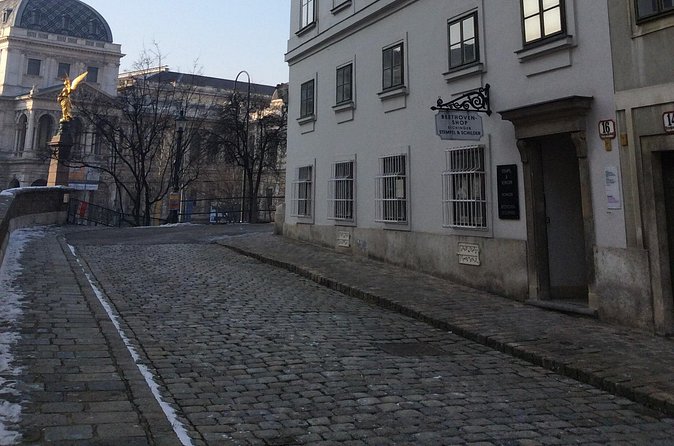
A private tour is not automatically better than a group tour. It is better when the subject rewards questions, and Beethoven certainly does.
You can ask Frank to explain a musical idea in plain terms, or you can take the conversation into composition, politics, performance practice, or Beethoven’s working relationships. The tour is offered in English, and the guide can tailor the explanation to your level.
That flexibility is especially useful if your group has mixed interests. One person may know the symphonies well, while another may be visiting because Vienna’s music tradition is part of the city experience. A fixed group lecture has to move at one speed. A private walk can pause when the subject becomes meaningful to you.
The private format also helps at the Eroica Hall. If access has been arranged, a small group is the natural way to experience such a room. You can look closely, ask about the performance, and take in the scale without being pushed along with a large crowd.
The drawback is cost. At $229.87 per person, this is a premium experience. Group discounts may reduce the per-person price, making it more appealing for friends or family traveling together. Still, you are paying for expert time, a private format, and access to places that are not normally part of a basic city tour.
I would not choose it simply because you want a general introduction to Beethoven. Vienna offers many ways to encounter his music. I would choose this one if you want the addresses, rooms, vanished theaters, and performance details behind the music.
Timing, walking, and who should book
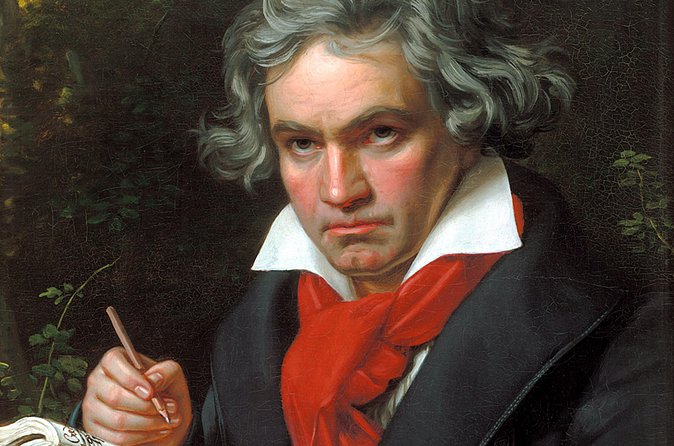
The stated duration is about two hours and 30 minutes. That is long enough to build a connected story, but short enough to fit into a full day of sightseeing. Because the route links several central Vienna locations, expect walking between stops and plan for a moderate level of physical fitness.
The tour operates in English and uses a mobile ticket. Confirmation is sent within 48 hours, subject to availability. Since the experience is booked on average 24 days ahead, early planning is sensible, especially if you want a particular weekday and time.
The listed hours are Monday through Friday, from 10 a.m. to 3 p.m. That weekday schedule may be inconvenient if your Vienna visit is built around weekend sightseeing. Check availability before arranging other fixed plans.
The tour requires good weather. If poor weather cancels it, you are offered another date or a full refund. You can cancel for a full refund up to 24 hours before the start time. Changes or cancellations made less than 24 hours ahead are not accepted for a refund.
I would recommend comfortable shoes and a little time around the meeting point. The walk is not described as strenuous, but the physical requirement is moderate rather than minimal.
Is $229.87 per person a fair price?
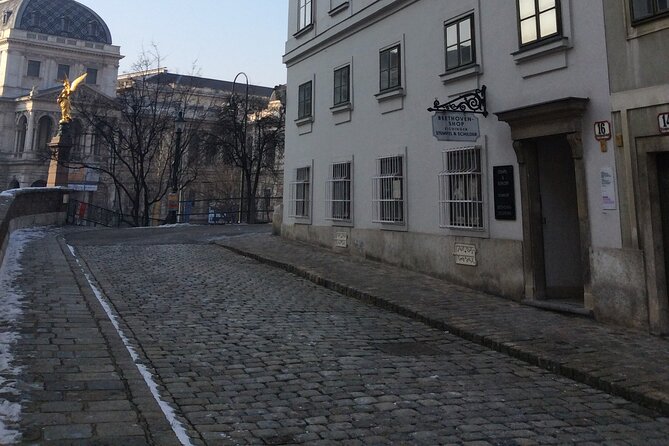
The price is high for a 2.5-hour city walk, so the value depends on what you want from Vienna.
If you only want to see a Beethoven plaque or hear a short biography, this is too expensive. If you want a private specialist who can explain the relationship between music and place, the calculation changes. The cost includes a personal guide, private participation, admission to the Pasqualatihaus and Theatermuseum, and the possibility of access to the Eroica Room through a special arrangement.
The Eroica Hall is the key value question. If that access is confirmed, the tour offers something difficult to reproduce on your own. You can still visit many Beethoven-related sites independently, but you may not receive the same explanation of vanished theaters, former concert rooms, and the specific circumstances of each performance.
The price also works better for a group. Group discounts are available, and the tour is private, so the same guide’s time is shared only among your party. A solo visitor will feel the price more sharply than a family or group of friends splitting the cost.
I see this as a specialist experience rather than a standard sightseeing purchase. For a devoted Beethoven listener, it can be the centerpiece of a Vienna music day. For a casual visitor, it may be better to spend the money on a concert and choose a less costly general walking tour.
Who will enjoy this most?
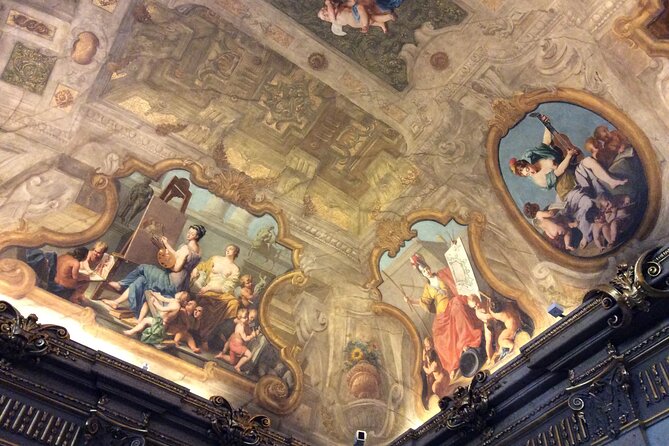
You are a good match for this tour if you want places connected to actual composition and performance, not just famous names on a map. It suits listeners who already love Beethoven, students of music, and anyone curious about how a major composer worked within Vienna’s buildings and institutions.
It is also a strong choice if you value conversation. The private setting gives you room to ask follow-up questions, and the supplied account describes a discussion that continued well beyond the planned route. That is useful if you have been interested in Beethoven since childhood or have a long list of questions.
I would be more cautious if you dislike walking, need a weekend activity, or want a broad tour of Vienna’s entire music scene. The route is tightly focused on Beethoven and the places tied to him. Its strength is also its limit.
Should you book this Beethoven tour?
Book it if the thought of standing in the Eroica Hall, tracing Beethoven’s performances through former theaters, and seeing the house linked to Fidelio, the Fifth, and Sixth Symphonies excites you. The private format and guide Frank’s personal expertise make it feel designed for a serious conversation rather than a standard sightseeing script.
Skip it if your interest in Beethoven is casual or if the weekday schedule and premium price do not fit your plans. Before booking, ask for confirmation of the route order and the Eroica Room access. For the right music lover, this is one of the more personal ways to understand Beethoven’s Vienna.
FAQ
How long does the Beethoven tour last?
The tour lasts approximately two hours and 30 minutes.
Is the tour private?
Yes. Only your group participates in the activity.
What language is the tour offered in?
The tour is offered in English.
Where does the tour begin?
It begins at the Aula of Sciences, Wollzeile 27A, 1010 Vienna, Austria.
Which Beethoven-related sites are included?
The route includes the Academy of Sciences, the Wien Museum Beethoven Pasqualatihaus, the Theatermuseum in the Lobkowitzpalais, and Theater an der Wien.
Is admission included?
Admission is included for the Wien Museum Beethoven Pasqualatihaus and the Theatermuseum. Admission is listed as free for the Academy of Sciences and Theater an der Wien.
Can I cancel for a full refund?
Yes. You can cancel at least 24 hours before the start time for a full refund. If poor weather cancels the experience, you are offered another date or a full refund.
Just added around Vienna
- Vienna’s Musical Heart: Private Walking Tour with a Local★ 5.0 · 2 reviews
- Vienna: Concert by the Vienna Baroque Orchestra★ 4.6 · 56 reviews
- Vienna: Strauss Museum – Music&History in Historic 1837 Hall★ 4.7 · 31 reviews
- Vienna Supreme Orchestra at Palais Niederösterreich★ 4.8 · 10 reviews
- Vienna: Sunday Brunch Danube Cruise & Live Music★ 4.2 · 42 reviews
- Vienna Private Walking Tour including State Opera★ 3.2 · 7 reviews
- Vienna: Romantic Classics Piano, Violin, and Cello Concert★ 4.7 · 60 reviews
- Vienna: Mozart, Beethoven, & Strauss Private Tour★ 5.0 · 4 reviews
Vienna Concerts, compared.
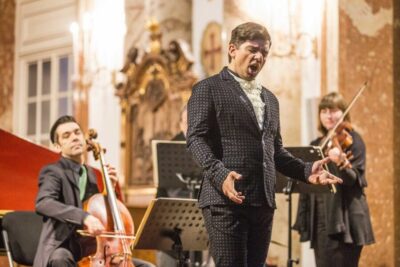
Vienna: Vivaldi’s Four Seasons Concert in Karlskirche
Read our review →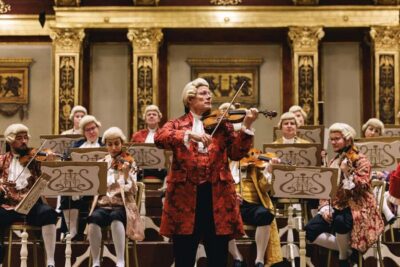
Vienna: Mozart Concert at the Musikverein – Golden Hall
Read our review →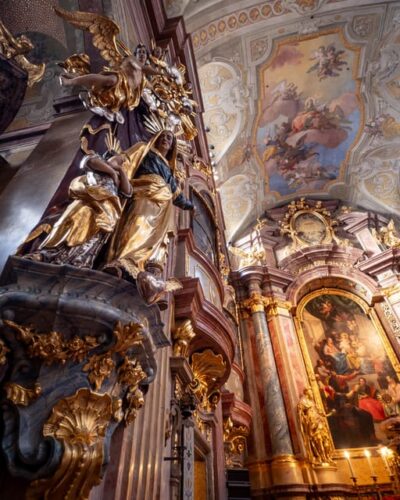
Vienna: Classical Concert in St. Anne’s Church (Annakirche)
Read our review →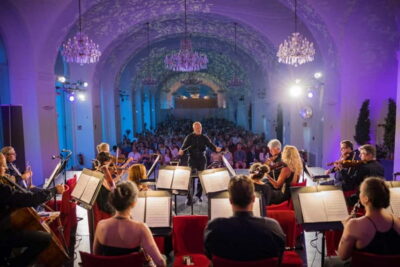
Vienna: Mozart and Strauss Concert at Schönbrunn
Read our review →
Vienna: Tickets for Mozarthaus Vienna with Audio Guide
Read our review →
Vienna Classical Concert at St. Peter’s Church
Read our review →Vienna: Classical Concert in St. Anne’s Church (Annakirche)
Read our review →Browse the lists this tour appears in