
Review · VIENNA
Mozarthaus Concert in Vienna – Piano Trio
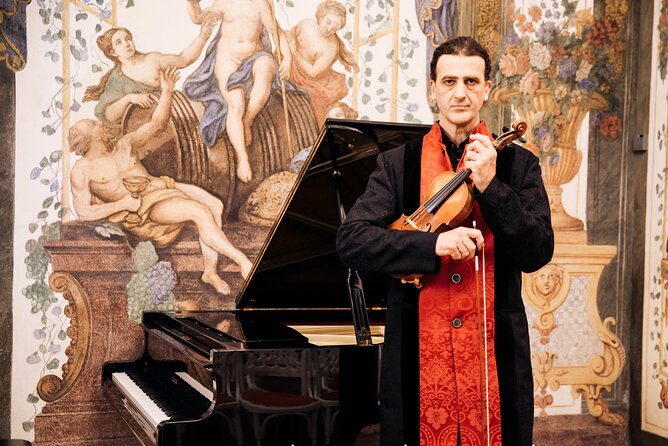
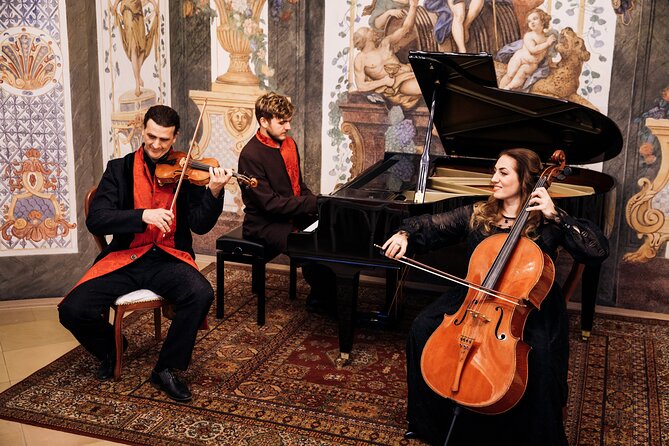
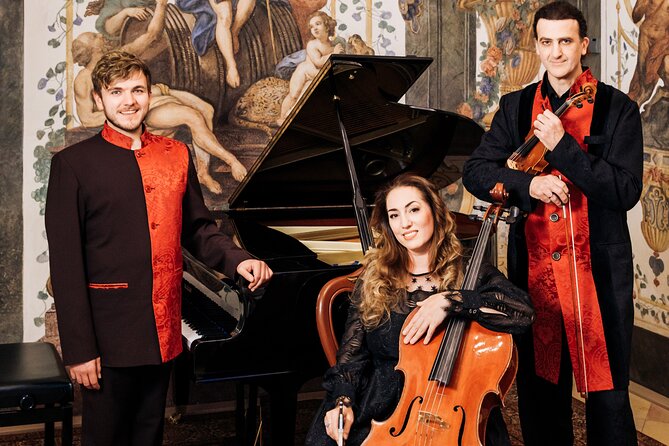
Mozart’s first Vienna apartment makes an unusually intimate concert room. In the Sala Terrena, a piano, violin, and cello perform major works by Mozart, Beethoven, Schubert, Chopin, Haydn, and others, often close enough for you to watch the musicians’ hands and expressions.
I like the small salon setting, which seats roughly 40 people according to the experience details, and the 90-minute program, long enough for a proper evening of music without taking over your night. The finale may include Haydn’s Rondo all’ Ongarese and Schubert’s Trio in E-flat major, D. 929, often called Op. 100.
The main drawback is practical: the booking information has not always made the exact location clear. Go to Deutschordenshaus, Singerstraße 7, 1010 Vienna, and arrive about 15 minutes early to collect your ticket. One seating note also matters: a past audience member found the violinist backlit.
Key points before you book
- Music in Mozart’s former apartment: The concert takes place in the building where Mozart lived and worked in 1781.
- A true piano trio: Expect piano, violin, and cello, with solo pieces mixed into the larger trio program.
- A compact, intimate room: The salon seats about 40 people, so even lower-priced seating can offer a good view.
- A 90-minute evening program: The repertoire ranges from Mozart and Beethoven to Schubert, Chopin, and Haydn.
- Category A, B, and student tickets: Category A covers rows 1 to 3, Category B covers rows 4 to 6, and student tickets apply to all rows.
- Plan for the address: Use Deutschordenshaus, Singerstraße 7, 1010 Wien, Austria, and allow time to pick up your ticket.
Entering Mozart’s 1781 Vienna home
The appeal here begins before the first note. The concert takes place in the house of Mozart’s first Vienna apartment, part of the monastery belonging to the German Teutonic Order. Mozart lived and worked there for Archbishop Colloredo in 1781, making the room more than a generic concert venue.
That setting gives the evening a sense of place that a modern concert hall cannot match. You are not simply hearing Mozart in Vienna. You are hearing Mozart’s music in a building tied directly to his working life in the city.
The Sala Terrena is described as one of Vienna’s oldest concert halls. Its small scale shapes the entire experience. A piano trio does not need a large stage or a grand auditorium to make an impression. In a room this size, the balance between instruments is easier to follow, and the physical work of playing becomes part of the performance.
The room itself is also a reason to arrive without rushing. The setting is historic and ornate, and the concert’s atmosphere depends as much on the room as on the printed program. You will want a few minutes to find the box office, collect your ticket, and settle in before the music begins.
More Piano Concerts in Vienna:
- Vienna: Romantic Classics Piano, Violin, and Cello Concert
★ 4.7 · 60 reviews - Krakow: Chopin Piano Recital at Chopin Concert Hall
★ 4.7 · 2,330 reviews - Warsaw: Live Chopin Piano Concert
★ 4.7 · 370 reviews
What the piano trio actually plays
The core ensemble is a piano, violin, and cello. The program is not limited to Mozart, which is good news if you want a fuller picture of the Classical and Romantic tradition.
You can expect famous works by:
- Wolfgang Amadeus Mozart
- Ludwig van Beethoven
- Franz Schubert
- Frédéric Chopin
- Joseph Haydn
- Other well-known composers
The format mixes full piano trios with solo selections. Piano works, violin pieces, and cello pieces are presented alongside works for all three musicians. That variety keeps the 90-minute concert from becoming one long block of similar sound.
The finale is a particular attraction. The program highlights Haydn’s piano trio Rondo all’ Ongarese and Schubert’s Trio in E-flat major, D. 929, commonly identified as Op. 100. Schubert’s trio is one of the best-known works in the piano-trio repertoire, while Haydn’s rondo brings a livelier close.
Programs can vary, so you should treat these pieces as a special feature rather than a guaranteed full running order unless they are printed on your confirmation. Still, the advertised mix gives you a useful idea of the evening: familiar composers, contrasting instruments, and a strong finish.
Why the small room changes the concert
Large Vienna concert halls have their place, but this performance offers something different. A salon holding about 40 people creates a close relationship between the musicians and the audience. You can see the pianist, violinist, and cellist working together rather than watching distant figures on a broad stage.
That closeness is especially useful for a piano trio. The piano supplies much of the structure, while the violin and cello trade melodic lines and respond to each other. In a large hall, you may focus mainly on the sound. Here, you can also follow the visual rhythm of the performance.
The small room does not guarantee that every seat will be perfect. One person found the violinist backlit, which could make it harder to see the player clearly from some angles. Even so, the compact layout means the difference between the seating areas may be less important than it would be in a large theater.
This is why I would not automatically pay more for Category A. Category A includes rows 1 to 3, while Category B includes rows 4 to 6. With the room’s reported size, Category B may still give you a satisfying view and sound. Category A makes more sense if you particularly want to sit near the performers or prefer the first few rows.
Is $70.89 good value?
At $70.89 per person, this is not a bargain concert in the casual sense. You are paying for a live performance, a historic setting, a central Vienna evening activity, and the convenience of a reserved ticket. Drinks are not included, so set aside extra money if you want something before or after the music.
I see the price as fair for someone who places real value on classical music and historic spaces. The experience combines three things in one short evening: a professional piano trio, a program built around major European composers, and access to a room linked to Mozart’s Vienna life.
The value is weaker if you only want background music or a quick tourist stop. Ninety minutes is a substantial commitment, and the main attraction is the music itself. You should enjoy listening attentively to piano, violin, and cello. The historic room adds meaning, but it does not replace an interest in the performance.
Student tickets are available for all rows, which gives students a more affordable way to attend. For other ticket holders, Category B is worth considering because the venue is small. The higher-priced Category A seats may offer a closer view, but the information provided does not suggest that Category B is a poor location.
A few more concerts around Vienna worth a look
- Vienna: Vivaldi’s Four Seasons Concert in Karlskirche
★ 4.7 · 14,951 reviews - Vienna: Classical Concert in the World-Famous Musikverein
★ 4.6 · 6,673 reviews - Vienna: Mozart Concert at the Musikverein – Golden Hall
★ 4.6 · 5,194 reviews - Vienna: Classical Concert in St. Anne’s Church (Annakirche)
★ 4.6 · 3,414 reviews
A practical look at the 8:00 pm schedule
The concert starts at 8:00 pm and lasts about one hour and 30 minutes. That makes it a natural fit after dinner or a day of sightseeing. The end time should leave you with the rest of the night free, though you should still plan your return trip rather than assuming every nearby service will suit you.
The experience is near public transportation, which helps with arrival. The exact meeting point deserves extra attention, however. Use Deutschordenshaus, Singerstraße 7, 1010 Wien, Austria as your destination. Do not rely only on a vague reference to a local address or expect a taxi driver to identify the correct entrance from the concert name alone.
Your ticket is held at the theater box office for collection on the day of the performance. Arrive at least 15 minutes before 8:00 pm. This small buffer protects you from the most avoidable problem of the evening: finding the building at the last moment and then having to collect your ticket.
A mobile ticket is available, but the instructions still call for box-office collection. Keep the ticket confirmation accessible on your phone and allow time for the handoff. The group can include up to 50 people, though the salon has been described as seating about 40, so the room should remain far smaller than a typical concert venue.
The musicians and the tone of the evening
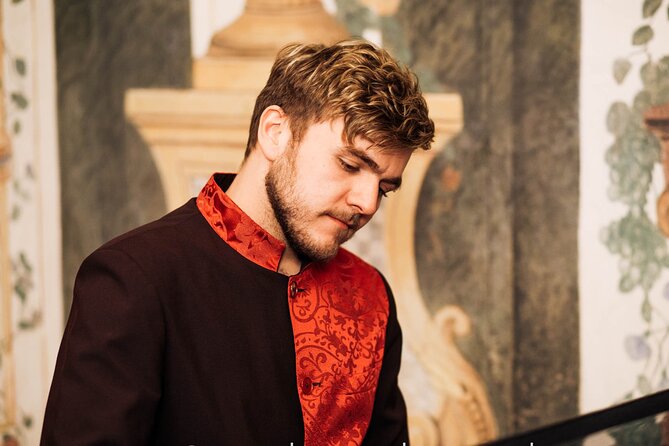
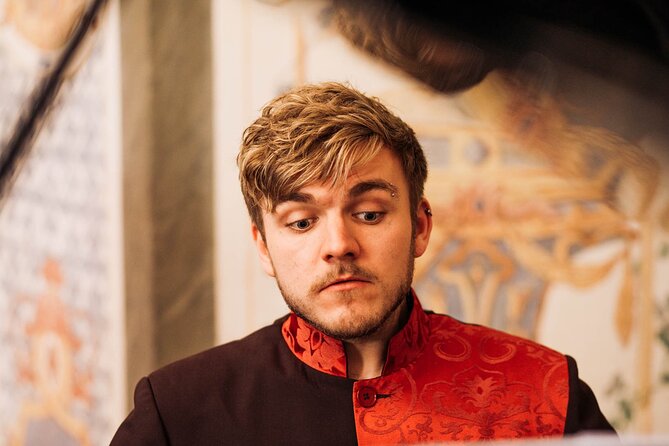
The performers are presented as the Mozart Ensemble. The group’s piano-trio program depends on the partnership between three musicians, rather than on one headline soloist. That matters because the best moments in a trio come from the conversation among piano, violin, and cello.
The music is described as virtuoso in style, and the repertoire includes demanding works. A past attendee singled out the pianist as phenomenal, while another praised the three musicians for playing together with precision. Those comments point to a performance that aims for polish as well as atmosphere.
The tone is not necessarily stiff or formal. The musicians have been described as personable and funny, which may make the evening feel less ceremonial than some classical concerts. That can be a plus if you like a little human warmth between pieces.
At the same time, you should not expect a full theatrical production. This is a focused chamber concert. There is no mention of drinks, a meal, or a broader guided visit built into the ticket. The main event is the music in the historic room.
Who will enjoy this most
I would recommend the concert most strongly to:
- Classical music fans who want Mozart, Beethoven, Schubert, Chopin, and Haydn in one program
- People who prefer small rooms to large concert halls
- Visitors interested in Mozart’s life in Vienna
- Couples looking for a polished evening activity
- Students who can use the student ticket category
- Anyone who wants a cultural event lasting about 90 minutes
It also works well for someone who has already attended a major Vienna concert and wants a more personal setting. The scale is the main difference. Instead of a broad orchestral sound, you get the close detail of three instruments in a historic salon.
I would think twice if you dislike classical music or want a highly social night with drinks included. The ticket does not cover beverages, and the quiet room rewards attention. You may also prefer another concert if seeing each musician clearly is especially important to you, since the lighting has been imperfect from at least one seat.
Ticket categories and the best seat strategy
The three ticket types are straightforward:
- Category A: rows 1 to 3
- Category B: rows 4 to 6
- Student: all rows
In a larger theater, front rows can make a major difference. Here, the room’s small size reduces that gap. A Category B ticket may be the sensible choice if you want to control costs without giving up the close-room experience.
Category A suits you if you want the nearest possible view and do not mind paying more for it. Keep in mind that a very close seat is not automatically the best seat for every person. You may prefer a little distance to see the three musicians together rather than focusing on one performer.
The student ticket is not restricted to particular rows, which is useful. The supplied details do not specify eligibility requirements, so bring whatever student identification you normally use when booking a student fare if requested.
What makes this different from a standard Mozart concert
Many Vienna concerts use Mozart’s name as a general symbol of the city. This one has a more direct connection: the building was Mozart’s first Vienna apartment, and he lived and worked there in 1781. That link does not mean every piece on the program was written in that room. It does mean the venue adds historical weight to the evening.
The repertoire also moves beyond Mozart. Beethoven, Schubert, Chopin, and Haydn create a wider program, giving you different styles and moods. The solo works let each instrument take the lead, while the piano trios show how the three musicians interact.
That combination makes the concert a useful choice for someone who wants more than a single-composer program. You get the Mozart setting without being limited to Mozart alone.
Booking, cancellation, and timing details
Confirmation is provided at the time of booking, and the experience uses a mobile ticket. Your ticket is collected at the theater box office on the day of the concert, so keep your booking details ready.
Free cancellation is available up to 24 hours before the local start time for a full refund. Cancellations or changes made less than 24 hours before the 8:00 pm start are not accepted for a refund.
Most people can participate, and the activity is near public transportation. The maximum group size is 50 people. These details make it a fairly simple evening plan, provided you handle the address and ticket collection in advance.
Should you book the Mozarthaus Piano Trio?
Book it if you want live chamber music in a genuinely Mozart-connected setting, especially if the idea of a small salon appeals to you more than a large formal hall. The program offers familiar composers, a 90-minute length, and a strong closing pair of works by Haydn and Schubert.
I would choose Category B for value unless sitting in the first three rows is important to you. Arrive 15 minutes early, use Singerstraße 7 as the exact address, and remember that drinks are not included.
Skip it if classical music is not a real interest or if you want a casual nightlife activity rather than a focused concert. For the right audience, though, this is a compact and memorable way to spend a Vienna evening, with the room itself doing as much work as the music.
FAQ
Where does the Mozarthaus Piano Trio concert take place?
It takes place at Deutschordenshaus, Singerstraße 7, 1010 Wien, Austria, in the Sala Terrena, part of the building connected with Mozart’s first Vienna apartment.
What time does the concert begin?
The concert starts at 8:00 pm.
How long does the concert last?
The performance lasts approximately one hour and 30 minutes.
What instruments are performed in the concert?
The Mozart Ensemble performs as a piano trio with piano, violin, and cello. The program also includes piano, violin, and cello solo pieces.
What ticket categories are available?
Category A covers rows 1 to 3, Category B covers rows 4 to 6, and student tickets are available for all rows.
Is cancellation available?
Yes. You can cancel at least 24 hours before the local start time for a full refund. Cancellations or changes made less than 24 hours before the start time are not refunded.
Just added around Vienna
- Vienna’s Musical Heart: Private Walking Tour with a Local★ 5.0 · 2 reviews
- Vienna: Concert by the Vienna Baroque Orchestra★ 4.6 · 56 reviews
- Vienna: Strauss Museum – Music&History in Historic 1837 Hall★ 4.7 · 31 reviews
- Vienna Supreme Orchestra at Palais Niederösterreich★ 4.8 · 10 reviews
- Vienna: Sunday Brunch Danube Cruise & Live Music★ 4.2 · 42 reviews
- Vienna Private Walking Tour including State Opera★ 3.2 · 7 reviews
- Vienna: Romantic Classics Piano, Violin, and Cello Concert★ 4.7 · 60 reviews
- Vienna: Private Music Tour★ 5.0 · 8 reviews
Vienna Concerts, compared.
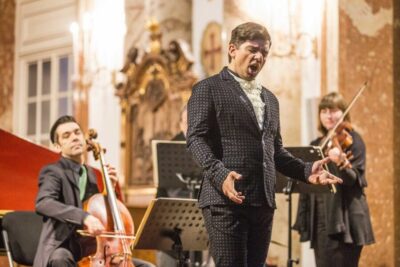
Vienna: Vivaldi’s Four Seasons Concert in Karlskirche
Read our review →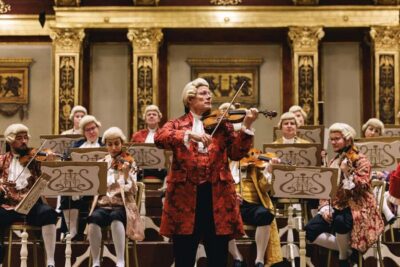
Vienna: Mozart Concert at the Musikverein – Golden Hall
Read our review →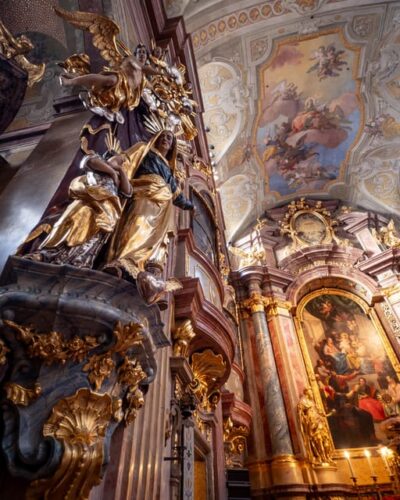
Vienna: Classical Concert in St. Anne’s Church (Annakirche)
Read our review →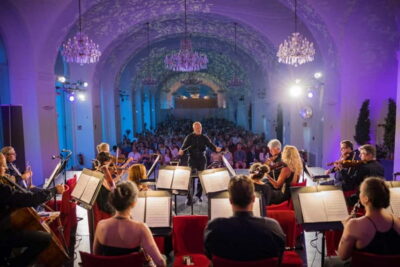
Vienna: Mozart and Strauss Concert at Schönbrunn
Read our review →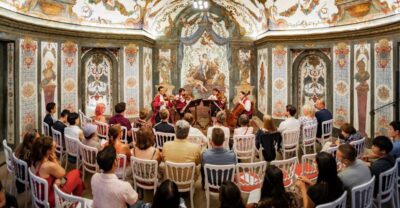
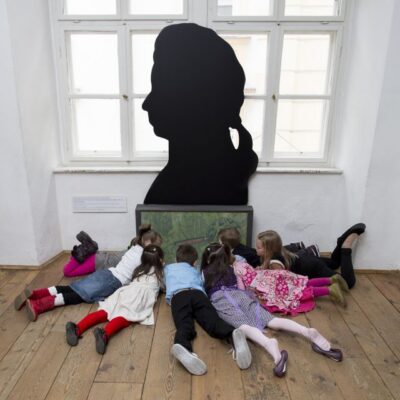
Vienna: Tickets for Mozarthaus Vienna with Audio Guide
Read our review →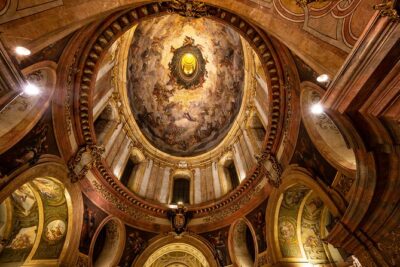
Vienna Classical Concert at St. Peter’s Church
Read our review →Vienna: Classical Concert in St. Anne’s Church (Annakirche)
Read our review →Browse the lists this tour appears in