
Review · VIENNA
Amadeus Concerts at Ehrbarsaal – Viennas hidden gem
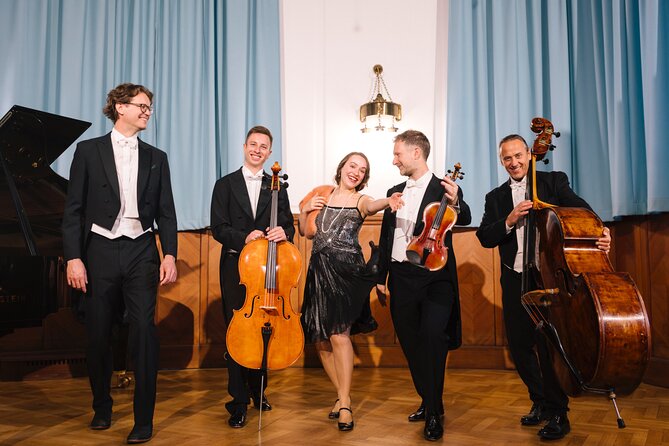
The best thing about Amadeus Concerts is its scale. At the Kleiner Ehrbarsaal, you are close to the performers in a historic room rather than seated in a huge concert hall. The program moves from Mozart and Strauss to the swinging 1920s, with a singer and instrumentalists who keep the evening warm and personal.
I like two things in particular: the short, well-shaped program works even if you are new to classical music, and the musician who introduces the pieces adds amusing stories about Vienna and its composers. The complimentary glass of sparkling wine with the performers afterward is another fine touch.
The main consideration is the one-hour length. This is a lively introduction to Viennese music, not a full evening at the opera or a long symphony concert. Also, the intimate room means seating matters, so book early if you want a front-row place.
Key points
- A 60-minute musical trip through Vienna: Hear familiar classics, waltzes, polkas, and 1920s numbers in one compact program.
- An intimate Ehrbarsaal setting: The small hall lets you see and hear the musicians at close range.
- Live explanations in English: A violinist introduces pieces with anecdotes about composers and Vienna’s musical past.
- A singer adds theatrical color: The vocal performance brings extra energy and variety to the instrumental program.
- A personal ending: After the concert, you can share a drink and a little conversation with the musicians.
- A practical evening price: At about $59.26 per person, the event offers a polished cultural night without the cost or time commitment of a major opera production.
Vienna has no shortage of classical concerts. You can hear Mozart in grand palaces, Strauss in elaborate halls, and opera in some of Europe’s most famous buildings. Amadeus Concerts takes a different approach: it places you in the Kleiner Ehrbarsaal, a smaller room in Vienna’s 4th district, for an hour of music, stories, and easygoing interaction.
That difference matters. In a large hall, the ceremony can sometimes overpower the music. Here, the setting keeps your attention on the performers. You can watch the violinist work through a phrase, hear the singer clearly, and feel the room respond when a familiar waltz begins.
The address is Mühlgasse 30, 1040 Wien. The concert starts at 6:30 pm and ends back at the same location. It is near public transportation, so you can fit it into an evening without building your entire day around the event.
What You Hear During the 60-Minute Program
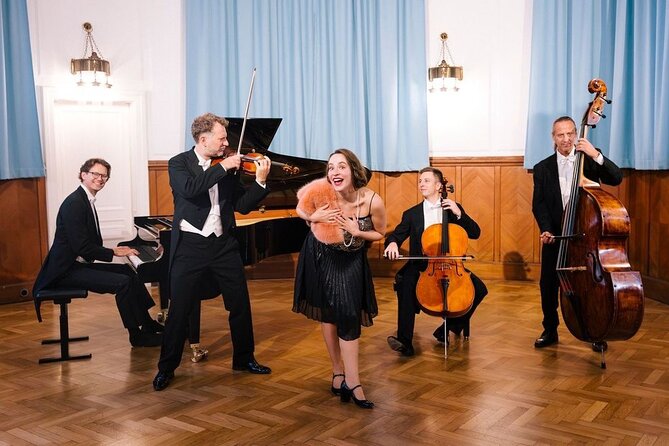
The program is designed as a musical tour of Vienna rather than a single-composer recital. You can expect famous works associated with Mozart, Johann Strauss, and other composers connected with Austrian music. The selections also include Viennese waltzes, polkas, and music inspired by the 1920s.
That variety is one of the event’s strengths. If you already love classical music, you get recognizable favorites along with less familiar pieces. If you normally skip classical concerts, the shifting pace and lighter arrangements make the hour easier to follow.
The music is not presented as a dry list of compositions. A musician introduces the selections with short explanations, historical details, and humorous anecdotes. Those comments help you understand why Vienna became such an important center for composers and performers.
The spoken introductions are especially useful for an international audience. The performance is presented in English, so you do not need to know German to follow the stories or understand the shape of the evening.
A few more concerts around Vienna worth a look
- Vienna: Vivaldi’s Four Seasons Concert in Karlskirche
★ 4.7 · 14,951 reviews - Vienna: Classical Concert in the World-Famous Musikverein
★ 4.6 · 6,673 reviews - Vienna: Mozart Concert at the Musikverein – Golden Hall
★ 4.6 · 5,194 reviews
The Musicians and the Role of the Singer
The ensemble is built around professional instrumentalists and a singer. The musicians have been described as a quintet featuring vocals, violin, cello, double bass, and piano, giving the program a fuller sound than the small room might suggest.
The exact balance can vary by piece. Some selections lean toward strings and piano, while others use the singer to bring a more theatrical quality. That change of texture keeps the program moving. You are not listening to the same sound for an entire hour.
The singer receives particular attention in the program. Her voice adds warmth and stage presence, and her appearance gives the evening a sense of variety rather than a purely instrumental format. If you enjoy classical vocals but do not want to commit to a full opera, this is a useful middle ground.
The musicians also bring humor and energy to the performance. Some numbers have enough lift that you may find yourself quietly moving along with the rhythm. The mood is polished, but not stiff.
Inside the Kleiner Ehrbarsaal
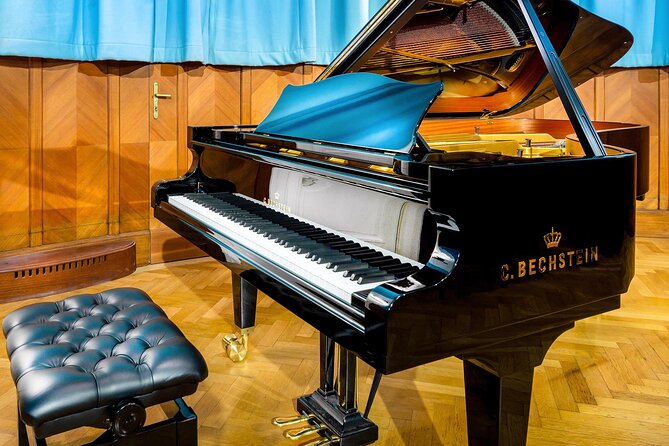
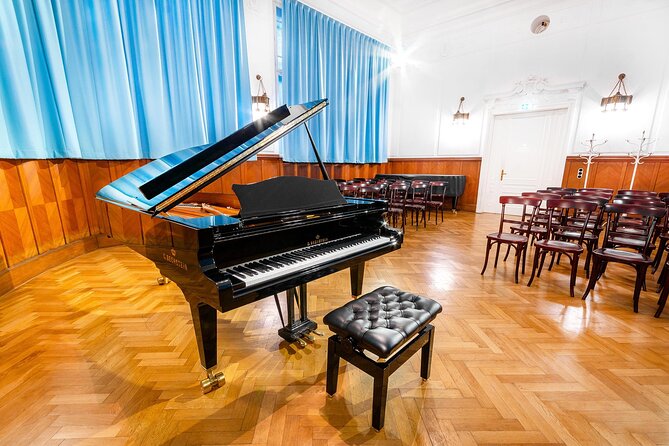
The Kleiner Ehrbarsaal is the real setting for the experience. It offers an intimate atmosphere and good acoustics, according to the supplied details, with enough character to make the concert feel tied to Vienna rather than interchangeable with a performance anywhere else.
A smaller room changes your relationship with the music. You can see the performers’ expressions and follow the physical work behind each piece. There is less distance between stage and audience, and the concert feels closer to the chamber-music tradition of earlier centuries, when music was often performed in salons and private rooms.
The room may not provide the grand visual drama of a palace hall. That is the tradeoff. You come here for closeness, sound, and atmosphere, not for a vast interior or elaborate production design.
I would pay attention to seating when booking. One audience member specifically found the first row worthwhile, and the room’s size means that even seats farther back should keep you relatively connected to the performers. If seeing the singer and instrumentalists up close matters to you, an early booking is sensible.
Storytelling That Gives the Music Shape
The introductions are more than filler between pieces. They provide the context that helps a mixed program make sense. You hear anecdotes about composers, links between music and Vienna, and explanations that connect different periods.
This is important because many visitors recognize the names Mozart and Strauss but know less about the social world around their music. A short story can make a waltz feel less like a museum piece and more like part of Vienna’s living culture.
The commentary also helps first-time listeners. You do not need to identify every instrument or understand classical forms. You can simply enjoy the melody, then listen for the detail the presenter points out.
The tone is light. Expect humor and lively moderation rather than a formal lecture. That balance suits the one-hour format and keeps the concert accessible for families, couples, and people who do not usually attend classical performances.
Same city, a different sound:
- Vienna: Classical Concert in St. Anne’s Church (Annakirche)
★ 4.6 · 3,414 reviews - Vienna: Mozart and Strauss Concert at Schönbrunn
★ 4.5 · 2,967 reviews - Vienna: Classical Concert at Mozart’s First House
2,423 reviews - Vienna: Tickets for Mozarthaus Vienna with Audio Guide
★ 4.2 · 2,344 reviews
A Good Choice for Classical Music Beginners
I would recommend this concert to you if you want to sample Vienna’s music without spending an entire night at an opera house. The program is short enough to fit around dinner or an evening walk, yet varied enough to feel like a complete event.
It also works well for a mixed group. One person may know every Strauss waltz, while another may rarely listen to classical music. The recognizable melodies, humorous explanations, singer, and changes in tempo give everyone something to follow.
The performance is not aimed only at beginners, though. The musicians are described as highly skilled professionals, and the arrangements include both well-known classics and less familiar pieces. Experienced listeners can enjoy the quality of the playing while newcomers get a clear introduction.
The biggest limitation is that an hour can only cover so much. You will not hear an extended symphony or a full opera scene. Think of this as a lively musical sampler with a strong sense of place.
Why the Post-Concert Drink Matters
The evening does not simply stop when the final piece ends. You can stay for a drink with the musicians, including a complimentary glass of sparkling wine. This creates a relaxed finish and gives you a chance to exchange a few words with the performers.
That personal contact is unusual at larger cultural events. You do not need to treat it as a formal reception. It is simply a friendly opportunity to thank the musicians, ask a short question, or share the room with other audience members after the applause.
For me, this detail helps justify the price. You are paying for more than a seat during a one-hour performance. You are also getting a small-scale cultural evening with an informal ending, rather than being sent straight back onto the street when the music stops.
The drink is not the main reason to book. The music should come first. But it adds warmth and makes the event feel less like a standard ticketed performance.
Price and Overall Value at $59.26
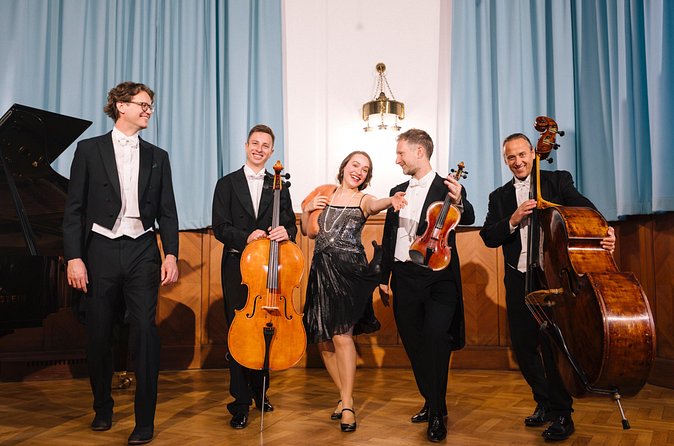
At approximately $59.26 per person, Amadeus Concerts is not the cheapest way to hear music in Vienna. You can find free church performances and lower-priced recitals. Still, price alone does not tell the whole story.
You receive a professional concert, a central Vienna location, English commentary, an intimate venue, and a drink with the performers afterward. The one-hour length also helps you use the rest of your evening for dinner or another activity.
The value is strongest if you care about atmosphere and access to the performers. If you only want background music or the lowest possible ticket price, this may not be the right choice. If you want a polished performance with explanation and personal contact, the cost is easier to defend.
The maximum audience is 60 people. That limit helps protect the small-room character, though it also means popular dates may fill. The experience is booked, on average, about eight days ahead, so I would not leave it until the final night of your Vienna stay.
Timing, Transport, and Planning Your Evening
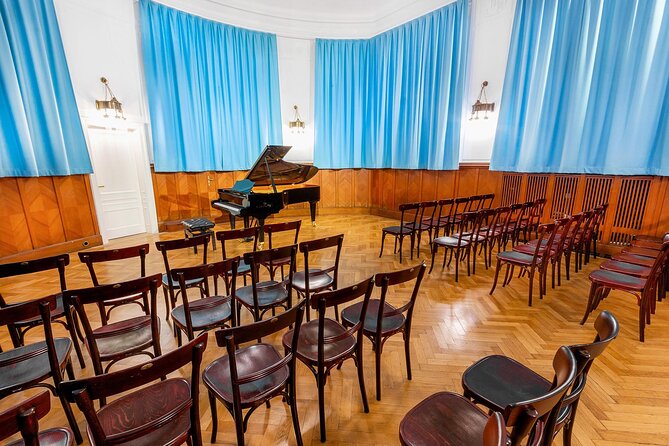
The start time is 6:30 pm at Mühlgasse 30. The activity ends where it begins, and the venue is near public transportation. Those details make it straightforward to pair with an afternoon in Vienna’s museums, markets, or historic center.
Plan to arrive with enough time to find the hall without rushing. The provided information does not specify a separate check-in procedure, seating assignment system, or exact public transport route, so check the confirmation on your phone before leaving.
A mobile ticket is accepted, which keeps the booking simple. Confirmation is provided at the time of booking. Most people can participate, and the event has a maximum capacity of 60.
For cancellation, you can receive a full refund if you cancel at least 24 hours before the local start time. Changes or cancellations made less than 24 hours before the concert are not accepted for a refund.
Who Should Book This Concert?
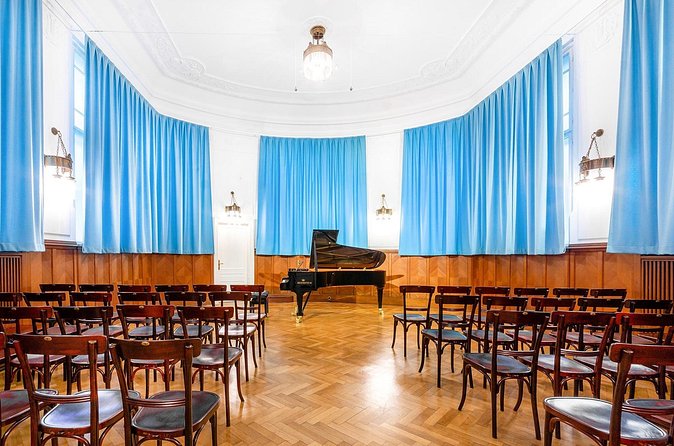
This concert fits you best if you want:
- A short and polished evening activity
- Familiar Viennese music with some less familiar selections
- English explanations between pieces
- A small venue rather than a large concert hall
- A performance that includes both instruments and singing
- A relaxed chance to speak with the musicians afterward
- A classical concert suitable for people with mixed levels of interest
It is also a good pick for couples and families who want something cultural but not overly formal. The one-hour format is manageable, and the humor keeps the mood light.
You may want another option if you are seeking a full opera, a long symphony, or the spectacle of a major palace concert. You should also look elsewhere if your main goal is a very low-cost performance. Amadeus Concerts charges for the setting, musicianship, commentary, and personal atmosphere.
My Practical Take
I like the way this event uses Vienna’s musical identity without turning it into a stiff history lesson. The program gives you Strauss and Mozart, but it also includes other periods, 1920s rhythms, anecdotes, and a singer who adds personality.
The Ehrbarsaal setting is central to the appeal. In a large venue, you may admire the architecture first and the musicians second. Here, the performers are the focus. The close seating and good acoustics make the hour feel direct.
The best seats are worth considering, especially if you want to watch the instrumentalists closely. If your schedule is fixed, book ahead because the audience limit is small. And if you are choosing between this and a longer classical event, be honest about your energy level. After a full day of sightseeing, a one-hour concert can be exactly right.
Should You Book Amadeus Concerts?
Yes, if you want a personal introduction to Vienna’s music in a charming, smaller setting. The professional musicians, strong singer, English storytelling, changing program, and sparkling wine finish offer more than a routine recital.
I would book it as an evening companion to sightseeing, not as a replacement for the Vienna State Opera or a major symphony. At $59.26, the value comes from the complete experience: close-up music, useful context, a historic-feeling room, and a friendly ending.
Choose a front-row seat if available, arrive ready for a lively rather than solemn concert, and keep your expectations suited to a 60-minute program. For a compact taste of Vienna’s musical character, this is a smart choice.
FAQ
Where does Amadeus Concerts take place?
The concert takes place at the Kleiner Ehrbarsaal Wien, at Mühlgasse 30, 1040 Wien, Austria.
What time does the concert start?
The concert starts at 6:30 pm.
How long does the performance last?
The concert lasts approximately 60 minutes.
What kind of music is performed?
The program includes Viennese music, works associated with Mozart and Johann Strauss, waltzes, polkas, and music from the 1920s.
Is the concert presented in English?
Yes. A musician guides the audience through the program in English with stories and anecdotes about Vienna’s composers and musical past.
Can I meet the musicians afterward?
Yes. The evening can conclude with a drink, including a complimentary glass of sparkling wine, shared with the musicians.
Can I cancel for a full refund?
Yes. You can cancel at least 24 hours before the local start time for a full refund. Cancellations or changes made less than 24 hours before the start are not accepted for a refund.
Just added around Vienna
- Vienna’s Musical Heart: Private Walking Tour with a Local★ 5.0 · 2 reviews
- Vienna: Concert by the Vienna Baroque Orchestra★ 4.6 · 56 reviews
- Vienna: Strauss Museum – Music&History in Historic 1837 Hall★ 4.7 · 31 reviews
- Vienna Supreme Orchestra at Palais Niederösterreich★ 4.8 · 10 reviews
- Vienna: Sunday Brunch Danube Cruise & Live Music★ 4.2 · 42 reviews
- Vienna Private Walking Tour including State Opera★ 3.2 · 7 reviews
- Vienna: Romantic Classics Piano, Violin, and Cello Concert★ 4.7 · 60 reviews
- Vienna: Mozart, Beethoven, & Strauss Private Tour★ 5.0 · 4 reviews
Vienna Concerts, compared.
Vienna: Vivaldi’s Four Seasons Concert in Karlskirche
Read our review →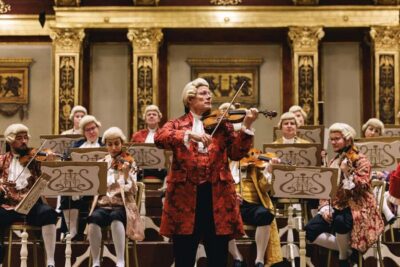
Vienna: Mozart Concert at the Musikverein – Golden Hall
Read our review →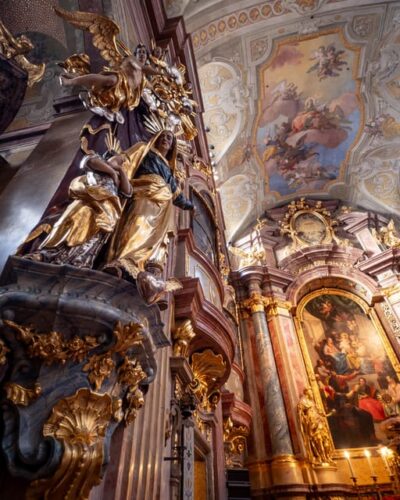
Vienna: Classical Concert in St. Anne’s Church (Annakirche)
Read our review →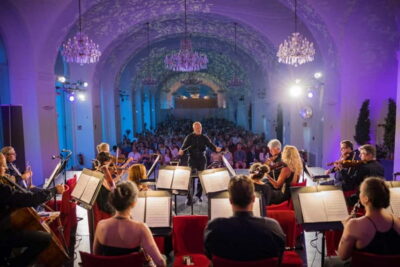
Vienna: Mozart and Strauss Concert at Schönbrunn
Read our review →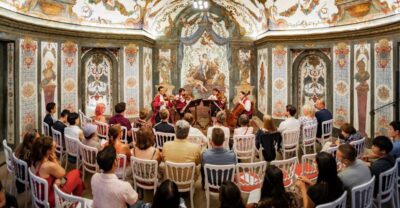
Vienna: Tickets for Mozarthaus Vienna with Audio Guide
Read our review →
Vienna Classical Concert at St. Peter’s Church
Read our review →Vienna: Classical Concert in St. Anne’s Church (Annakirche)
Read our review →Browse the lists this tour appears in