
Review · VIENNA
STATE OPERA – PRIVATE guided tour (tickets included)
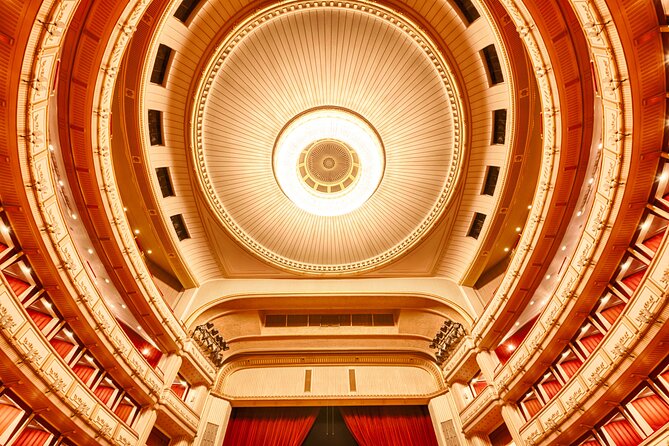
Vienna’s State Opera is more than a pretty concert hall. Its construction caused a public scandal, one architect died after the criticism, and the building now combines grand 19th-century rooms with sections rebuilt after the Second World War. This private tour with Giselle connects the architecture to the people and machinery that keep opera running.
I like the private format, since Giselle can shape the conversation around your interests, whether you care most about Beethoven, famous singers, or Vienna’s social life. I also like the behind-the-scenes angle: daily set changes, storage areas, staffing, and the Opera Ball give you more than a quick look at gold and marble.
The main consideration is the $267 price for about 90 minutes. That can be good value for a private group with tickets included, but it is a substantial spend if you mainly want to admire the building on your own. The tour is also limited to areas open to the public.
Key points about the State Opera tour
- A private 90-minute visit: Only your group takes part, so the pace and conversation can respond to your interests.
- A building with a dramatic past: Learn why the original opera house caused a scandal and how its postwar sections differ from the older rooms.
- Stories about major names: The tour covers Placido Domingo, Montserrat Caballé, José Carreras, Gustav Mahler, Herbert von Karajan, Rudolf Nureyev, and Margot Fonteyn.
- More than architecture: You hear how stage sets change daily, where they are stored, and how many people work for the opera.
- Opera Ball insight: Giselle explains the annual event, including its links to millionaires and local politicians.
- Simple central meeting point: Begin and finish at the Vienna State Opera, Opernring 2, near public transportation.
Why the Wiener Staatsoper deserves a closer look
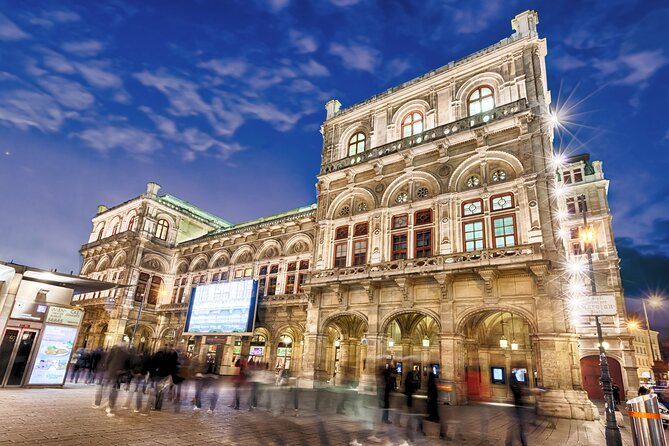
Vienna is often called a city of music, and the State Opera is one of the clearest places to understand why. This is not only a performance venue. It is a large working institution, a ceremonial space, a social stage, and a building shaped by war, fashion, politics, and changing ideas about opera.
The visit begins at Opernring 2 in central Vienna. You meet your guide at the opera house, then spend roughly an hour and a half exploring the areas open to the public. Since this is a private activity, you do not have to follow the rhythm of a large group or wait while a guide answers unrelated questions.
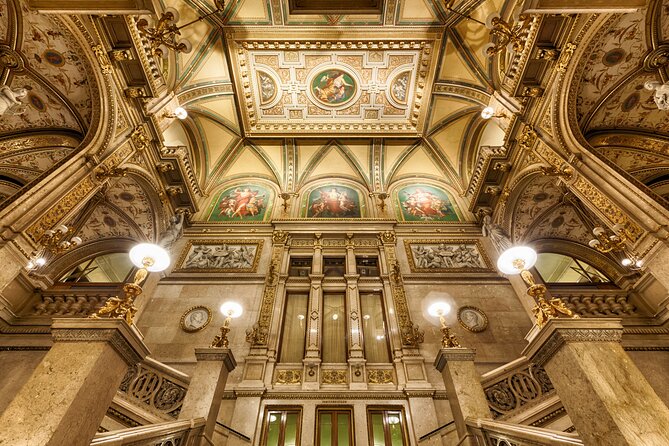
That matters here. The State Opera can seem intimidating at first, especially if you are not an opera expert. A good guide helps turn a grand staircase or ornate hall into part of a story. Giselle’s approach, based on her background in Vienna guiding, includes music, architecture, local customs, and the practical work behind a performance.
More Opera Performances in Austria
- Vienna: Mozart Concert at the Vienna State Opera
★ 4.6 · 461 reviews - Vienna: Musical Tickets THE PHANTOM OF THE OPERA
★ 4.9 · 132 reviews - Vienna State Opera House Mozart Concert in Historical Costumes
★ 4.0 · 120 reviews
The old opera house and the scandal behind it
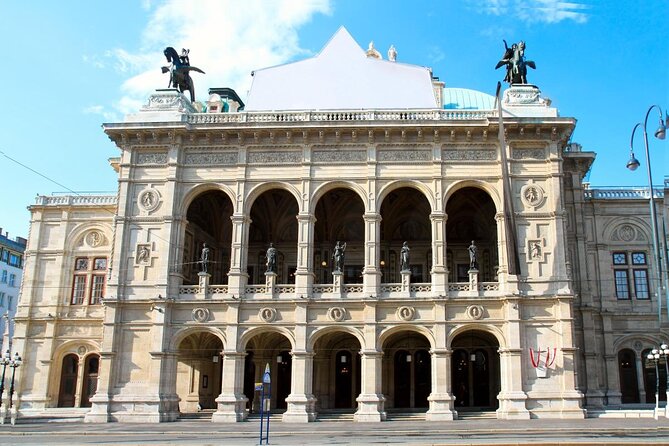
One of the most interesting parts of this visit is the building’s difficult beginning. The State Opera was built about 150 years ago, and its original design drew harsh criticism. The public response was so severe that it contributed to the deaths of one of the architects involved in the project.
That detail changes the way you look at the building. The decoration may appear confident and imperial today, but it was not universally admired when new. During the tour, you can connect the building’s grand old rooms to the expectations of 19th-century Vienna, when a major public monument had to satisfy powerful officials, critics, and the public.
I appreciate this kind of story because it keeps architecture from becoming a list of dates and styles. You get a useful reminder that famous buildings often begin as controversial projects. What now looks like a symbol of Vienna once had to win over a doubtful city.
The older parts of the opera house provide the formal setting. Expect attention to the pompous historic interiors and the public spaces that express the wealth and ceremony associated with the institution. The focus is not simply on taking photographs. Giselle uses the rooms to explain how the opera functioned as part of Vienna’s cultural life.
Seeing the postwar sections beside the grand rooms
The State Opera was damaged during the Second World War, and part of the building was rebuilt afterward. The tour points out the contrast between the older historic areas and the modern sections created after the war.
This is useful because you see the opera house as a layered building rather than a perfectly preserved relic. One room may reflect the formal taste of the 19th century, while another belongs to a later period shaped by reconstruction and practical needs.
The contrast also gives the visit some variety. If you only want lavish decoration, the old section will likely be your favorite. If you are interested in how important buildings survive damage and continue working, the postwar areas add another level to the story.
The exact route can depend on which areas are open at the time of your visit. The experience includes all public areas available during the tour, not restricted staff-only spaces. That is worth keeping in mind if you expect access to every backstage room or technical corridor.
Famous artists, from Mahler to Domingo
A State Opera visit becomes much more meaningful when the building is tied to the people who made it famous. Giselle discusses performers and musical figures connected with its stage, including Placido Domingo, Montserrat Caballé, and José Carreras.
The tour also covers Gustav Mahler and Herbert von Karajan, two major figures associated with conducting and opera leadership. Rudolf Nureyev and Margot Fonteyn bring the world of dance into the story. These names help place the opera house within a wider European tradition of singing, conducting, ballet, and stage performance.
You do not need a specialist background to enjoy this section. If you already know opera, you can use the private setting to ask more focused questions. One especially useful detail from the tour’s exchanges is that Giselle can adapt the conversation to musical interests, including Beethoven.
If you are traveling with friends or family who have different levels of interest, this flexibility helps. One person can ask about famous performers while another asks about the architecture or the daily operation of the building. The private format makes that sort of mixed conversation practical.
More Opera Performances in Vienna
- Vienna Private Walking Tour including State Opera
★ 3.2 · 7 reviews
The stage changes every day
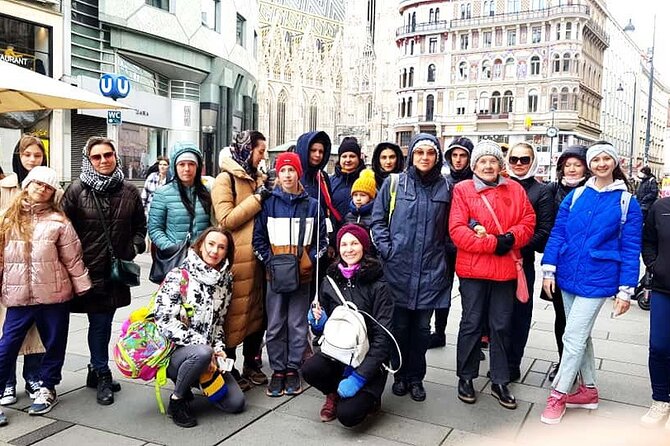
The most unusual part of the tour may be its explanation of stage production. The opera’s sets change daily, and Giselle explains how those changes happen and where the scenery is stored.
That practical information gives you a glimpse of the scale behind a performance. A spectator sees the finished stage for a few hours. The opera’s staff must prepare, move, store, and replace large scenic elements while also supporting singers, musicians, dancers, costumes, lighting, and other production needs.
You should not expect a full technical backstage tour, since the route is limited to public areas. Still, learning how the stage sets change daily adds useful context to what you see from the auditorium or public rooms. It also helps you understand why a major opera house requires so many workers.
The tour addresses how many people work for the institution in total. That question is easy to overlook when you are focused on the singers, but it may be one of the best ways to understand the opera as a workplace rather than only a monument.
The Opera Ball and Vienna’s social calendar
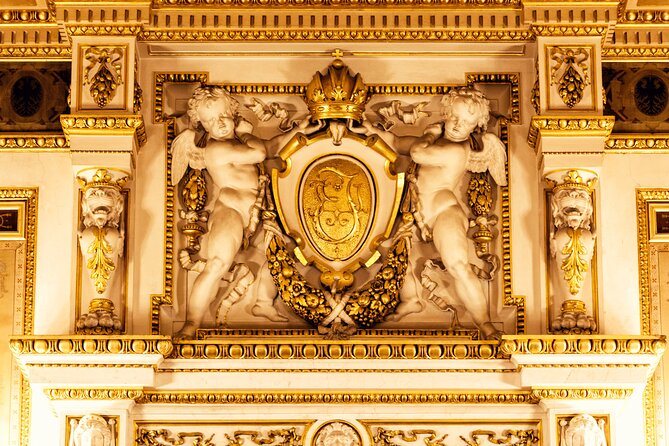
The Opera Ball gives the tour a lively social angle. Giselle explains how the event is celebrated and discusses its connection with millionaires and local politicians.
Even if you are not attending the ball, this topic shows how the State Opera functions outside regular performances. It is part of Vienna’s public image and social calendar, with a level of ceremony that may feel very different from an ordinary evening at the opera.
This is also where the private format has real value. You can ask about the event’s role in local life, the people who attend, and how the opera house changes for such a major occasion. The subject may appeal especially to you if your interest in Vienna includes etiquette, public ceremony, and the city’s old imperial traditions.
The Opera Ball discussion will not replace attending a performance. It does, however, give you a clearer sense of why this building remains important beyond its artistic program.
Giselle’s guiding style
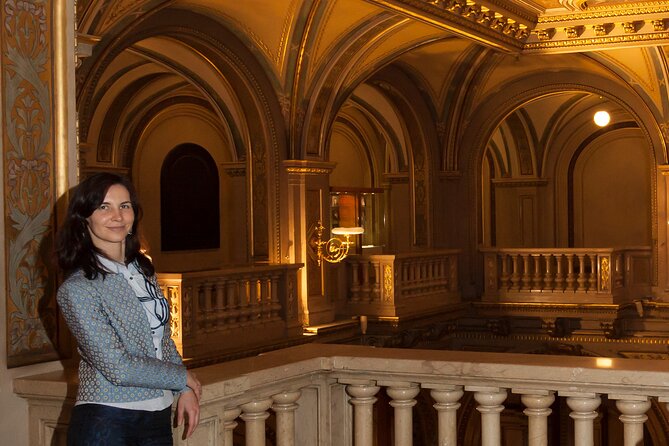
The guide listed for this experience is Giselle, from Giselle Tours Vienna. The available feedback points to a guide who is warm, professional, funny, and comfortable discussing music, history, and Vienna.
Her communication before meeting is another practical advantage. That can help you feel prepared for the appointment, especially if you are coordinating a private outing for family or friends.
Giselle also appears able to adjust the tour to the people in front of her. A musician received a conversation that included Beethoven, while other groups valued explanations of Vienna and the opera’s architecture. Spanish-speaking visitors also praised her in Spanish, so Spanish may be possible, though the tour information does not formally list a language schedule.
The strongest quality here is not simply the amount of information. It is the ability to make the subject feel personal. You can ask questions without worrying that you are holding up a large group, and Giselle can spend more time on the parts that interest you most.
Is $267 a fair price?
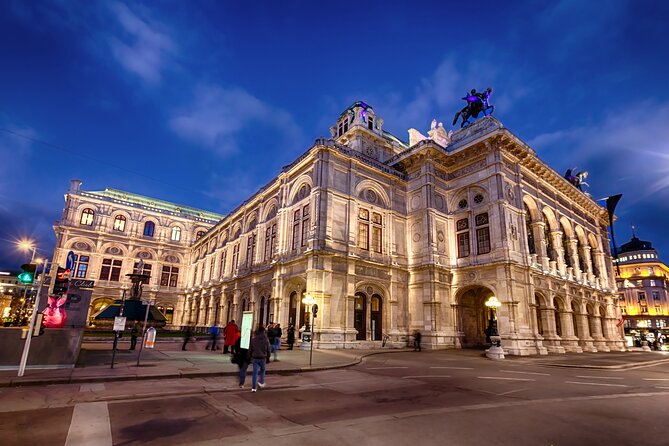
At $267, this is not a budget sightseeing stop. The value depends heavily on how many people are in your private group and how much you want a guided experience.
For one or two people, the cost is easier to question. You are paying for a private guide, admission tickets, and a focused 90-minute visit. If you only want to see the decorative interiors, a less expensive option may suit you better.
For a family or group of friends, the calculation changes. A private tour can be more worthwhile when several people share the cost, especially if the group wants to ask questions or has different interests. You also avoid the limits of a large fixed group and can discuss opera, music, architecture, or local customs in the same visit.
The tour is a good match for people who value explanation over simple entry. You are paying for access with context, not just access to a building. The included ticket is helpful, but the real value lies in Giselle’s interpretation and the chance to connect public rooms with the opera’s daily work.
Timing, meeting point, and practical details
The tour lasts approximately one hour and 30 minutes. That is long enough for a substantial look at the State Opera without taking up an entire morning or afternoon.
You start and finish at the same place, the Vienna State Opera at Opernring 2, 1010 Vienna. The meeting point is near public transportation, which makes it easy to fit the visit into a central Vienna sightseeing day.
A mobile ticket is provided. Confirmation normally arrives at booking, although reservations made within one hour of the start time are confirmed as soon as possible and remain subject to availability.
Most people can take part, and this is a private activity for your group only. The information provided does not give a detailed accessibility description, so you should contact the provider before booking if you have specific mobility or access needs.
Cancellation is free up to 24 hours before the start time. Cancel later than that and the amount paid is not refunded. Any changes made within 24 hours are also not accepted, with cut-off times based on local Vienna time.
Who will enjoy this private opera visit?
I would recommend this tour most strongly to you if:
- You want a private experience rather than a large group visit.
- You enjoy learning how a major cultural institution operates.
- You are interested in famous singers, conductors, dancers, and composers.
- You want to compare the old historic rooms with the postwar reconstruction.
- You are traveling with family or friends and want a flexible discussion.
- You like Vienna’s social traditions, including the Opera Ball.
It may be less suitable if you want a full performance, access to restricted backstage areas, or a low-cost introduction to the opera house. The tour discusses performances and production, but it is not an opera ticket for a show.
Should you book the State Opera tour?
Book it if you want the State Opera explained as a living institution, not just photographed as an ornate building. The stories about its scandalous construction, famous artists, daily stage changes, staff, and Opera Ball give the visit substance.
I would be especially inclined to book for a small group that can share the $267 cost and make good use of Giselle’s flexibility. If you are unsure about opera, this is a friendly way to get oriented. If you already love music, ask for the details that interest you most.
Skip it if your priority is simply entering the building as cheaply as possible. For everyone else, the private format and Giselle’s personal approach make this a focused, informative way to understand one of Vienna’s most important cultural addresses.
FAQ
Where does the State Opera private tour begin?
The tour begins at the Vienna State Opera, Opernring 2, 1010 Wien, Austria.
Where does the tour end?
The activity ends back at the Vienna State Opera meeting point.
How long does the tour last?
The tour lasts approximately one hour and 30 minutes.
Are admission tickets included?
Yes. The admission ticket is included in the tour price.
Is this a private activity?
Yes. Only your group participates in the private tour.
What is the cancellation policy?
You can cancel at least 24 hours before the start time for a full refund. Cancellations or changes made less than 24 hours before the start time are not accepted, and the amount paid is not refunded.
Just added around Vienna
- Vienna’s Musical Heart: Private Walking Tour with a Local★ 5.0 · 2 reviews
- Vienna: Concert by the Vienna Baroque Orchestra★ 4.6 · 56 reviews
- Vienna Supreme Orchestra at Palais Niederösterreich★ 4.8 · 10 reviews
- Vienna: Sunday Brunch Danube Cruise & Live Music★ 4.2 · 42 reviews
- Vienna: Strauss Museum – Music&History in Historic 1837 Hall★ 4.7 · 31 reviews
- Vienna Private Walking Tour including State Opera★ 3.2 · 7 reviews
- Vienna: Romantic Classics Piano, Violin, and Cello Concert★ 4.7 · 60 reviews
- Vienna: Mozart, Beethoven, & Strauss Private Tour★ 5.0 · 4 reviews
Vienna Concerts, compared.
Vienna: Vivaldi’s Four Seasons Concert in Karlskirche
Read our review →
Vienna: Mozart Concert at the Musikverein – Golden Hall
Read our review →
Vienna: Classical Concert in St. Anne’s Church (Annakirche)
Read our review →
Vienna: Mozart and Strauss Concert at Schönbrunn
Read our review →
Vienna: Tickets for Mozarthaus Vienna with Audio Guide
Read our review →
Vienna Classical Concert at St. Peter’s Church
Read our review →Vienna: Classical Concert in St. Anne’s Church (Annakirche)
Read our review →Browse the lists this tour appears in