
Review · GERMANY
City tour (including visit to the Frauenkirche) and Semper Opera Tour
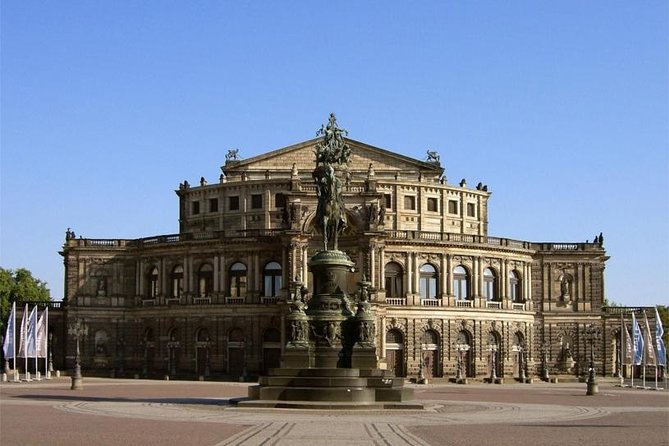
Dresden’s most famous sights come together neatly here: the rebuilt old town, the Frauenkirche interior, the Procession of Princes, the Zwinger, Brühl’s Terrace, and the Semperoper. The strongest part is the way the tour connects Dresden’s wartime destruction with its careful rebuilding, rather than treating each monument as an isolated photo stop.
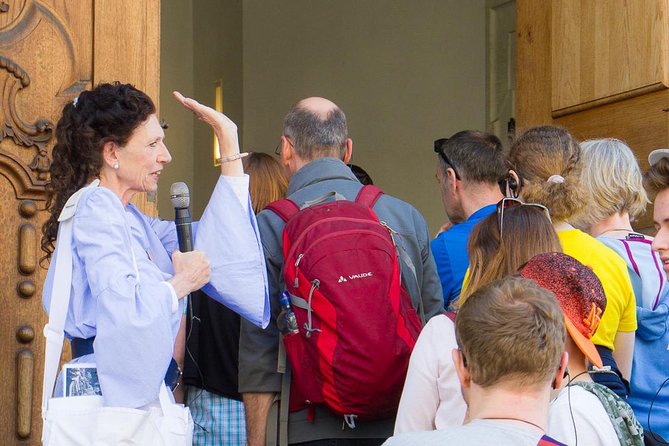
I like the inside visit to the Frauenkirche, which adds real substance to the city walk, and I like the practical audio system that lets you hear the guide while taking pictures or looking around. Dagmar Renger is named as the guide, and her enthusiastic, personal approach has been especially well received.
The main caution is group size and the variable opera schedule. The group is limited to 15, but one assessment still found the Semperoper portion too crowded and not engaging enough. The opera visit can also move to another time if rehearsals or performances require it.
Key points at a glance
- Two-part Dresden introduction: Spend about two hours walking through the old town, then take an hour-long Semperoper tour after a one-hour lunch break.
- Frauenkirche from inside: Visit the church as part of its open-church access, with explanations of the interior and its reconstruction.
- Dresden’s rebuilding story: See how Neumarkt, the Frauenkirche, and other central sights were restored after the city’s destruction.
- Dagmar Renger’s personal style: Expect live storytelling, visual material, humor, and details that go beyond a basic monument checklist.
- Small but not private: The maximum group size is 15, so the tour feels more manageable than a large coach walk, though the opera portion may still feel busy.
- Good combined value: At $32.02 per person, admission to the Semperoper is included, and children up to 16 are free.
Why this Dresden tour works as a first introduction
I see this as a strong first-day activity for Dresden. In four hours, you get the city center’s main historic sights without spending the whole day inside museums or rushing from one end of town to another.
The first part runs from 10:30 a.m. to about 12:30 p.m. You then have an hour for lunch before the Semperoper tour begins at 1:30 p.m. The full experience finishes around 2:45 p.m., although the opera schedule can change.
That timing matters. You can use the morning walk to get your bearings, stop for lunch on your own, and finish at Theaterplatz, close to several major attractions. I would not book another fixed activity immediately afterward, since the opera visit may shift when rehearsals or performances affect access.
The tour is led live, with spoken explanations and visual material. A listening system helps you keep up while walking, photographing a building, or standing at the edge of a busy square. That is a small feature, but it can make a big difference in an outdoor city tour.
More Opera Performances in Germany:
- Dresden: New Green Vault and Semper Opera Tour
★ 4.5 · 19 reviews - Venice: La Fenice Opera House Entry Ticket with Audio Guide
★ 4.6 · 11,742 reviews - Sydney Opera House Official Guided Walking Tour
★ 4.5 · 3,770 reviews
Stallhof and Neumarkt: Dresden’s old center returns
The walk begins at Dresden Information on Neumarkt 2. From there, the first stop is Stallhof, the old tournament courtyard used for knight games. It is one of those places that can be easy to pass without a guide, especially if you are focused on the grander buildings nearby.
The short stop, about 10 minutes, gives the courtyard a clear purpose. You learn why it existed and how it fit into Dresden’s courtly world. It is not a long visit, but it helps set up the city’s connection with Saxon rulers, ceremony, and public display.
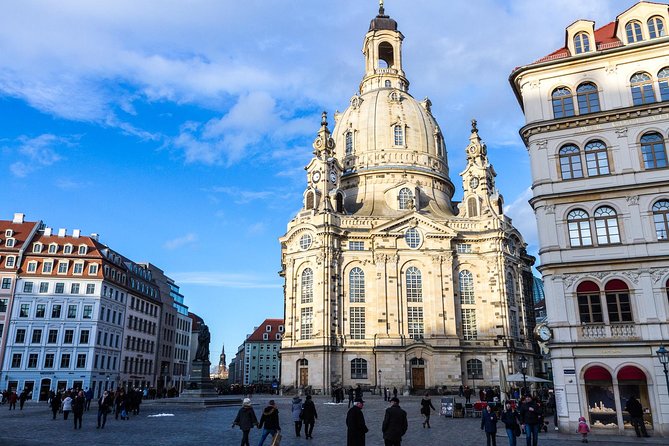
Neumarkt follows, also for about 10 minutes. This is Dresden’s reconstructed historic center, lined with patrician palaces and centered on the Frauenkirche. The important point is not simply that the buildings look old. Much of the area reflects a determined rebuilding effort, designed to restore the appearance and character of the historic square.
I like having this context before entering the Frauenkirche. Without it, the restored facades can look like a polished old-town set. With it, you start to see Neumarkt as a place shaped by destruction, memory, and difficult decisions about how a city should rebuild.
Inside the Frauenkirche: more than an exterior photo
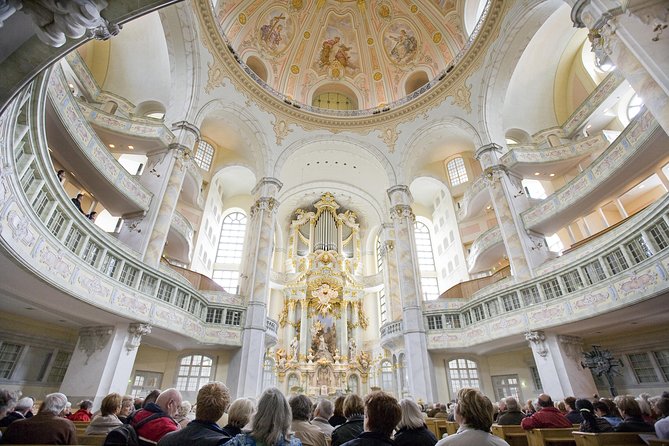
The Frauenkirche is the emotional center of the city walk. The program includes exterior explanations and an inside inspection as part of the open church, with attention to the church’s interior design and historical reconstruction.
The inside visit lasts about 15 minutes, so you should not expect a full architectural lecture or a quiet private viewing. Still, this is far more useful than stopping only outside for a photograph. The guide can point out details in the interior that are easy to miss when you enter alone.
The reconstruction is especially important here. The church is a visible example of Dresden’s attempt to restore its central identity after wartime destruction. The tour places the building within that story, showing both its architectural features and the choices involved in bringing it back.
Dagmar Renger’s explanations are a key reason this part works. The comments about the Frauenkirche have been singled out as especially informative, and her style is described as authentic, engaging, and enthusiastic. If you like a guide who adds human stories and occasional humor rather than reciting dates, this should suit you.
The open-church arrangement also means the visit depends on the church’s access conditions. You are visiting during regular church access, not as part of an exclusive private opening. Dress and behave appropriately for a working religious building.
The Procession of Princes and the Zwinger
Next comes the Procession of Princes, one of Dresden’s most memorable outdoor artworks. It shows the Saxon princely family on roughly 25,000 Meissen porcelain tiles.
The 10-minute stop is short, but the work rewards a guide’s explanation. It is a long, detailed image rather than a single dramatic monument, and you may not know where to look first. A live explanation helps turn a wall covered in figures into a readable story about Saxon rulers and public image.
The use of porcelain tiles is also a distinctly Saxon detail. Dresden’s artistic identity is tied closely to porcelain production, court culture, and elaborate display. This stop links those themes in a way that is easy to understand while standing outdoors.
The Dresden Zwinger receives about 15 minutes. It was one of the city’s main courtly fairgrounds and remains one of its best-known architectural complexes. You get a guided look rather than a long museum visit, so the focus is on the site’s role, design, and place in Dresden’s public image.
I would think of this stop as a framework for later exploration. The tour gives you enough to appreciate the Zwinger, but not enough time to see its museums in detail. If you plan to return on your own, you will already know why the complex matters and which parts deserve another look.
More City Tours in Germany:
- Liverpool: City & Beatles Tour with Live Guide & Live Music
★ 4.7 · 5,944 reviews - New York City: Harlem Gospel Live Music Concert
★ 4.7 · 1,479 reviews - New York City: Gourmet Dinner Cruise with Live Music
★ 4.2 · 1,074 reviews - 4-hour Harlem Gospel Tour in New York City
★ 4.0 · 935 reviews
Brühl’s Terrace and the route toward Theaterplatz
The walk continues to Brühl’s Terrace, a former fortress wall now used as a promenade. From here, you can look toward the Elbe, the flood plains, and Dresden’s newer town across the river.
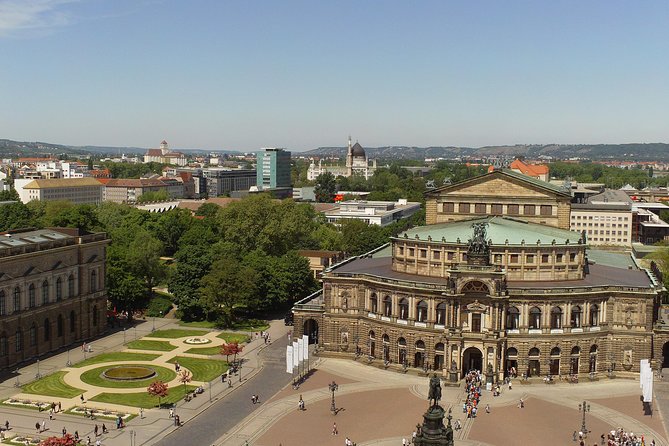
This is the tour’s best pause for gaining a sense of the city’s layout. The earlier stops are concentrated around historic buildings and squares. Brühl’s Terrace opens the view and shows how central Dresden relates to the river and the newer districts beyond it.
The stop lasts about 10 minutes. That is enough for an explanation and a few photographs, but not for a relaxed promenade. If views are important to you, keep your camera ready and listen while walking. The listening system is useful here because you do not have to choose between looking outward and staying close to the guide.
From Brühl’s Terrace, the tour heads toward the Semperoper area. The exact walking route and timing can depend on the guide and local conditions, but the city portion ends at lunchtime, with the opera visit scheduled after the break.
The one-hour lunch break
After the city walk, you have about an hour for individual lunch, from roughly 12:30 to 1:30 p.m. Lunch is not included, so plan on finding your own food near the center.
This break is well placed. Four hours of walking and standing can become tiring, especially if you are also taking photographs and listening closely. The pause gives you time to eat, rest, and arrive at the Semperoper ready for the second part.
The key practical point is not to wander too far. The meeting arrangement places the end of the tour at the Semperoper on Theaterplatz, so keep your lunch plans central and allow enough time to return. The schedule is designed as one connected experience, not as two unrelated bookings.
Inside the Semperoper: architecture, music, and changing access
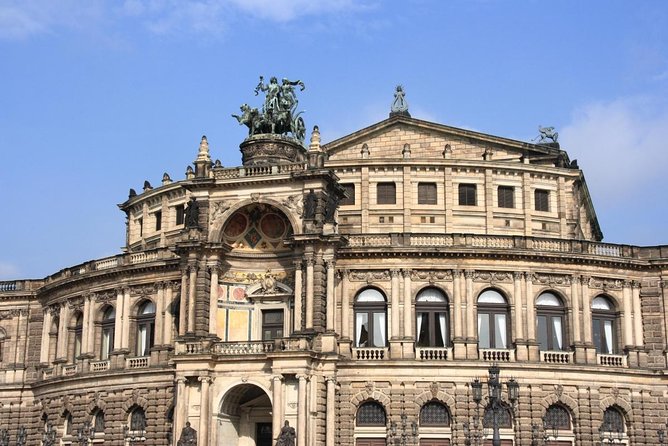
The Semperoper tour lasts about 45 minutes according to the stop schedule, while the overall description allows about an hour for the opera-house portion. You receive admission as part of the price and learn about the building’s unusual construction history and musical importance.
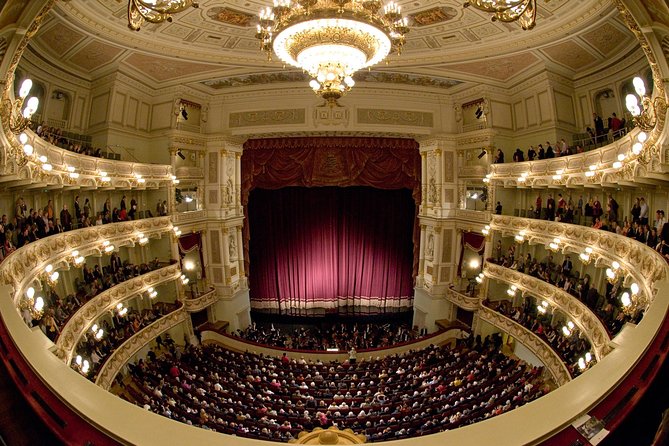
The tour includes the atmospheric foyers, glazed vestibules, and the ornate auditorium. These spaces are the reason the opera visit adds something different from the morning walk. The city tour explains Dresden in the open air. The Semperoper tour lets you study a carefully designed performance building from within.
The auditorium is described as having renewed splendor, which reflects the building’s long story of damage, rebuilding, and restoration. The tour is not simply about decorative surfaces. It connects the opera house to Dresden’s musical life and to the city’s wider habit of rebuilding important cultural buildings.
Access is schedule-dependent. Rehearsals and performances can affect the available date or time, and the organizer may tell you if the opera visit must be moved. I recommend checking the final timing before you make dinner plans or reserve another afternoon activity.
The opera section is also where expectations matter most. The strongest responses praise its content, but one lower assessment found the group too large and the presentation less interesting than the morning walk. Even with a 15-person maximum, an indoor tour can feel crowded if several groups are using the building at once.
If you are passionate about opera-house design, the visit should be worthwhile. If you mainly want a quiet look at the auditorium, be prepared for a guided group setting rather than a private architectural viewing.
Guide style and group size
Dagmar Renger is identified as the guide, and the comments about her style are consistently positive. I would expect a personal approach, with stories about Dresden, amusing touches, and explanations tied to the exact buildings in front of you.
That style is particularly useful in Dresden, where the restored city center can otherwise feel visually confusing. A guide can explain what is old, what was rebuilt, and why the city chose to recreate certain historic forms.
The audio system is another practical advantage. You can hear while walking, taking pictures, or standing slightly apart to get a better view. It also reduces the need for everyone to crowd tightly around the guide.
The group limit is 15 people. That is not a private tour, but it is smaller than many standard city walks. Still, the opera portion may feel more crowded than the number suggests because foyers and entrances are enclosed.
The published rating is 4.9 out of 5 from 21 ratings, with 95 percent recommending the experience. That points to a generally strong level of satisfaction, while the less positive assessment is useful because it highlights the main risk: the Semperoper presentation may not feel as lively or spacious as the city walk.
Is $32.02 a good value?
At $32.02 per person, the price is reasonable for a four-hour program that combines a guided city walk with included admission to the Semperoper. You are paying for live guiding, the Frauenkirche visit, the audio system, and the opera-house entry.
Children up to 16 are free, which makes the outing particularly attractive for families. The subject matter also works for mixed-age groups because you are not spending four straight hours inside a museum. There are outdoor stops, visual landmarks, a lunch break, and a dramatic interior visit.
The value is best if you want an overview rather than deep time at one site. You will see the major old-town highlights, but each stop is brief. The Zwinger and Frauenkirche, in particular, deserve longer independent visits if you want to study architecture, art, or museum collections.
I would compare the cost with the price of separate admission and guiding before booking anything else. Since the Semperoper admission is included, the combined format removes some planning and gives the day a clear shape.
Who should book this experience?
I would recommend it to first-time visitors who want Dresden’s major central sights explained in one morning. It is also a good match if you care about reconstruction, architecture, royal history, and music rather than simply collecting photographs.
Families may appreciate the free entry for children up to 16 and the midday break. People who prefer independent travel can still use the tour as an orientation, then return to the Zwinger, Frauenkirche, or Brühl’s Terrace later.
I would be more cautious if you dislike group tours, want long uninterrupted time at each sight, or expect a private visit inside the Semperoper. The city walk appears to be the stronger part, and the opera schedule can change.
Most people can take part, the route is near public transportation, and service animals are allowed. Confirmation arrives when you book. Free cancellation is available up to 24 hours before the start time, but changes or cancellations inside that window are not accepted.
Should you book the Dresden city and opera tour?
Book it if you want a well-paced introduction to Dresden with strong historical storytelling and a guaranteed look inside the Frauenkirche. The combination of the rebuilt old town and Semperoper gives you a useful picture of Dresden’s architecture, culture, and recovery in one half-day.
I would book with two expectations: the city walk is likely to be the highlight, and the opera visit is subject to access conditions and group atmosphere. At $32.02, with opera admission included and children up to 16 free, the price makes sense for a first visit, especially if you value a guide who can connect the buildings into one clear story.
FAQ
How long does the full experience last?
The experience lasts approximately four hours, from 10:30 a.m. until around 2:45 p.m., including a one-hour individual lunch break.
When does the tour operate?
It operates from February through December on Mondays, Wednesdays, Fridays, and Saturdays.
What time does the tour begin?
The tour starts at 10:30 a.m.
Where does the city tour begin?
The meeting point is Dresden Information, Neumarkt 2, 01067 Dresden, Germany.
Where does the experience finish?
The experience ends at the Semperoper Dresden, Theaterplatz 2, 01067 Dresden, Germany.
Is admission to the Semperoper included?
Yes. Admission to the Semperoper tour is included in the price.
Are children allowed to join for free?
Yes. Admission is free for children up to 16 years old.
Can the Semperoper tour time change?
Yes. The program depends on rehearsals and the Semperoper schedule. If the opera tour date or time changes, the organizer will provide information.
Just added around Germany
- Medieval Knight’s Dinner Show with Live Music in Munich★ 3.0 · 2 reviews
- Dresden: New Green Vault and Semper Opera Tour★ 4.5 · 19 reviews
- Nymphenburg classical music à la Mozart★ 4.7 · 3 reviews
- Festive Concert in the All-Saints Court Church★ 4.6 · 11 reviews
- Festive Concert at Schleißheim with Residence-Soloists★ 4.7 · 25 reviews
- Mozart and German Composers Private Tour in Munich★ 4.8 · 4 reviews
- Hamburg: St. Pauli Walking Tour with Live Music★ 4.0 · 3 reviews
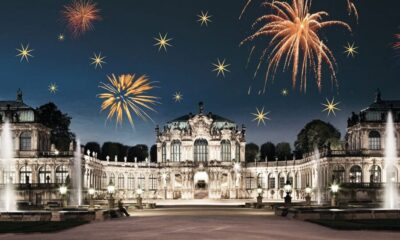
- Dresden: New Year’s Eve Concert at the Zwinger★ 4.8 · 20 reviews
Germany Concerts, compared.
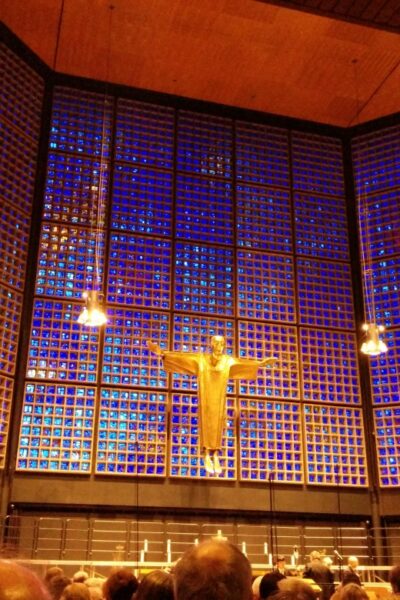
Berlin: Classical Concert at Kaiser Wilhelm Memorial Church
Read our review →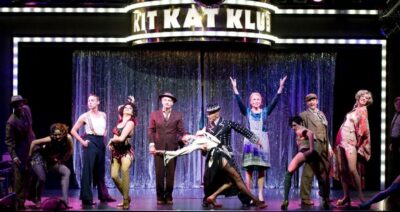
Berlin: Cabaret – The Berlin Musical at Tipi am Kanzleramt
Read our review →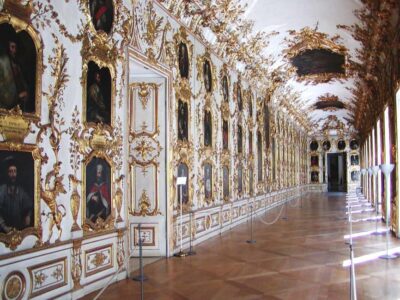
Munich: Classical Concert at the Residenz Palace
Read our review →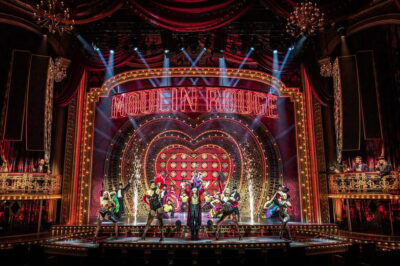

Munich: Concert in the Court Chapel of the Residenz
Read our review →
Browse the lists this tour appears in