
Review · CHENGDU
Jinjiang Theater: Eight-Face Changing-Legendary Sichuan Opera
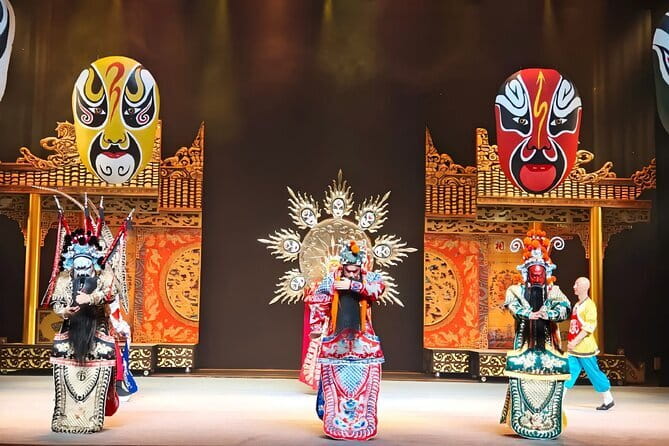
The fastest hands in Chengdu take center stage at Jinjiang Theater, where painted masks change in a blink. The 70-minute program follows Little Sanqing’s struggle to master face-changing, then piles on fire breathing, acrobatics, puppetry, dance, and martial arts. The eight-face finale is the big draw.
I like the broad mix of old Sichuan arts and the tidy one-hour-plus length. The complimentary gaiwan tea also gives the evening a local touch for only $18. The main consideration is that the show moves quickly from one short act to the next, so anyone hoping for a fully translated opera drama may find the spectacle easier to follow than the story.
Key points at a glance
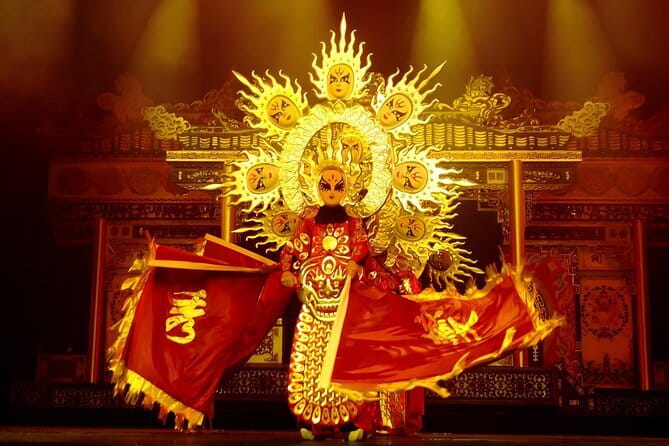
- Eight-face changing: The signature act takes the famous Sichuan face-changing skill to an even more dramatic level.
- A full 70-minute program: Opera excerpts, shadow art, puppetry, acrobatics, dance, and specialty acts fill one compact evening.
- Fire and lantern thrills: Fire breathing and the Rolling Lantern bring the most immediate stage excitement.
- A story behind the spectacle: Little Sanqing’s path toward mastering face-changing gives the performance a human thread.
- Tea at the theater: Your ticket includes a cup of Sichuan gaiwan tea.
- Simple central meeting point: The theater is at 54 Hua Xing Zheng Jie near Luomashi and Tianfu Square.
Sichuan opera is famous for its face-changing, but this production wisely avoids making you wait through a long drama to reach it. Instead, it offers a sampler of stage traditions, then builds toward the standard face-changing act and the special eight-face performance.
The result is closer to a cultural showcase than a full-length opera. That makes it a good first introduction if you want to see several forms in one sitting. You can watch singers, actors, dancers, puppeteers, acrobats, and martial artists share the same program without committing to a long performance in an unfamiliar language.
At the center is Little Sanqing. His story follows the difficult path toward mastering face-changing, ending with the debut of the eight-face technique. You may not catch every detail of the plot, but the basic idea is clear enough: skill comes through struggle, training, and persistence.
That story matters because face-changing is not just a costume trick. It is one of Sichuan opera’s best-known stage skills, built around speed, control, and dramatic timing. The performance lets you enjoy the surprise of the masks while giving the technique a place within the larger opera tradition.
The show opens with a Sichuan opera excerpt called The Three Heroes Fight Lü Bu. This is the martial side of the art, with stylized movement and combat energy rather than the naturalistic action you might see in a modern film.
Next comes hand shadow art, a quieter change of pace. Simple shapes made with the hands offer a reminder that Chinese stage entertainment does not always need elaborate scenery. The act also helps the program vary its rhythm before the next burst of physical skill.
The umbrella-kicking number brings classic circus-style control. An umbrella becomes a moving target as performers keep it in the air with their feet. It is a light, playful act, and it gives the audience an easy visual win even if the opera passages feel unfamiliar.
A Sichuan opera specialty called Hidden Knife follows. The title points to the show’s taste for surprise and theatrical concealment. Like face-changing and fire breathing, it works best as a stage reveal rather than as a plot point you need to decode.
The program returns to opera with Releasing Pei. These excerpts give you a better sense of the singing, recitation, gestures, and formal movement that sit underneath the more famous tricks. If you want to understand Sichuan opera as more than mask changes, pay attention to these sections.
Fire breathing is one of the clear crowd-pleasers. It adds real tension to the evening because the act depends on close control and precise timing. It is also one of the moments when the show feels least like a museum display and most like live stage entertainment.
The Rolling Lantern act brings a different kind of suspense. Its appeal comes from balance, motion, and the danger suggested by the object itself. The program places it among other specialties, so you get repeated changes in mood rather than one long block of opera.
Multi-person drum kicking raises the physical stakes again. Several performers work around a drum in an acrobatic display that combines rhythm with balance. I would expect this section to be especially easy to enjoy without knowing anything about Sichuan opera, since the visual idea is immediate.
These numbers are useful for families and mixed groups. One person can come for the opera, another for the face-changing, and someone else for the acrobatics. At $18, the ticket offers enough variety that you are not paying for one narrow specialty.
The puppet presentation, The Beauty of Life, gives the program a softer turn. After fire, martial movement, and acrobatics, puppetry brings a more delicate form of stage craft into view.
The dance selections also widen the cultural picture. The Water Sleeve Dance uses long sleeves as part of the movement, turning fabric into a flowing visual element. It is a graceful contrast to the sharp gestures and sudden reveals elsewhere in the program.
The Ghost Immortal Dance adds a more unusual theatrical mood. Its title suggests a supernatural or otherworldly character, and it helps keep the final portion of the show from becoming a simple parade of masks and costume changes.
A traditional fashion show rounds out the presentation. This was an unexpected highlight for me because it shows clothing as part of performance, not just decoration. The costumes give you a quick look at formal Chinese styles while keeping the show accessible and visual.
Do not expect every act to receive a long explanation. The point is variety, movement, color, and skilled presentation. The program gives you a series of memorable images rather than a detailed lesson in costume history or opera theory.
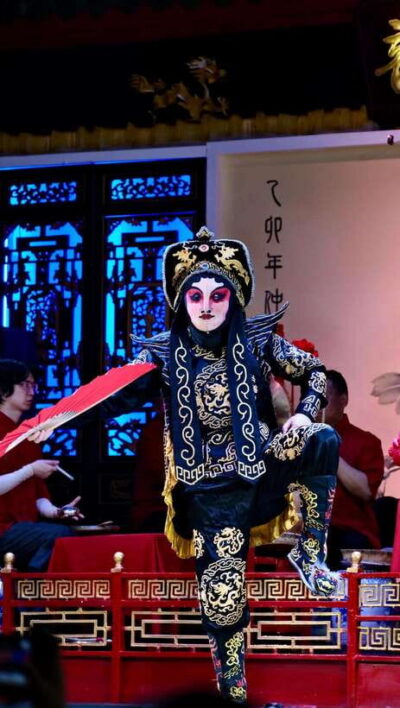
Face-changing is the main reason to book this particular evening. Performers shift from one painted face to another with startling speed, using methods that are carefully hidden from the audience.
The effect works because the movement is so clean. A turn of the head, a sweep of fabric, or a sharp gesture can reveal a new face before you have time to work out how it happened. I would not spend the act trying to solve the trick. Watch the timing instead.
The program then adds three costume changes, which extend the theme of transformation beyond the face itself. Costume changes give the performers a chance to alter character and mood in seconds, and they keep the stage picture changing even between the biggest specialty numbers.
The eight-face changing act is the signature moment. It takes the familiar face-changing idea and increases the number of transformations, making speed and precision even more important. If you have seen a standard Bian Lian performance before, this is the part most likely to feel new.
Keep your expectations sensible. The show does not explain every technical detail, and you will not be invited backstage to inspect the masks. Its value is the chance to see a rare stage skill presented in its natural setting, inside a theater in Chengdu, a major center for Sichuan opera.
Jinjiang Theater is described as one of the historic birthplaces of Sichuan opera. That setting gives the evening more weight than a face-changing act presented as a stand-alone tourist trick.
The location is near Tianfu Square, and the ticket redemption point is Jinjiang Theater at 54 Hua Xing Zheng Jie, Luomashi, Jin Jiang Qu, Chengdu, Sichuan 610017. The venue is near public transportation, which makes an 8 pm start easier to fit into a day of sightseeing.
You should allow enough time to find the theater and redeem your ticket before the performance begins. The supplied meeting information gives the start time as 8 pm, but it does not provide a separate arrival time, seat map, or transportation directions. I would use the address exactly as written and confirm the venue before setting out.
The included gaiwan tea adds a small but welcome cultural detail. Sichuan gaiwan tea is traditionally served in a lidded bowl, and having a cup during the performance helps connect the evening to local habits rather than making it feel like a bare stage show.
At $18, this is a strong value if you want a short evening activity with plenty of variety. You receive about 70 minutes of entertainment, a complimentary cup of tea, and a program that includes opera, acrobatics, puppetry, dance, martial arts, fire breathing, and face-changing.
The value is not only in the number of acts. A mixed program lowers the risk of a disappointing evening for a first-time visitor. If one opera excerpt does not hold your attention, the next act may be shadow art or acrobatics. If you come mainly for the masks, the show still gives you the full face-changing sequence and the eight-face specialty.
The tradeoff is depth. A specialist looking for a long, formally presented Sichuan opera may want something more focused. This production favors a quick succession of highlights, so it works better as an introduction or evening outing than as a complete study of the art.
The low price also makes it easy to pair with other Chengdu plans. You can spend the day exploring the city and reserve the show for the evening without giving up a large part of your night. The short format is useful if you prefer not to sit through a three-hour performance.
I would recommend it to first-time visitors who want a clear introduction to Sichuan opera without needing prior knowledge. The physical acts need little translation, and the face-changing gives the evening a memorable focus.
Families should find plenty to hold their attention. The program changes often, and the acrobatics, puppetry, fire breathing, and masks offer strong visual appeal. The description says all ages can enjoy it, and most people can participate.
It also suits solo visitors and couples looking for a distinctive evening activity. You do not need a guide to explain every act in order to appreciate the speed, costumes, music, and movement.
I would be more cautious if you want a quiet, scholarly presentation or a fully translated story. The show is built for spectacle and variety. Its opera excerpts are part of a larger program, not the whole point.
The performance begins at 8 pm at Jinjiang Theater. Your admission ticket is included, and confirmation is normally provided when you book, unless you make the reservation within one day of the performance. In that case, confirmation arrives as soon as possible, subject to availability.
Free cancellation is available up to 24 hours before the start time for a full refund. Cancellations or changes made within 24 hours are not accepted for a refund.
The experience requires good weather and a minimum number of people. If poor weather or low enrollment causes cancellation, you are offered another date or experience, or a full refund. That policy is worth noting even though the performance itself takes place in a theater.
SUKHA Travel provides the experience. No guide name is supplied, and the information does not promise live translation or a private introduction. Plan on the performance itself being the main event.
Should you book Jinjiang Theater’s eight-face show?
Book it if you want a reasonably priced, visually strong evening in Chengdu and you are curious about the art behind face-changing. The eight-face finale, fire breathing, Rolling Lantern, and acrobatics give you plenty of memorable moments, while the opera excerpts and dances add cultural context.
Skip it if your main goal is a long, serious opera performance with extensive explanation. For most visitors, though, this compact program offers a smart first look at Sichuan opera. The tea, central location, manageable 70-minute length, and $18 price make it an easy addition to a Chengdu itinerary.
More Opera Performances in China
- Chengdu: Sichuan Opera Shu Feng Yan Yun Evening Show Ticket
★ 4.7 · 185 reviews - Chengdu Sichuan Opera Show Ticket – Shu Feng Ya Yun
★ 4.4 · 73 reviews - Sichuan Culture Opera Show in Chengdu
★ 4.5 · 69 reviews
FAQ
Where does the Sichuan opera show take place?
It takes place at Jinjiang Theater, 54 Hua Xing Zheng Jie, Luomashi, Jin Jiang Qu, Chengdu, Sichuan 610017, China.
What time does the performance start?
The listed start time is 8 pm.
More Opera Performances in Chengdu:
- Chengdu: Sichuan Opera Show Ticket – Shu Feng Ya Yun
★ 4.8 · 30 reviews - Chengdu Sichuan Opera Evening Show Ticket-Shu Feng Yan Yun
★ 5.0 · 15 reviews - Chengdu: Sichuan Opera Show ShufengYayun & Covered Bowl Tea
★ 4.2 · 14 reviews - Shu Feng Ya Yun Sichuan Opera Ticket
★ 5.0 · 13 reviews
How long is the show?
The performance lasts approximately 1 hour and 10 minutes.
What is included with admission?
Admission to the performance is included, along with a complimentary cup of traditional Sichuan gaiwan tea.
What acts are part of the program?
The program includes opera excerpts, hand shadow art, umbrella kicking, Hidden Knife, fire breathing, Rolling Lantern, multi-person drum kicking, puppetry, face-changing, eight-face changing, three costume changes, a traditional fashion show, Water Sleeve Dance, and Ghost Immortal Dance.
Is the show suitable for most people?
Yes. The experience information says most visitors can participate and describes the show as suitable for all ages.
Can I cancel for a full refund?
Yes. You can cancel at least 24 hours before the start time for a full refund. Cancellations or changes made less than 24 hours before the start time are not accepted for a refund.
More Traditional Music and Dance Shows in Chengdu
- Chengdu: Liyuan Theater Sichuan Opera Face-Changing Show
★ 4.8 · 9 reviews - Chengdu: Sichuan Opera Face-Changing and Acrobatics Show
★ 4.6 · 9 reviews - Skip the Line: Sichuan Opera Chengdu Ticket
★ 4.0 · 8 reviews - Sichuan Opera with face-changing at Sichuan opera theater
★ 4.5 · 6 reviews
Just added around Chengdu
- Sichuan Opera Show with Hotel Pickup★ 5.0 · 3 reviews
- Classsic sichuan Opera at sichuan Provincial Theater★ 5.0 · 4 reviews
- Skip the Line: Sichuan Opera Chengdu Ticket★ 4.0 · 8 reviews
- Sichuan Opera with face-changing at Sichuan opera theater★ 4.5 · 6 reviews
- Chengdu Signature Opera Face Changing and Tea★ 5.0 · 7 reviews
- Chengdu Sichuan Opera Evening Show Ticket-Shu Feng Yan Yun★ 5.0 · 15 reviews
- Shu Feng Ya Yun Sichuan Opera Ticket★ 5.0 · 13 reviews
- Jinjiang Theater:Eight-Face Changing-Legendary Sichuan Opera★ 4.0 · 6 reviews
Chengdu Concerts, compared.
Chengdu: Sichuan Opera Shu Feng Yan Yun Evening Show Ticket
Read our review →
Chengdu Sichuan Opera Show Ticket – Shu Feng Ya Yun
Read our review →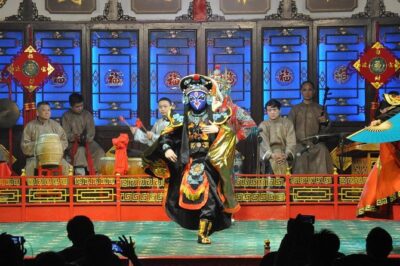
Chengdu: Sichuan Opera Show Ticket – Shu Feng Ya Yun
Read our review →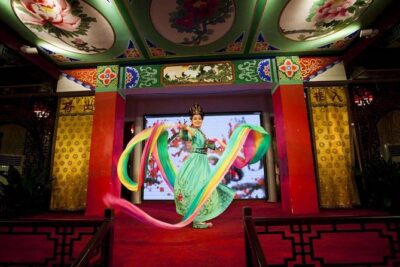
Chengdu Sichuan Opera Evening Show Ticket-Shu Feng Yan Yun
Read our review →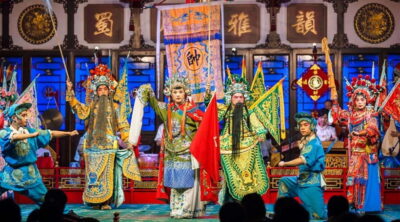
Chengdu: Sichuan Opera Show ShufengYayun & Covered Bowl Tea
Read our review →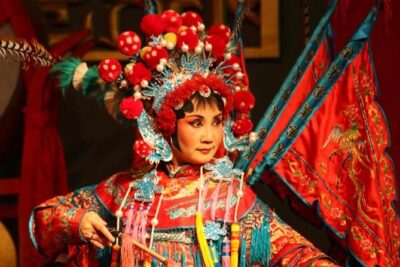
Chengdu: Sichuan Opera Face-Changing and Acrobatics Show
Read our review →Browse the lists this tour appears in