
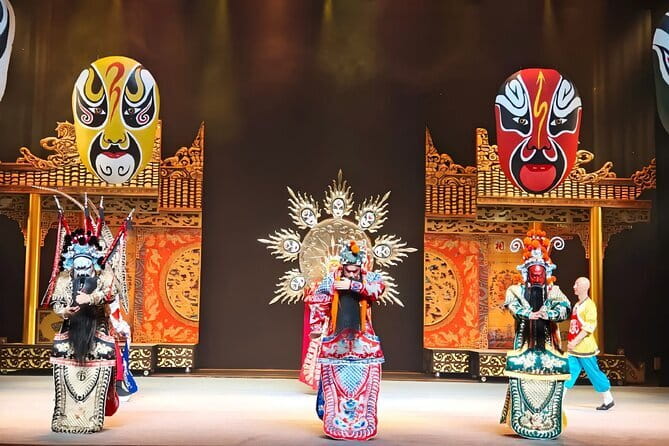
Review · CHENGDU
Jinjiang Theater:Eight-Face Changing-Legendary Sichuan Opera
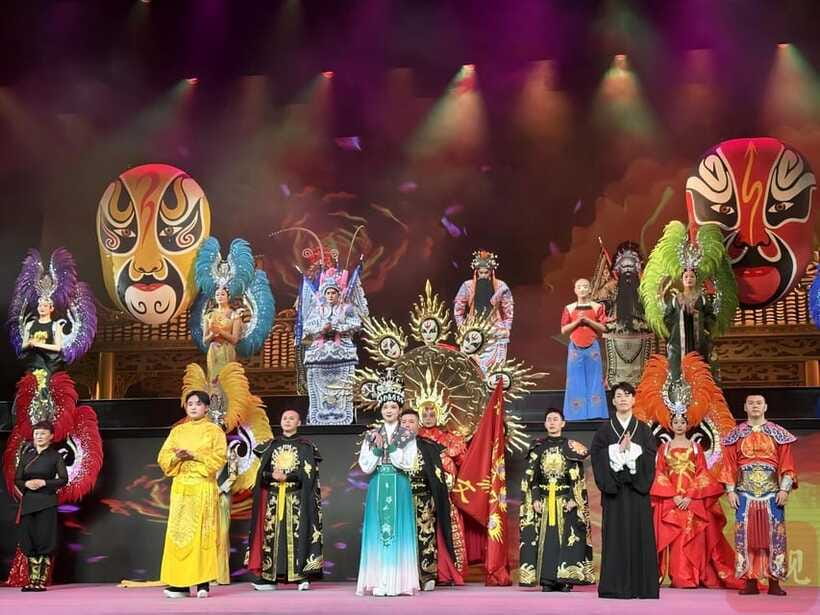
The most striking feature here is eight-face changing, a Sichuan opera specialty presented as the climax of a full stage production. You’ll also see fire breathing, hand shadows, puppetry, acrobatics, dance, and classic opera scenes, all in one 70-minute performance.
I like the central location near Tianfu Square and the free bowl of Gaiwan tea at Yuelai Tea House next door. I also like the clear story of Little Sanqing, which gives the fast-moving stage tricks a human thread. The main consideration is that seats are randomly assigned within your ticket section, and the show is not a quiet, minimalist opera recital.
Key Points
- Eight-face changing: Watch the production’s signature act, presented as a single, highly visual performance.
- A full Sichuan opera sampler: The program includes singing, movement, martial arts, fire breathing, costume changes, puppetry, and comedy.
- Tea before the curtain: Redeem your ticket serial number or QR code for one bowl of covered-bowl tea at Yuelai Tea House.
- A story rooted in Chengdu: Little Sanqing’s struggle is set at Sanqinghui, the historic site where Jinjiang Theater now sits.
- Easy central setting: The theater is at No. 54 Huaxing Street, close to Tianfu Square.
- Family-friendly pricing detail: One adult ticket includes one child under 1.2 meters, provided the child does not need a seat.
Eight Faces, One Fast-Moving Sichuan Opera Show
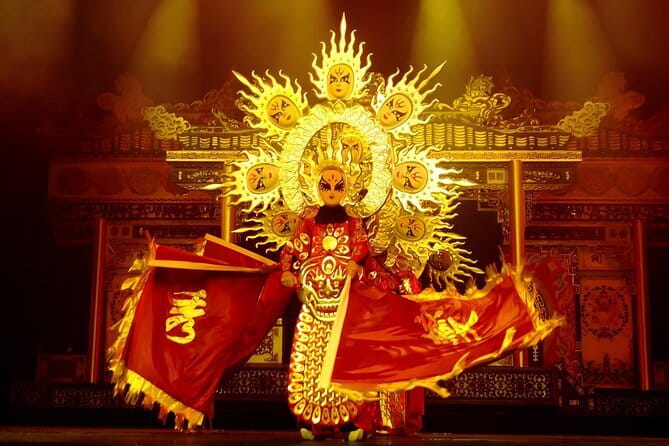
Sichuan opera is famous for its sudden face changes, but this performance gives you much more than that one trick. The 70-minute program works as a compact introduction to the art form, mixing opera excerpts with acrobatics, music, dance, puppets, shadow work, and special stage skills.
The central story follows Little Sanqing, a serious young opera student at Sanqinghui in Chengdu. His master sees his talent and agrees to take him as a disciple. Little Huanhua falls in love with him, but Young Master Ma takes her away and has Little Sanqing’s face burned.
Forced into hiding, Little Sanqing wears a mask and continues practicing. He eventually perfects the eight-face change, performing the technique in one continuous sequence. Little Huanhua later finds him, and the pair return to the stage together.
You do not need to know Sichuan opera before arriving. The plot gives you enough structure to understand the emotional stakes, while the physical performance keeps the pace moving. If you prefer a long, fully translated drama, this may feel abbreviated. If you want an accessible introduction to Chengdu stage traditions, the format makes sense.
More Opera Performances in China
- Chengdu: Sichuan Opera Shu Feng Yan Yun Evening Show Ticket
★ 4.7 · 185 reviews - Chengdu Sichuan Opera Show Ticket – Shu Feng Ya Yun
★ 4.4 · 73 reviews - Sichuan Culture Opera Show in Chengdu
★ 4.5 · 69 reviews
What You See Before the Famous Face Change
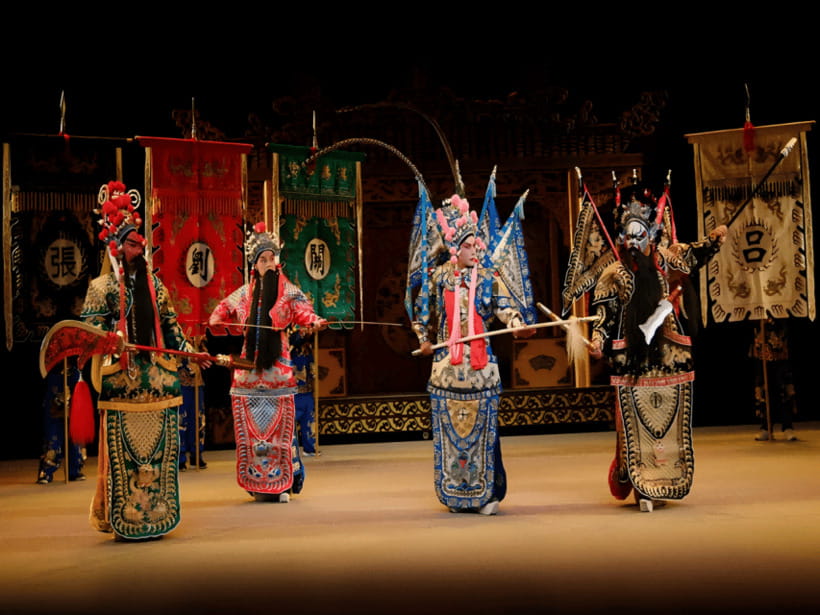
The opening parts introduce the range of skills that support Sichuan opera. One featured excerpt is The Three Heroes Fight Lü Bu, a martial scene that brings combat movement and opera technique together.
You’ll also see hand-shadow art, umbrella kicking, and a hidden-knife specialty. These acts show how much of the tradition depends on precise body control. The performers are not simply singing in costume. Their gestures, posture, footwork, and timing carry meaning.
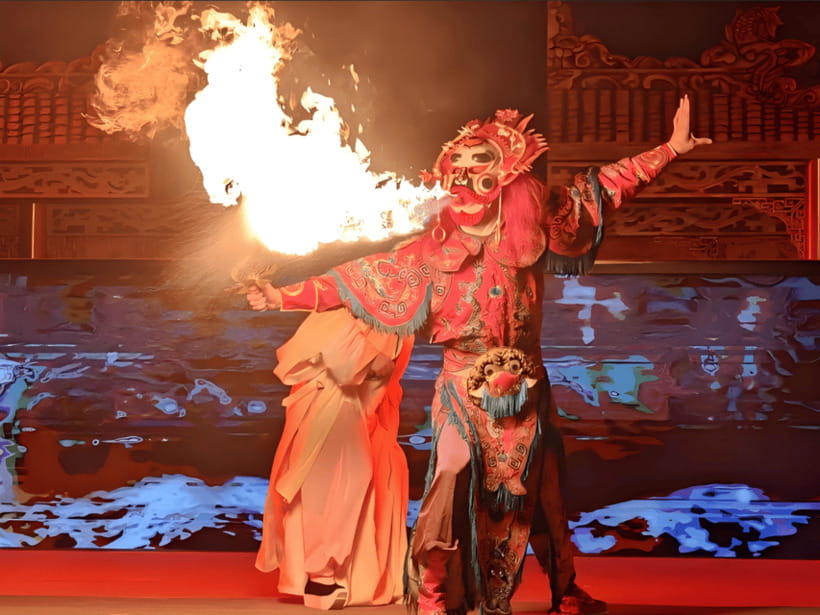
A scene called Releasing Pei adds another opera excerpt before the special effects begin. The program then moves into fire breathing, one of the most startling traditional skills in the show. It is presented as part of the stage program, so you should expect a theatrical spectacle rather than an explanation of how the technique works.
The range is useful for first-time viewers. You get short samples instead of one long scene built around a single character. The tradeoff is that the program can feel like a parade of highlights, with one act arriving soon after another.
Rolling Lanterns, Drums, and Moving Bodies
Rolling Lantern is another Sichuan opera specialty, presented alongside acrobatics and character work associated with young male and young female roles. This is where the production shows how traditional opera can combine storytelling with physical comedy and balance.
The acrobatic program also includes multi-person drum kicking. That act adds a group element and changes the rhythm from solo skill to coordinated movement. You’ll see how much concentration is required when several performers share the stage and use props at once.
A separate Beauty of Life puppet show adds a different scale and texture. Puppetry can be easier to appreciate in person than in a short video because you can watch the puppeteers’ control and the movement of the figures together. The show also includes hand-shadow work in a market scene, plus magic tricks and other acrobatic touches.
For families, this variety is a strong point. A child who is not following every sung passage may still connect with the puppets, drums, fire, or fast costume changes. Adults who want a strictly traditional opera evening should know that this production intentionally adds modern stage variety to keep the action broad and accessible.
The Eight-Face Changing Finale
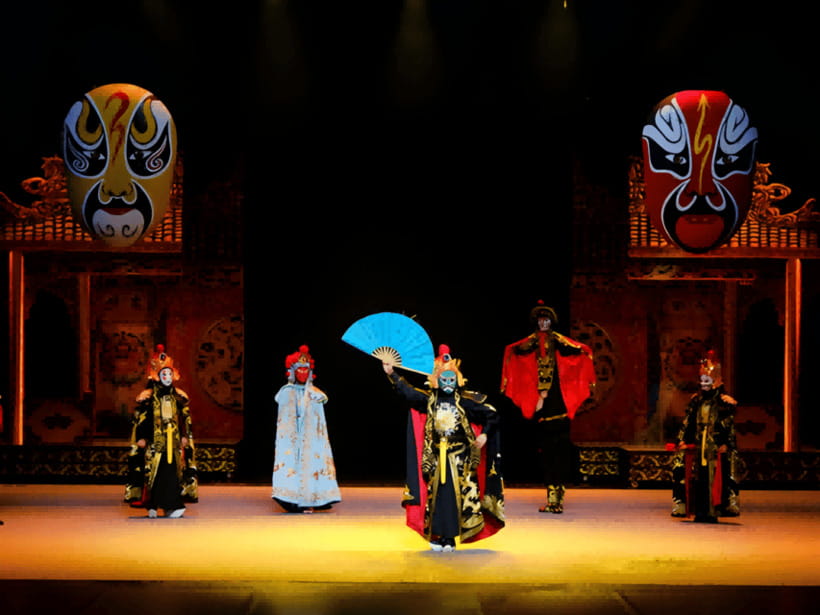
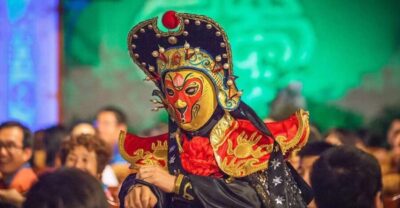
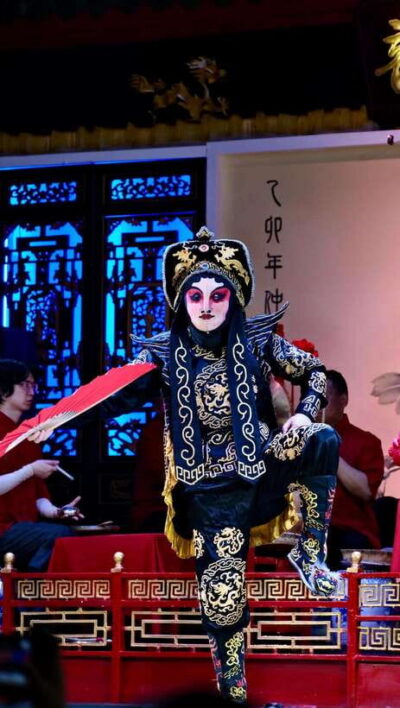
The signature event is the exclusive eight-face-changing performance. Face-changing, known as bian lian, is one of Sichuan opera’s best-known skills. The performer changes masks or facial colors with sudden movements, making the moment feel almost impossible to track.
Here, the technique is tied directly to Little Sanqing’s story. His mask is not just a prop. It represents the period when he has to hide after his injury, then becomes part of the skill he develops through years of practice.
The production describes the eight-face change as one seamless performance. You should expect the act to be quick, visual, and difficult to analyze while it is happening. The fun is in trying to follow the performer’s hands, head turns, fans, costume, and timing, then realizing the face has changed again.
Recording is not allowed. That rule may frustrate anyone hoping to study the trick later, but it also keeps phones from blocking the view and respects the performers’ work. Put your phone away and watch closely. The act is over quickly enough that even a short distraction can mean missing a change.
More Opera Performances in Chengdu:
- Chengdu: Sichuan Opera Show Ticket – Shu Feng Ya Yun
★ 4.8 · 30 reviews - Chengdu Sichuan Opera Evening Show Ticket-Shu Feng Yan Yun
★ 5.0 · 15 reviews - Chengdu: Sichuan Opera Show ShufengYayun & Covered Bowl Tea
★ 4.2 · 14 reviews - Shu Feng Ya Yun Sichuan Opera Ticket
★ 5.0 · 13 reviews
Costume Changes and Traditional Dance
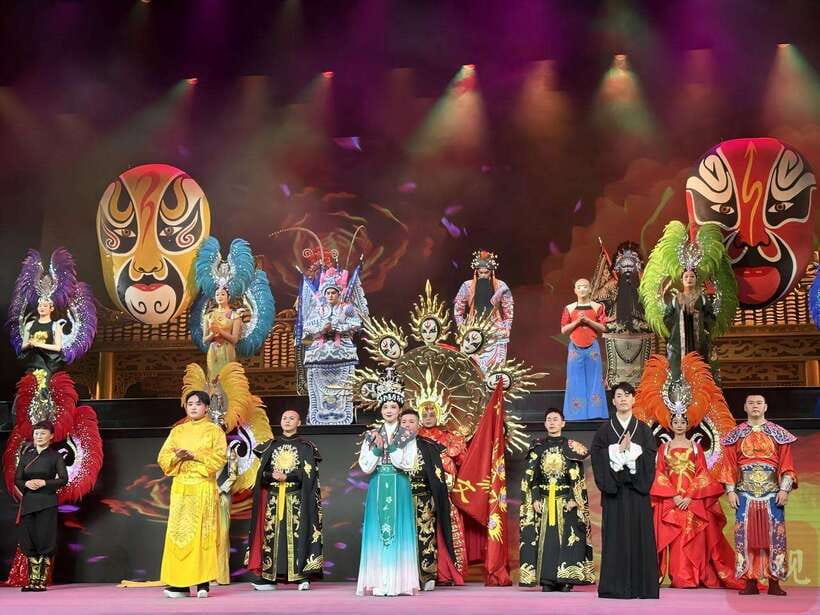
After the face-changing act, the production continues with three costume changes, a traditional fashion show, and several dance sections. These pieces broaden the picture of Sichuan opera beyond masks and fire.
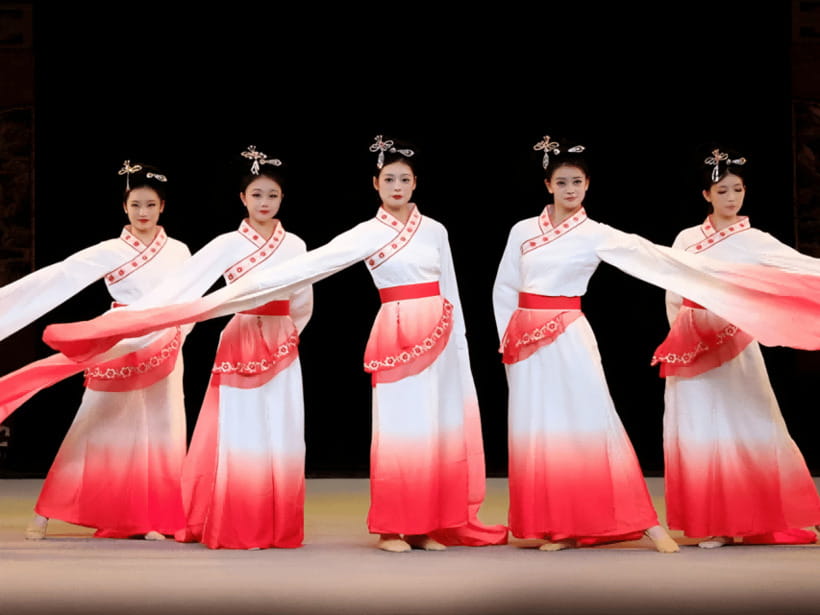
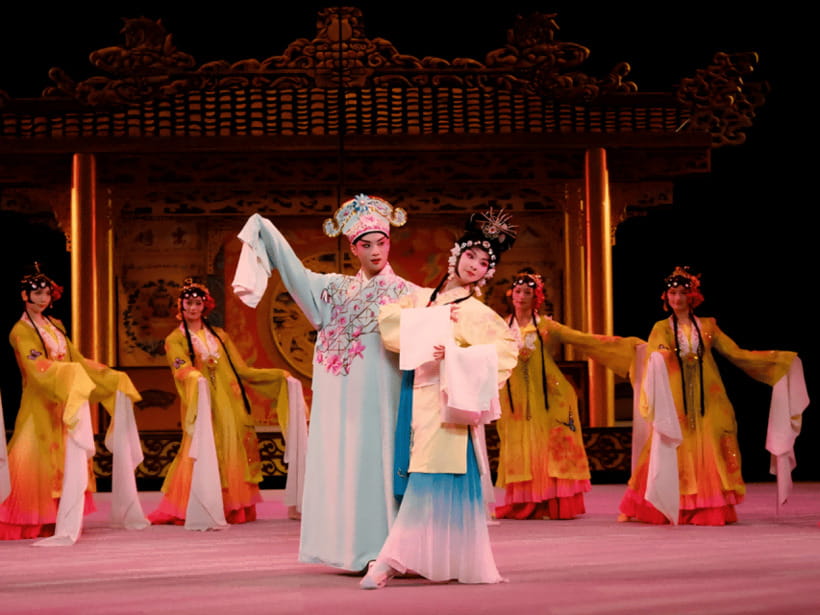
The listed dances include water-sleeve dance and ghost-immortal dance. Water sleeves create long, flowing lines through arm movement, while the ghost-immortal material brings a more theatrical and stylized mood. Group fan dance adds another visual pattern, with performers moving together rather than working only as individual stars.
Aerial silk dance and balancing acts are also included in the broader production. These additions make the show feel closer to a stage variety program than a single conventional opera. That is a benefit if you want visual energy and several kinds of traditional Chinese performance in one sitting.
The limitation is simple: the show may not satisfy you if your main goal is a full-length Sichuan opera with extended singing and dialogue. Jinjiang Theater presents a sampler built around special skills, dramatic scenes, and visual movement.
A Tea Stop Beside Jinjiang Theater
Your ticket includes one bowl of covered-bowl tea at Yuelai Tea House, located right next to the theater. The tea is available one hour before the performance begins.
This is a practical part of the experience, not just a small extra. Traditional Gaiwan tea is served in a lidded bowl, and the bowl, lid, and saucer form a familiar part of Sichuan tea culture. You can use the tea stop to slow down before the show and get comfortable with the neighborhood around the theater.
To claim it, present your ticket serial number or QR code. You also need the same ticket information for theater entry, so keep the email easy to find on your phone. The ticket must show your seat number as well as the code. Without the serial number, QR code, and seat information, you cannot enter.
No food is allowed inside the theater, so finish any snacks before you take your seat. Alcohol and drugs are prohibited, and prohibited items are not permitted in the venue.
Location Near Tianfu Square
Jinjiang Theater is at No. 54 Huaxing Street in Luoma City, Jinjiang District, Chengdu. Its central position near Tianfu Square makes it a useful evening or afternoon addition to a Chengdu sightseeing day.
The activity begins and ends at the theater. There is no sightseeing transfer, hotel pickup, or separate city tour included. You’ll need to make your own way to the address and follow the ticket collection instructions sent by the provider.
The central location is one of the strongest practical reasons to choose this performance. You can pair it with other stops in central Chengdu instead of spending time traveling far outside the city. Still, check your email carefully before setting out. The instructions include the address, contact information, and the process for collecting or using the ticket.
Seats, Timing, and What Your Ticket Buys
The price is $20 per person for a 70-minute performance, with a selected seat included. Seats are randomly assigned within the designated ticket area, so you cannot count on choosing a particular row or exact position.
For this type of show, the price is fair if you want a concentrated cultural performance rather than a long evening production. You receive the seat, the full program, and tea next door. The value is strongest for first-time visitors who want to sample several Sichuan opera skills without committing to a much longer event.
The price also works well for families because one adult ticket includes one child under 1.2 meters, as long as that child does not occupy a seat. Children over 1.2 meters need a full-price ticket.
The show is available at different starting times, so check the schedule when booking. Arrive early enough to redeem the tea and sort out your ticket details. Since you need the QR code and seat number to enter, last-minute confusion at the theater is avoidable with a quick email check.
Cancellation is flexible if your plans change. You can cancel up to 24 hours in advance for a full refund, and you can reserve now and pay later.
Who Will Enjoy This Performance Most
I would choose this show for a first visit to Chengdu, especially if you want a cultural evening that is easy to understand without a background in opera. The program gives you a broad sample of Sichuan stage arts in a short period.
It also suits families and mixed-age groups. The visual effects, puppets, fire breathing, acrobatics, costume changes, and fan dance give younger viewers several ways to stay interested. The story helps connect the separate acts, even when the opera language is unfamiliar.
You may want a different performance if you are an opera specialist looking for a long, traditional production with extended vocal passages. You may also find the variety-show format too busy if you prefer quiet drama and slow character development.
The presentation is available in Chinese and English, and a host or greeter may speak either language. That does not mean every song or line will be translated in full, so focus on the movement, music, costumes, and visual storytelling as well as the plot.
Practical Advice Before You Go
Check your email for three things: the ticket serial number, the QR code, and the seat number. Save the message before leaving your hotel in case your connection is unreliable.
Use the tea benefit one hour before showtime. Present the serial number or QR code at Yuelai Tea House, then keep the ticket details ready for the theater entrance.
Do not plan to record the performance. Video recording is prohibited, and no food is allowed in the theater. Seats are assigned randomly within your ticket section, so arrive with an open mind rather than expecting a specific location.
The activity ends where it begins, at Jinjiang Theater. That makes it easy to continue exploring central Chengdu afterward or return to your hotel without arranging a separate pickup.
Should You Book Jinjiang Theater’s Eight-Face Changing Show?
Book it if you want an affordable, central, family-friendly introduction to Sichuan opera, especially if the idea of seeing eight-face changing in person appeals to you. The tea stop, clear story, and broad mix of acts make the $20 price useful for a short cultural outing.
Think twice if you want a serious, full-length opera with extended scenes and little added spectacle. This is a fast sampler, with fire breathing, puppets, acrobatics, dance, costume changes, and opera excerpts sharing the stage. For most first-time visitors, that variety is the point.
FAQ
How long does the Jinjiang Theater performance last?
The performance lasts 70 minutes.
Where is Jinjiang Theater located?
Jinjiang Theater is at No. 54 Huaxing Street, Luoma City, Jinjiang District, Chengdu, Sichuan Province. It is near Tianfu Square.
Is tea included with the ticket?
Yes. Your ticket includes one bowl of covered-bowl Gaiwan tea at Yuelai Tea House, next to the theater, one hour before the performance.
What do I need to enter the theater?
You need the ticket serial number, QR code, and seat number sent by email. Without these details, you cannot enter the theater.
Can children attend for free?
One adult ticket includes one child under 1.2 meters free of charge, provided the child does not occupy a seat. Children over 1.2 meters require a full-price ticket.
Can I record the performance?
No. Video recording is not allowed, and food is also prohibited inside the theater.
More Traditional Music and Dance Shows in Chengdu
- Chengdu: Liyuan Theater Sichuan Opera Face-Changing Show
★ 4.8 · 9 reviews - Chengdu: Sichuan Opera Face-Changing and Acrobatics Show
★ 4.6 · 9 reviews - Skip the Line: Sichuan Opera Chengdu Ticket
★ 4.0 · 8 reviews - Sichuan Opera with face-changing at Sichuan opera theater
★ 4.5 · 6 reviews
Just added around Chengdu
- Sichuan Opera Show with Hotel Pickup★ 5.0 · 3 reviews
- Classsic sichuan Opera at sichuan Provincial Theater★ 5.0 · 4 reviews
- Jinjiang Theater: Eight-Face Changing-Legendary Sichuan Opera★ 5.0 · 6 reviews
- Skip the Line: Sichuan Opera Chengdu Ticket★ 4.0 · 8 reviews
- Sichuan Opera with face-changing at Sichuan opera theater★ 4.5 · 6 reviews
- Chengdu Signature Opera Face Changing and Tea★ 5.0 · 7 reviews
- Chengdu Sichuan Opera Evening Show Ticket-Shu Feng Yan Yun★ 5.0 · 15 reviews
- Shu Feng Ya Yun Sichuan Opera Ticket★ 5.0 · 13 reviews
Chengdu Concerts, compared.
Chengdu: Sichuan Opera Shu Feng Yan Yun Evening Show Ticket
Read our review →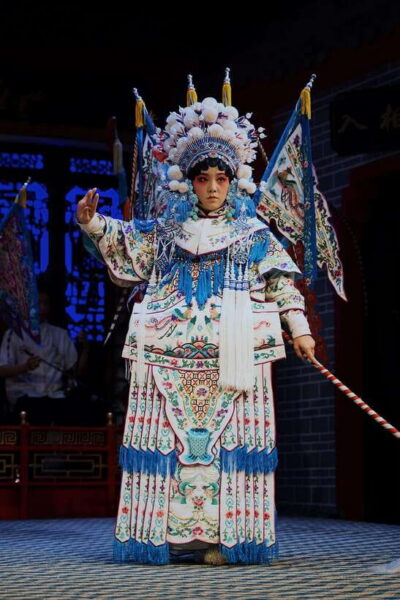
Chengdu Sichuan Opera Show Ticket – Shu Feng Ya Yun
Read our review →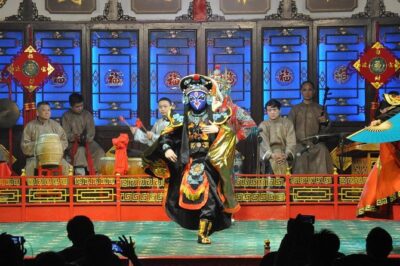
Chengdu: Sichuan Opera Show Ticket – Shu Feng Ya Yun
Read our review →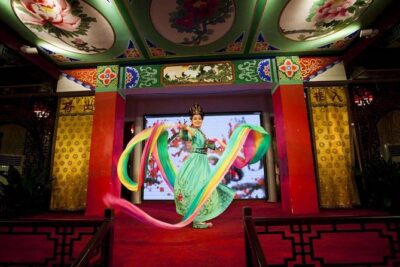
Chengdu Sichuan Opera Evening Show Ticket-Shu Feng Yan Yun
Read our review →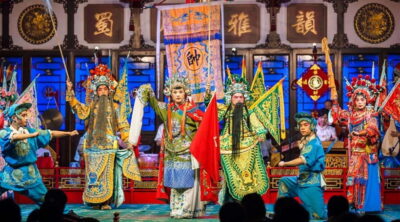
Chengdu: Sichuan Opera Show ShufengYayun & Covered Bowl Tea
Read our review →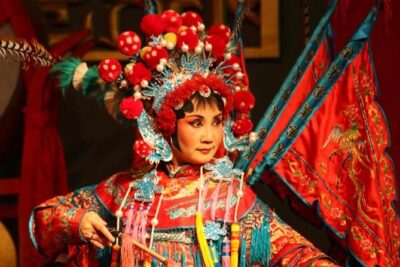
Chengdu: Sichuan Opera Face-Changing and Acrobatics Show
Read our review →Browse the lists this tour appears in