
Review · INDIA
Mumbai: A Symphony of Seven Islands – Get Local in One Day
Mumbai is best understood in motion, and this tour makes that the whole point. In one day, you move from the Gateway of India through old imperial streets, Portuguese-era lanes, railway stations, markets, high-rises, and the Arabian Sea. The city becomes a story rather than a checklist of sights.
I like the mix of local transport and major landmarks, especially the train rides, bus trip, auto fare, and walk through Chor Bazaar. I also like the food stops, with vada pav and pav bhaji included. The main drawback is the pace: you will walk a lot, change vehicles often, and face Mumbai traffic, crowds, and heat.
Key points
- Four-part city story: Follow Mumbai from Imperial Bombay to modern Aamchi Mumbai.
- Real local movement: Use trains, buses, an auto, and a cab rather than staying in a tour vehicle.
- Big sights and quieter corners: See the Gateway of India, CST, Marine Drive, Chor Bazaar, old Portuguese-style homes, and Dhobi Ghat.
- Food is part of the lesson: Try vada pav and pav bhaji, with an optional stop for local sweets.
- Guide Shrijit leads the day: He links the places with a fact-based story about Mumbai’s growth.
- Budget-friendly pricing: At $34 per person, the tour includes the guide, water, auto and train fares, and two iconic dishes, but not taxi fares.
Mumbai told through four scenes
This is not a conventional sightseeing loop. The tour is built as a live story called A Symphony of Seven Islands, following Mumbai from a group of islands to a huge modern city.
That structure matters. Instead of seeing unrelated monuments one after another, you get a reason for moving from one part of the city to the next. The guide acts as narrator, explaining how trade, colonial rule, migration, transport, industry, and daily life shaped Mumbai.
I particularly like this approach for a first visit. Mumbai can feel scattered, and its major sights do not always explain themselves. A story gives the day a clear thread. The tradeoff is that the itinerary is packed. You will not have long, leisurely stops at every site.
The day uses several forms of transport. You walk, ride local trains and buses, take an auto, and use a cab. That is useful if you want to understand how the city actually works, but it is less suitable if you prefer a quiet vehicle and a fixed schedule.
More Classical Concerts in the world:
- Vienna: Vivaldi’s Four Seasons Concert in Karlskirche
★ 4.7 · 14,951 reviews - Vienna: Classical Concert in the World-Famous Musikverein
★ 4.6 · 6,673 reviews - Vienna: Mozart Concert at the Musikverein – Golden Hall
★ 4.6 · 5,194 reviews
Scene One: from the Gateway of India to CST
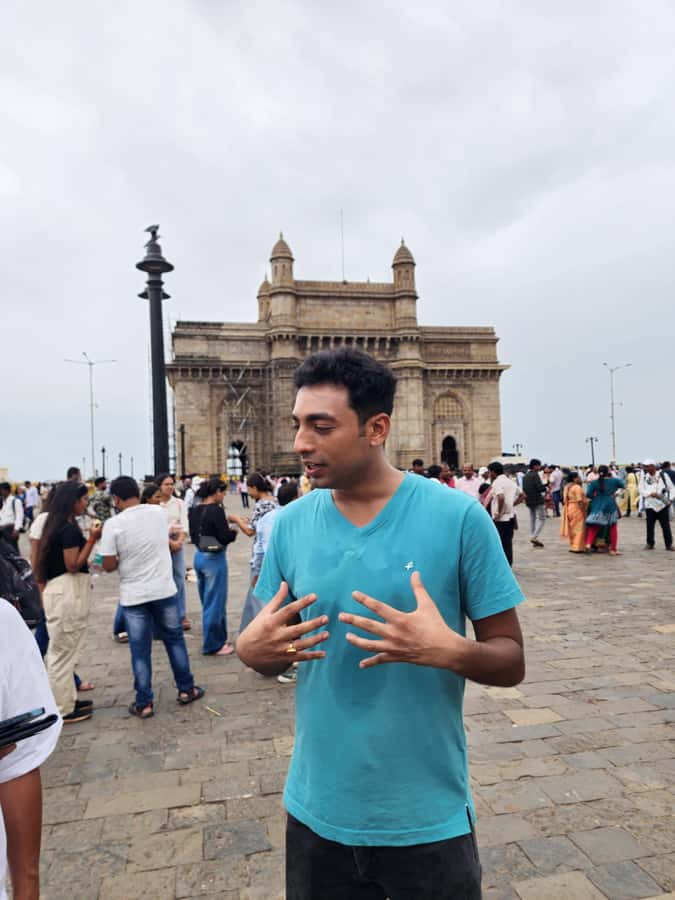
The opening scene begins at the Gateway of India, Mumbai’s best-known waterfront landmark. It is a fitting place to start because the monument faces the harbor and recalls the period when the city’s port tied it to distant empires, traders, and passengers.
From there, you walk through Colaba. The area gives you an early contrast between grand buildings, commercial streets, and everyday city life. The route continues to St. Thomas Church, Mumbai’s oldest Anglican church, before turning toward the central business district.
The walk passes the Bombay Stock Exchange, Flora Fountain, Bombay University, and the High Court. These are not just photo stops. Together, they show the formal side of colonial Bombay, with grand civic buildings built to project order, wealth, and imperial authority.
You then reach Marine Drive, where the city’s architecture shifts again. The broad seafront and long curve of buildings help explain Mumbai’s movement from its old colonial center toward a denser, more modern city.
One of the tour’s useful touches is the bus ride that follows. You are not simply taken from one monument to another. You see the city from street level while using the same kind of transport that many residents depend on each day.
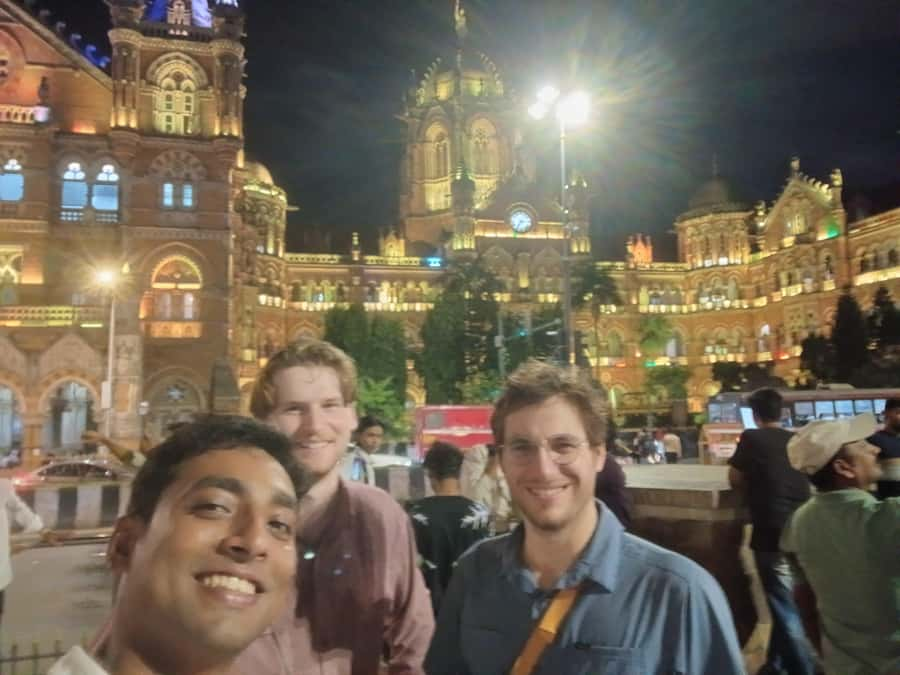
The destination is Chhatrapati Shivaji Terminus, usually called CST. This UNESCO World Heritage Site is one of Mumbai’s great architectural sights, combining railway function with an elaborate Victorian design. The station also fits the tour’s main theme: railways helped connect the city and reshape its growth.
Food closes this scene with pav bhaji. The dish is a Mumbai classic made with spiced vegetables served with buttered bread rolls. It is filling, informal, and tied to the city’s street-food culture. Since it is included, you can try it without treating the meal as an extra expense.
The practical point is simple: wear shoes that can handle a long urban walk. The route includes roads, lanes, station areas, and busy public spaces, so comfortable clothing and a small amount of cash are sensible.
Scene Two: a Portuguese trace in the city
From CST, you board a local train. This is more than a quick transfer. The train carries the story from the formal colonial center into a much older residential quarter, where a different strand of Mumbai’s past remains visible.
The area is described as an Indo-Latin neighborhood, with narrow lanes and roughly 200-year-old homes. Sloping roofs and arched windows give the streets a look more commonly associated with Goa than with the high-rise city around them.
This is one of the most distinctive parts of the day. Mumbai is often presented through grand colonial buildings or modern towers, but these smaller homes show how older communities survived as the city grew around them. The contrast is sharp: quiet lanes and traditional houses sit close to dense urban development.
The neighborhood leads to a hilltop garden with views toward the docks. From here, the harbor becomes part of the story again. Ships once brought goods, people, ideas, and political power through this bay, and the port helped turn the seven islands into a major city.
The name Bom Bahia means Good Bay, the phrase from which Bombay developed. That small language lesson gives the scene a clear focus. You are looking at the place where Mumbai’s contact with the wider world began to take shape.
The drawback is that older residential areas are not polished museum settings. Streets can be uneven or crowded, and the appeal comes from atmosphere, architecture, and the guide’s explanation rather than a long list of formal attractions. If you want famous landmarks at every stop, this part may feel understated. If you like seeing how a city’s past survives in ordinary streets, it is likely to be a highlight.
Scene Three: Chor Bazaar and Bombay Black
A cab ride takes you into what the tour calls Black Town, the rougher, more crowded side of old Mumbai. The name points to the historic division between European quarters and areas where Indian residents lived and worked.
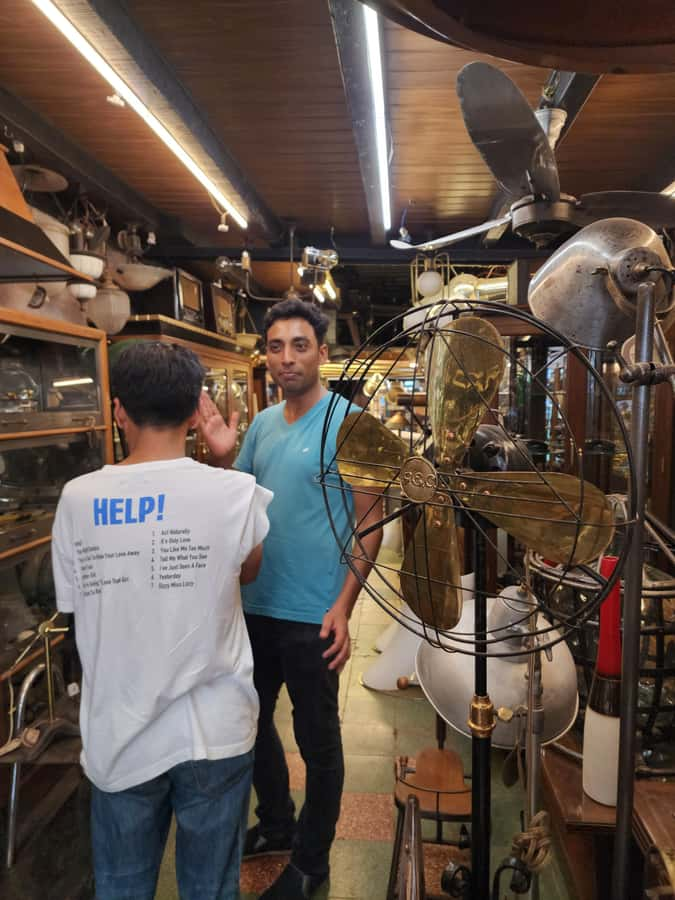
The route includes Chor Bazaar, one of the city’s best-known markets for antiques and old objects. The market is a chance to look at another side of Mumbai’s commercial life, far removed from the formal offices and monumental buildings seen earlier.
You should approach Chor Bazaar with curiosity rather than a fixed shopping list. The value here is the setting, the variety of goods, and the sense of a working market. If you hope to buy something, bring cash and be ready to inspect items carefully. The tour does not promise a particular purchase or a bargain.
This section is also linked with the Mumbai portrayed in Shantaram, a city of hard edges, quick deals, crowded streets, and constant movement. The contrast with the Gateway of India and the High Court is deliberate. You see the city’s polished public face, then its rougher commercial core.
There may be an optional stop at a century-old sweet shop. Desserts are not included, so keep a little extra money if you want to try one. The tour information does not specify which sweets will be available, and the stop should be treated as an optional taste of local food rather than a guaranteed meal.
After the market, you return to a nearby train station. By this point, the transport itself has become part of the sightseeing. Local trains can be busy, and the pace may feel tiring, but they show how Mumbai’s districts connect and how much of city life is organized around rail travel.
This is also the point where some visitors may need to manage their energy. The day combines walking, food, public transport, and changing neighborhoods. There is no stated group size or fixed timing for each stop, so expect the guide to adjust the rhythm around traffic and city conditions.
A few more concerts around the world worth a look
- Hydra-Poros-Aegina Islands One Day Cruise With Live Music Dancing & Buffet Lunch
★ 4.0 · 68 reviews - Garni, Geghard & Symphony Small-Group Day Trip with Lavash Baking
★ 5.0 · 263 reviews - London Theatre: JUST FOR ONE DAY – The Live Aid Musical
★ 4.5 · 19 reviews - Chengdu to Xi’an: Terracotta Army Day Trip by Bullet Train
★ 3.7 · 4 reviews
Scene Four: Dhobi Ghat, Shivaji Park, and the Arabian Sea
The final train ride leads into a more modern Mumbai of concrete towers and crowded transport routes. From above, you see Dhobi Ghat, the famous open-air laundry associated with the city’s daily work life.
Dhobi Ghat is valuable because it shifts attention from architecture to labor. The sight is not just colorful or unusual. It represents a long-running service economy operating within one of the world’s most densely built cities.
You then take a bus through the metropolis toward Shivaji Park. The park is described as Mumbai’s cultural heart, a place tied to public life and local identity. It provides another change in mood after the noise of markets, stations, and major roads.
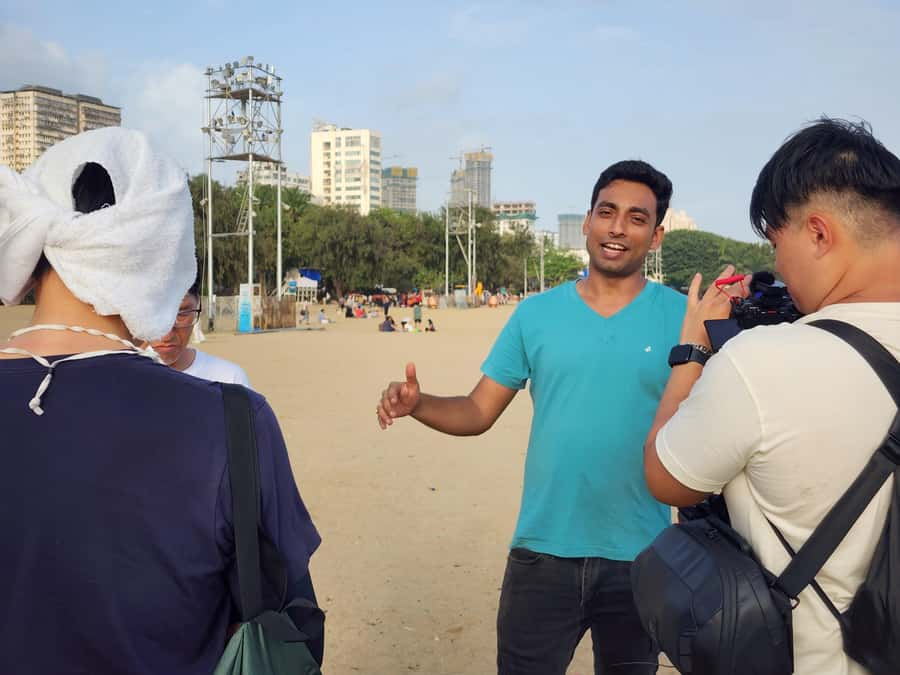
From Shivaji Park, you walk to a nearby beach for sunset over the Arabian Sea. Ending beside the water gives the whole day a natural shape. Mumbai begins with the harbor and ends with the sea, while the route between them shows the city’s growth from islands and port settlements to a dense modern center.
The sunset stop is peaceful in concept, but do not expect the entire day to be calm. You reach it after many transitions, and the atmosphere at the beach can depend on the day’s conditions. Still, it is a fitting final pause and a chance to think back over the four scenes.
What the $34 price includes

At $34 per person, this is a strong value if you want transport, food, and guiding combined in one city day. The included items are:
- An expert local guide
- One bottle of water
- Auto fare
- Train fare
- Vada pav
- Pav bhaji
The price works best for someone who would otherwise need to arrange several short rides, navigate local trains, choose food stops, and research the city’s historical links alone. You are paying for the structure and interpretation as much as for the included items.
Cab fare is separate and uses dynamic pricing. The stated total should not exceed Rs. 150, but you are advised to carry at least Rs. 300, and I would follow that advice. Bring additional cash if you want optional desserts or other personal purchases.
The tour does not include every meal, entry fee, or shopping expense. The supplied details do not list paid admissions, but you should still bring cash because Mumbai’s small food and transport costs are easier to handle that way.
The guide and the storytelling style
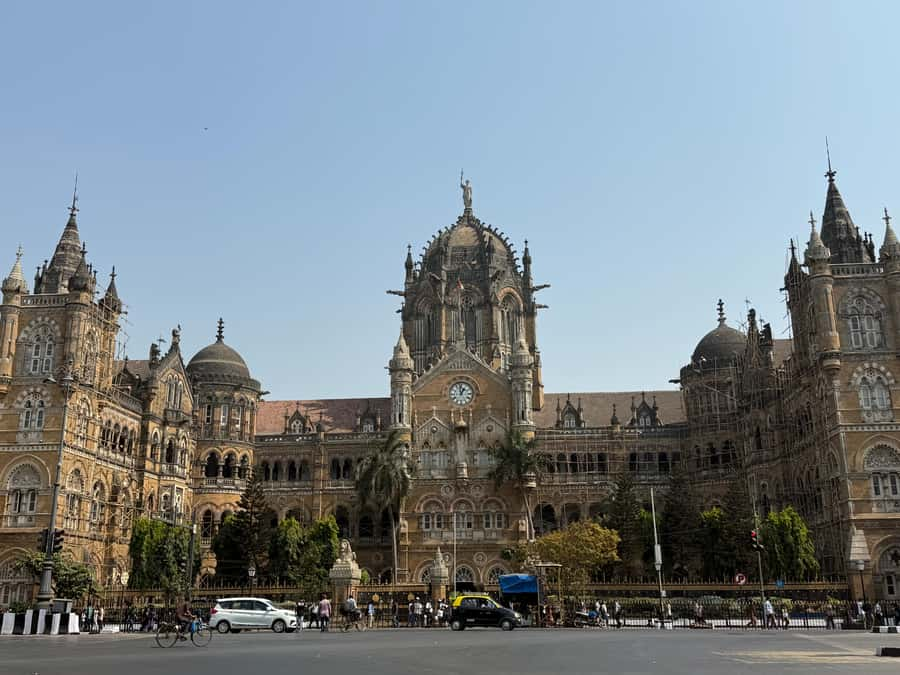
Guide Shrijit is central to the experience. His role is not only to point out buildings. He connects each neighborhood to the next and builds the story through historical details, local transport, food, and changing street scenes.
That approach suits Mumbai particularly well. The city can overwhelm you with noise and movement, while its past is often hidden behind modern traffic and construction. A guide who keeps the timeline clear can help you understand why the city looks so mixed and uneven.
The tour is conducted in English. The storytelling has been described as fact-based, friendly, and easygoing, with punctual organization despite Mumbai traffic. You should still allow for changes in pace because traffic, trains, and crowded streets are outside anyone’s control.
Who will enjoy this one-day route
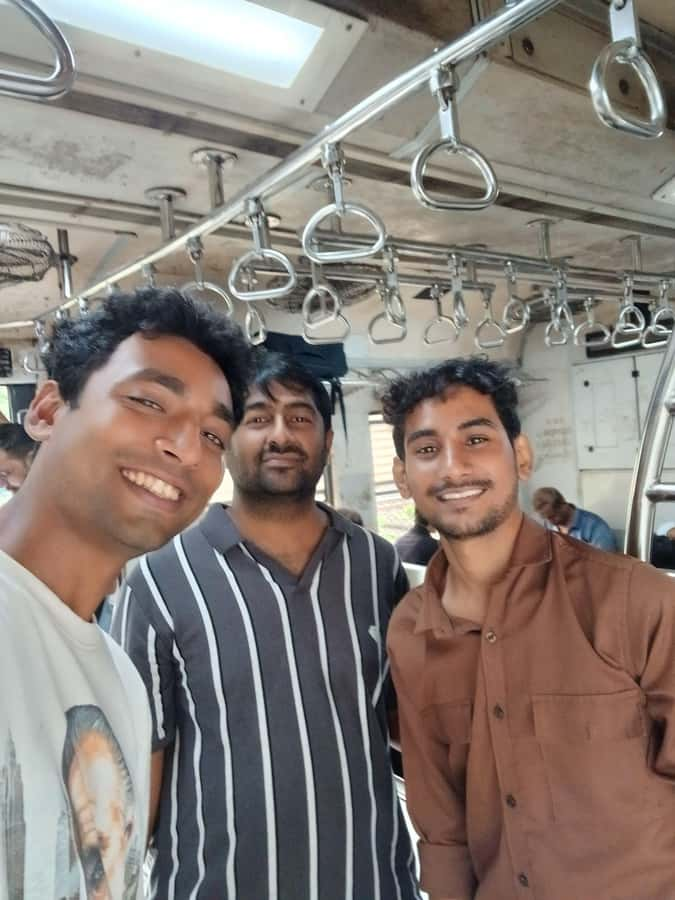
I would recommend this for first-time visitors who want more than the usual landmark circuit. It is also a good fit if you want to try local transport without having to work out the routes yourself.
You will get the most from it if you:
- Enjoy walking through ordinary neighborhoods
- Want historical context alongside famous sights
- Like street food and are open to simple local dishes
- Are curious about trains, buses, autos, and city routines
- Prefer a full day with many changes of scene
It is less suitable for anyone needing step-free access. The experience is not suitable for wheelchair users, and it is not intended for babies under one year or people over 95 years. Comfortable shoes are essential, and hand sanitizer or tissues are useful additions to your day bag.
The tour also requires flexibility. You may be walking in warm weather, moving through crowded public areas, and dealing with traffic delays. Bring water beyond the included bottle if you normally drink often, and keep cash easy to reach.
Should you book Mumbai: A Symphony of Seven Islands?
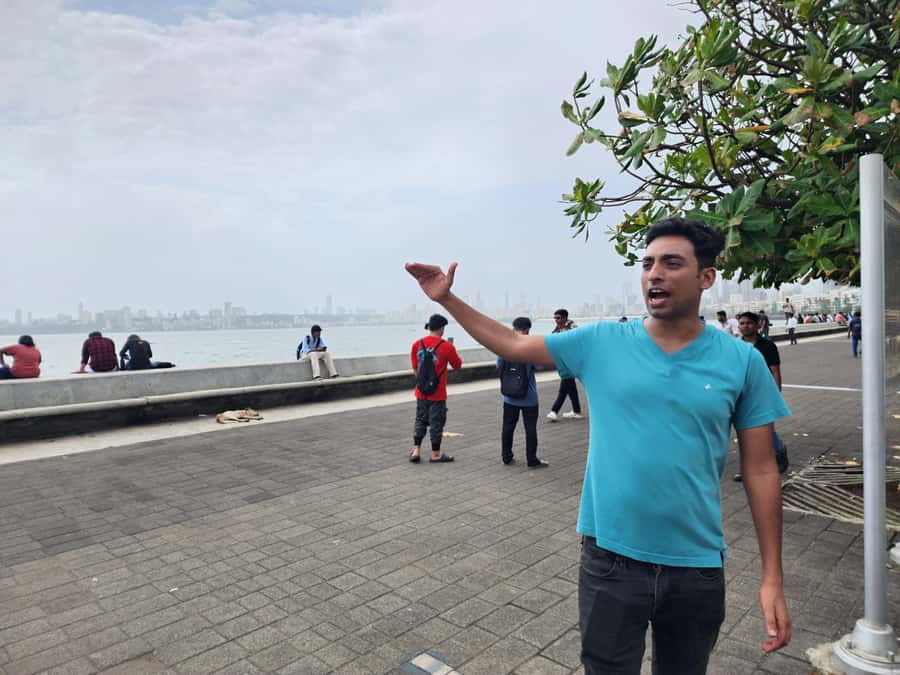
Book it if you want Mumbai explained as a living city rather than presented as a row of monuments. The strongest features are the combination of local transport, historical storytelling, and food. Shrijit’s role gives the route a clear human guide, while the four scenes take you from imperial landmarks to older residential lanes, markets, rail corridors, laundry work, and the coast.
Skip it if you want a relaxed sightseeing day with one vehicle, long stops, and little walking. This is a busy urban expedition, and its best moments come from change, contrast, and contact with ordinary city life.
At $34, the tour offers good value for an active visitor who wants an informed introduction to Mumbai in one day. Carry cash, wear sensible shoes, and expect the city to keep moving around you.
FAQ
How much does the tour cost?
The price is $34 per person.
What food is included?
Vada pav and pav bhaji are included. Desserts are optional and cost extra.
Which transport is used?
The route includes walking, local trains, buses, an auto, and a cab. Train and auto fares are included, while taxi fare is separate.
How much cash should I bring?
The taxi cost should not exceed Rs. 150, but you are advised to carry at least Rs. 300. Extra cash is useful for optional desserts and personal purchases.
Who guides the tour?
The guide is Shrijit, and the tour is conducted in English.
Is the tour suitable for wheelchair users?
No. The experience is not suitable for wheelchair users.
Can I cancel for a full refund?
Yes. You can cancel up to 24 hours in advance for a full refund.
Just added around the world
- Wrocław: Chopin & Friends piano concerts★ 4.6 · 28 reviews
- Warsaw: Candlelight Concert at Fryderyk Concert Hall★ 4.7 · 110 reviews
- Warsaw: Chopin Concert Ticket With Glass of Champagne★ 4.7 · 59 reviews
- Warsaw: Guided Walking Tour with a Private Chopin Concert★ 5.0 · 13 reviews
- Viva Blackpool: ABBA Bottomless Brunch with Live Music★ 5.0 · 2 reviews
- Waitangi: Treaty Grounds Hāngī and Concert Combo Pass★ 4.7 · 67 reviews
- Vienna: Concert by the Vienna Baroque Orchestra★ 4.6 · 56 reviews
- Vienna: Sunday Brunch Danube Cruise & Live Music★ 4.2 · 42 reviews
India Concerts, compared.

Akshardham Light & Fountain Show with Pick-up & Drop-off
Read our review →
Akshardham Temple Evening Tour with Musical Fountain Show
Read our review →
Delhi’s Arts, Dance, Music, History, Food and Heritage Tour
Read our review →
Private Evening Tour of Akshardham Temple with Musical Fountain Show
Read our review →

Blissful Half Day Sunset Camel Safari with Musical Evening
Read our review →
Exclusive Musical Evening at Desert Luxury Camp (NO CAMEL)
Read our review →
Old Delhi Haveli with live Classical dance, music & cuisine
Read our review →Browse the lists this tour appears in