
Review · SEOUL
Korean Traditional Music Performance Ticket
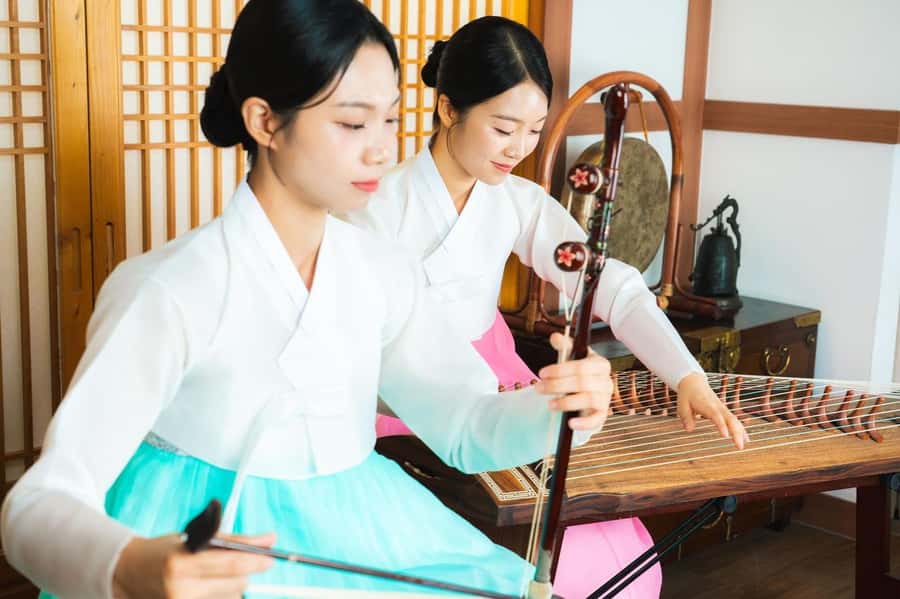
Korean music sounds especially good in a hanok. This one-hour concert in Insadong moves from a quiet opening blessing to court music, solo instruments, folk songs, and Korean pop played on traditional instruments. The setting is simple, intimate, and far removed from a big concert hall.
I like the three-part program, which gives the performance a clear shape instead of presenting one long string of unfamiliar tunes. I also like the chance to speak with the musicians afterward and see their instruments up close. The main drawback is practical: the hall is reached by stairs only, and the price is a fairly serious $47 for one hour.
- A hanok setting near Insadong places the music in one of Seoul’s best-known areas for traditional arts.
- Gayageum and haegeum performances give you a close look at two distinctive Korean instruments.
- The three stages move from a blessing ceremony to court music, solo pieces, folk songs, and modern pop.
- K-pop and drama OSTs make the program easier to connect with if formal court music feels unfamiliar.
- Small groups of up to 20 people keep the room personal and make the post-concert conversation worthwhile.
- Weekday shows at 11:00, 13:00, and 15:00 fit neatly into an Insadong sightseeing day.
A Quiet Concert in the Heart of Insadong
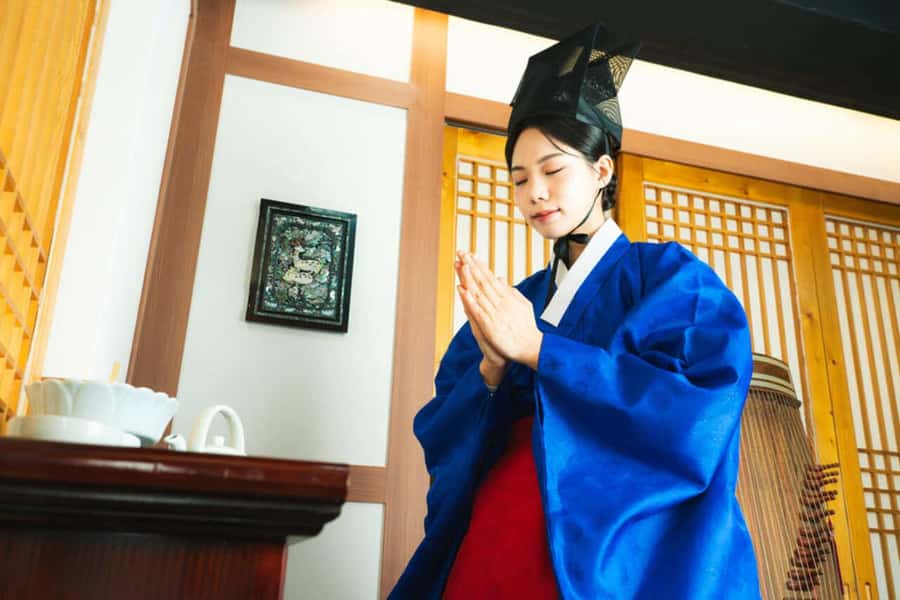
This is not a grand theater production. You enter a modest, atmospheric hanok on the second floor, take a chair, and sit close to the performers. That scale is part of the appeal. You can watch the musicians’ hands, hear the detail in the strings and voices, and ask about the instruments once the formal performance ends.
The venue is at Jinyeon Hall, 2F, 10 Insadong 5-gil, in Jongno-gu. It is about six minutes on foot from Exit 3-1 of Jonggak Station on Line 1, or eight minutes from Exit 5 of Jongno 3-ga Station on Line 5. The address is easy enough on paper, but allow extra time for the final approach. One audience member had trouble locating the studio with Naver Map and found Google Maps more useful.
You should arrive 10 minutes early. The doors and seating process are simple, but a late arrival can be awkward in a quiet performance room. Set your phone to silent before the musicians begin, and plan on staying focused for the full hour.
What the Three-Part Program Gives You
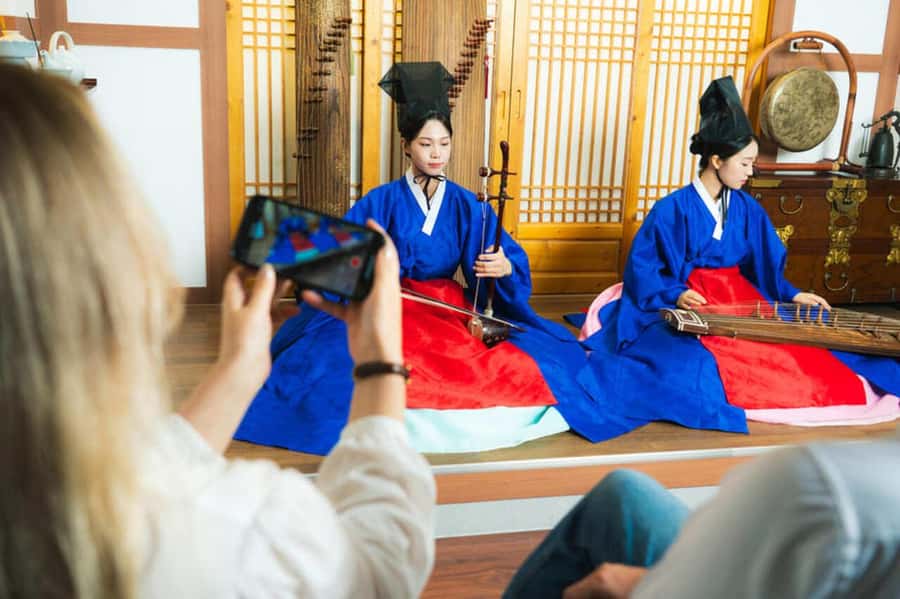
The concert is arranged in three stages, each with a different purpose. That structure helps you follow the performance even if you have never heard Korean court or folk music before.
More Traditional Music and Dance Shows in the world:
- Budapest: Dinner Cruise with Live Music and Folk Dance Show
★ 4.4 · 2,090 reviews - Porto: The highest-rated traditional fado concert (downtown)
★ 4.8 · 1,557 reviews - Budapest: Hungarian Folk Dance & Concert with Dinner Option
★ 4.2 · 786 reviews
1. Gilje, an Opening Blessing
The program begins with Gilje, described as an opening blessing ceremony. It sets a calm, respectful tone and gives the concert a sense of occasion before the music begins in earnest.
This portion may appeal most to you if you enjoy cultural ceremonies and performances that carry a spiritual or reflective quality. It is not just a quick introduction. The opening is meant to prepare the room and the audience, so settle in rather than expecting an immediate burst of showmanship.
2. Jinyeon, the Banquet Performance
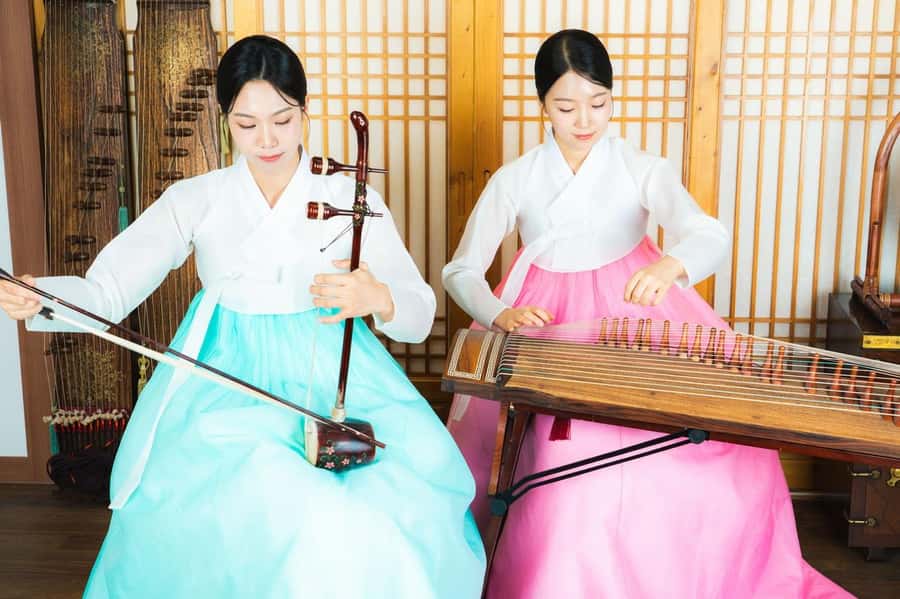
The second section, Jinyeon, brings in graceful court music and stronger solo instrumentals. This is where the beauty of the gayageum and haegeum becomes easiest to appreciate.
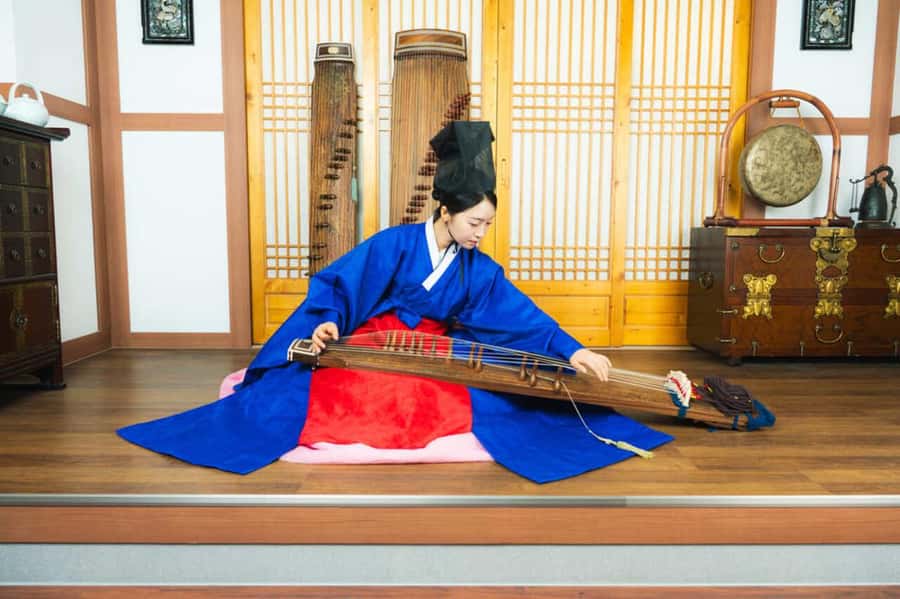
The gayageum is a Korean zither with strings stretched over a long wooden body. The haegeum is a two-stringed bowed instrument with a bright, expressive sound. In a small room, these instruments have room to speak clearly. You are close enough to notice changes in tone and rhythm rather than hearing only a broad, blended sound.
The musicians have more than 10 years of experience, and the performance calls for control as well as feeling. The concert is not built around spectacle. Its appeal comes from the musicians’ skill, the traditional clothing, and the way each instrument carries its own voice.
3. Together in Harmony
The final stage brings Korean folk songs together with creative versions of K-pop and drama soundtrack pieces. This is likely to be the most immediately accessible part of the hour, especially if you are new to Korean traditional music.
The shift from court and folk music to modern songs also makes a useful point. Korean musical culture is not frozen in the past. Traditional instruments can carry familiar melodies in a new way, and the contrast gives the closing section energy without turning the concert into a pop show.
Folk material, including Arirang, gives the ending a strong cultural anchor. The program also includes international pieces, so you are not expected to recognize every song to enjoy the arrangement.
More Tickets in the world:
- Prague: Entry Ticket Classical Concert at the Mirror Chapel
★ 4.7 · 4,636 reviews - Florence: Santa Monaca Church Italian Opera Concert Ticket
★ 4.7 · 2,692 reviews - Tromsø: Midnight Concert Ticket at the Tromsø Cathedral
★ 4.8 · 1,734 reviews - Prague: Mozart Ballroom Concert Ticket with 3-Course Dinner
★ 4.8 · 1,200 reviews
Why the Hanok Setting Matters
The hanok does more than provide a pretty backdrop. Traditional Korean architecture helps the music feel connected to place. Sitting on a chair inside a historic-style home, rather than in a modern auditorium, changes your sense of distance from the performers.
The room is small and simple. That means you will not get theatrical lighting, a large stage, or the polished production of a major venue. In return, you get a more personal encounter. The musicians enter close to the audience, perform without a large barrier between you and them, and remain available for conversation afterward.
The setting also works well as part of a day in Insadong. You can combine the 11:00 or 13:00 show with nearby galleries, tea shops, craft stores, and traditional streets. The 15:00 performance is a useful afternoon pause after sightseeing, though the weekday-only schedule limits your choices.
Meeting the Musicians After the Music
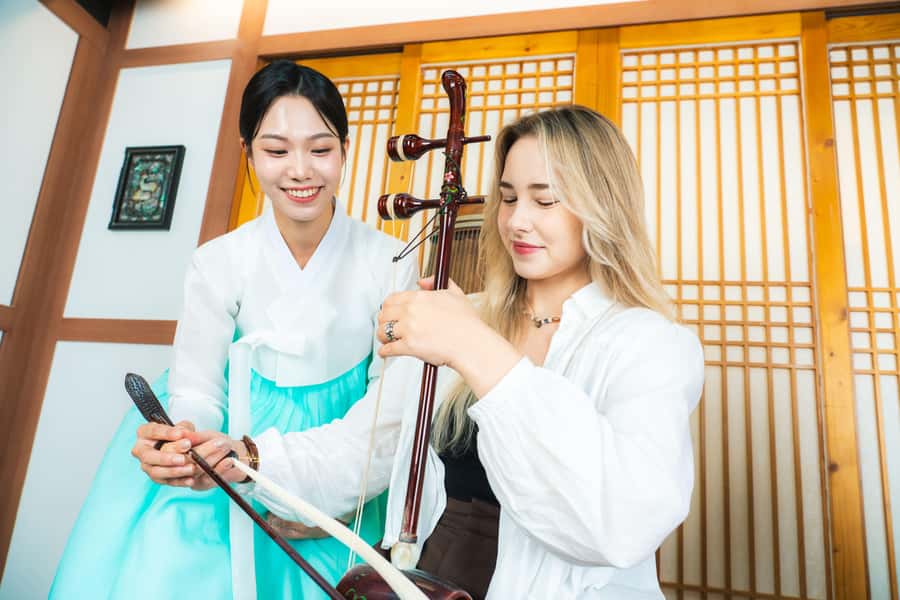
The formal hour does not have to be the end of the experience. Afterward, you can take photos with the musicians and exchange a few words about their instruments. The performers have also shown audience members how to play their instruments, which adds a hands-on moment without turning the concert into a workshop.
This informal contact is one of the strongest reasons to choose a small performance over a large cultural show. You can ask about the gayageum, haegeum, or the pieces you have just heard. English and Korean are used, so international visitors can take part.
The conversation will naturally depend on the schedule and the number of people attending. Still, the group size is capped at 20, which gives you a reasonable chance of seeing the instruments at close range and having a brief exchange. Be respectful of the musicians’ time, especially if another show is due to begin.
The $47 Question: Is One Hour Worth It?
At $47 per person, this is not a bargain attraction. You are paying for a short, specialized performance in a small venue, not a full-day cultural tour with transportation or a meal. Hotel pickup, drop-off, food, and drinks are not included.
The value improves if you already plan to spend time in Insadong and want one focused cultural activity rather than another general sightseeing stop. You also get more than a passive concert: the hanok setting, three-part format, traditional clothing, explanations in English or Korean, and post-show contact with the musicians all add to the experience.
I would be more cautious if you are mainly looking for a cheap evening activity or a large-scale show. The performance lasts about 60 minutes, and the space is intentionally intimate. One audience member felt the price could be lower, a fair point given the length.
For someone who cares about Korean music, cultural performance, or unusual experiences in Seoul, the cost is easier to justify. For a family trying to fill several hours on a tight budget, there are likely more economical choices.
Choosing the Right Show Time
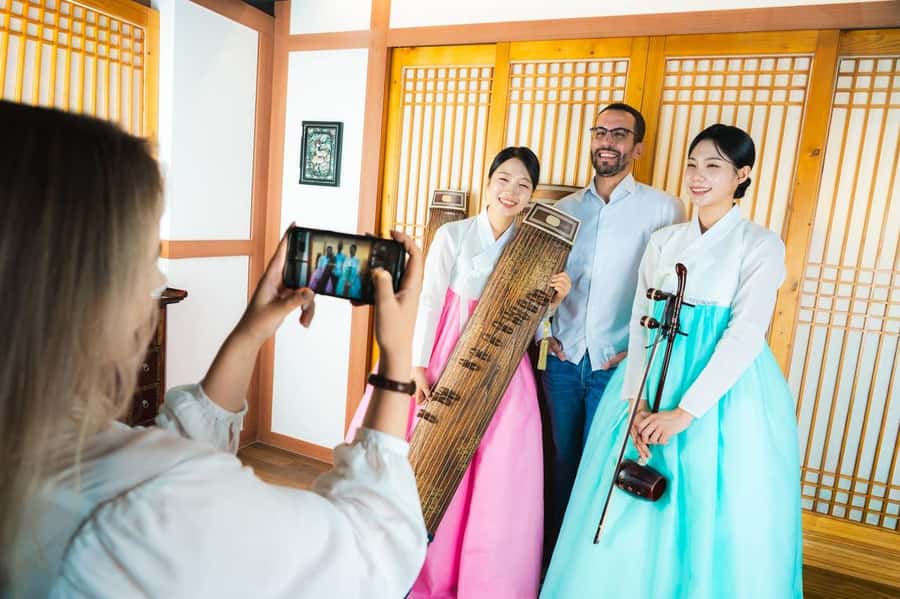
Performances take place on weekdays only, excluding weekends and public holidays. The three start times are 11:00, 13:00, and 15:00.
The 11:00 performance works well before lunch and leaves most of the day open. The 13:00 show makes a natural break after a morning in central Seoul. The 15:00 performance suits an afternoon in Insadong, although you should avoid cutting it close with another reservation.
Arrive 10 minutes early. The hall is upstairs, and the venue has no elevator. That stair access is not suitable for people with mobility impairments, so check the route before booking. Nearby public parking is recommended if you are arriving by car, but the central location makes subway access the simpler choice.
Who Will Enjoy This Most?
I would recommend this concert to you if you:
- Want a direct introduction to Korean traditional music
- Prefer small cultural performances to large tourist shows
- Are already visiting Insadong
- Enjoy seeing instruments and meeting performers
- Like programs that connect older music with K-pop and drama songs
- Want an activity that takes only about an hour
It is also a good choice for parents or older family members who enjoy seated cultural activities, provided they can manage the stairs. The performance has enough variety to hold the attention of someone new to Korean music, while the formal structure gives experienced listeners something more focused.
You may want to skip it if you dislike quiet performances, have difficulty with stairs, or want a highly interactive event from beginning to end. The atmosphere is respectful and solemn. You are expected to listen quietly during the music, not chat or move around freely.
Practical Tips for Finding Jinyeon Hall
Give yourself a few extra minutes to locate the building. The studio is at 2F, 10 Insadong 5-gil, but map apps may not guide you to the exact entrance. Google Maps was specifically useful for finding the performance space when Naver Map proved confusing.
Look for the address in the Insadong area and plan to walk from the subway. Jonggak Station and Jongno 3-ga Station are both within easy reach, with the stated walking times of six and eight minutes. Since the venue is on the second floor, check the entrance and stairs before the start time rather than rushing in at 10:59.
Keep your phone silent once you sit down. This sounds minor, but a ringing phone is especially distracting in a small room where every sound carries. Food and drinks are not part of the booking, so plan lunch, coffee, or tea separately around the show.
How This Compares With a Large Cultural Show
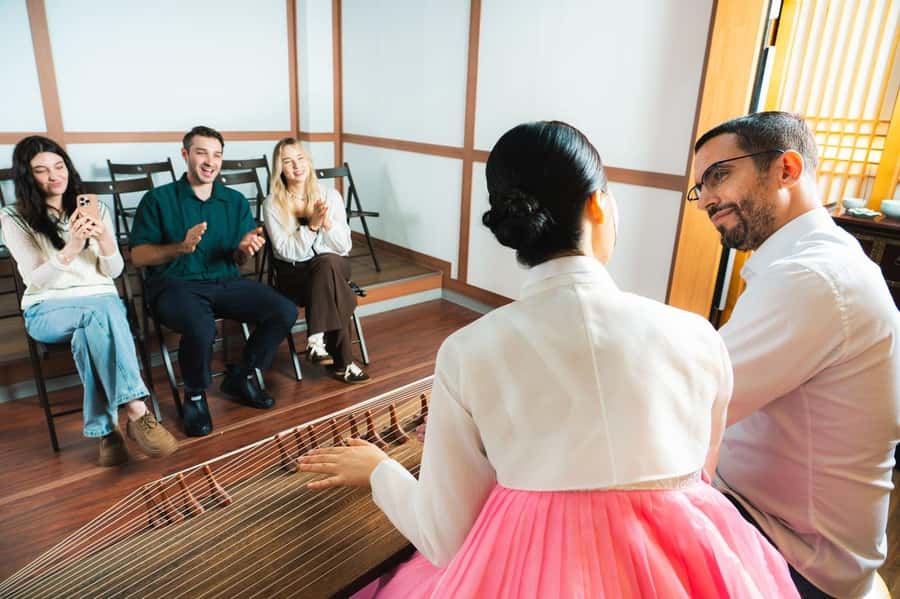
A major theater performance might offer a bigger stage, more dancers, elaborate costumes, and a broader production. This concert offers something different: proximity.
Here you can focus on the sound of individual instruments and see the performers work at close range. The room does not overwhelm the music, and the chance to speak with the artists afterward gives the visit a personal finish. The tradeoff is scale. If you expect a sweeping spectacle, this may feel too modest.
The concert also works better for cultural understanding than for nonstop entertainment. The opening blessing, court music, folk songs, and modern arrangements show several sides of Korean performance practice in a short time. You will not become an expert in Korean music in one hour, but you will leave with a clearer sense of how old and new styles can share the same stage.
Should You Book the Korean Traditional Music Performance?
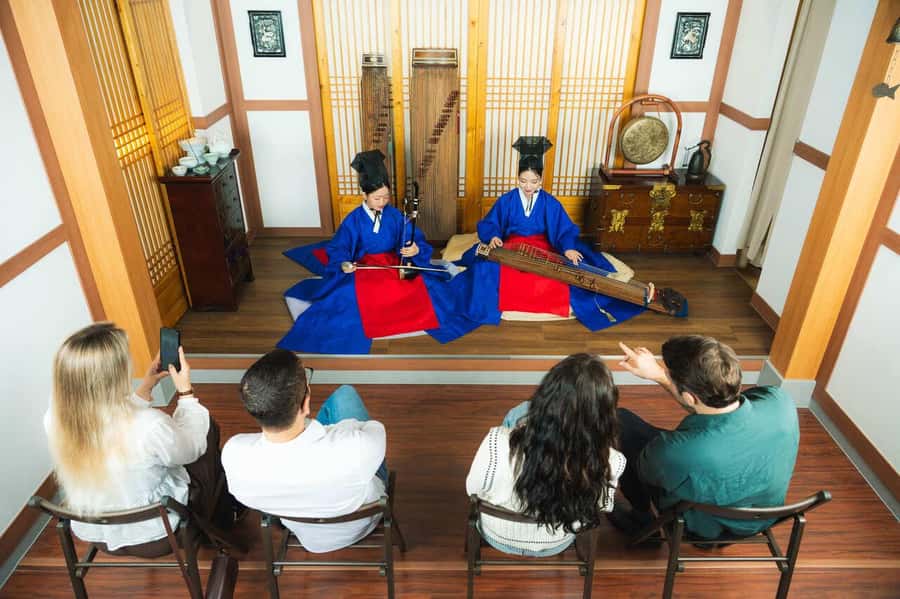
Book it if you want a calm, close-up cultural experience in Seoul and can manage the stairs. The hanok setting, skilled musicians, gayageum and haegeum, and final blend of folk songs, K-pop, and drama music create a well-shaped hour. The post-concert conversation and photos make it feel more personal than a standard seat-and-leave performance.
Think twice if $47 feels high for a one-hour activity, if you need elevator access, or if you are visiting Seoul on a weekend. For the right audience, this is a thoughtful addition to an Insadong day. It is less about spectacle and more about listening closely, learning a little, and meeting the people who keep these instruments in use.
FAQ
Where is the Korean Traditional Music Performance held?
It is held at Jinyeon Hall, 2F, 10 Insadong 5-gil, Jongno-gu, Seoul, South Korea.
How long does the performance last?
The performance lasts approximately 60 minutes.
What time are performances held?
Weekday performances are scheduled at 11:00, 13:00, and 15:00. Shows do not take place on weekends or public holidays.
Which languages are available?
The experience is available in English and Korean.
Is transportation included?
No. Hotel pickup and drop-off are not included. You make your own way to the meeting point.
Is the venue accessible by elevator?
No. The venue can be reached by stairs only and has no elevator. The activity is not suitable for people with mobility impairments.
Can I cancel for a full refund?
Yes. You can cancel up to 24 hours in advance for a full refund.
Just added around the world
- Wrocław: Chopin & Friends piano concerts★ 4.6 · 28 reviews
- Warsaw: Guided Walking Tour with a Private Chopin Concert★ 5.0 · 13 reviews
- Warsaw: Candlelight Concert at Fryderyk Concert Hall★ 4.7 · 110 reviews
- Warsaw: Chopin Concert Ticket With Glass of Champagne★ 4.7 · 59 reviews
- Viva Blackpool: ABBA Bottomless Brunch with Live Music★ 5.0 · 2 reviews
- Waitangi: Treaty Grounds Hāngī and Concert Combo Pass★ 4.7 · 67 reviews
- Vienna: Concert by the Vienna Baroque Orchestra★ 4.6 · 56 reviews
- Vienna: Sunday Brunch Danube Cruise & Live Music★ 4.2 · 42 reviews
Seoul Concerts, compared.

Alpaca World, Railbike and Vivaldi Park Experiences from Seoul
Read our review →
SEOUL: Gugak – Korean Traditional Music Museum&Concert Tour
Read our review →
Seoul: Vivaldi Park Winter Ski with Eobi Ice Valley Day Tour
Read our review →
Vivaldi Park Winter Ski with Eobi Ice Valley Day Tour from Seoul
Read our review →
Seoul: SnowyLand in Vivaldi Park with Nami or Alpaca
Read our review →
Vivaldi Park Winter Ski Resort with Nami Island Tour from Seoul
Read our review →

Browse the lists this tour appears in