
Review · NEW YORK CITY
Broadway Musical Theater Walking Tour
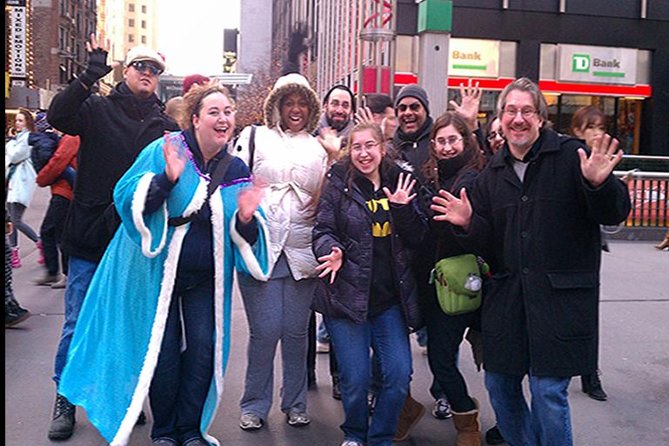
Broadway’s best stories often happen outside the theater doors. On this walking tour, you follow a theater insider through the Drama Book Shop, Sardi’s, Shubert Alley, and the Gershwin Theatre lobby while hearing about famous performers, opening-night parties, Broadway founders, and a resident ghost named Olive Thomas.
I like the small-group limit of 25, which gives the guide room to talk with you rather than simply recite facts. I also like the focus on places you can actually see from the street, including the George M. Cohan statue and the walls of Sardi’s covered with theater portraits.
The main drawback is scope. You do not go inside Broadway theaters for backstage tours, and the walk can stretch beyond the advertised two hours. If you want a performance, set tour, or theater interior, this is not that kind of experience.
Key points
- Drama Book Shop stop: Go inside this theater-focused bookstore for an opening look at Broadway culture.
- Sardi’s portraits: Learn how opening-night parties connect with the famous faces displayed on the restaurant walls.
- Olive Thomas story: Hear about Disney Theatrical and the ghost said to reside in the area.
- Shubert Alley and Times Square: Get the stories behind Broadway’s founders, Mr. Broadway, and the square’s name.
- Gershwin Theatre lobby: See the lobby connected with Wicked, while hearing backstage stories without entering the theater itself.
- A guide makes the difference: Mike, also called Michael, is praised for his energy, humor, and enormous store of Broadway facts.
Broadway stories begin at the Drama Book Shop
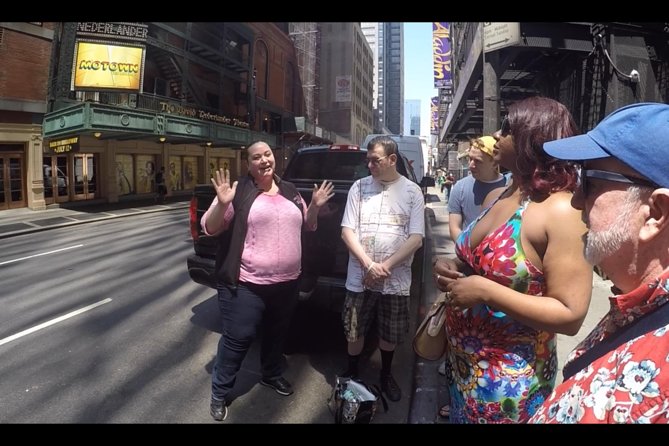
The Drama Book Shop is a smart place to begin because it puts you in the right frame of mind. This is not simply a walk past marquee signs. You start with a place tied directly to plays, musicals, scripts, and the people who make theater.
You go inside for part of the visit, which gives the first stop more substance than a quick sidewalk explanation. The stop lasts about 15 minutes, so it should feel like an introduction rather than a long shopping break.
Your guide uses the area to explain Broadway history, legends, and lore. That broad subject can include the turning points and colorful stories that are easy to miss when you walk through Times Square on your own. The value here comes from the connections: a building, a name, and a theater tradition become linked through a story.
The tour also covers Disney Theatrical and the story of Olive Thomas, a resident ghost. That detail adds a little old-theater mystery without turning the outing into a ghost tour. If you like the odd corners of show-business history, this is one of the more unusual subjects on the route.
I would pay close attention here. The Drama Book Shop stop sets up the rest of the walk, and it helps you understand Broadway as a working theater district rather than just a row of glowing signs.
More Musicals in New York City
- NYC: Aladdin the Musical on Broadway
★ 4.8 · 1,800 reviews - NYC: MJ the Musical on Broadway
1,510 reviews - NYC: Moulin Rouge! the Musical on Broadway
1,329 reviews
Sardi’s and the faces of opening night
Sardi’s is one of the most recognizable theater restaurants in the area, and the tour uses it to explain the social side of Broadway. You hear about opening-night parties and the artists shown on the restaurant’s walls.
The portraits matter because they turn Sardi’s into more than a place to eat before a show. They create a visual record of performers and theater figures connected with Broadway. Your guide can point out how the restaurant became part of the theater world and why its walls are worth studying.
This stop also lasts about 15 minutes. That is enough time to hear the main stories and look at the displays, but it is not designed as a meal stop. You should not expect food or a reserved table to be part of the experience.
I like this section for its human scale. Broadway can feel like a huge machine of theaters, ticket booths, and crowds. Sardi’s brings the focus back to the actors, writers, and artists whose careers shaped the district.
For theater fans, this can be more useful than another general Times Square photo stop. You are not simply hearing that Broadway is famous. You are learning how performers and opening-night rituals became part of its culture.
Mr. Broadway, Times Square, and Shubert Alley
The walk continues with stories about Mr. Broadway and how Times Square got its name. These subjects help explain why the district developed its identity and why the name Broadway carries such weight.
The exact appeal depends on your interest in city history. If you already know the basic story of Times Square, you may find the extra theater context more useful than the naming detail itself. If you are new to New York, the explanation gives you a better sense of how the area became linked with entertainment.
Shubert Alley is another important stop. Your guide talks about the founders and the people behind the theaters. The alley has a strong connection with Broadway’s past, so it gives the tour a quieter contrast to the noise and movement around Times Square.
This is where walking really helps. You can move between the sites at street level and see how close the theater landmarks are to one another. A taxi or sightseeing bus might show you the district, but it would not give you the same chance to pause beside a statue, alley, restaurant, or theater entrance while hearing its story.
The George M. Cohan statue adds another physical marker to the route. It gives you a specific figure to connect with the guide’s discussion of Broadway personalities and the idea of Mr. Broadway.
The Gershwin Theatre lobby and Wicked
The final major stop is the Gershwin Theatre, where you visit the lobby while Wicked is playing. This is a strong finish for fans of modern musical theater because the building is tied to one of Broadway’s best-known current productions.
You also hear backstage stories here. That phrase should be understood correctly: the tour does not take you backstage, and it does not provide a full theater interior tour. Instead, you hear stories connected with theater work while visiting the lobby and exterior area.
The Gershwin portion is listed at about one hour, making it the longest part of the walk. That gives your guide time to connect the theater with Broadway history, Wicked, the George M. Cohan statue, Shubert Alley, Sardi’s, and the Broadway souvenir store.
For a serious theater fan, this extended section is likely the heart of the experience. You get several recognizable Broadway reference points in one route, along with stories that are hard to pick up from a casual walk.
For someone less interested in musicals, an hour around one theater may feel long. The tour is built for people who enjoy names, productions, theater lore, and behind-the-scenes anecdotes. You should choose it for that reason, not because you expect a general New York sightseeing walk.
More Musicals in the USA
- NYC: Chicago the Musical on Broadway
687 reviews - NYC: Hell’s Kitchen the Musical on Broadway
407 reviews - NYC: The Great Gatsby the Musical on Broadway
406 reviews - Hamilton Musical Themed Guided Walking Tour
★ 5.0 · 338 reviews
What the guide adds to the walk
The guide is central to the value here. Mike, also referred to as Michael, is described as energetic, entertaining, and able to keep the group involved. He is praised for knowing a remarkable amount about theaters, plays, actors, playwrights, and unusual Broadway stories.
That matters because the route itself is compact. You could pass the Drama Book Shop, Sardi’s, Shubert Alley, the souvenir store, and the Gershwin Theatre on your own. The guide gives those places meaning and links them together.
I would expect a lively delivery rather than a quiet, formal lecture. The strongest feedback points to a guide who keeps the pace moving and encourages interest even among people who already know a fair amount about Broadway.
The tour can also work for dedicated theater fans. People who have spent years watching musicals may still find gaps in their knowledge, especially in older Broadway history. At the same time, the amount of information can be a lot for a casual visitor, particularly if the walk runs closer to three hours.
One practical tip is to allow more time than the stated two-hour estimate. A previous version of the walk took three hours, and one participant felt the material could have been covered in less time. That does not mean every departure will last that long, but you should avoid booking a tight lunch, matinee, or other appointment immediately afterward.
Is two hours enough for the Broadway route?
The advertised duration is approximately two hours. That is a reasonable estimate for the listed stops, but the actual pace depends on the guide, questions, group size, and how long the group spends at each location.
The maximum group size is 25 people. That is not a private tour, yet it is still small enough for a guide to speak to the whole group without the scale of a large bus outing. A bigger group could make sidewalk stops slower, while an especially engaged group could extend the walk.
The route includes several stops with different purposes:
- The Drama Book Shop gives you an indoor start and theater-book culture.
- Sardi’s focuses on portraits and opening-night traditions.
- Shubert Alley and the Cohan statue add Broadway people and founder stories.
- The Gershwin lobby and surrounding area provide the longest look at a current theater setting.
If you want a fast overview, the walk may feel too detailed. If you enjoy listening to stories and asking questions, the extra time can be part of the appeal. I would treat two hours as the basic plan and keep some flexibility afterward.
There are also air-conditioned stops along the route, which can help on a warm New York day. Still, this is an outdoor walking experience, and it requires good weather. Wear comfortable shoes and plan for the normal demands of moving around Midtown on foot.
The $50 price and what you receive
The cost is $50 per person. That price pays for the guide and the organized walking experience. It does not include a show ticket, food at Sardi’s, souvenir photos, or purchases at the Broadway souvenir store.
The value depends almost entirely on your interest in Broadway. If you would happily spend an afternoon reading about theater figures, productions, and old stories, the price can make sense. You are paying for access to a guide’s store of information and for a route that connects several landmarks in a short area.
If you mainly want to see Times Square, $50 is harder to justify. You can walk through the district for free, view many theater exteriors, and take your own photos. The paid advantage is the explanation, the inside visit at the Drama Book Shop, the lobby stop at the Gershwin, and the guide’s personal knowledge of Broadway people and productions.
Souvenir photos are available to purchase, but they are not included. Since the tour centers on public places and landmarks, you can decide for yourself if an added photo purchase is worthwhile.
Who will enjoy this Broadway walking tour?
I would recommend it most strongly to:
- Musical theater fans who want more context around the shows they already love
- Visitors curious about Broadway history, actors, playwrights, and theater traditions
- People who prefer a walking route to a bus or a purely self-guided visit
- Parents with children who are accompanied by an adult and have an interest in theater
- Anyone who enjoys unusual stories, including the Olive Thomas ghost tale
I would be more cautious if you want to enter multiple theaters, see backstage spaces, or watch a performance. The tour does not include theater interiors beyond the Gershwin lobby and does not include show admission.
It may also be a poor fit if you dislike long explanations. The guide’s strength is the amount of information, but that same detail can make the outing feel slow if you want only a quick introduction.
The English-only format is another point to consider. The tour is offered in English, and no other language option is provided in the details.
Timing, weather, and practical planning
The scheduled start time is 11:00 a.m., and the tour returns to its meeting point at the end. The exact meeting address is not provided here, so check your booking confirmation carefully before setting out.
Children must be accompanied by an adult. The group can include up to 25 people, so arrive ready to stay with the group during street crossings and outdoor stops.
You receive confirmation when you book, and the ticket is mobile, which keeps the process simple. The tour requires good weather. If poor weather cancels it, you are offered another date or a full refund.
You can cancel for a full refund up to 24 hours before the start time. Changes or cancellations made less than 24 hours before the start are not accepted for a refund. Since the walk depends on outdoor conditions, it is sensible to check the forecast before your final day.
Should you book this Broadway tour?
Book it if you want Broadway explained by a guide who can connect theaters, actors, restaurants, founders, and legends into one walking story. Mike or Michael appears to be the kind of guide who gives the tour its real value, especially for people who want more than a quick photo outside a marquee.
Skip it if your priority is entering several theaters, seeing backstage areas, or keeping your sightseeing short. You may also want to skip it if your schedule cannot handle a walk that could run longer than two hours.
For the right audience, $50 is a fair price for a focused Broadway history walk. Go in expecting stories, landmarks, and the Gershwin lobby, not a theater tour or a performance ticket. If that matches your interests, this is a useful way to see the Broadway district with far more context than you would get on your own.
FAQ
How long is the Broadway Musical Theater Walking Tour?
The tour is advertised as lasting approximately two hours. It has also taken three hours on at least one occasion, so allow extra time after the scheduled finish.
What time does the tour start?
The tour starts at 11:00 a.m.
Where does the tour end?
The activity ends back at the meeting point.
Is the tour offered in English?
Yes. The tour is offered in English.
How many people can join the tour?
The maximum group size is 25 people.
Does the tour go inside Broadway theaters?
The tour does not go inside the theaters for a full theater or backstage visit. It does include the Gershwin Theatre lobby and an indoor visit at the Drama Book Shop.
Are children allowed on the tour?
Yes, but children must be accompanied by an adult.
Can I cancel for a full refund?
Yes. You can cancel at least 24 hours before the start time for a full refund. Cancellations or changes made less than 24 hours before the start are not accepted for a refund. If poor weather cancels the tour, you are offered another date or a full refund.
More Walking Tours in New York City
- West Harlem: Gospel Church Service and Sunday Walking Tour
★ 4.3 · 411 reviews - Half-Day Harlem Gospel Experience Walking Tour
★ 4.5 · 283 reviews - Harlem Gospel Multimedia Walking Tour
★ 4.0 · 57 reviews - Harlem & The Rise Of Gospel Music Walking Tour
★ 5.0 · 56 reviews
Just added around New York City
- Harlem Sunday Gospel Experience★ 4.0 · 46 reviews
- Harlem & The Rise Of Gospel Music Walking Tour★ 5.0 · 56 reviews
- Six The Musical on Broadway Ticket★ 4.0 · 55 reviews
- Sunday Walking Tour and Gospel in West Harlem★ 4.0 · 14 reviews
- New York Harbor Wine and Jazz Sail aboard Clipper City★ 4.5 · 21 reviews
- New York: Harlem tour and Gospel service★ 4.5 · 30 reviews
- New York City Live Jazz Sail★ 5.0 · 14 reviews
- Operation Mincemeat: A New Musical on Broadway Ticket★ 4.5 · 7 reviews
New York City Concerts, compared.
NYC: Harlem Hallelujah! Gospel Wednesday Concert
Read our review →
New York City: Harlem Gospel Live Music Concert
Read our review →

NYC: Holiday Yacht Cruise with Jazz, Cocoa & Carols
Read our review →
Harlem: Central Harlem Sunday Gospel with Locals
Read our review →Browse the lists this tour appears in