
Review · ROME
Rome: “The Most Beautiful Opera Arias” Concert
Opera in Rome does not always require a grand theater, formal dress, or a three-hour commitment. At this small concert near Piazza Venezia, you sit in a Waldesian Church just a few feet from the singers and pianist. The setting is simple, warm, and acoustically lively. In a space this small, a trained voice can feel surprisingly powerful.
I like the short, familiar program, which makes this an easy first taste of opera. I also like the central location, excellent acoustics, and friendly presentation, including occasional humor and simple Italian participation. The main point to consider is the timing: plan on about 50 minutes, not a full evening-length opera, and do not expect a large cast, orchestra, or elaborate staging.
Key points at a glance
- Arias near Piazza Venezia: The church is only a short distance from one of Rome’s busiest central squares.
- A compact opera sampler: Hear selections linked to La Traviata, Turandot, Rigoletto, Tosca, and other Italian favorites.
- Close-up performance: The intimate church places you near the singers, piano, and musical details.
- A good first opera: The familiar melodies and brief format work well for beginners, families, and teenagers.
- Warm acoustics: The church gives the voices room to carry, even without a full orchestra.
- Simple logistics: You receive an opera ticket, but you make your own way there and should check the exact meeting point for your booking.
What this Rome opera concert actually is
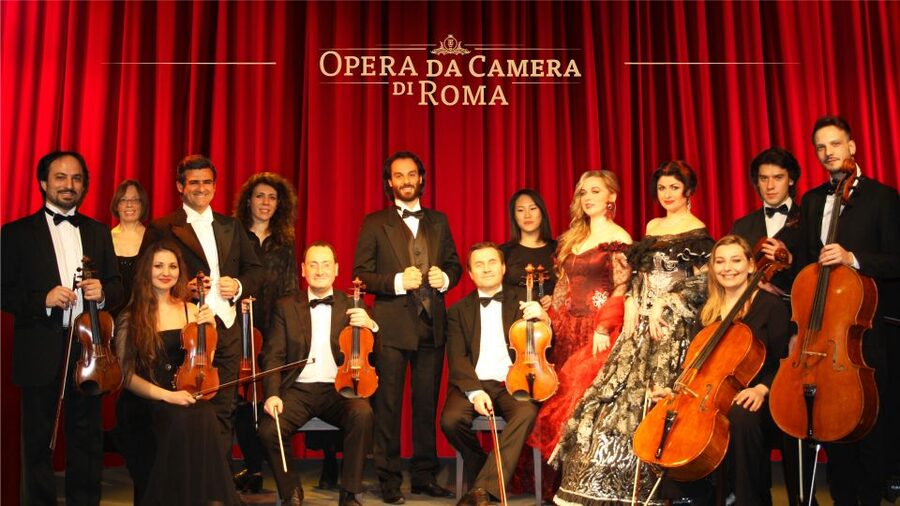
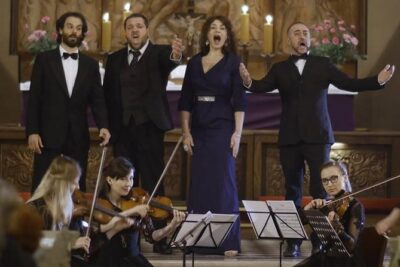
This is a small-scale classical concert presented by Opera da Camera di Roma. The basic team is usually two opera singers with a pianist, although the particular performers can vary by date. Pianist Roberto is named in the experience details from past performances, and other feedback specifically praises singers such as Christian, Antonieta, Marco, and Francesca. Treat those names as examples of past lineups, not a promise for your performance date.
The program is built as a sampler rather than a complete opera. You may hear arias from Verdi’s La Traviata and Rigoletto, Puccini’s Turandot, and Tosca, along with Neapolitan songs and selections connected with Vivaldi’s Four Seasons. That mix matters. You are not being asked to follow a plot in Italian or sit through several acts. You get the emotional high points: the soaring soprano, the ringing tenor, the dramatic piano, and the melodies many people recognize from films, advertisements, or previous concerts.
The advertised duration is 50 minutes, while some descriptions refer to a journey of up to 70 minutes. I would plan my Rome day around a 50-minute performance. It is usually long enough to feel worthwhile without becoming hard work after a full day of sightseeing. Some performances include an encore, but you should not build your schedule around one.
More Opera Performances in Italy
- Rome: Opera Concert at Palazzo Poli – Fontana di Trevi
★ 4.7 · 1,026 reviews - Rome: Italian Opera Night Concert by Candle Glow
★ 4.6 · 630 reviews - The Great Opera Arias Concert at Palazzo Poli – Trevi Fountain
★ 5.0 · 533 reviews
Entering the Waldesian Church near Piazza Venezia
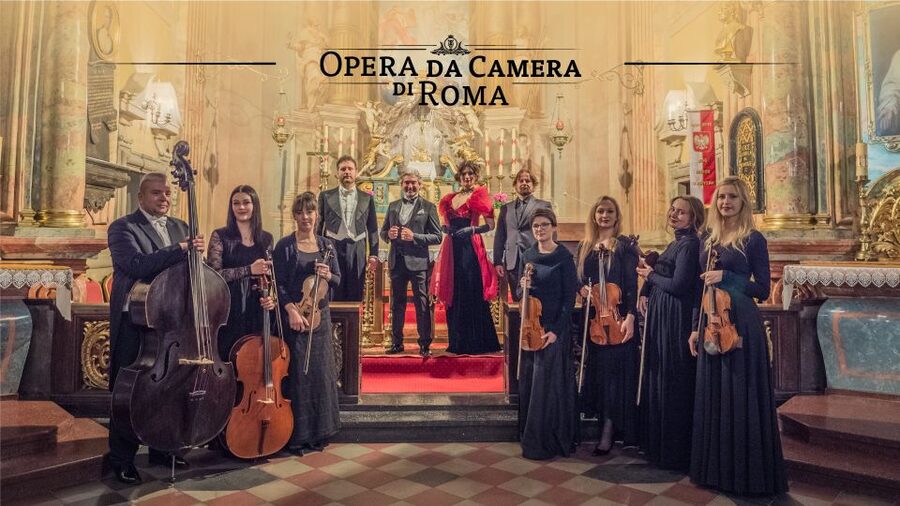
The church is part of the appeal, though it is not a grand Roman basilica covered in famous artworks. It provides a warm, modest room with pew seating and unusually good acoustics. The small scale creates the feeling of a private concert, with the performers close enough for you to see their expressions and watch the pianist work.
The setting may initially feel less theatrical than you expect. There is no large stage, orchestra pit, or ornate opera-house production. Lighting is fairly plain, and one useful improvement would be more theatrical lighting for the singers. Still, once the first voice fills the room, the church makes sense. The sound does the dramatic work.
The venue is only meters from Piazza Venezia, putting you in a useful part of central Rome. You can combine the concert with time around the piazza, the Capitoline Hill area, or nearby evening dining. The exact meeting point can vary by booking option, so check your confirmation rather than relying only on a general map pin.
A host or greeter meets you in English or Italian and shows you to your pew. Directions are sent in advance, and the process is designed for an independent arrival rather than a guided walk. There is no tour guide explaining Rome’s monuments before the music begins. That is a benefit if you want a clean, focused concert, but a drawback if you expect a cultural lecture.
The music: familiar arias and Italian favorites
The strongest part of the program is its accessibility. Opera can seem intimidating when you imagine untranslated stories, unfamiliar characters, and long performances. Here, the emphasis is on individual arias and songs. You hear the voice at full strength, without needing to know every plot detail.
La Traviata can provide the tender, lyrical side of Verdi. Rigoletto brings more drama and theatrical force. Turandot offers the grand Puccini sound many people recognize, while Tosca can give the tenor a chance to deliver a passionate, high-impact aria. One performance included a rendition believed to be E lucevan le stelle from Tosca, a familiar selection for many opera newcomers.
Neapolitan songs add a lighter, more direct connection to Italian musical culture. These pieces often feel easier to follow than a full dramatic aria because the mood is clear even when you do not understand every word. The program may also include Vivaldi’s Four Seasons, giving the pianist a chance to move beyond opera and show a different side of Italian classical music.
Do not expect a complete orchestra. The piano carries the accompaniment, and that makes the event more intimate but less massive than a major theater production. A good pianist has to support the singers without covering them. Roberto and other pianists have been praised for their sympathetic accompaniment, which is especially important in a small room.
Why the close seating changes the experience
At a large opera house, the singer’s voice travels across a wide auditorium. Here, you hear the sound at close range. You can notice the change in tone between a soft phrase and a full dramatic passage, as well as the pianist’s timing and the singers’ interaction.
That closeness can be moving. The church acoustics help the voices echo without turning the performance into a blur. Several accounts describe the sound as powerful and emotional, with the soprano often receiving particular praise. The piano remains an active part of the concert, not background noise.
The intimate format also lets the performers connect with the audience. The evening can include a little humor, brief audience participation, or Italian words that you can repeat and sing. One performance even taught basic Italian phrases so the audience could join in. The tone is welcoming rather than stiff.
Seating is in church pews, and comfort is not perfect for everyone. One complaint specifically concerned uncomfortable seats and pews that needed repair. If you have a sensitive back or need very supportive seating, keep that in mind. The room itself has been described as warm, which is helpful in cooler months, while the 50-minute length is manageable during Rome’s hotter summer evenings.
More Opera Performances in Rome
- Rome: Italian Opera Concert and Traditional Dinner
★ 4.1 · 453 reviews - Rome: Freddie Mercury Opera Show
★ 3.9 · 381 reviews - Concert Ticket – The Most Beautiful Opera Arias by Opera da Camera di Roma
★ 4.5 · 322 reviews - Rome: St. Paul’s Within the Walls Church Opera Arias Ticket
★ 4.6 · 312 reviews
A sample program, from first note to encore
The event does not function like a guided tour with a set sequence of Roman sights. Your itinerary is essentially arrival, seating, performance, and departure. That simplicity is part of its value.
Arrival and seating
You make your own way to the church. A host welcomes you at the door, checks your booking, and directs you to a pew. Because the meeting point may differ by option, read the booking details carefully and allow enough time to find the entrance near Piazza Venezia.
There is no hotel pickup, drop-off, or parking included. Parking in central Rome would be a poor plan anyway, so public transport, walking, or a taxi arranged independently is more practical. The experience is best treated as a central evening stop, not a package with transportation.
The opening selections
The pianist and singers establish the mood quickly. You may get an opening piece that lets the piano set the tone before the voices take over. The program is built for variety, moving between lyrical, comic, romantic, and dramatic selections rather than staying at one emotional pitch.
This helps if you are new to opera. You can hear several styles without spending the evening trying to adjust to one long story. It also gives experienced listeners a pleasant compact recital, though serious opera followers may want a full staged production elsewhere in Rome.
The major arias
The middle section is where the singers usually make the strongest impression. The soprano can move from delicate high lines to forceful climaxes, while the tenor has room for a more heroic sound. The exact balance depends on the day’s cast, but the small church gives both singers a strong platform.
The program may include songs from Verdi and Puccini, alongside Neapolitan favorites. You should expect a highlight reel, not a fixed opera sequence with costumes, scenery, and character development. That distinction is important when comparing this with tickets at Teatro dell’Opera di Roma.
The close
The concert finishes without an interval. That keeps the energy intact and makes the event easy to fit between dinner and other evening plans. An encore is possible, especially when the audience is enthusiastic, but it is not listed as a guaranteed part of the program.
At the end, you can leave directly into central Rome. There is no formal post-concert talk or included walk. That gives you freedom to continue your evening, perhaps with dinner or a stroll near Piazza Venezia.
Who will get the most from the $40 price
At $40 per person, this is strong value if you want live Italian music in a central venue without committing to a full opera night. You are paying for professional singers, a pianist, a ticketed performance, and a distinctive setting. The close distance from Piazza Venezia also saves time and makes the concert easy to pair with other plans.
The price looks especially good for first-time opera listeners. You can test the art form in under an hour, hear recognizable works, and decide if you want a longer production later. Parents have also found the bite-size format useful for teenagers. A 15-year-old or 17-year-old may resist a full opera but still enjoy a lively program of famous arias.
It is also suitable for mixed-age groups. Grandparents, parents, and children can share the experience without needing the same level of musical background. The humor and audience contact keep it from feeling like a serious lecture.
The value is weaker if you are seeking a complete theatrical production. There are only a few performers, with piano rather than orchestra, and the lighting and staging are basic. A person expecting grand scenery or a large chorus could feel underwhelmed. You are buying musical intimacy, not spectacle.
Practical advice before you book
Check the date and exact meeting point carefully. The general venue is near Piazza Venezia, but the meeting details may vary by option. The host speaks English and Italian, and you should receive directions in advance, but you still need to navigate there yourself.
Plan for 50 minutes. Some descriptions refer to 70 minutes, and an encore can add a little time, but the safest schedule assumes the shorter duration. That makes it a good choice before dinner or as a compact evening activity.
Do not pay extra for a better seat without confirming how seating works for your selected option. One past complaint involved a more expensive seat that ended up in the last row. Seating conditions can change, but this is a useful reason to check the details and arrive with realistic expectations.
The church is warm and comfortable in general, but the pews are not ideal for every body. If comfort matters, ask the host about seating on arrival. Also remember that there is no parking, hotel pickup, or drop-off included.
Cancellation is flexible: you can cancel up to 24 hours before the start for a full refund. You can also reserve now and pay later, which helps if your Rome schedule is still shifting.
Is this the right Rome evening for you?
I would book this concert if you want a short, central, low-pressure introduction to opera. The singers and pianist are the real attraction, and the Waldesian Church gives the music a close, human scale. You do not need opera experience, Italian language skills, or formal knowledge of the composers to enjoy the evening.
I would look elsewhere if your main goal is a grand opera-house production with orchestra, costumes, scenery, and a full plot. This concert is a sampler. Its strength is that it gives you the emotional punch of famous arias without the time and formality of a full performance.
For most visitors, the $40 price is fair, particularly if you value the central location and the chance to hear strong voices in a room where you can see the performers clearly. Book it as an intimate musical interlude in Rome, not as a substitute for a major staged opera.
FAQ
How long does the opera concert last?
The listed duration is 50 minutes. Some descriptions refer to a performance of up to 70 minutes, and an encore may sometimes be included, so allow a little extra time if your schedule is tight.
Where does the concert take place?
It takes place in a cozy Waldesian Church near Piazza Venezia in central Rome. The church is only a short distance from the piazza.
What music is performed?
The program can include arias from La Traviata, Turandot, Rigoletto, and Tosca, along with Neapolitan songs and selections from Vivaldi’s Four Seasons.
Is this a complete opera?
No. It is a concert of selected arias and songs, not a fully staged opera with a complete plot, costumes, scenery, and orchestra.
How many performers are there?
The usual format features two opera singers and a pianist. The particular singers and pianist may vary by performance date.
Is the concert suitable for someone who has never seen opera?
Yes. The short running time, familiar selections, and compact format make it a practical introduction to opera.
Is the concert suitable for children or teenagers?
Yes. The brief program and accessible music can work well for families and teenagers, including those who might not enjoy a full-length opera.
Is the concert guided?
No. This is a performance rather than a guided tour. A host or greeter speaks English and Italian, welcomes you, and shows you to your pew.
Are transportation and parking included?
No. Parking and hotel pickup and drop-off are not included. You make your own way to the church.
Can I cancel the booking?
You can cancel up to 24 hours in advance for a full refund. A reserve-now, pay-later option is also available.
Just added around Rome
- The Three Tenors Concert in St. Paul’s Within the Walls★ 4.5 · 49 reviews
- Rome: OPERA’S GREATEST HITS (Concert + Aperitif)★ 5.0 · 28 reviews
- Rooftop Bar Opera Show: The Great Beauty of Rome★ 5.0 · 92 reviews
- Freddie Mercury Opera Show in Rome★ 4.0 · 37 reviews
- Rome: Rooftop Gourmet Dinner & Opera Performance★ 5.0 · 4 reviews
- Opera Serenades in Palazzo Doria Pamphilj, Rome★ 5.0 · 27 reviews
- Rome: Chopin & Italian Friends Piano Concert★ 4.5 · 11 reviews
- Opera Concert Ticket in Rome with Dinner★ 4.0 · 52 reviews
Rome Concerts, compared.
Rome: Opera Concert at Palazzo Poli – Fontana di Trevi
Read our review →
Rome: The Three Tenors at St. Paul’s Church Concert Ticket
Read our review →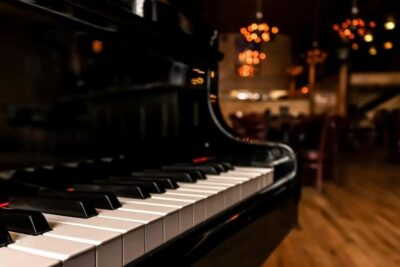
Rome: Italian Opera Night Concert by Candle Glow
Read our review →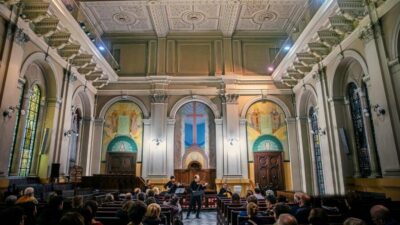
The Great Opera Arias Concert at Palazzo Poli – Trevi Fountain
Read our review →
Rome: Italian Opera Concert and Traditional Dinner
Read our review →
Concert Ticket – The Most Beautiful Opera Arias by Opera da Camera di Roma
Read our review →Browse the lists this tour appears in