
Review · PARIS
Harlem in Paris : the Birth of Jazz in France (Small Group Walking Tour)
Paris’s Pigalle once pulsed with American jazz, Black performers, cabarets, and late-night clubs. This tour brings that lost world back through music, photographs, videos, and stories about Josephine Baker, Louis Armstrong, Django Reinhardt, and lesser-known figures such as Eugene Bullard and Valaida Snow. I especially like the audio-visual opening and the focus on people who helped shape Paris beyond the usual sightseeing circuit.
I also like the small private format, which lets Ellen adjust the pace and answer questions. The main consideration is that much of the experience uses imagination: several clubs are now closed, vacant, or changed beyond recognition, and the walking portion covers about 2 kilometers rather than a large section of Paris.
Key points to know before booking
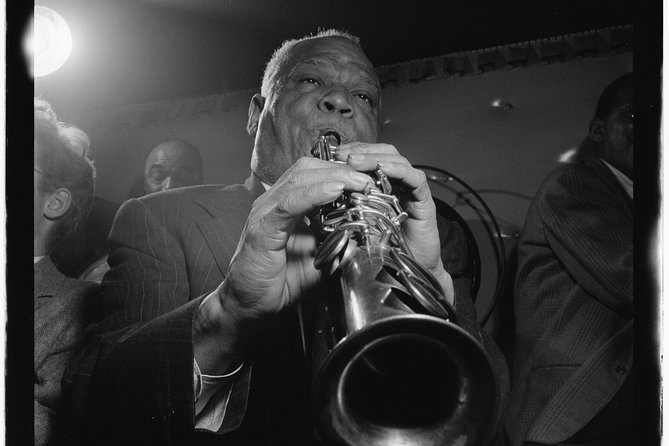
- Josephine Baker anchors the story: Learn how the young Harlem performer became a French icon after the 1925 Revue Nègre.
- The tour begins with a presentation: Expect photographs, recordings, videos, and historical material before heading outside.
- Pigalle is the setting: Former clubs such as Zelli’s, the Grand Duc, and Chez Josephine connect the streets to the jazz age.
- Ellen leads the experience: Her presentation is highly prepared, personal, and built around detailed research.
- This is history rather than nightlife: You visit former club locations, not functioning jazz venues.
- Private groups keep it flexible: Only your group participates, with group discounts available.
Pigalle before the tourist crowds
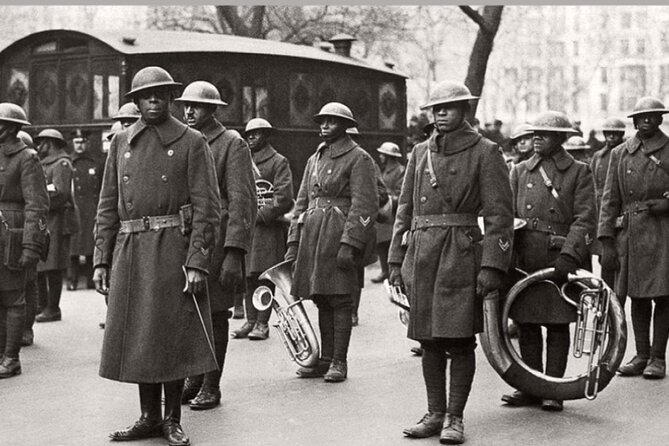
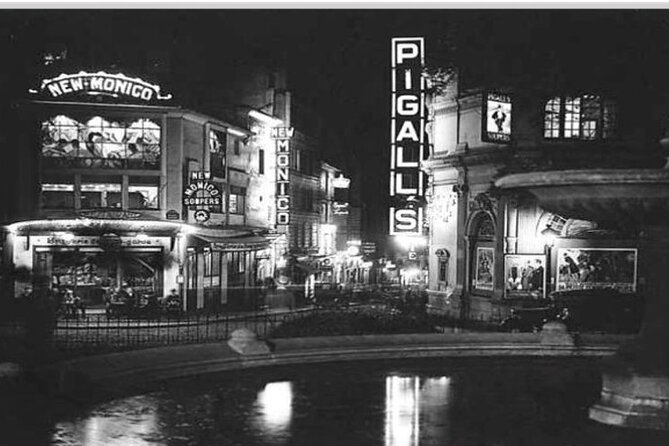
Harlem in Paris: The Birth of Jazz in France is really a tour of Pigalle, the neighborhood around Place Blanche and Place Pigalle. In the 1920s and 1930s, this was a late-night district of cabarets, dance halls, restaurants, and clubs. American performers arrived with new sounds, French audiences embraced them, and Paris became an important stage for Black musicians from the United States and the Caribbean.
The experience gives you a useful introduction before asking you to interpret the streets. The tour begins at Artemisia Montmartre, 11 Rue Fromentin, near the red-light district. The opening portion is generally a sit-down presentation in a hotel or restaurant setting, with music, old photographs, video clips, documents, and other visual material shown on a tablet or in a PowerPoint-style presentation.
That format matters. Many of the original clubs no longer operate, so a plaque or ordinary doorway may be all you see outside. The recordings and photographs help you picture the performers inside those buildings instead of expecting a preserved jazz quarter.
Ellen leads the tour in English. Her approach is part lecture, part storytelling, and part neighborhood walk. She has built the experience around original images, recorded songs, and the personal details of musicians who are often left out of standard Paris tours.
More Jazz Concerts in Paris:
- Create unique jewelry from top Parisian designer Bijoux Blues
★ 4.0 · 2 reviews - New Orleans Steamboat Natchez Jazz Cruise with Dinner Option
★ 4.0 · 7,533 reviews - New Orleans Steamboat Natchez Jazz Cruise
★ 4.5 · 5,334 reviews
What the sit-down introduction adds
The opening presentation is one of the most important parts of the experience. If you expect two and a half hours of continuous walking, you may be disappointed. The tour includes a substantial indoor introduction, followed by roughly an hour of walking through Pigalle.
I see this as a sensible choice for the subject. You need some context to understand why Josephine Baker mattered, how jazz reached France, and why Paris became a place where Black American artists could work, perform, and build careers.
The presentation also introduces names that may be unfamiliar. You hear about performers, club owners, musicians, and entertainers who shaped Parisian nightlife without becoming household names. Music and moving images give the period more life than a list of dates ever could.
The indoor section can also help families and mixed-interest groups. One parent and child described the tour as a useful shared experience, while another family found the guide able to keep children interested. You are not required to arrive as a jazz expert.
At the same time, this is not a casual stroll with a few passing anecdotes. Ellen presents a large amount of information, and people looking for a relaxed neighborhood walk may find the opening more formal than expected.
Place Blanche and Josephine Baker’s Paris
The first main stop is Place Blanche, beside the former location associated with Josephine Baker’s club, Chez Josephine. Baker arrived in France in 1925 after working in vaudeville in Harlem. She came with the New York Syncopated Orchestra and a young clarinet player named Sidney Bechet.
At only 18, she became the star of the Revue Nègre, a daring production commissioned by the Théâtre des Champs-Élysées. The show included 13 dancers and 12 musicians, but Baker quickly became its central figure. Her dancing, stage presence, and striking costumes made her an immediate Paris sensation.
The tour places Baker within a larger story. She was not simply an entertainer who found success abroad. She became known as the Black Venus of Paris, later became a French national, and lived in France from 1925 until her death in 1975.
That long connection gives the stop emotional weight. You are looking at an ordinary Paris street while hearing how an American performer transformed herself into a French cultural figure. The contrast between the present-day surroundings and the old photographs is part of the point.
Rue Mansart and the Louis Armstrong connection
At Rue Mansart, the tour stops near a bistro where Louis Armstrong would eat after rehearsals at a recording studio nearby. This is where the story becomes pleasantly human. Armstrong is remembered as a giant of jazz, but here you also hear about his meals, his working routine, and his introduction to choucroute, the sausage-and-cabbage dish popular in France.
The stop also connects Armstrong with Django Reinhardt, the French Gypsy jazz guitarist. Their meeting links American jazz with the European style that developed around Reinhardt and his fellow musicians.
This is a short stop, about 10 minutes, but it gives the tour a useful change of scale. You move from the grand career of Josephine Baker to the daily life of a touring musician. You also see how jazz in France was not just imported and copied. French musicians adapted it and created something of their own.
Do not expect a preserved Armstrong restaurant or a museum display. The value is in the story and the location, supported by the photographs and recordings shown during the tour.
More Walking Tours in Paris:
- Area ,Opera, Jewellery,Fashion,Palais Royal walking tour
★ 5.0 · 47 reviews - Paris: Guided Walking Tour from Opera Garnier to Notre-Dame
★ 4.3 · 16 reviews - Paris Walk: Opera to Montmartre with Pastry & Chocolate
★ 5.0 · 4 reviews - Pairs: The Opera to Hotel des Invalides Guided Walking Tour
★ 3.7 · 3 reviews
Zelli’s and the story of Eugene Bullard
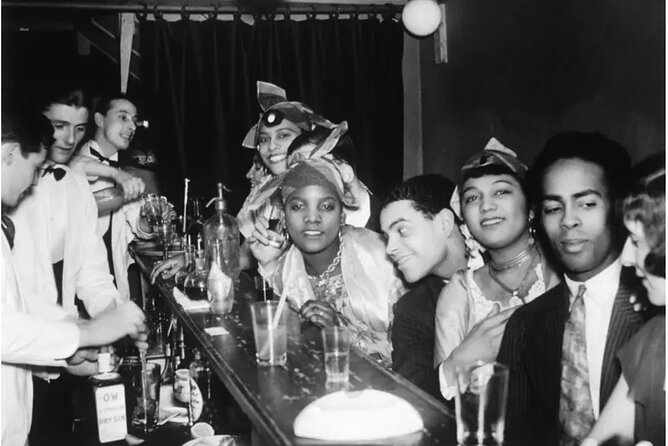
On Rue Pierre-Fontaine, you stop outside the former site of Zelli’s, one of Pigalle’s best-known cabarets during the 1920s. Zelli’s attracted attention for its modern jazz program and became a meeting place for performers and night owls.
This stop introduces Eugene Jacques Bullard, one of the tour’s most remarkable figures. Bullard was the son of a formerly enslaved man from Martinique. During the First World War, he fought for France and became the first African American fighter pilot in history.
He flew 30 missions, brought down two German aircraft, and earned promotion to corporal along with the nickname Black Jacques. After the war, he learned to play drums and worked as a musician at Zelli’s. He later became its manager.
With support from Joe Zelli, Bullard opened the Grand Duc, a club offering hot jazz and soul food. It became one of the popular venues in Paris. His story connects war service, music, business, and Black life in France in a way that a standard jazz biography often misses.
The building itself may not reveal much. That is a recurring feature of this tour. You are not entering a grand restored club. You are standing in front of a modern street address while Ellen uses images and stories to show what once happened there.
The women who ruled Pigalle’s night life
Back at Place Blanche, the focus shifts to women in jazz and nightlife. This part of the tour is especially valuable because it moves beyond the familiar male names associated with the period.
You meet Bricktop, known as the Queen of Pigalle. She arrived in Paris with only $24 and eventually became a major figure in the city’s club scene. Her circle included royalty, artists, and celebrities, showing how a Black American entertainer could gain social influence in Paris as well as professional success.
Then comes Valaida Snow, a singer, dancer, and multi-instrumentalist who played eight instruments. Louis Armstrong called her the second-best trumpet player in the world. In Europe during the 1930s, she became a major star.
Snow’s story takes a darker turn. While performing in Denmark in 1940, she was arrested by the Nazis. She was eventually freed through a prisoner exchange, but returned to the United States badly affected by the experience. She later recovered enough to continue her jazz career.
This section gives the tour a wider emotional range. Pigalle was not only glamour and music. The performers lived through racism, war, imprisonment, and the uncertainty of working far from home.
Rue Victor Massé and Alberta Hunter
The final listed stop is on Rue Victor Massé, outside a club that is now closed after the Covid period. You will not be visiting a functioning music venue here, but the location provides the setting for Alberta Hunter’s story.
Hunter experienced the Jazz Age in both Harlem and Paris. She left music in the 1940s and worked as a nurse for two decades. At the age of 83, she was persuaded to return to singing. She relaunched her career and became a star again through the strength of her voice.
Her life is a good ending for the walking section because it challenges the usual idea of a performer’s career. Hunter was not confined to one brief era. She moved between continents, left music for another profession, and returned to the stage late in life.
The closed club also makes the practical limitation clear. This is a historical route through places connected to jazz, not a night out with live music. If you want a current concert or a working cabaret, this is the wrong experience.
What makes the guide effective
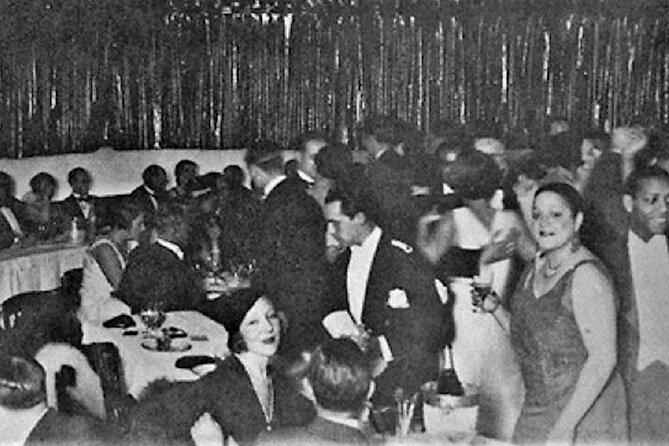
Ellen’s preparation is central to the tour. She uses photographs, songs, video, documents, and memorabilia to support the stories. The tablet or other visual display is especially useful when you are standing outside a building that has lost its original purpose.
Her style is more detailed than breezy. She knows the biographies, remembers names and dates, and gives performers individual personalities. You are likely to hear not only where someone worked, but also how that person survived, built a business, served in wartime, or returned to music after years away.
That approach works best if you enjoy stories and historical context. It also suits people who want to learn about Black American life in Paris beyond the most famous names.
One boundary is worth noting. The focus is jazz, musicians, entertainers, and related club culture. It is not a general tour of Black writers and artists in Paris. If your main interest is James Baldwin or literary expatriate life, you should choose a different subject. This tour does not attempt to cover every Black American connection to the city.
Walking pace, group size, and practical details
The tour lasts about two and a half hours and starts at 2:00 p.m. It ends at Place Pigalle. The walking route covers about 2 kilometers, with stops of roughly 10 to 20 minutes at several sites.
Because the route stays in Pigalle, you spend most of the outdoor portion in one compact area. That keeps the walking manageable and leaves time for storytelling. A stroller has been used successfully on the route, and most people can participate. Service animals are allowed, and the meeting point is near public transportation.
This is a private activity, so only your group participates. That can make a real difference during the presentation. You can ask questions, pause over a photograph, or move at a comfortable pace without holding up a large group.
The weather policy matters because the tour includes outdoor walking. Poor weather may lead to a new date or a full refund. You can cancel for a full refund up to 24 hours before the start time. If the minimum number of participants is not reached, the provider offers another date, another experience, or a refund.
Is $107.84 a fair price?
At $107.84 per person, this is not a cheap way to spend an afternoon in Paris. The value depends on how much you want from the experience.
You are paying for a private English-language tour, a prepared indoor presentation, research into a specialized subject, music and video material, and a guided walk through several former club locations. The price makes more sense for a private group that can share the cost or for someone with a serious interest in jazz, Black history, or unusual Paris stories.
It makes less sense if you mainly want a long outdoor walk or a large number of landmarks. The route is compact, several venues are gone, and the actual walking portion is only about an hour. Food, drinks, and hotel transfers are not included.
I would also compare the price with your other Paris priorities. If this is your first visit and you still need to see the Louvre, Notre-Dame, or Montmartre, the tour fills a more specialized niche. If you have already covered the main sights, it offers a fresh way to understand Pigalle.
Who should book it?
Book this tour if you enjoy jazz, personal stories, Black history, or the parts of Paris that have disappeared from the city’s physical streets. You will get the most from it if you are willing to listen closely and picture the old clubs through photographs and sound.
It also works well for a private family group, a parent and older child, or friends who want a focused cultural experience. The manageable route and sit-down introduction make it less tiring than a full-day walking tour.
Think twice if you expect live music, active clubs, or two and a half hours of outdoor sightseeing. You should also know that the presentation is a major part of the experience. For the right audience, that preparation is what makes the ordinary-looking streets meaningful.
FAQ
Where does the Harlem in Paris tour start?
The tour starts at Artemisia Montmartre, 11 Rue Fromentin, 75009 Paris, France.
What time does the tour begin?
The scheduled start time is 2:00 p.m.
Where does the tour end?
The walking tour ends at Place Pigalle.
How long does the experience last?
The experience lasts approximately two hours and 30 minutes.
Is the tour offered in English?
Yes. The tour is offered in English.
Is this a private tour?
Yes. Only your group participates in the activity.
Are food and drinks included?
No. Food and beverages are not included.
What happens if the weather is poor?
If the experience is canceled because of poor weather, you will be offered another date or a full refund.
Just added around Paris
- Area ,Opera, Jewellery,Fashion,Palais Royal walking tour★ 5.0 · 47 reviews
- Create unique jewelry from top Parisian designer Bijoux Blues★ 4.0 · 2 reviews
- Private Opera Garnier Theater 2-Hour Tour in Paris★ 5.0 · 45 reviews
- Sunset Picnic with View of Eiffel Tower and Live Music★ 5.0 · 15 reviews
- Paris Opera Garnier Private Tour★ 5.0 · 42 reviews
- Opera Garnier with private guide★ 4.5 · 21 reviews
- Paris Seine River Dinner Cruise by Maxim’s with Champagne & Music★ 4.0 · 131 reviews
- 2 Hour Private Opera Garnier Guided Tour★ 5.0 · 11 reviews
Paris Concerts, compared.

Paris: 3-Course-Dinner Cruise on the Seine with live music
Read our review →
Bateaux Mouches Dinner Cruise on the Seine River in Paris
Read our review →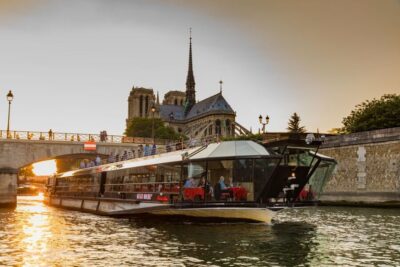
Paris: 4-Course Dinner Cruise on Seine River with Live Music
Read our review →
Paris: Gourmet Dinner Cruise on Seine River with Live Music
Read our review →
Paris: Opera Garnier and Seine River Cruise Tickets
Read our review →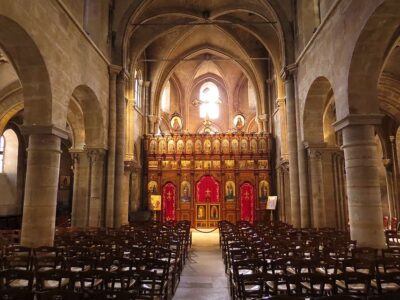
Paris: Classical Music Concert in Saint-Julien-le-Pauvre
Read our review →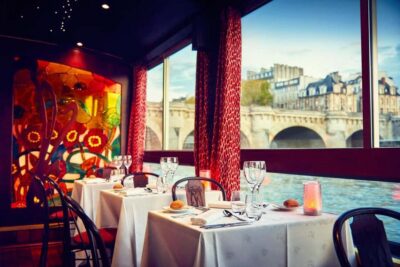
Paris: Seine River Cruise with 3-Course Dinner & Live Music
Read our review →
Paris: Classical Music Concert Tickets in Parisian Churches
Read our review →Browse the lists this tour appears in