
Review · NEW YORK CITY
Alexander Hamilton Musical Walking Tour
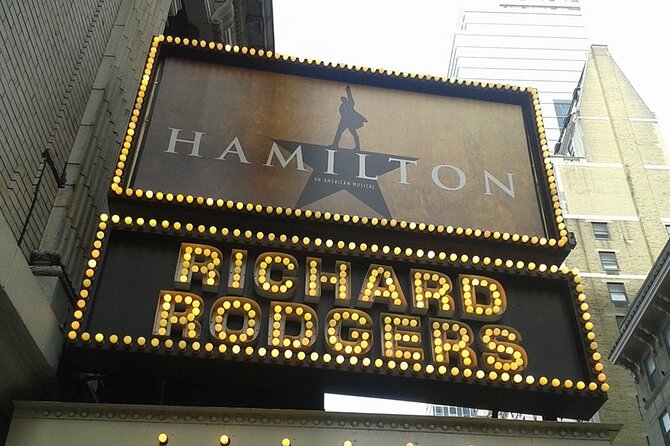
The best part of this Alexander Hamilton walking tour is the way it turns Lower Manhattan into a live history lesson. You follow the places tied to Hamilton, Burr, Eliza, Washington, banking, and the early United States, while the musical gives the stories a familiar beat.
I like the mix of musical connections and major sights, especially the Federal Reserve, Stone Street, Fraunces Tavern, Wall Street, and Trinity Church. I also like that the tour stays on foot, so you can look closely at the old streets and buildings instead of watching them pass through a window.
The main caution is simple: this is a serious amount of walking, and the route may not always cover every listed stop. One guest did not reach Stone Street or Fraunces Tavern and also found the guide difficult to hear, so a small group and a clear voice matter.
Key points to know before you book
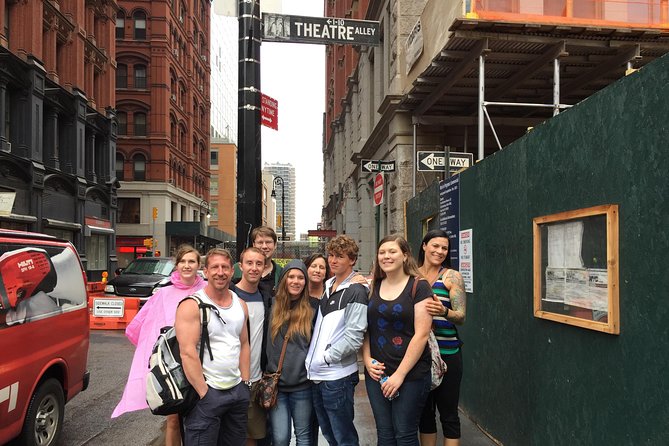
- Hamilton meets Lower Manhattan: Connect musical moments with real places tied to Hamilton, Burr, Eliza, Washington, and Jefferson.
- A two-hour walking route: The tour covers a compact but history-packed part of New York on foot.
- Free landmark admissions: The $50 price includes a professional local guide, while the sights are viewed from outside or at no extra admission cost.
- A lively guide can make the difference: Michael has been praised for singing along with the group and sharing practical Broadway ticket advice.
- Expect some physical effort: There is a lot of walking, and the guide may be hard to hear in noisy city streets.
- Weather matters: You can cancel for a full refund up to 24 hours before departure, but poor weather may also lead to a new date or refund.
Starting at Park Row with the Schuyler sisters
The tour begins at 41 Park Row, near 38 Park Row, at 11 a.m. This puts you close to some of the oldest civic and commercial streets in Lower Manhattan, a fitting place to start a story about the young United States.
Early in the walk, you hear about the Theatre on Nassau Street, also called The New Theatre. Opened on December 11, 1732, at 64 to 66 Nassau Street, it was likely Manhattan’s first purpose-built theater. The wooden, two-story building belonged to Rip Van Dam, a merchant and former governor, and opened with The Recruiting Officer.
For a Hamilton fan, this stop connects nicely with the Schuyler sisters looking for a mind at work. For a history-minded visitor, it is a reminder that colonial New York already had public entertainment, commerce, and political life before Hamilton arrived on the scene.
The theater itself is gone, of course. You are seeing the location and hearing the story, not entering an original building. That distinction matters if you expect preserved interiors at every stop.
More Musicals in New York City
- NYC: Aladdin the Musical on Broadway
★ 4.8 · 1,800 reviews - NYC: MJ the Musical on Broadway
1,510 reviews - NYC: Moulin Rouge! the Musical on Broadway
1,329 reviews
The Federal Reserve and Hamilton’s financial plan
The Federal Reserve Bank of New York is one of the tour’s strongest visual stops. Its imposing exterior gives you a clear sense of modern American finance, while the guide explains how Alexander Hamilton helped design a banking system for the new nation.
The location is also tied to the musical’s The Room Where It Happened. Across from the bank was the former address associated with Thomas Jefferson, adding another layer to the political rivalry and compromise that shaped the early government.
You do not pay an admission fee here. The point is the exterior, the story, and the connection between Hamilton’s financial ideas and the machinery of Wall Street today. The bank is described as the richest in the world, which gives the stop plenty of visual weight even if you are not a banking enthusiast.
I like this section because it moves beyond Hamilton as a soldier and politician. You see him as a builder of institutions. That helps explain why his work still affects daily life long after the final song.
Seaport trade and the working city
The route also reaches the Seaport, where the guide discusses vendors, trade, and the practical business of old New York. This is a useful counterpoint to the grand speeches and famous names.
Hamilton’s world was not made only in government rooms. It was supported by merchants, sellers, dock workers, and people moving goods through the city. The Seaport stop gives the tour a more ordinary, street-level view of Manhattan’s early economy.
The supplied route does not give a separate admission or a fixed time for this section. Treat it as part of the walk rather than a museum visit. You will get the most from it if you enjoy connecting small urban details with larger political events.
Stone Street and the Hamilton-Burr connection
Stone Street is one of the most atmospheric places on the route. Here, the guide explains where Hamilton and Eliza lived and points out the nearby workplace connected with Aaron Burr.
This is the kind of stop that makes the rivalry feel less abstract. Hamilton and Burr were not merely opposing figures in a stage plot. They occupied the same small city, worked close to one another, and moved through the same streets.
Stone Street also helps you see how tightly packed old Lower Manhattan was. The narrow street and historic setting offer a sharper sense of place than a broad modern avenue.
There is an important practical warning here. Stone Street appears in the planned route, but one account says this stop was missed, along with Fraunces Tavern. That may have resulted from timing, route changes, or the pace of the group. If Stone Street is a top priority, tell the guide at the start and keep an eye on the schedule.
More Musicals in the USA
- NYC: Chicago the Musical on Broadway
687 reviews - NYC: Hell’s Kitchen the Musical on Broadway
407 reviews - NYC: The Great Gatsby the Musical on Broadway
406 reviews - Hamilton Musical Themed Guided Walking Tour
★ 5.0 · 338 reviews
Fraunces Tavern, where Hamilton first met Burr
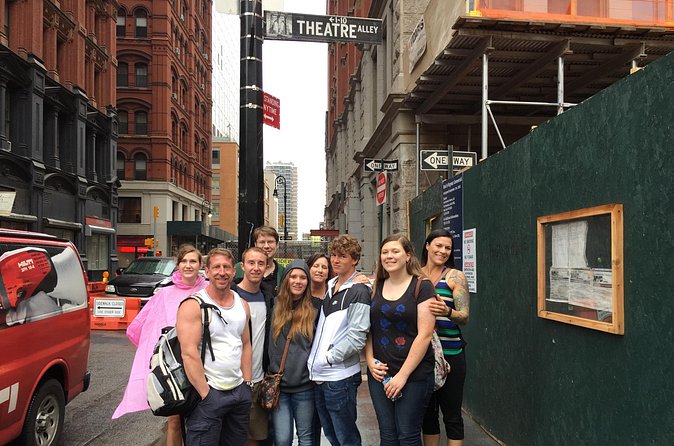
Fraunces Tavern is another key Hamilton location. The guide identifies it as the place where Hamilton and Burr first met, and the museum preserves the building’s connection with George Washington’s first headquarters.
The suggested theme here is raise a glass, but this is not simply a pub stop. Fraunces Tavern links the Revolution, Washington, Hamilton, and Burr in one compact setting. It gives you a chance to think about how personal networks shaped the new republic.
The itinerary allows about 10 minutes at this stop, with admission listed as free for the tour. The information provided does not promise an interior museum visit, so you should expect a brief exterior or surrounding-area stop unless the guide says otherwise.
Again, the route may not always reach it. If this is the place you most want to see, confirm with the guide early. A two-hour walk has to balance many stops, and Lower Manhattan has plenty of distractions along the way.
Wall Street, the bull, and the question of college
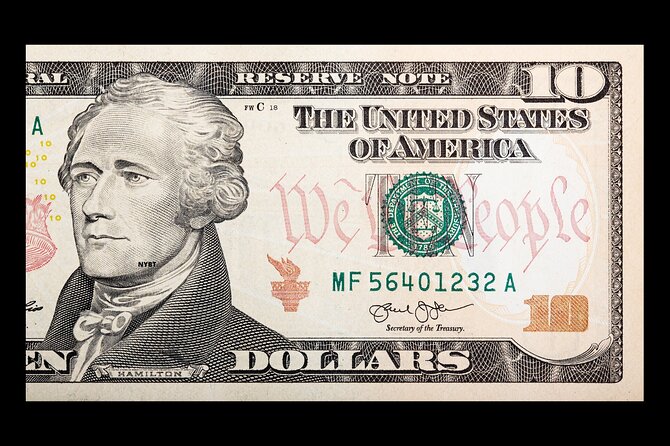
The tour then moves through the Wall Street area, including the famous bull. You have time to take a picture with this large bronze symbol of financial confidence and market energy.
You also consider where Hamilton went to college. The supplied details identify this as one of the tour’s discussion points but do not provide the answer, so the guide supplies the historical explanation during the walk.
Wall Street itself offers another useful piece of context. The name refers to the Dutch settlement’s defensive wall, built as part of the 1624 settlement. Today, the street is linked with the country’s financial systems, but its name points back to a much earlier New York.
The New York Stock Exchange appears near the end of the route. You hear about opening bells, recession warnings, and the way the exchange is used as a sign of national financial health. The timing is designed to let you experience the area near the close of the working day, though the tour does not promise entry into the exchange.
The statue of Fearless Girl and the changing city
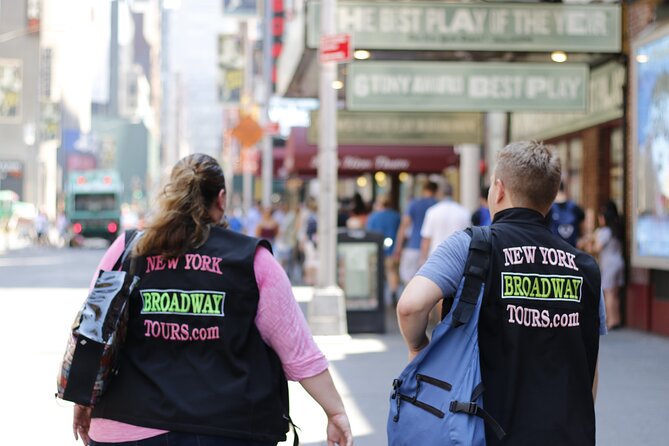
Across from the Wall Street bull, you see the statue that began as a temporary art installation. It now looks toward the New York Stock Exchange.
This is a quick photo stop, but it adds a modern note to a tour mostly concerned with the eighteenth century. The bull represents one kind of financial power. The girl facing it offers a more recent public image and a different reading of who belongs in the city’s centers of authority.
I appreciate this contrast. It keeps the tour from becoming a string of old buildings and founding fathers. Lower Manhattan is still changing, and the route lets you place Hamilton’s arguments about power and government beside modern symbols of business and public life.
Federal Hall and the birth of the new government
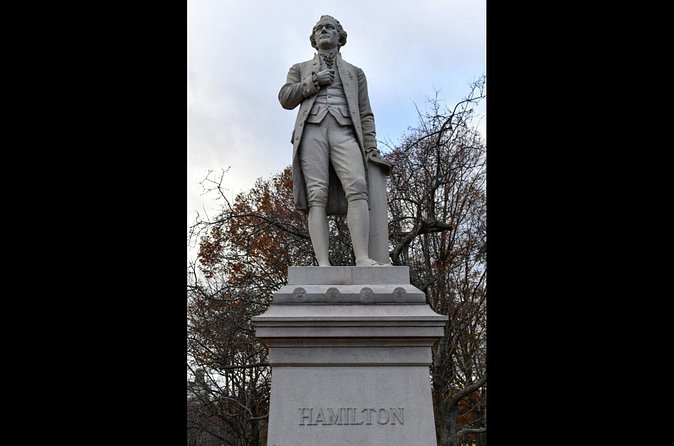
The route also reaches the National Monument associated with George Washington’s inauguration. Its domed form is one of the area’s most recognizable architectural features.
Here, the guide discusses how the founding fathers came to terms with writing the Bill of Rights. The building later served as a customs house and became part of the Treasury Department in the nineteenth century.
This stop gives the tour a clear civic center. You are no longer looking only at Hamilton’s personal story. You are considering the early government’s larger problems: how to protect individual rights, organize public finance, and turn a fragile union into a functioning country.
The stop works best if you pause to look at the building rather than rushing past for a quick fact. The itinerary does not list an admission charge or promise an interior visit, so plan on seeing the monument as part of the walking route.
Trinity Church and Hamilton’s final resting place
The tour finishes its historical portion at Trinity Church, described as New York City’s oldest church. The guide covers the church’s story from the 1690s to the present and points out its impressive exterior.
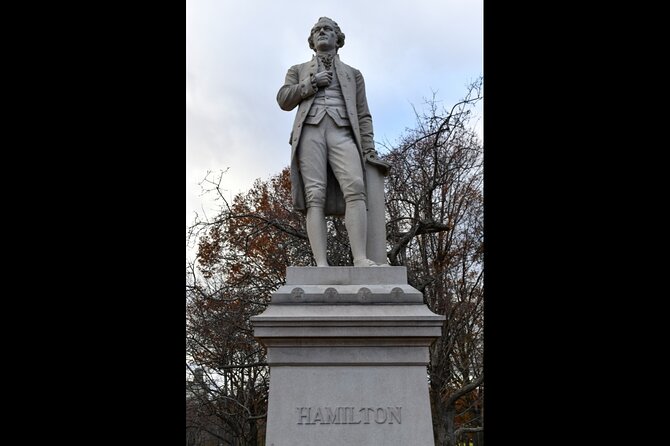
The most important moment for Hamilton fans comes here: you pay respects at Alexander Hamilton’s grave. This gives the walk a quieter ending after the noise of Wall Street and the energy of the musical references.
Trinity Church also brings together several strands of the tour. Hamilton’s public work, private relationships, religious setting, and place in New York’s civic memory all meet in one location.
About 10 minutes is listed for the stop, and admission is free. The activity ends back at the starting point, so you will need to allow for the return walk when planning lunch, another attraction, or a Broadway show.
What the $50 price really covers
At $50 per person, this is not a bargain if you are measuring only admission tickets. Most of the landmarks are viewed from the street, and the tour does not include souvenir photos. You are paying for the guide’s storytelling, route planning, historical links, and the convenience of covering many Lower Manhattan sites in about two hours.
That can be fair value if you already plan to visit Wall Street and want a clear Hamilton theme instead of a general city walk. The professional local guide adds the most value when the explanations connect the musical to real people, addresses, financial debates, and political decisions.
The price also makes more sense for a first visit to Lower Manhattan. You can see the Federal Reserve, Wall Street, Federal Hall, Trinity Church, the bull, and the nearby historic streets without having to organize the route yourself.
The value drops if you want long interior visits or plenty of free time at each place. Ten minutes is listed for several stops, and the group may need to keep moving. This is a guided overview with strong historical connections, not a museum tour.
Group size, sound, and walking comfort
The maximum group size is 20 people. That is small enough for a more personal walk, but city noise can still make it hard to hear. One account specifically found the guide difficult to hear and suggested a listening device would have helped.
Choose a place near the guide when the group gathers. If you are at the back, step forward at busy streets and ask for important points to be repeated. This simple habit can make a large difference.
The walk lasts about two hours and includes many stops across Lower Manhattan. Wear comfortable shoes and expect to be on your feet most of the time. Children can participate, but they must be accompanied by an adult.
The tour is offered in English and uses a mobile ticket. Confirmation arrives when you book. Since the activity requires good weather, check the forecast and keep your plans flexible.
The guide can shape the whole experience
The guide is the main reason to book this kind of tour. The facts are available in books and on plaques, but a good guide connects them into a story you can follow while walking.
Michael is specifically associated with an enthusiastic version of the experience. His style includes singing songs from the musical with the group and offering advice on finding less expensive Broadway tickets. That extra Broadway guidance could be useful if you are building a full theater day around the tour.
The singing will not appeal to everyone, but it fits the subject. If you want a strictly academic lecture, this may feel informal. If you enjoy hearing the musical tied directly to the streets around you, it adds energy.
The key issue is audibility. Enthusiasm is helpful only if you can hear the explanation. Stay close, speak up when needed, and remember that a busy New York street is part of the setting.
Who should book this Hamilton walk?
I would recommend it most strongly to Hamilton fans who want the real New York behind the stage story. You will recognize musical themes while gaining a better sense of the people, addresses, institutions, and arguments that inspired them.
It also suits history buffs who enjoy early American politics and finance. The route covers Washington, Jefferson, Burr, Hamilton, the Bill of Rights, banking, trade, and the city’s changing role in national life.
It is less suited to anyone who dislikes walking, needs guaranteed access to every listed stop, or wants a quiet tour with a listening device. The route may shift, and one account indicates that Stone Street and Fraunces Tavern were missed.
Book at least with the weather in mind. The tour is commonly reserved about 31 days ahead, so planning roughly a month out is sensible if your New York schedule is fixed. You can cancel for a full refund up to 24 hours before the start time. Changes made inside that window are not accepted, and poor weather can lead to another date or a refund.
Should you book the Alexander Hamilton Musical Walking Tour?
Book this tour if you want a lively, focused introduction to Hamilton’s Lower Manhattan and you value a guide’s connections more than formal museum entry. The best moments are the Federal Reserve, Stone Street, Fraunces Tavern, Federal Hall, and Trinity Church, especially Hamilton’s grave.
Think twice if every listed stop is essential to you. Ask at the start about Stone Street and Fraunces Tavern, stay close enough to hear, and expect a steady walk rather than a leisurely stroll.
For the right audience, $50 buys a useful historical framework and a practical way to see several major sights in one morning. It is a good choice for musical fans, first-time Lower Manhattan visitors, and anyone who likes history served with a little Broadway spirit.
FAQ
How long does the Alexander Hamilton Musical Walking Tour last?
The tour lasts approximately two hours and ends back at the meeting point.
Where does the tour start?
The meeting point is 41 Park Row, near 38 Park Row, New York, NY 10038.
What time does the tour begin?
The scheduled start time is 11 a.m.
Is the tour offered in English?
Yes. The tour is offered in English.
What is included in the price?
The $50 price includes a professional local guide. Souvenir photos are not included, though they may be available to purchase.
Can I cancel for a full refund?
Yes. You can cancel at least 24 hours before the experience start time for a full refund. Cancellations or changes made less than 24 hours in advance are not accepted, and poor weather may result in a different date or a full refund.
More Walking Tours in New York City
- West Harlem: Gospel Church Service and Sunday Walking Tour
★ 4.3 · 411 reviews - Half-Day Harlem Gospel Experience Walking Tour
★ 4.5 · 283 reviews - Harlem Gospel Multimedia Walking Tour
★ 4.0 · 57 reviews - Harlem Gospel Experience Walking Tour in French
★ 4.5 · 51 reviews
More Music Walking Tours in New York City
- Harlem & The Rise Of Gospel Music Walking Tour
★ 5.0 · 56 reviews - New York: Hamilton Musical Walking Tour of Lower Manhattan
★ 5.0 · 3 reviews - The Original Sound of Music Tour in Salzburg
★ 4.5 · 6,129 reviews - Salzburg: Original Sound of Music Tour
★ 4.8 · 5,059 reviews
Just added around New York City
- Harlem Sunday Gospel Experience★ 4.0 · 46 reviews
- Six The Musical on Broadway Ticket★ 4.0 · 55 reviews
- Harlem & The Rise Of Gospel Music Walking Tour★ 5.0 · 56 reviews
- Sunday Walking Tour and Gospel in West Harlem★ 4.0 · 14 reviews
- New York Harbor Wine and Jazz Sail aboard Clipper City★ 4.5 · 21 reviews
- New York: Harlem tour and Gospel service★ 4.5 · 30 reviews
- New York City Live Jazz Sail★ 5.0 · 14 reviews
- Operation Mincemeat: A New Musical on Broadway Ticket★ 4.5 · 7 reviews
New York City Concerts, compared.
NYC: Harlem Hallelujah! Gospel Wednesday Concert
Read our review →
New York City: Harlem Gospel Live Music Concert
Read our review →

NYC: Holiday Yacht Cruise with Jazz, Cocoa & Carols
Read our review →
Harlem: Central Harlem Sunday Gospel with Locals
Read our review →Browse the lists this tour appears in