
Review · LONDON
Private Rock ‘n’ Roll Music Tour of Central London
London’s rock story is written into ordinary streets, pubs, theatres, shopfronts, and office buildings. On this private walk, you follow the trail from the London Palladium, where Beatlemania took hold, to Denmark Street, where British musicians found guitars, publishers, studios, and a place to begin.
I like the private format, since you can ask about your favorite band instead of listening to a fixed script. I also like the range: Beatles, David Bowie, the Rolling Stones, Pink Floyd, Eric Clapton, Queen, the Sex Pistols, and Jimi Hendrix all appear along the way. The main drawback is pace. With about 17 stops in three hours, many visits are brief, and this is an outdoor walking tour rather than a museum visit.
Key points at a glance
- A remarkable music route: Walk from the London Palladium to Denmark Street through Soho, Mayfair, and the West End.
- Major Beatles locations: See the former Apple headquarters and the rooftop site linked with the band’s final public performance.
- Bowie’s London: Visit Heddon Street and Hotel Café Royal for two very different Ziggy Stardust stories.
- Private guiding: Your group alone takes part, with guiding fees included and questions welcome throughout.
- Mostly exterior sightseeing: Most stops are free, but entry to Ronnie Scott’s, the Odeon Covent Garden, and Denmark Street attractions is not included.
- Good value for a group: The $205.67 price covers up to 15 people, making the per-person cost far better for a full group than for one or two guests.
From Beatlemania at the Palladium to the BBC’s music battles
The tour begins outside the London Palladium on Argyll Street, a sensible meeting point in the West End and an exciting place to start. This theatre hosted major performers and the popular television program Sunday Night at the London Palladium. It was also where Beatlemania truly caught fire.
You will hear about the Beatles appearances there and the Rolling Stones decision not to follow the usual end-of-show routine. That detail gives the opening a little bite. The tour is not only about famous concerts. It is also about image, manners, television, and the ways young bands challenged the entertainment world around them.
A short walk brings you to Broadcasting House, the BBC headquarters and home to major radio stations. A wing is named for John Peel, one of Britain’s most important radio voices and music champions. The stop also adds needed balance: the BBC helped popular music reach millions, but it also banned certain records from the airwaves.
That tension matters. London music did not grow only because radio welcomed it. Some artists became more interesting precisely because broadcasters treated them as troublesome or unsuitable. You get a better sense of how music moved from clubs and record shops into homes across Britain.
The route then passes a university building that was once the London Polytechnic. In September 1962, Roger Waters, Nick Mason, and Richard Wright enrolled there to study architecture. They rehearsed in a basement tea room in a group called Sigma 6. Syd Barrett later joined, and the band became Pink Floyd.
This is one of the more unusual stops because it connects a normal educational building with the earliest days of one of Britain’s most important bands. Do not expect a dramatic museum display. The value lies in hearing how ordinary student life, borrowed rehearsal space, and changing band names preceded Pink Floyd’s success.
More Music Walking Tours in London:
- London Rock and Roll Music Tour
★ 4.5 · 943 reviews - London Private Music Tour with a Local Guide Tailored to Your Interests
★ 4.0 · 7 reviews - The Original Sound of Music Tour in Salzburg
★ 4.5 · 6,129 reviews
Carnaby Street and the clubs that shaped Swinging London
Carnaby Street brings the tour into the fashion center of 1960s London. You will hear why the street became fashionable, how its flamboyant clothing drew on unexpected 1950s sources, and how bands such as the Small Faces, The Who, and the Rolling Stones became tied to that look.
This stop is useful because music and clothing were never separate in London. The right jacket, haircut, or pair of trousers helped a band create an identity before the first note was played. The tour also brings in Don Arden, a notorious promoter and manager whose work links the business side of the period with the bands themselves.
Nearby Kingly Street once held the Bag O’Nails, a club that attracted the Jimi Hendrix Experience, The Who, The Animals, and Tom Jones. It was also where several musicians met future wives, including Paul McCartney, who met Linda in 1967.
The Bag O’Nails story is a good example of what makes this walk different from a standard sightseeing route. You are not simply checking off concert halls. You are following the social network around them: musicians, partners, managers, drinking places, and late-night meeting spots.
Bowie’s Heddon Street photograph and Ziggy’s farewell
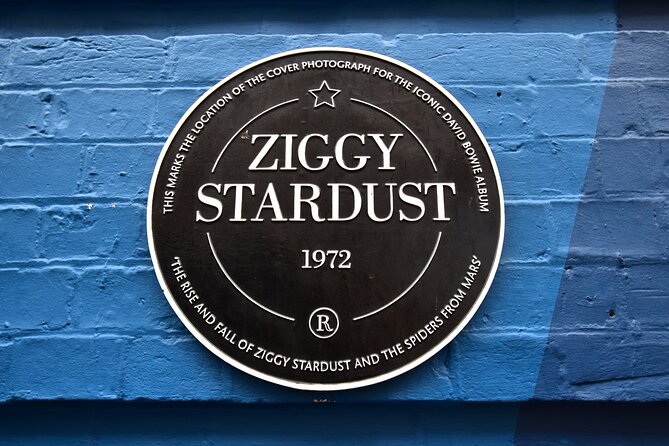
Heddon Street is one of the clearest photo stops on the route. It provided the setting for the front and back cover images of The Rise and Fall of Ziggy Stardust and the Spiders From Mars. You can recreate the famous photographs and hear how the shoot took place on a cold, wet January night in 1972.
This is a worthwhile moment for Bowie fans, but it also works for casual visitors because the contrast is so striking. The location is a real London street, not a purpose-built set. The atmosphere of the album cover came from styling, lighting, weather, and Bowie’s performance in a very ordinary urban setting.
At Hotel Café Royal, the story moves from a photograph to a stage character’s final act. The building began as a café in 1865, and in 1973 Bowie retired Ziggy Stardust there during a costly, star-filled event.
You will also hear how that occasion inspired a Ziggy Stardust cocktail bar inside the hotel. The tour does not promise entry, so treat this as an exterior landmark and a story stop. Still, the location gives Bowie’s theatrical career a physical address, linking a fictional persona to one of London’s grand old meeting places.
The Marquee, The Ship, and London’s club circuit
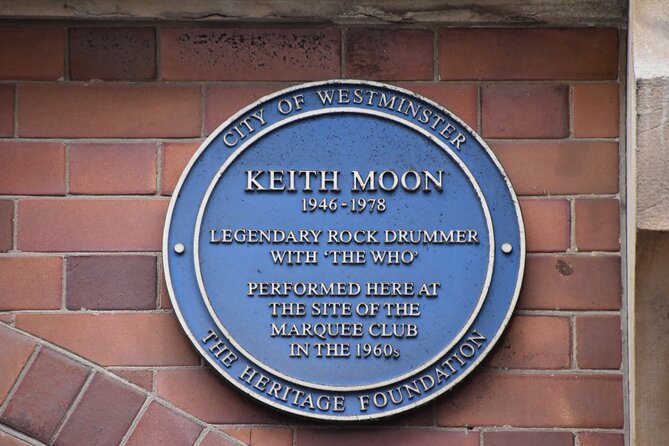
Wardour Street was once home to the Marquee Club, a venue that operated for 26 years and helped launch the early careers of The Who, David Bowie, and many others. A plaque to Keith Moon sits over a doorway, described as dusty rather than polished. That small detail suits the story. Music history does not always come with a grand monument.
The Marquee mattered because it gave developing acts a place to play in front of people who cared about new music. You will learn why the club became so important and how its loss of an alcohol licence changed the local routine.
The nearby Ship pub became the place where music fans drank, and the musicians followed. Outside, you hear about the drunken behavior of rock stars and the pub’s role in the club scene.
This part of the tour has a useful human scale. Recordings and famous photographs can make musicians seem distant. Pubs such as The Ship show how the scene actually worked, with performers and audiences sharing the same narrow local circuit. The story may be colorful, but you should expect to remain outside rather than settle in for a drink.
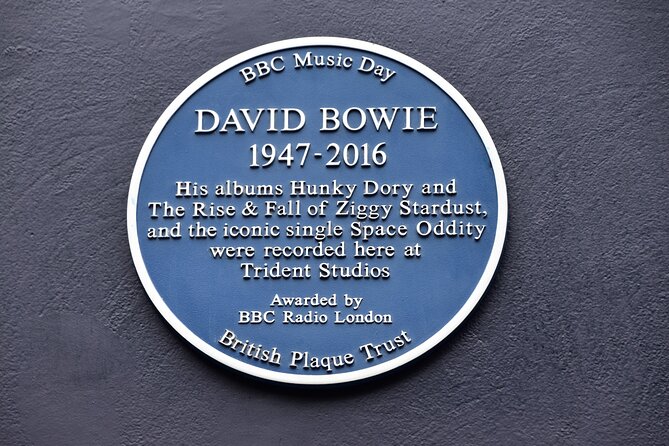
Around the corner is a small alley with a plaque marking Trident Studios. Between 1968 and 1981, artists including David Bowie, the Beatles, Queen, Elton John, the Rolling Stones, and Black Sabbath recorded there.
The range of names tells you why this modest-looking location matters. It was not one band’s studio. It was a working center used across several stages of British rock, from the Beatles and Stones to heavier music and glam-era artists. As with several stops, the plaque is the physical point, while the guide provides the larger story.
A few more concerts around London worth a look
- VIP Jazz Dinner Cruise with Private Tour and Open Bar Option
★ 4.5 · 838 reviews - Sydney Half Day Private Tour: See Sydney Opera House and Bondi
★ 5.0 · 123 reviews - Little Havana Tour Private Cuban Podcaster Art, Museums, Music
★ 4.5 · 93 reviews - Warsaw Chopin Airport Private Transfer
★ 4.5 · 75 reviews
The Beatles at Savile Row and McCartney’s business empire
At 3 Savile Row, you see the former Beatles office and the site of the famous rooftop concert from 1969. The building was also the headquarters of Apple, which made it a magnet for Beatles fans.
The rooftop performance is now familiar through Let It Be and Get Back, but seeing the building helps turn a film sequence into a place. This was the Beatles final performance together in public, and the office had a steady stream of interesting visitors. You will hear about those connections as well as the concert itself.
The stop is outside, so do not expect an interior tour. Its strength is the setting and the guide’s storytelling. If the Beatles are your main reason for booking, this is one of the most important points on the route.
At Cordings, the focus shifts to Eric Clapton. As a teenager, he window-shopped at the clothing store and hoped one day to afford its clothes. Later, he became a regular customer, invested in the business, and served as its design director.
It is a neat story about success changing a person’s relationship with a familiar shop. It also widens the tour beyond concerts and recording studios. Rock stars influenced clothing, retail, and personal style, not just music.
In Soho Square, you visit the home of MPL, Paul McCartney’s publishing company. The story here is financial rather than theatrical: McCartney became the richest Beatle in part through music publishing.
This stop helps explain why songwriting rights can matter as much as album sales. You will not tour the business, but the location gives the guide a chance to explain how a songwriter’s catalog can grow into a long-term enterprise.
Ronnie Scott’s, Brian Epstein, and the Sex Pistols
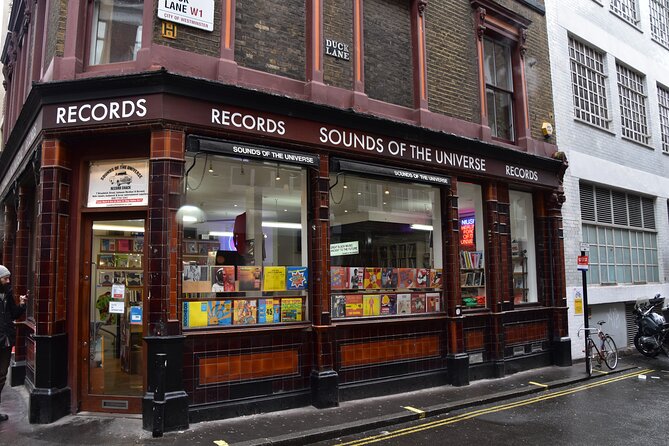
Ronnie Scott’s Jazz Club moved to Frith Street in 1965 and became a major London music venue. The tour covers famous performers, a surprising Lady Gaga performance, and Jimi Hendrix’s final performance.
This is a short stop, listed at about five minutes, and admission is not included. The club is best understood as an important address on the route, not as a full evening of jazz. If you want to attend a performance, that would require a separate plan.
At the Odeon Covent Garden, the story returns to Beatles manager Brian Epstein. In 1966, he decided to buy a theatre and had ambitious plans for it. You will hear what he intended, what happened there, and how the venue connects with performers of the 1960s.
Admission is not included, so the tour focuses on the building and its past. This is another stop where the guide’s account matters more than the amount of time spent on site.
Foyles Bookshop occupies what was once a university building. It is linked with the Sex Pistols first gig, as well as the early management decisions of Malcolm McLaren. You will hear why McLaren booked the band mainly for student events and where Steve Jones got the group’s guitars.
That detail gives the punk story a practical edge. Before the Sex Pistols became a major name, they needed small rooms, student audiences, equipment, and someone willing to put them on a bill. The stop shows how far the band was from its later reputation.
Denmark Street, the tour’s strongest finish
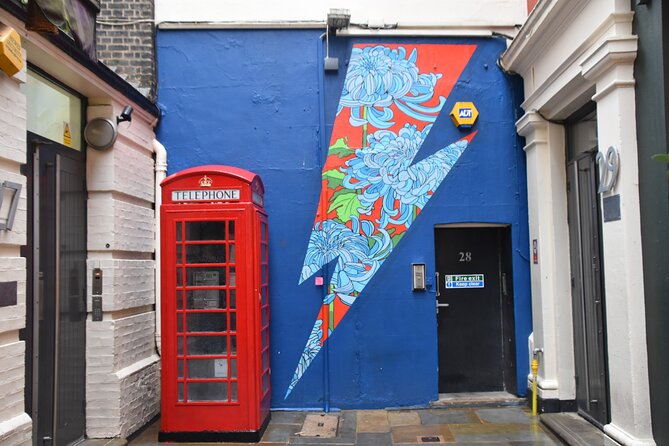
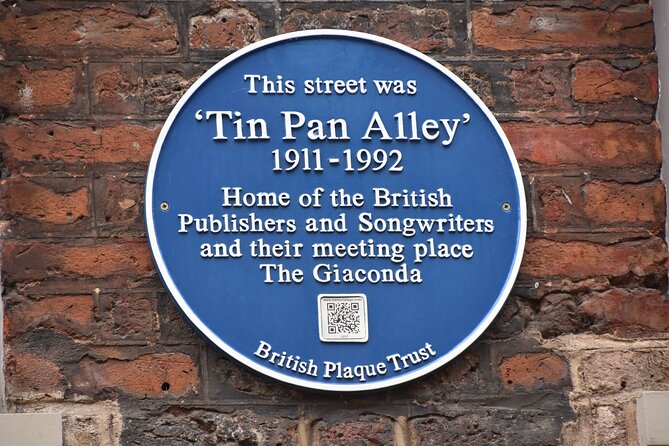
The final destination is Denmark Street, often called Tin Pan Alley. It is now known for guitar shops and music venues, but its importance reaches much further.
The Beatles first music publishing deal was struck here. The Rolling Stones recorded their first album here. The Sex Pistols crashed in the area, rehearsed there, and John Lydon drew rude pictures on a wall that may still be visible.
The street also connects with the early careers of Elton John and David Bowie. That makes it a fitting finish because it brings together the musicians and themes from the whole walk: publishing, recording, rehearsal rooms, instruments, ambition, and mischief.
The tour ends here rather than returning to the Palladium. That matters when planning your day. Denmark Street is in the central London area, but you should still allow time to orient yourself before your next appointment.
What the three-hour format means
The listed duration is about three hours, with stops ranging from five to 15 minutes. That is enough time for a strong overview, but not enough for long visits inside venues. Most locations are seen from public streets, and the guiding fees are included.
The route covers a lot of ground, so wear comfortable shoes and expect a moderate level of walking. Public transport is nearby, but the experience itself is a walking tour. Service animals are allowed.
The private setup is a major advantage for music fans. A group of up to 15 can take part, and you can ask for more detail about the Beatles, Bowie, punk, prog rock, jazz, or the Stones. If guide Michael leads your walk, his broad store of stories is likely to be a real asset, with one published account describing the information as enough for a novel.
That said, the price of $205.67 is easier to justify with a larger group. For 10 people, it works out at roughly $21 per person. For two people, it is a much bigger spend for three hours, though the private attention may still appeal to serious fans.
Who should book this London music walk?
I would choose this tour if you want stories tied to real addresses and prefer a guide to a large museum display. It suits Beatles fans, Bowie followers, Rolling Stones supporters, Pink Floyd fans, punk listeners, and anyone curious about the people and places around London’s music scene.
It is less suitable if you want live music, interior access, long visits, or a slow photographic tour. You will see many stops in a short time, and three venues list admission as not included. Check the pace against your walking ability and leave room in your schedule after the finish.
The booking terms are friendly: you can cancel for a full refund up to 24 hours before the local start time. The tour is offered in English, and confirmation is provided when you book.
Should you book it?
Book it if the idea of standing outside the Beatles Apple office, recreating Bowie’s Heddon Street photograph, and tracing the route to Denmark Street sounds better than another general London walk. The best part is the connection between famous names and everyday places.
For the strongest value, bring a group. For the strongest experience, arrive ready with questions about the music you love. This is a fast-moving, story-led walk, and its success depends on how much you enjoy connecting a shop, pub, plaque, or theatre with the people who changed British music.
FAQ
How long does the private rock music tour last?
The tour lasts approximately three hours.
Where does the tour begin?
It begins outside the London Palladium at 8 Argyll Street, London W1F 7TF.
Where does the tour finish?
The tour finishes on Denmark Street in central London.
What language is the tour offered in?
The tour is offered in English.
Is this a private tour?
Yes. Only your group takes part, with a maximum group size of 15 people.
What is included in the price?
All guiding fees are included.
Are admission tickets included?
Most listed stops are free outdoor locations. Admission is not included at Ronnie Scott’s Jazz Club, the Odeon Covent Garden, or Denmark Street.
How much does the tour cost?
The listed price is $205.67 per group of up to 15 people.
What level of fitness is required?
A moderate level of physical fitness is recommended because this is a walking tour through central London.
Can I cancel for a full refund?
Yes. You can cancel at least 24 hours before the experience start time for a full refund. Changes or cancellations made less than 24 hours before the start time are not accepted for a refund.
Just added around London
- London Private Music Tour with a Local Guide Tailored to Your Interests★ 4.0 · 7 reviews
- Mrs Doubtfire The Musical Theatre Tickets in London★ 5.0 · 4 reviews
- London Theatre: SIX The Musical★ 4.5 · 15 reviews
- London Theatre: Matilda The Musical★ 4.0 · 44 reviews
- London Theatre: Paddington The Musical★ 5.0 · 22 reviews
- London Theatre: MJ The Musical★ 4.0 · 37 reviews
- A Fairytale Christmas Day with Food and Christmas Concert★ 5.0 · 5 reviews
- Jazz Notes – Jazz Jam Ticket★ 5.0 · 6 reviews
London Concerts, compared.
London: ABBA Voyage Express Bus and Optional Concert Ticket
Read our review →
London West End Musical Silent Disco Walking Tour Top 1% Rated
Read our review →
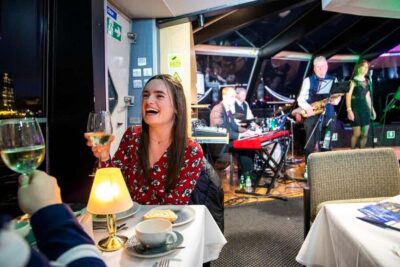
London: River Thames Dinner Cruise with Live Jazz
Read our review →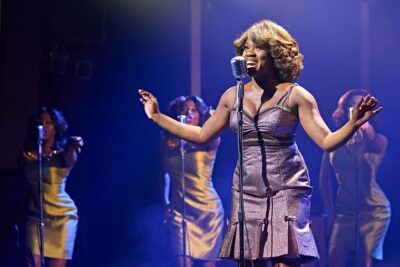
London Theatre: TINA – The Tina Turner Musical-Closes Sept 2025!
Read our review →
Browse the lists this tour appears in