
Review · SALZBURG
Salzburg 2.5-Hour Walking Tour: Mozart, Old Town & More
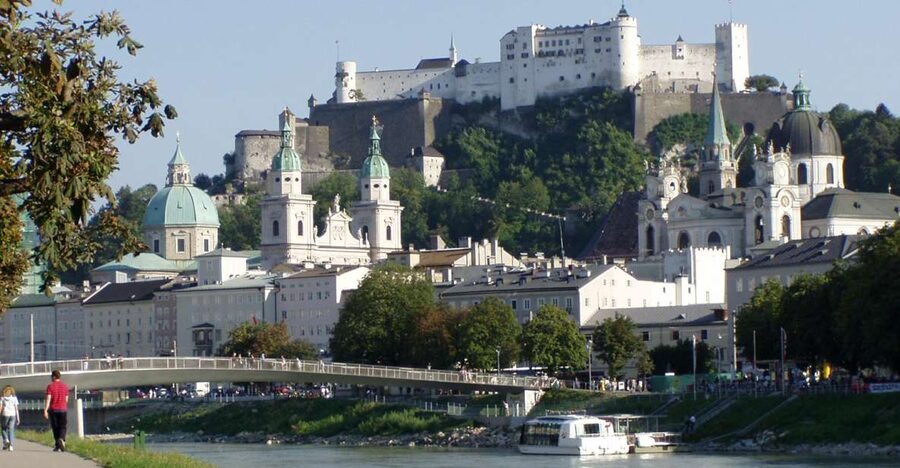
Salzburg’s story comes into focus as you walk from Mirabell Palace to the Old Town, crossing the river and moving from gardens and grand residences into medieval lanes, churches, and Mozart’s birthplace. The route gives you a useful first look at the city without burying you in museum interiors.
I like the clear east-to-west route and the chance to hear Salzburg’s past explained on the street where it happened. I also like the human touch offered by guides such as Junko, June, Melody, and Julia, several of whom have added a short song in a church. The main drawback is that Mirabell Palace can feel slow at the start, and this is a walking overview rather than a detailed visit inside every major sight.
Key points at a glance
- Start at Mirabell Palace: Meet street-side at the main entrance on Mirabellplatz 4, not deep inside the palace grounds.
- Cross the Makartsteg: The route links Salzburg’s New Town with the historic Old Town on foot.
- See Getreidegasse and Mozart’s birthplace: Wrought-iron signs and Mozart’s early home are central highlights.
- Hear more than dates: Guides explain archbishops, churches, local culture, Mozart, and selected Sound of Music connections.
- Finish above the city: An optional Mönchsberg lift ride costs €4 per person and leads to a panoramic viewpoint.
- Plan for real walking: Wear comfortable shoes and leave large bags and luggage behind.
Why this Salzburg walking tour works as a first look
At $53 per person, this is not the cheapest way to walk around Salzburg. You can see many streets and squares on your own for nothing. The value comes from having a guide connect the buildings, church interiors, political power, music, and daily life into one story over 150 minutes.
I would put this tour near the start of a Salzburg stay. You get a map in your head, learn which parts of the center deserve a longer visit, and can ask for restaurant or photo suggestions while you still have time to use them. One guide even helped point out good places for pictures and offered ideas for the rest of the day.
The tour is also useful if your time is tight. The historic center is compact, but it is easy to walk past important buildings without knowing what you are seeing. A guide can turn a plain-looking façade, a church doorway, or an old apartment block into part of Salzburg’s larger story.
The experience is offered in English or German. The guide may be Junko, June, Melody, Julia, Christine, Annabell, Aisleen, or another member of the team, so the style can vary. The strongest descriptions point to guides who are warm, flexible, and able to answer questions rather than simply recite a script.
More Classical Concerts in Austria
- Salzburg: Mozart Concert at Mirabell Palace
★ 4.8 · 3,498 reviews - Salzburg: Best of Mozart Fortress Concert and Dinner
★ 4.5 · 1,424 reviews - Salzburg: Mozart Concert with Dinner
★ 4.8 · 835 reviews
Mirabell Palace and the opening story
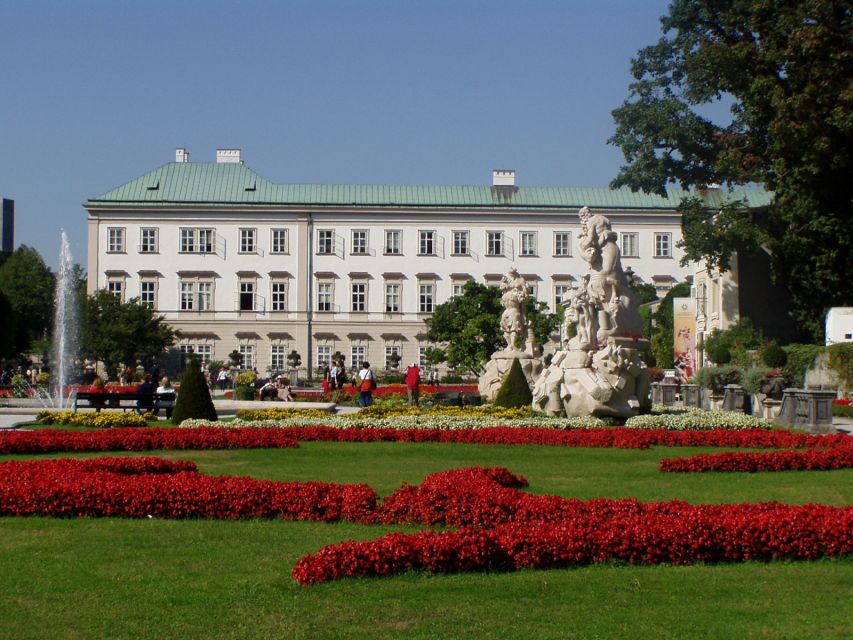
Meet in front of the main entrance of Schloss Mirabell at Mirabellplatz 4. The meeting point is specifically on the street side, so check the supplied meeting-point photo before you set off. That small detail matters because a grand palace entrance can leave you wondering which side of the square is correct.
Mirabell Palace began under Prince Archbishop Wolf Dietrich von Reitenau. He built it for Salome Alt, his mistress, and their 15 children. That fact gives the palace a distinctly Salzburg beginning: this was not only a formal residence but also a statement of personal power, wealth, and private life.
I like starting here because the palace introduces the archbishops who shaped Salzburg. Their influence appears again in the churches, squares, and grand buildings later in the walk. You are not simply looking at a pretty building before the real tour starts. You are getting the first clue to why Salzburg feels more like a small former capital than an ordinary provincial town.
Still, this is the section where pacing matters most. One person found the opening slow and nearly dull before the group moved away from Mirabell. If you already know Salzburg’s political background, you may want to stay active with questions here. Ask how the archbishops affected the city, or ask which parts of the palace and gardens are worth returning to after the tour.
Makartplatz, Mozart, and the New Town
Near Mirabell, at Makartplatz, you see the Mozart Residence. This is a useful contrast with the later stop at Mozart’s Birthplace in Getreidegasse. The two addresses help you understand Mozart’s connection to Salzburg without treating his name as a decorative label on every street.
The walk then explores the New Town on this side of the Salzach River. That part of the route is important because many first-time visitors rush straight toward the Old Town and miss the relationship between the two halves of central Salzburg. The guide gives you a sense of how the city opens out before becoming denser and more historic across the river.
This is also a good point to ask about modern Salzburg, not just its famous dead composers and archbishops. The tour is designed to cover culture and present-day facts as well as earlier centuries, and several guides have adjusted the discussion to suit the group’s interests.
You should not expect a full museum visit at the Mozart Residence during this walking tour. The focus is on orientation and context. If Mozart is your main reason for coming to Salzburg, use the walk to decide if you want to return for a longer indoor visit.
Crossing the Makartsteg into the Old Town
The Makartsteg footbridge is a natural turning point. You cross the river and arrive in the Old Town, where the street plan tightens and the buildings become more layered. It is a simple walk, but it helps you see Salzburg as a connected city rather than a collection of separate postcard views.
The bridge is also a practical photo stop. Guides have suggested good picture locations throughout the tour, and this crossing gives you a chance to look back toward the New Town and Mirabell side. Do not expect a long photography session if the group is moving, but there should be time to take a few useful pictures.
From here, the character changes quickly. Narrow streets, ornate façades, church towers, and historic squares replace the open approach around Mirabell. I like this transition because it lets you feel the city’s scale. Salzburg’s center is manageable on foot, yet it contains several distinct chapters within a short distance.
More Classical Concerts in Salzburg
- Salzburg: Best of Mozart Fortress Concert
★ 4.6 · 762 reviews - Best of Mozart Concert and Dinner or VIP Dinner at Fortress Hohensalzburg
★ 4.5 · 598 reviews - Salzburg: Old Town, Mozart, & Mirabell Gardens Walking Tour
★ 4.8 · 461 reviews - Mozart Concert and Dinner or VIP Dinner at Fortress Salzburg with River Cruise
★ 4.5 · 280 reviews
Getreidegasse and Mozart’s birthplace
Getreidegasse is Salzburg’s best-known shopping street, but it is more than a place for shops and souvenirs. Its wrought-iron trade signs are the key visual feature. Before modern signs and large storefront lettering, these symbols helped customers identify a baker, butcher, or other business. Look upward as you walk. The signs are easy to miss if you stare only at window displays.
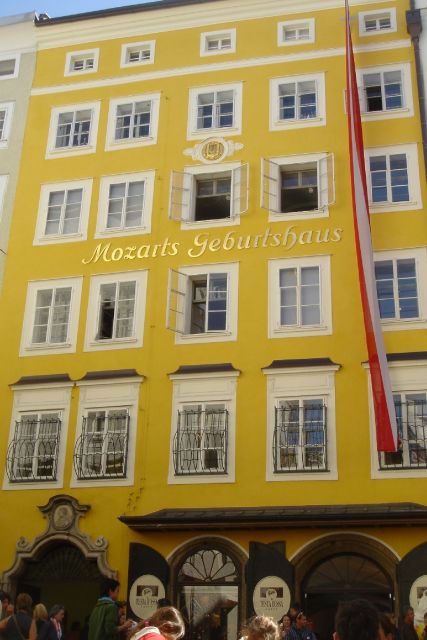
Mozart’s Birthplace is on Getreidegasse and forms one of the clearest highlights of the route. The walk places the composer in the physical center of Salzburg rather than treating him as an abstract part of the city brand. You see the street, the façades, and the setting connected to his early life.
This stop suits music lovers, but you do not need to be a Mozart expert to get value from it. Ask the guide how Mozart fits into Salzburg’s wider culture, or how the city uses his legacy today. A walking tour cannot replace the museum inside the birthplace, but it can help you decide if that museum deserves space in your schedule.
Getreidegasse can also be the busiest-feeling section of the walk. The route remains manageable, but the street’s popularity means you may need to pause at the edge rather than stop in the middle. Keep your group together and watch your footing around older paving.
Churches, squares, and the city’s powerful archbishops
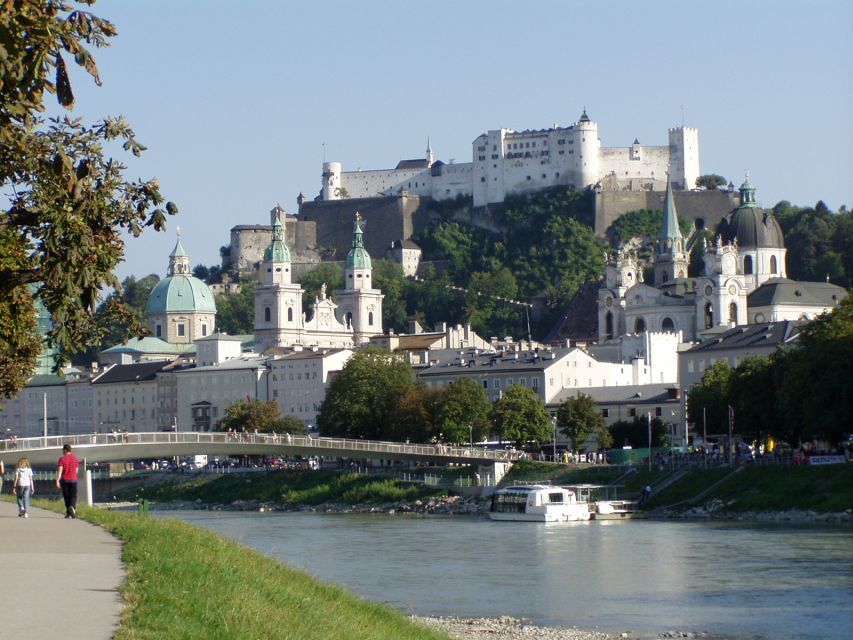
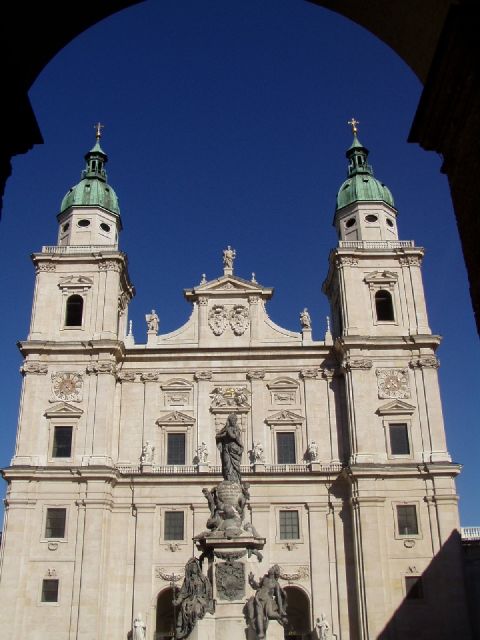
The Old Town section brings you through historic buildings, medieval apartments, and churches built from the Middle Ages into the Baroque period. The exact church stops can vary, with one or two churches included depending on the route and conditions.
This is where a good guide makes the biggest difference. Salzburg’s churches are not just places to admire decoration. They show how much authority the prince archbishops held and how religious power shaped the city’s public face. A guide can connect the interiors and façades to the political story introduced at Mirabell.
Several guides have been praised for using stories and gestures to explain the powerful archbishops. That style can make a complicated subject easier to follow than a list of names and dates. Guides have also discussed figures connected with Salzburg beyond Mozart, including Doppler, along with local customs and Sound of Music locations.
The musical moment is a pleasant extra, not a guaranteed formal performance. Junko and June are especially associated with singing Ave Maria or another short piece in a church, and other guides may bring a different style. The setting matters. A brief song in a church can give you a sense of Salzburg’s musical identity in a way that another paragraph of facts cannot.
Do not book this walk solely on the assumption that you will hear a song. It depends on the guide, the church, and the flow of the visit. Treat it as a possible bonus, while the main promise remains the walking tour and its historical explanation.
The optional Mönchsberg viewpoint
The planned ending is a panoramic view from Mönchsberg Hill, reached with an optional elevator ride. The lift costs €4 per person and is not included in the tour price. If you choose it, budget for that extra charge and make sure you understand how the group will finish.
The viewpoint is valuable because Salzburg’s layout becomes much clearer from above. After walking through lanes and squares, you can see the relationship between the river, the Old Town, Mirabell, and the surrounding area. It is a strong way to close an orientation tour.
The Mönchsberg stop is described as an optional free-guide addition, and the activity includes an additional 30 minutes at no extra guide charge. Since the advertised duration is 150 minutes, check the day’s plan with your guide if the extra time matters to you. Some tours have lasted closer to three hours, but you should not build a tight onward connection around that possibility.
If you have a train, reserved museum entry, or dinner booking immediately afterward, skip the lift or confirm the finish time before starting. If your schedule is open, I would consider paying the €4. The view adds something different from the street-level walk and costs far less than many major Salzburg attractions.
How the guides shape the experience
The strongest part of this tour is the guide-to-group connection. Junko and June receive repeated praise for their clear English, patience, warmth, local knowledge, and singing. Melody is described as pleasant and well informed, while Julia is remembered for enthusiasm and useful food advice. Christine and other guides have also been singled out for making the walk both educational and enjoyable.
That does not mean every departure will feel identical. A private or very small group can allow more questions and changes of route. One couple had a particularly flexible experience because the guide could respond to their interests and the weather. A larger group may follow the planned route more closely.
The guides also appear willing to tailor the walk. You can ask for more history, more Mozart, more Sound of Music connections, or more practical suggestions for the rest of your stay. Some groups have heard about Christmas markets, churches, gardens, film locations, and present-day Salzburg in the same outing.
I would ask questions early rather than wait until the final church. Tell the guide what matters to you, especially if you want food advice, photo spots, music, architecture, or film locations. The tour seems to work best as a conversation, not as a silent march behind a flag.
Price, pace, and what to bring
At $53, the price makes the most sense if you want a human explanation of Salzburg and have limited time. For a solo visitor or first-time couple, the cost buys structure, local context, and a chance to avoid spending half a day wandering past sights without understanding them.
It is less compelling for someone who enjoys researching every building independently or plans to visit Salzburg repeatedly. You will still need separate admission for paid museums, and the €4 Mönchsberg elevator fee is extra. The walking tour is about seeing and understanding the city, not entering every attraction.
Wear comfortable shoes. The route includes streets, bridges, squares, and historic areas, and the tour lasts 150 minutes before any optional extension. Bring a passport or ID card, with a copy accepted according to the activity details. Large bags and luggage are not allowed, and pets are not permitted except assistance dogs.
Free cancellation is available up to 24 hours before the start, and you can reserve while paying later. Those terms are useful if your Salzburg plans may shift, but you should still check the available departure time before booking.
Who should book this Salzburg walk?
I would recommend it for a first morning or first evening in Salzburg, especially if you want the city explained before choosing museums and restaurants. It also suits short stays, cruise or coach itineraries with limited free time, and visitors who want both Mozart and broader city history.
Families and mixed-interest groups may like the route because it covers music, churches, architecture, stories, and views without focusing on one subject for the whole 2.5 hours. People who enjoy taking photos should benefit from the bridge, Getreidegasse, historic squares, and Mönchsberg finish.
I would think twice if you dislike walking, need a guaranteed short finish, or want extended time inside Mozart’s Birthplace and the churches. This is an overview. Its purpose is to help you see how Salzburg fits together, then point you toward the places you may want to explore on your own.
Should you book it?
Book this tour if you want a friendly, story-led introduction to Salzburg with the main sights arranged in a sensible walking route. The best departures seem to come from guides such as Junko or June, whose historical explanations and occasional singing add a personal touch.
Skip it if your priority is deep museum time, a dedicated Sound of Music excursion, or a fully private itinerary with every minute controlled. For most first-time visitors, though, the combination of Mirabell Palace, Mozart, Getreidegasse, churches, Old Town history, and an optional hilltop view makes $53 a reasonable way to get your bearings.
FAQ
Where does the Salzburg walking tour start?
The meeting point is street-side in front of the main entrance of Schloss Mirabell at Mirabellplatz 4, 5020 Salzburg. Check the supplied meeting-point picture for the exact spot.
How long does the tour last?
The scheduled duration is 150 minutes, or 2.5 hours. An additional 30 minutes may be available at no extra guide charge, so ask your guide about the plan for your departure.
Which languages are available?
The tour is offered in English and German.
Does the tour visit Mozart’s Birthplace?
The route goes along Getreidegasse, where Mozart’s Birthplace is located. The activity details describe seeing the birthplace from the route, but they do not include a separate museum admission.
Is the Mönchsberg elevator included?
No. The optional elevator ride costs €4 per person. The panoramic view from Mönchsberg Hill is the planned optional finish.
What should I bring to the tour?
Wear comfortable shoes and bring a passport or ID card. A copy is accepted. Large bags and luggage are not allowed, while assistance dogs are permitted.
More Walking Tours in Salzburg
- Salzburg Old Town Walking Tour, Mozart, Mirabell Gardens
★ 4.5 · 201 reviews - Salzburg: Life of Mozart Private Guided Walking Tour
★ 4.9 · 11 reviews - Sydney Opera House Official Guided Walking Tour
★ 4.5 · 3,770 reviews - London West End Musical Silent Disco Walking Tour Top 1% Rated
★ 5.0 · 1,057 reviews
Just added around Salzburg
- Original Sound of Music Tour Salzburg With Schnitzel and Noodle★ 4.5 · 151 reviews
- Musical Salzburg: Follow the Trail of the Beloved Movie★ 5.0 · 5 reviews
- Sound of Music Tour with Edelweiss Cooking Class in Salzburg★ 5.0 · 15 reviews
- Relive the Movie Private Sound of Music Tour in Salzburg★ 5.0 · 2 reviews
- Salzburg: Christmas Concert at Mirabell Palace★ 5.0 · 7 reviews
- Mozart Violin Sonatas St. Peter Romanesque Hall★ 5.0 · 7 reviews
- Mozart’s Salzburg Exploration Game and Tour★ 4.0 · 8 reviews
- Salzburg On the Traces of Mozart Private Tour★ 4.5 · 3 reviews
Salzburg Concerts, compared.
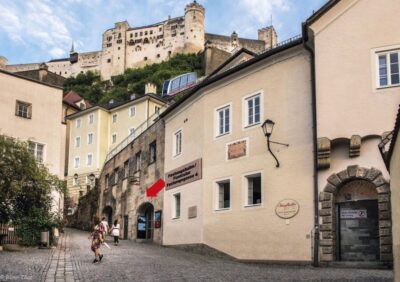
Salzburg: Best of Mozart Fortress Concert and Dinner
Read our review →
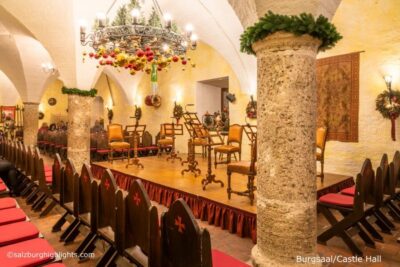
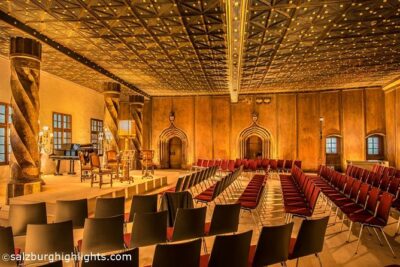
Best of Mozart Concert and Dinner or VIP Dinner at Fortress Hohensalzburg
Read our review →
Browse the lists this tour appears in